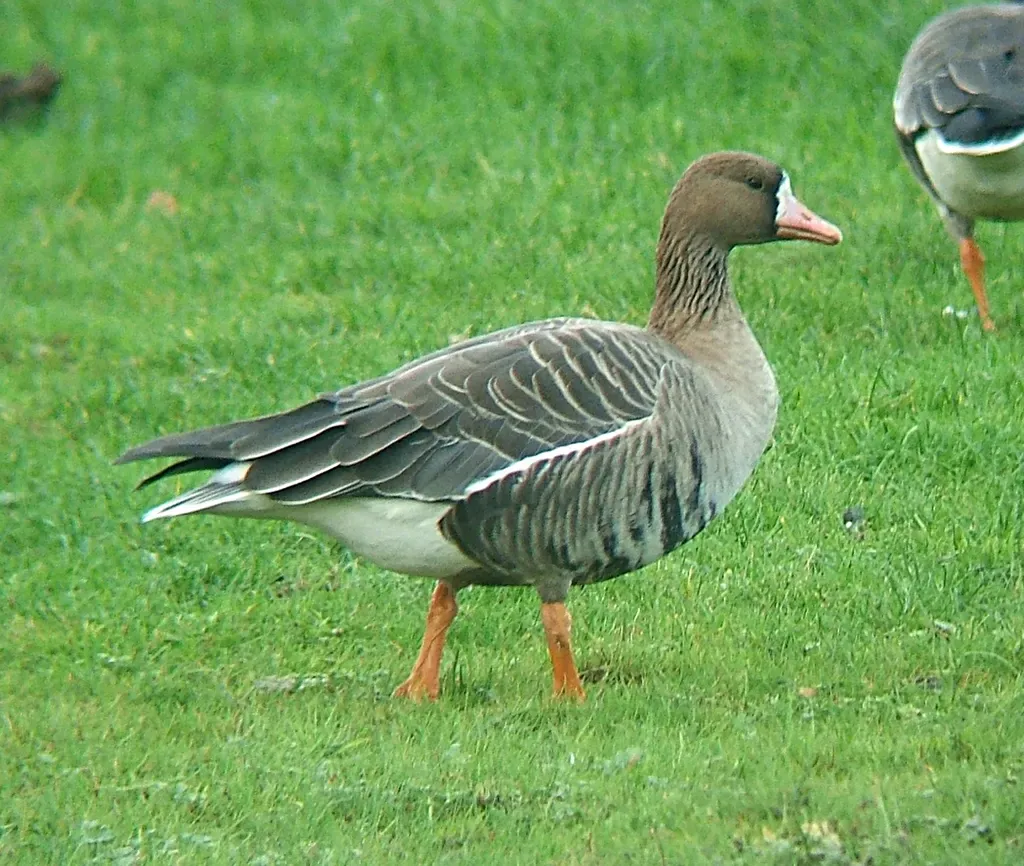
Photo:MPFCC BY-SA 3.0
Waterfowl
Greater white-fronted goose
Anser albifrons
- Group
- Waterfowl
- Size class
- Small (under 10 kg)
- Family
- Anatidae
Range
- North America
- Europe
- Asia
Habitat
- Farmland
- Wetland
Range
Countries it is found in
77 countries
- Afghanistan
- Albania
- Armenia
- Austria
- Azerbaijan
- Bangladesh
- Belarus
- Belgium
- Bermuda
- Bosnia & Herzegovina
- Bulgaria
- Canada
- China
- Croatia
- Cuba
- Cyprus
- Czechia
- Denmark
- Estonia
- Faroe Islands
- Finland
- France
- Georgia
- Germany
Range from:Wikipedia country bird lists, GBIF occurrence records — read 2026-08-05
Chapter 01
Overview
The greater white-fronted goose (Anser albifrons) breeds in northern Canada, Alaska, Greenland and Russia and winters further south in North America, Europe and Asia. It is named for the white patch at the base of its bill; albifrons is Latin for 'white forehead'. In North America the speckled breast earns it the name 'specklebelly'. The nominate European race breeds in the far north of Russia and winters to the south and west. The world population is put at five to six million adults and the IUCN rates it least concern, though hunting pressure is heavy in some areas.
Chapter 02
Identification
64–81 cm long with a 130–165 cm wingspan, weighing 1.93–3.31 kg — smaller than a greylag. Both sexes are greyish-brown with a pale grey breast blotched and barred dark brown to black, a pinkish bill and bright orange legs. It is larger than the lesser white-fronted goose and lacks its yellow eye-ring, and its white blaze does not reach as far up the forehead. The best-known call is a high-pitched, two-note cackle, lighter and more musical than a greylag's.
Chapter 03
Behaviour
Breeding success hangs on Arctic weather: the window for nesting and raising a brood lasts about three months, so a late thaw or a spring storm can wreck a season. Birds arrive in late May or early June and leave for autumn staging areas in early September. The nest is a scrape on the ground holding one to eight eggs, incubated for 22–27 days; the young leave within a day. Outside the breeding season it is a flocking bird, with flocks of up to 30,000 reported in Europe. Greenland birds keep family bonds for years, sometimes including grandparents.
Chapter 04
Hunting
In Sweden the bläsgås has a general open season only in Skåne, from 1 October to 31 January, and may only be shot from one hour before sunrise to one hour after sunset. Skyddsjakt is allowed year-round where birds gather at airports for flight safety, and from 1 July 2027 also at fields with unharvested crops or grazing in Blekinge and Skåne, 1 October to the end of February. The nominate and Greenland races both fall under the African-Eurasian Migratory Waterbird Agreement (AEWA).
Sources
Sources: Greater white-fronted goose — Wikipedia, Bläsgås — Wikipedia (svenska), Jaktförordning (1987:905) — Sveriges riksdag — read 2026-10-29
Cross-reference
Related species
Its closest relatives in the compendium, nearest kinship first.
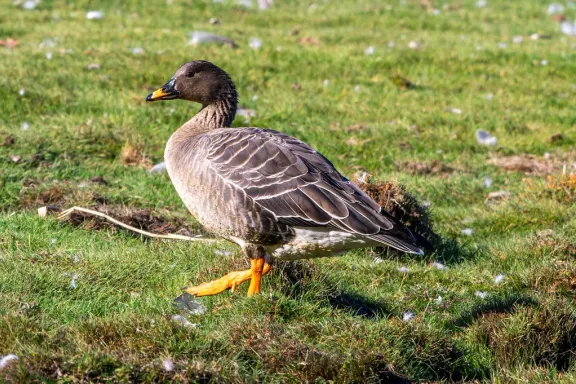
Waterfowl
Bean goose
Anser fabalis
Same genus (Anser)
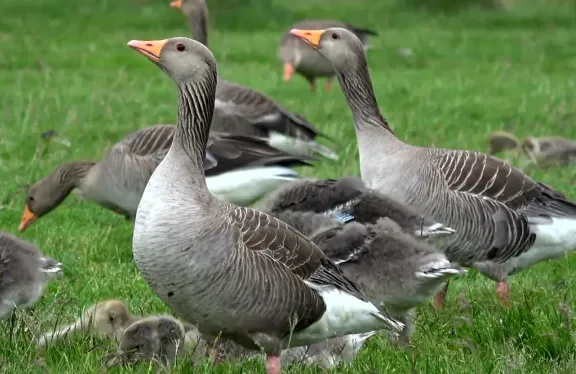
Waterfowl
Greylag goose
Anser anser
Same genus (Anser)
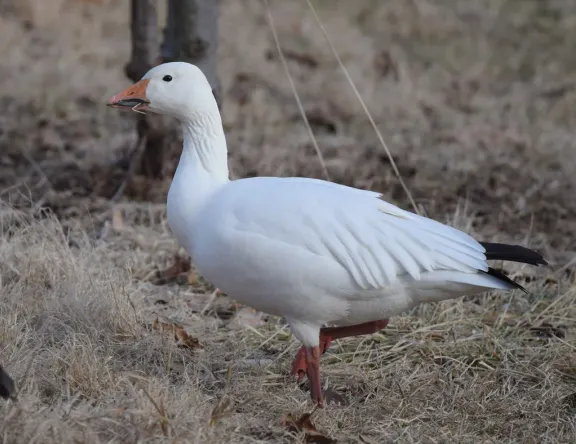
Waterfowl
Snow goose
Anser caerulescens
Same genus (Anser)
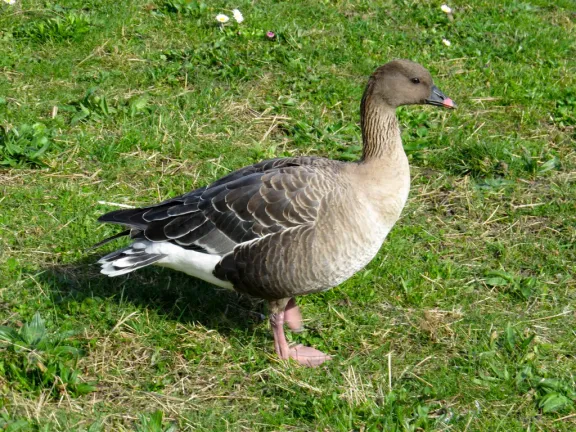
Waterfowl
Pink-footed goose
Anser brachyrhynchus
Same genus (Anser)
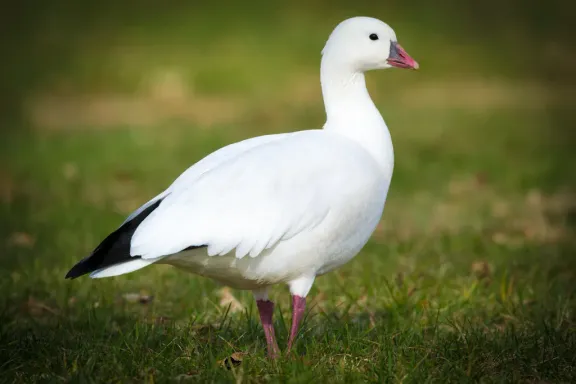
Waterfowl
Ross’s goose
Anser rossii
Same genus (Anser)
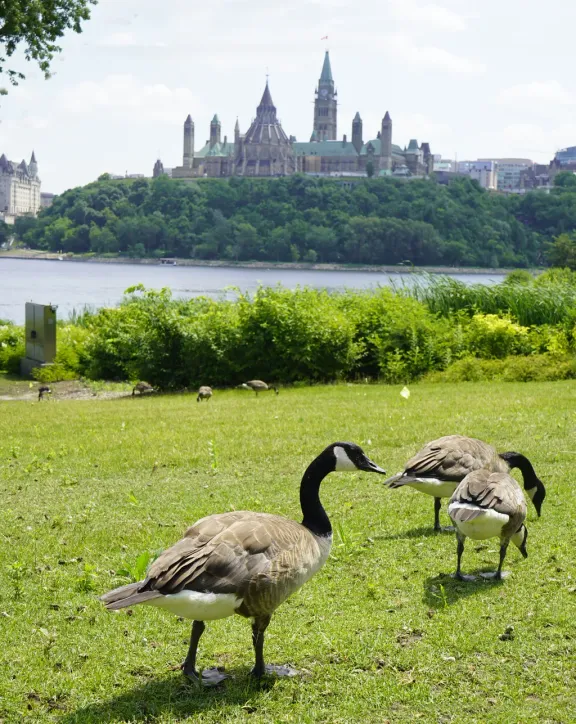
Waterfowl
Canada goose
Branta canadensis
Same subfamily (Anserinae)