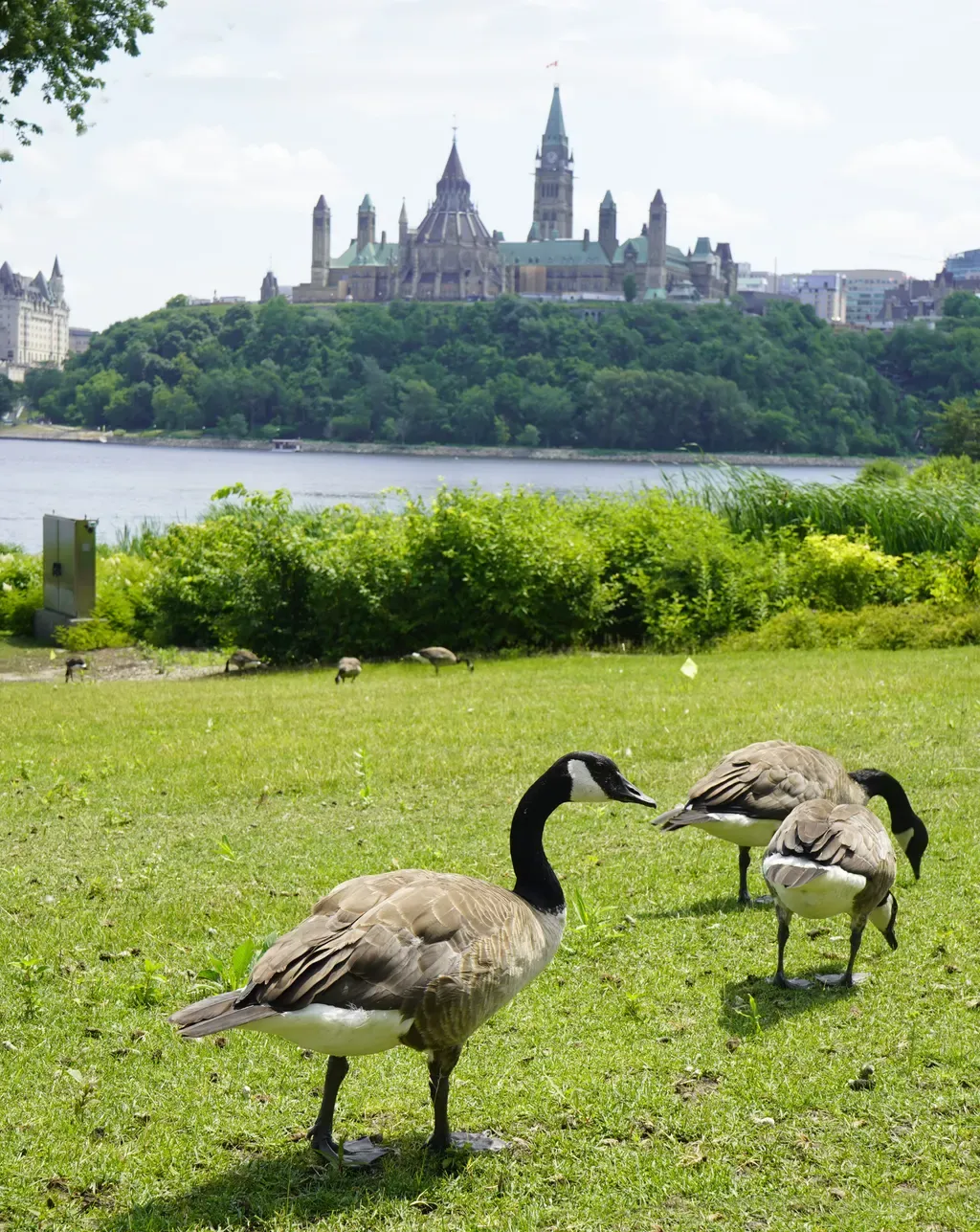
Photo:Pierre5018CC BY-SA 4.0
Waterfowl
Canada goose
Branta canadensis
- Group
- Waterfowl
- Size class
- Small (under 10 kg)
- Family
- Anatidae
Range
- North America
- Europe
Habitat
- Farmland
- Wetland
Range
Countries it is found in
38 countries
- Austria
- Bahamas
- Belgium
- Bermuda
- Bulgaria
- Canada
- Cuba
- Czechia
- Denmark
- Estonia
- Faroe Islands
- Finland
- France
- Germany
- Greenland
- Honduras
- Hungary
- Ireland
- Isle of Man
- Italy
- Latvia
- Liechtenstein
- Luxembourg
- Mexico
Range from:Wikipedia country bird lists — read 2026-08-05
Chapter 01
Overview
The Canada goose (Branta canadensis) is a large goose with a black head and neck, white cheeks, white under the chin and a brown body. It is native to Arctic and temperate North America, turns up on migration across the Atlantic in northern Europe, and has been introduced to France, the United Kingdom, Ireland, Scandinavia, New Zealand, Japan and Chile. Branta is a Latinised form of Old Norse Brandgás, 'burnt (black) goose'; canadensis is Neo-Latin for 'from Canada'. The first citation of 'Canada goose' in the Oxford English Dictionary dates to 1772.
Chapter 02
Identification
The black head and neck with a white chinstrap separate the Canada goose from every other goose except the cackling goose and the barnacle goose — and the barnacle has a black breast and grey rather than brownish body plumage. Some birds show a pepper-spotted or brown neck with brown plumage, assumed to be a leucistic variety. Several subspecies have been listed, from the Atlantic race through the interior, giant, Moffitt's, Vancouver and dusky forms.
Chapter 03
Behaviour
Like most geese the Canada goose is naturally migratory, wintering across most of the United States, and the calls from large V-formations overhead are what mark the turn of spring and autumn. Migration routes have shifted in some areas as habitat and food sources changed. It is primarily herbivorous, though it sometimes takes small insects and fish. On land it feeds on a variety of grasses, grasping a blade with the bill and tearing it with a jerk of the head, and takes beans and grains such as wheat, rice and corn where they are available.
Chapter 04
Hunting
Non-migratory Canada goose populations have been rising in North America. The bird is now frequently found on golf courses and in urban parks that would previously have held migratory geese only rarely, and its adaptability to human-altered ground has made it one of the commonest waterfowl species on the continent.

On the table
Meat & cooking
Table grade 5 of 55/5
- Sold as meat in a legal market
- Has a named traditional dish
- Published way to handle and cook it
- Eaten in more than one country
- No known health advisory
Traditional preparations
- Roast goose
- Wild goose is roasted whole or the breast taken off and cooked rare; the bird is far leaner than a farmed goose and dries out quickly. Roast goose — Wikipedia
- Confit and rillettes
- Legs and tougher cuts are traditionally preserved in fat, which suits a bird that has flown a long way. Confit — Wikipedia
Sources
Sources: Canada goose — Wikipedia — read 2026-08-05
Cross-reference
Related species
Its closest relatives in the compendium, nearest kinship first.
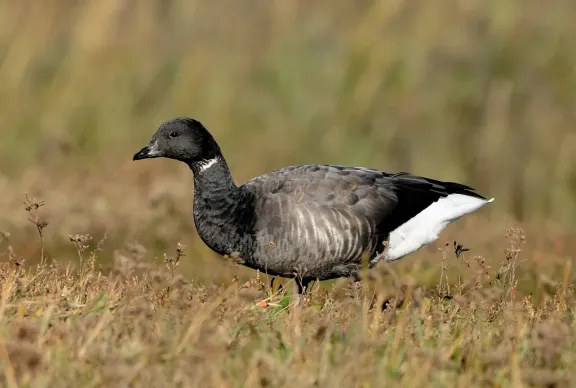
Waterfowl
Brant
Branta bernicla
Same genus (Branta)
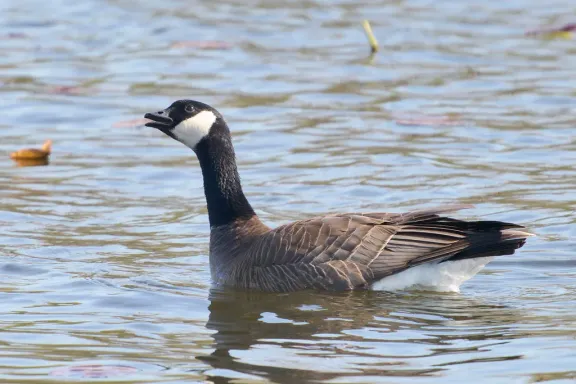
Waterfowl
Cackling goose
Branta hutchinsii
Same genus (Branta)
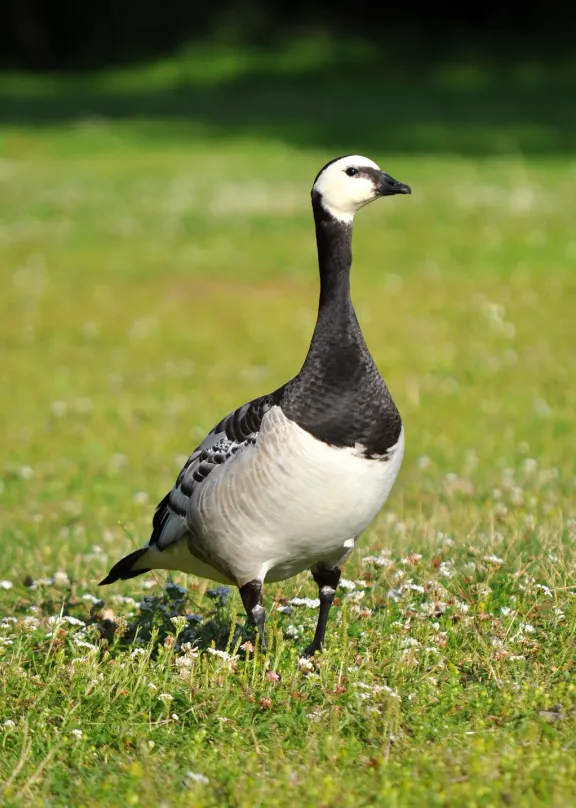
Waterfowl
Barnacle goose
Branta leucopsis
Same genus (Branta)
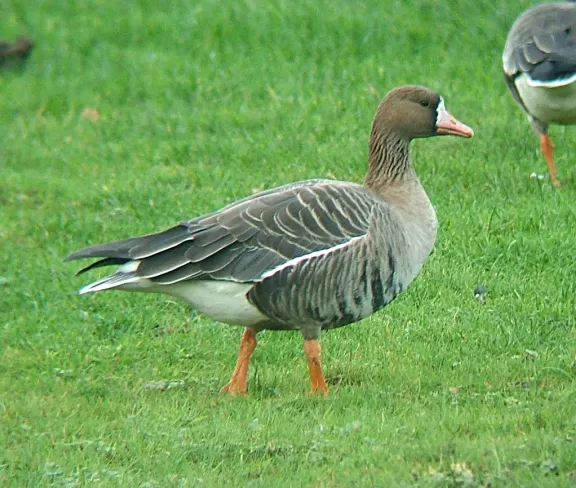
Waterfowl
Greater white-fronted goose
Anser albifrons
Same subfamily (Anserinae)
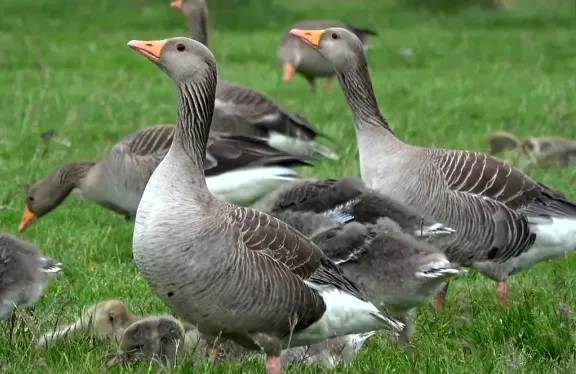
Waterfowl
Greylag goose
Anser anser
Same subfamily (Anserinae)
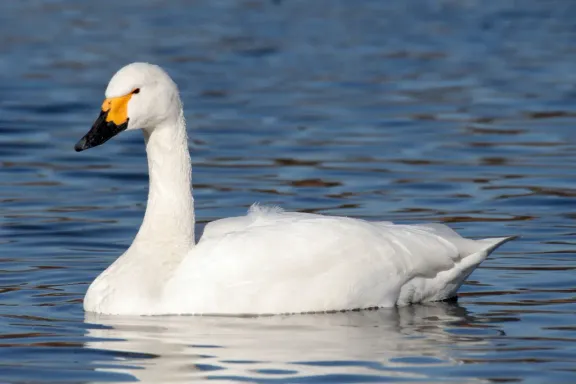
Waterfowl
Tundra swan
Cygnus columbianus
Same subfamily (Anserinae)