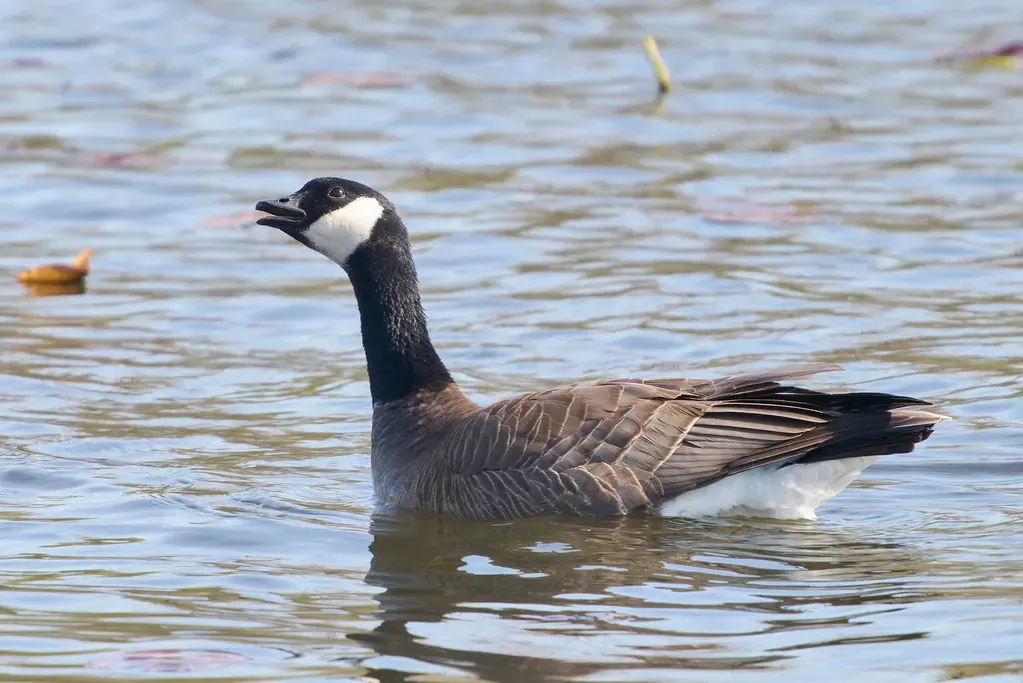
Photo:Paul DaneseCC BY-SA 4.0
Waterfowl
Cackling goose
Branta hutchinsii
- Group
- Waterfowl
- Size class
- Small (under 10 kg)
- Family
- Anatidae
Range
- North America
- Arctic
Habitat
- Farmland
Range
Countries it is found in
7 countries
- Belgium
- Canada
- Greenland
- Japan
- Mexico
- Sweden
- United States
Range from:Wikipedia country bird lists, GBIF occurrence records — read 2026-08-05
Chapter 01
Overview
The cackling goose (Branta hutchinsii) is a small North American black goose, named for the cackling calls of its flocks. Long treated as part of the Canada goose, it was split off as a species by the American Ornithologists' Union in July 2004, by the British Ornithologists' Union in 2005 and by the Swedish ornithological society's taxonomy committee in January 2007; genetically it turns out to be closer to the barnacle goose than to the Canada goose. The epithet honours Thomas Hutchins of the Hudson's Bay Company. It breeds in northern Canada and Alaska, on the Aleutians and in west Greenland, and winters across much of the United States, locally in western Canada and in northern Mexico. Overhunting and habitat loss in the late 19th and early 20th centuries brought a serious decline; better game laws and habitat protection have restored most populations, though some of the subspecies minima and leucopareia may still be falling, and the Commander and Kuril Islands birds that wintered in Japan were gone by about 1929. The world population is put at 920,000 to 1.4 million. Sweden has a single accepted wild record, at Hjälstaviken in Uppland from 10 April to 15 May 2014.
Chapter 02
Identification
The black head and neck with a white chinstrap separate it from every goose but the larger Canada goose and the similar-sized barnacle goose, which has a black breast and grey rather than brownish body. Compared with the Canada goose it has a proportionally shorter neck and a smaller bill. It measures 63–65 cm, weighs 1.4–2.38 kg and spans 108–111 cm. Up to five subspecies differ in size and plumage. The smallest, minima, weighs about 1.4–1.6 kg and is much smaller than any Canada goose, while hutchinsii reaches 3 kg and matches some Canada geese — the most Canada-like in plumage, with a pale but greyer breast. Leucopareia of the Aleutians has a white neck ring between the black neck and dark breast. The voice is clearly higher than a Canada goose's, squeaky yeek or uriik notes and nasal guwa calls.
Chapter 03
Behaviour
Cackling geese feed mainly on plants, submerging head and neck to reach water plants and sometimes upending like a dabbling duck; in migration and winter flocks gather on fields to eat leftover grain, and they also take a few insects, molluscs and crustaceans. They fly in the familiar V formation, and their passing calls mark the turn of spring and autumn. They nest on the tundra by ponds and streams, on raised ground near water — on the Aleutians on south-facing grassy slopes above the cliffs. The nest is a shallow, open bowl of dry grass, lichen and moss lined with down, holding 2 to 8 eggs incubated for 25–28 days. Because the nest is on the ground, eggs, sitting females and goslings are exposed to foxes and other predators, and both birds of the pair, the gander especially, defend it fiercely, even against passers-by. Pairs may mate for life, up to about 20 years, and families travel with one parent at the front and the other at the back.
Chapter 04
Hunting
In the United States the cackling goose is hunted as a dark goose alongside the Canada goose. In the Atlantic Flyway frameworks for 2026–2027 it shares the special early Canada and cackling goose seasons in September, with a daily bag of 15 geese in the aggregate, and in the regular dark goose seasons cackling and white-fronted geese count within the Canada goose bag. In Alaska's 2026 spring and summer subsistence harvest it is closed only in the Semidi Islands, and lead shot is banned throughout. In Sweden the polargås has no open season. The Hunting Ordinance sets jakttider for the Canada goose, kanadagås, but names no separate season for this species, so it is protected.
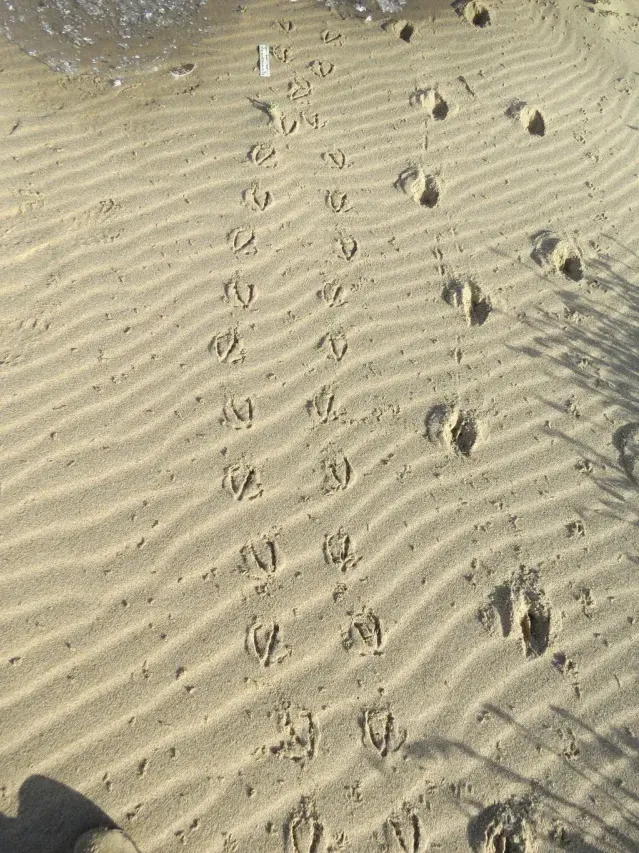
Field data
Tracks
A photograph of real sign left by Cackling goose. Prints vary with gait, ground and how long they have been there — treat this as one example, not a template.
Track photo:Garth HarwoodCC BY
Sources
Sources: Cackling goose — Wikipedia, Polargås — Wikipedia (sv), U.S. Fish & Wildlife Service: General Decision Frameworks for Annual Migratory Game Bird Hunting Seasons — Atlantic Flyway (27 August 2026), U.S. Department of the Interior: Migratory Game Bird Hunting Memorandum 2026–02, 2026–2027 seasons in certain States, U.S. Fish & Wildlife Service: Regulations for the 2026 Alaska Subsistence Spring/Summer Migratory Bird Harvest, Jaktförordning (1987:905) — Sveriges riksdag — read 2026-10-29
Cross-reference
Related species
Its closest relatives in the compendium, nearest kinship first.
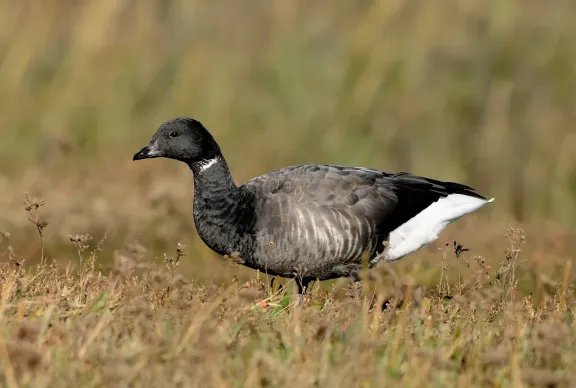
Waterfowl
Brant
Branta bernicla
Same genus (Branta)
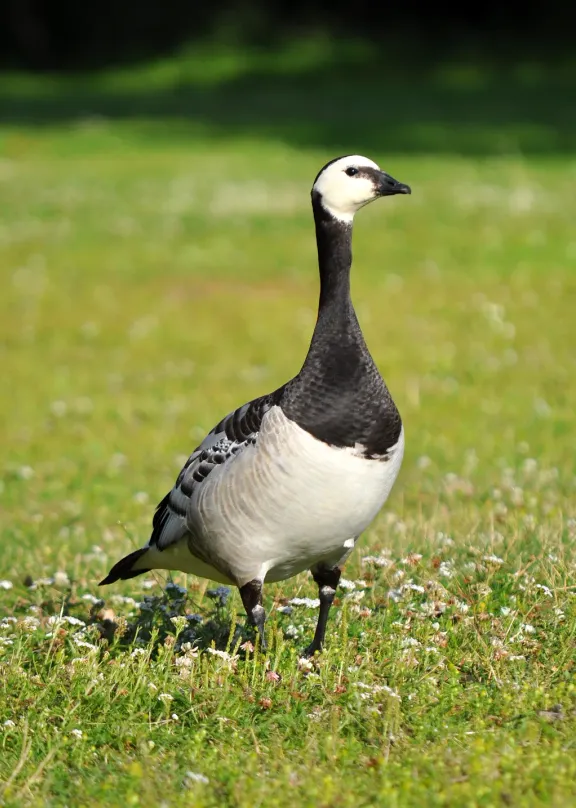
Waterfowl
Barnacle goose
Branta leucopsis
Same genus (Branta)
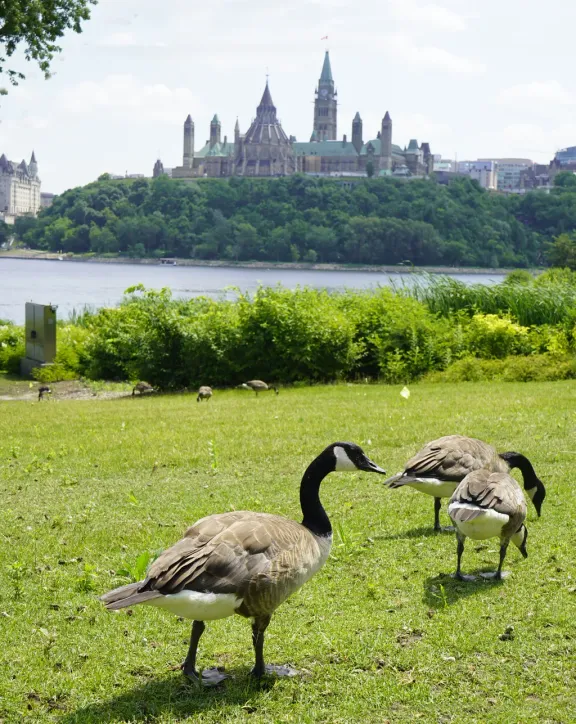
Waterfowl
Canada goose
Branta canadensis
Same genus (Branta)
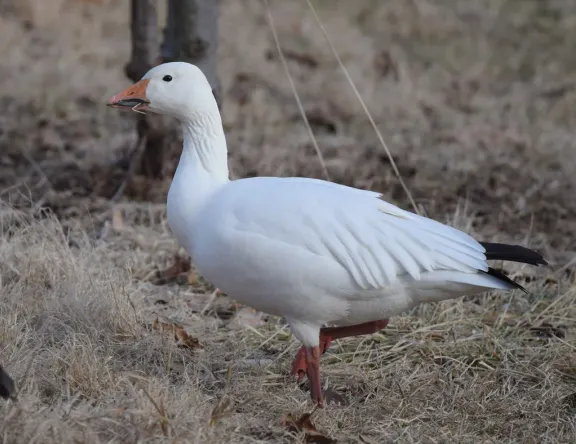
Waterfowl
Snow goose
Anser caerulescens
Same subfamily (Anserinae)
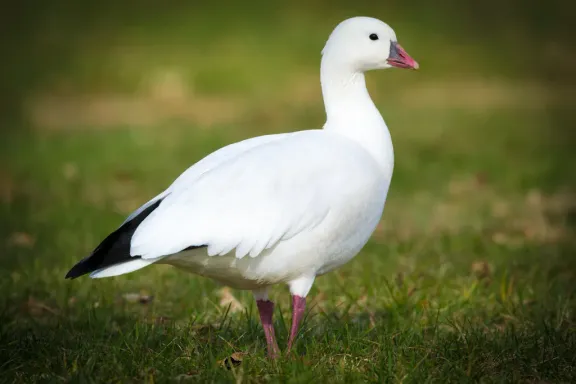
Waterfowl
Ross’s goose
Anser rossii
Same subfamily (Anserinae)
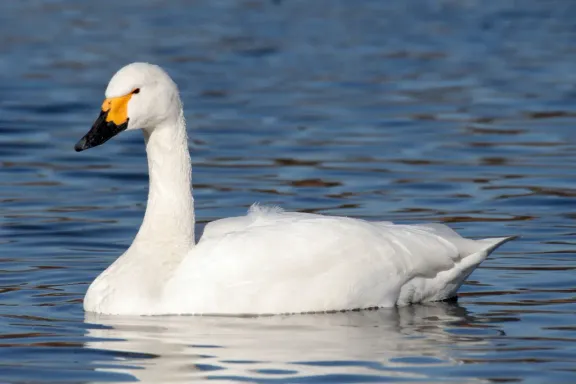
Waterfowl
Tundra swan
Cygnus columbianus
Same subfamily (Anserinae)