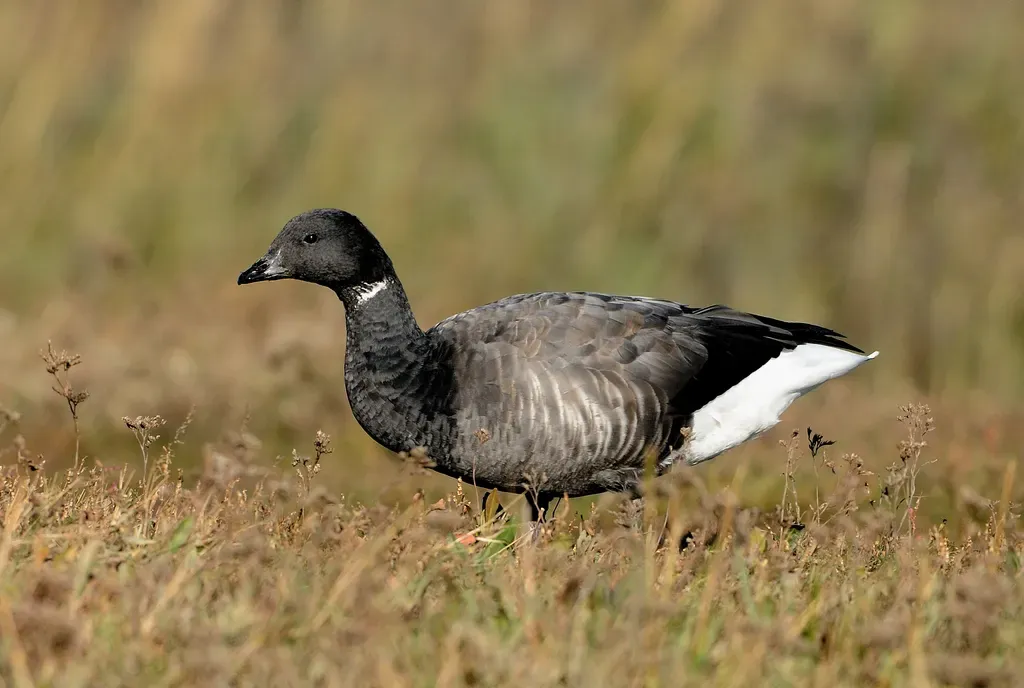
Photo:Kev ChapmanCC BY 2.0
Waterfowl
Brant
Branta bernicla
- Group
- Waterfowl
- Size class
- Small (under 10 kg)
- Family
- Anatidae
Range
- North America
- Europe
- Arctic
Habitat
- Coast
Range
Countries it is found in
37 countries
- Austria
- Belarus
- Belgium
- Bermuda
- Canada
- Cuba
- Czechia
- Denmark
- Estonia
- Faroe Islands
- Finland
- France
- Germany
- Greece
- Greenland
- Guernsey
- Hungary
- Iceland
- Ireland
- Isle of Man
- Italy
- Japan
- Jersey
- Kazakhstan
Range from:Wikipedia country bird lists, GBIF occurrence records — read 2026-08-05
Chapter 01
Overview
The brant or brent goose (Branta bernicla) is a small goose with three subspecies, all breeding on high-Arctic tundra and wintering on temperate sea coasts. Linnaeus described it in 1758 and restricted its type locality to Sweden; Branta is a Latinised form of the Old Norse brandgás, 'burnt goose'. The epithet, Medieval Latin for barnacle, records a myth dating back at least to the twelfth century that the bird hatched from barnacles. Once scarce, the world population grew more than tenfold to 400,000–500,000 by the mid-1980s; the IUCN rates it least concern.
Chapter 02
Identification
A small goose with a short, stubby bill: 55–66 cm long, 106–121 cm across the wings and weighing 0.88–2.2 kg. The undertail is pure white and the black tail is the shortest of any goose. Head and neck are black, with a small white patch on each side of the neck. The dark-bellied nominate race is uniformly dark grey-brown; the pale-bellied B. b. hrota has flanks and belly clearly paler than the back. Its call is a guttural, gurgling 'prrok', from which the Swedish name prutgås comes.
Chapter 03
Behaviour
Almost wholly herbivorous. In winter it was once strictly coastal, feeding on eelgrass and sea lettuce in tidal estuaries; in recent decades it has also moved onto farmland a short way inland, grazing grass and winter cereals. It nests on the ground near water and lays three to five eggs, incubated for 23 to 24 days; the goslings walk, swim and feed within a day. Pairs mate for life and migrate to the winter range as families, the adults defending feeding territory around their young.
Chapter 04
Hunting
The prutgås has no general open season in Sweden's hunting ordinance. It falls under the African-Eurasian Migratory Waterbird Agreement (AEWA). The barnacle myth had a practical consequence: in County Kerry in Ireland, until relatively recently, Catholics could eat the bird on a Friday because it counted as fish.
Field data
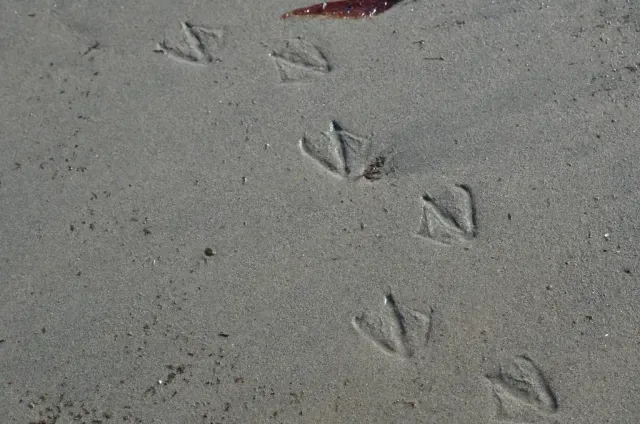
Tracks
A photograph of real sign left by Brant. Prints vary with gait, ground and how long they have been there — treat this as one example, not a template.
Track photo:Liam SteeleCC BY
On the table
Meat & cooking
Table grade 1 of 51/5
- Sold as meat in a legal market
- Has a named traditional dish
- Published way to handle and cook it
- Eaten in more than one country
- No known health advisory
Sources
Sources: Brant (goose) — Wikipedia, Prutgås — Wikipedia (svenska), Jaktförordning (1987:905) — Sveriges riksdag — read 2026-10-29
Cross-reference
Related species
Its closest relatives in the compendium, nearest kinship first.
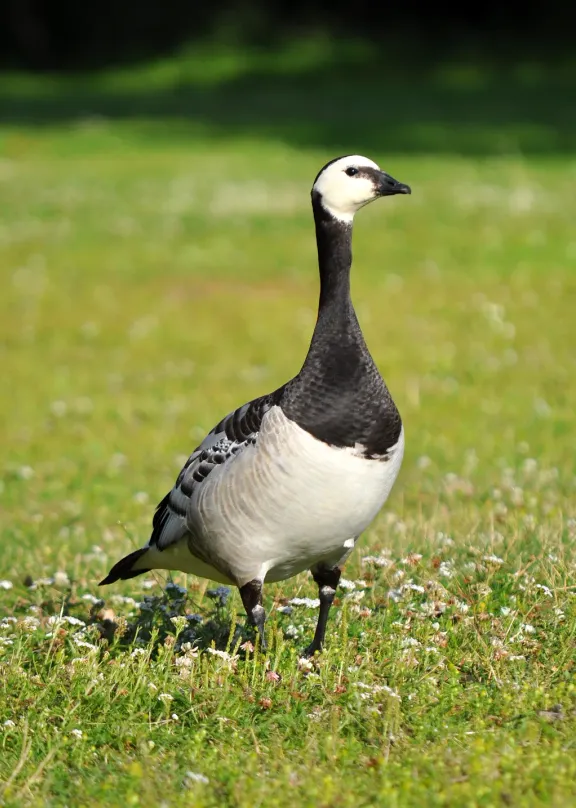
Waterfowl
Barnacle goose
Branta leucopsis
Same genus (Branta)
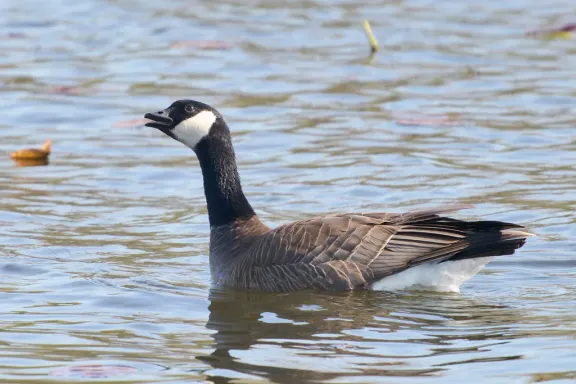
Waterfowl
Cackling goose
Branta hutchinsii
Same genus (Branta)
Waterfowl
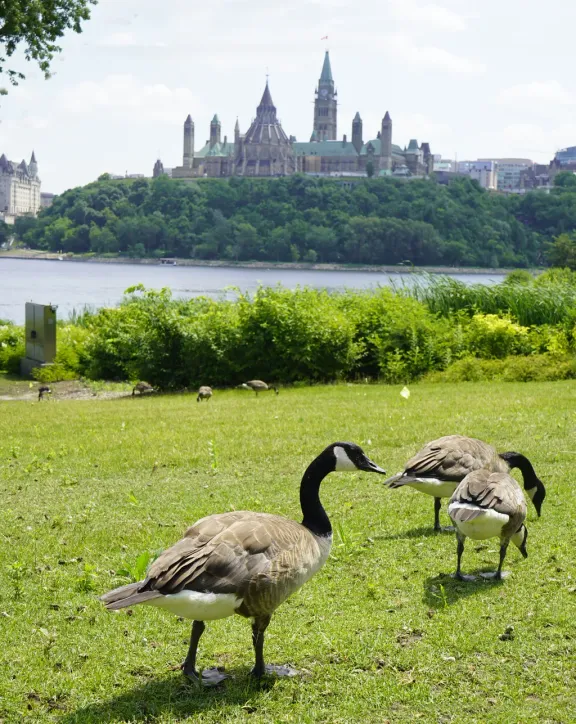
Canada goose
Branta canadensis
Same genus (Branta)
Waterfowl
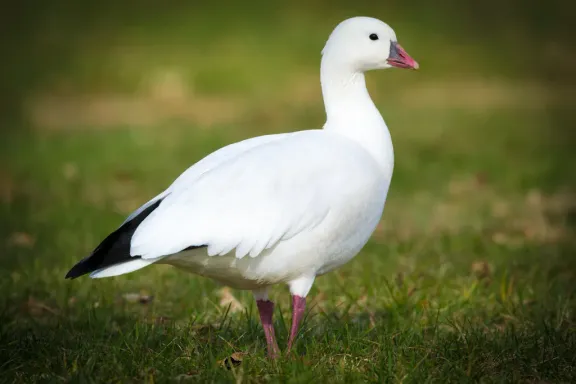
Ross’s goose
Anser rossii
Same subfamily (Anserinae)
Waterfowl
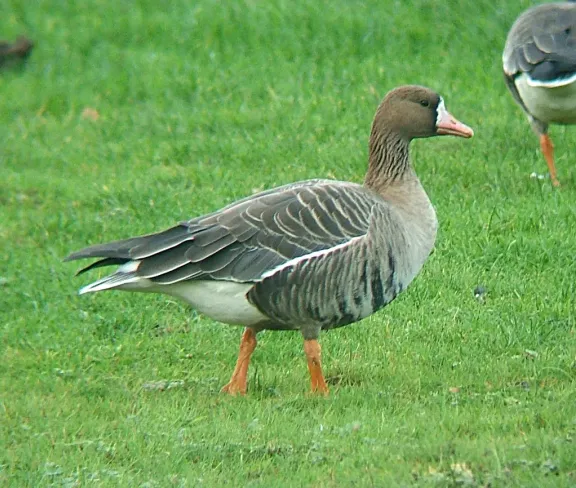
Greater white-fronted goose
Anser albifrons
Same subfamily (Anserinae)
Waterfowl
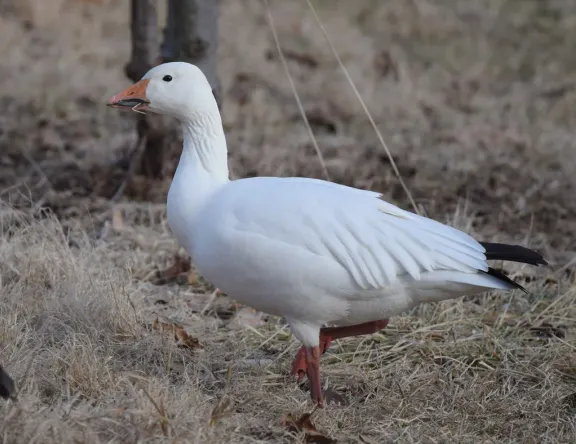
Snow goose
Anser caerulescens
Same subfamily (Anserinae)