Waterfowl
Ross’s goose
Anser rossii
- Group
- Waterfowl
- Size class
- Small (under 10 kg)
- Family
- Anatidae
Range
- North America
- Arctic
Habitat
- Farmland
Range
Countries it is found in
4 countries
- Bermuda
- Canada
- Mexico
- United States
Range from:Wikipedia country bird lists — read 2026-08-05
Chapter 01
Overview
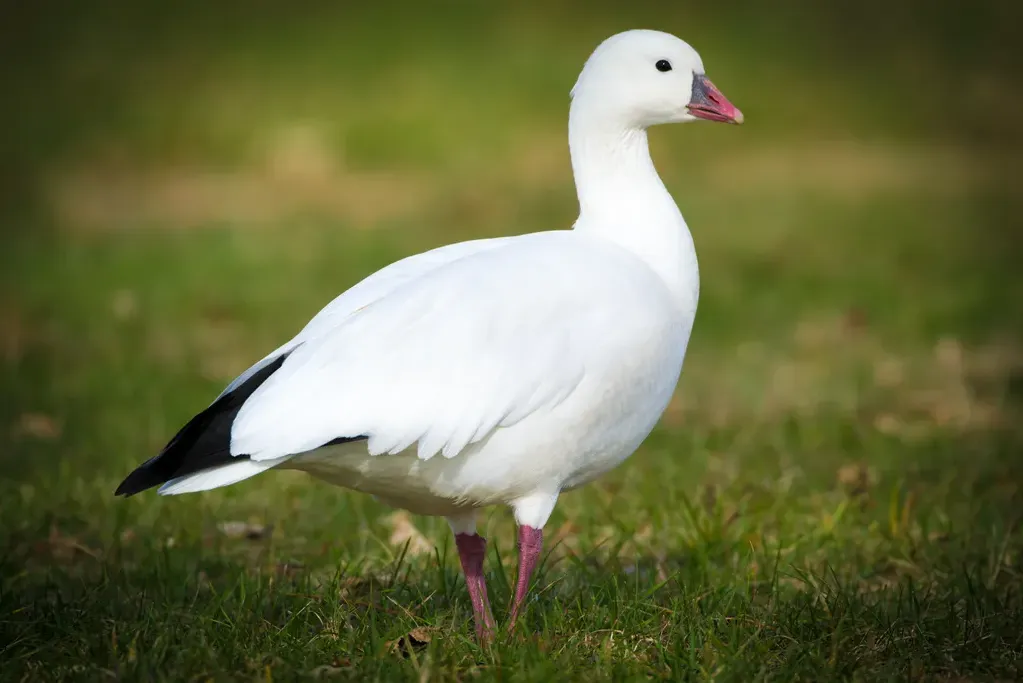
Ross's goose (Anser rossii) is the smallest of the three white geese that breed in North America, a short-necked white goose with black wingtips. It is named after Bernard R. Ross (1827–1874) of the Hudson's Bay Company in the Northwest Territories, though the explorer Samuel Hearne had described it as the 'horned wavey' some 80 years before John Cassin named it. Like the snow goose it was moved from Chen to Anser, a change the International Ornithological Committee adopted in 2016. It breeds on the tundra of the central Canadian Arctic — flat plains, wet meadows and marshy tundra with dwarf birch, willow, sedges and crowberry — and winters far to the south in the southern United States and sometimes northern Mexico. Once thought rare, it fell to a record low of 2,000–3,000 nesting birds in the Queen Maud Gulf in the early 1950s, and has since increased so strongly that the world population is put at 2.1 million adults and the IUCN lists it as least concern. Sweden has close to 20 records, the first at Ottenby on Öland in October 1995, but only one is judged certainly wild: two birds flying past Lindö udde in Blekinge in April 2024, one of them ringed at Cambridge Bay in Canada on 7 August 2017.
Chapter 02
Identification
A white goose with black wingtips, much like a white-morph snow goose but about 40 percent smaller, with a rounded head, a short neck and a short, triangular bill that is small for the body and lacks the snow goose's black 'lips'. The bill base is bluish and carries warty growths that grow more prominent with age. Adults have all-white secondaries, juveniles dark-centred ones, and the legs turn from olive grey in goslings to deep red. A dark 'blue' morph exists but is extremely rare, under 0.01 percent of adults. Males measure 59–64 cm and weigh 1.20–1.57 kg, with a wingspan of 113–116 cm; females are 57–62 cm and 1.07–1.45 kg, on average 6 percent smaller. No subspecies are recognised. The voice resembles a snow goose's but is higher and heard less often.
Chapter 03
Behaviour
Ross's geese are grazers of grasses, sedges and small grains, and often forage in large mixed flocks with snow geese. They leave the Canadian nesting grounds by mid-October, probably as food runs short before the freeze, and start back from mid-April into May. They nest in large colonies on islands in shallow lakes and the neighbouring mainland, building ground nests of twigs, leaves, grass, moss and down. The female lays about four eggs and incubates them for 21–23 days while the gander stands guard, covering the eggs with down when she leaves. Big colonies can damage the vegetation badly by overgrazing. Where Ross's and snow geese breed together, as at La Pérouse Bay, they sometimes hybridise, and the hybrids are fertile.
Chapter 04
Hunting
Market hunting nearly finished the species: shooting and trapping for sale in California markets drove the Queen Maud Gulf colonies to their low in the early 1950s. Hunting Ross's geese was made illegal in the US in 1931, restricted hunting returned once wintering numbers grew, and the bird is protected under the Migratory Bird Treaty Act. Today it is managed together with the snow goose as a 'light goose': since the late 1990s the US and Canada have used liberal seasons and the Light Goose Conservation Order to try to bring both species down to sustainable numbers. In Arkansas the order runs from 1–5 February and 8 February–25 April 2027, with no bag or possession limit and electronic calls and unplugged shotguns allowed. In the Atlantic Flyway Ross's geese fall within the light goose bag of 25 a day with no possession limit. In Sweden the dvärgsnögås has no open season under the Hunting Ordinance and is protected.
Sources
Sources: Ross's goose — Wikipedia, Dvärgsnögås — Wikipedia (sv), Snow goose — Wikipedia, Arkansas Game and Fish Commission: Light Goose Conservation Order, U.S. Fish & Wildlife Service: General Decision Frameworks for Annual Migratory Game Bird Hunting Seasons — Atlantic Flyway (27 August 2026), U.S. Department of the Interior: Migratory Game Bird Hunting Memorandum 2026–02, 2026–2027 seasons in certain States, Jaktförordning (1987:905) — Sveriges riksdag — read 2026-10-29
Cross-reference
Related species
Its closest relatives in the compendium, nearest kinship first.
Waterfowl
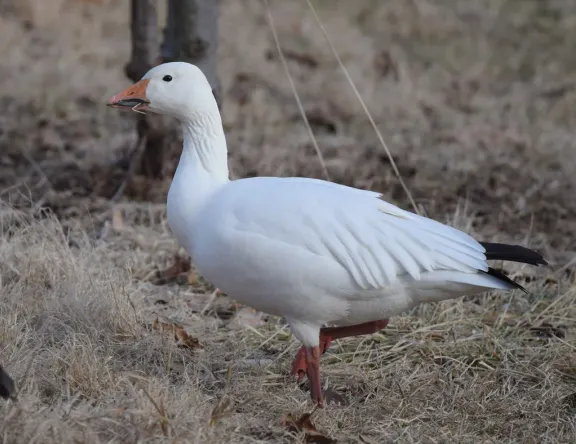
Snow goose
Anser caerulescens
Same genus (Anser)
Waterfowl
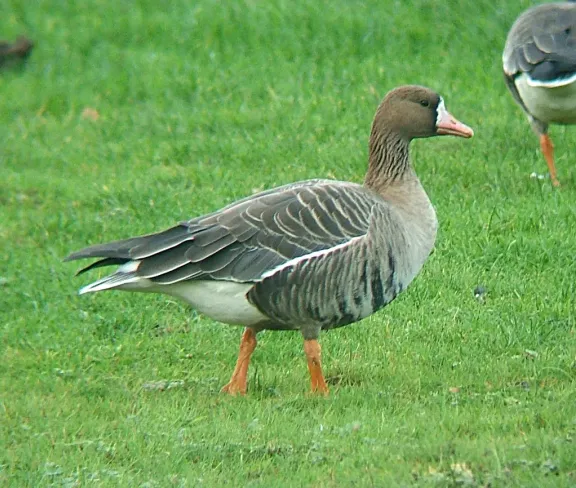
Greater white-fronted goose
Anser albifrons
Same genus (Anser)
Waterfowl
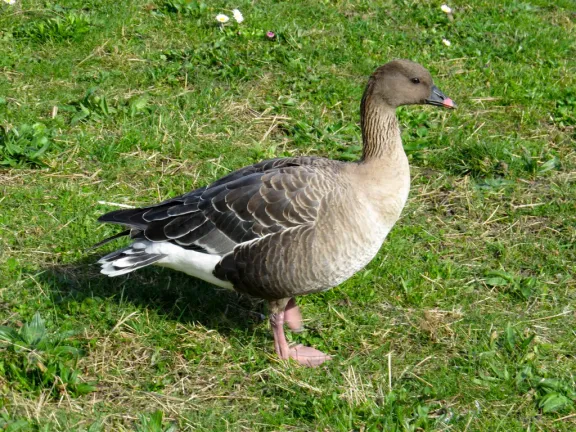
Pink-footed goose
Anser brachyrhynchus
Same genus (Anser)
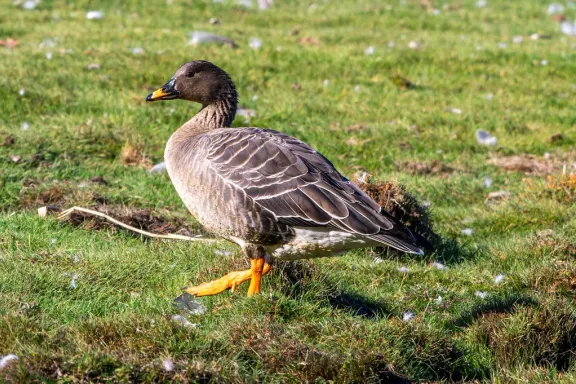
Waterfowl
Bean goose
Anser fabalis
Same genus (Anser)
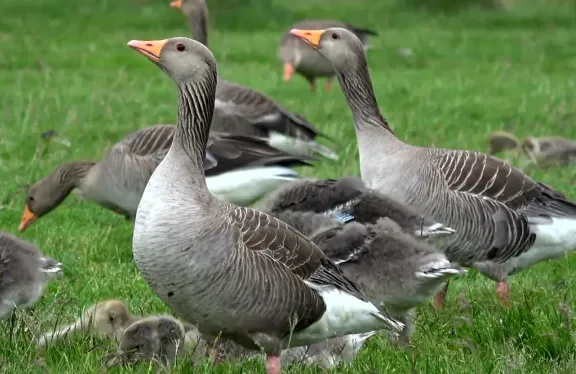
Waterfowl
Greylag goose
Anser anser
Same genus (Anser)
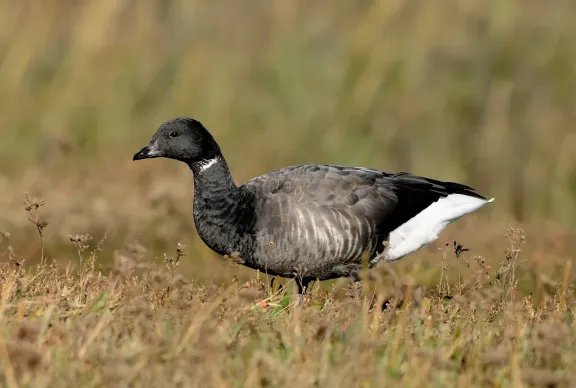
Waterfowl
Brant
Branta bernicla
Same subfamily (Anserinae)