Waterfowl
Snow goose
Anser caerulescens
- Group
- Waterfowl
- Size class
- Small (under 10 kg)
- Family
- Anatidae
Range
- North America
- Arctic
Habitat
- Farmland
- Wetland
Range
Countries it is found in
12 countries
- Bahamas
- Bermuda
- Canada
- Colombia
- Cuba
- Faroe Islands
- Greenland
- Haiti
- Mexico
- Netherlands
- Russia
- United States
Range from:Wikipedia country bird lists — read 2026-08-05
Chapter 01
Overview
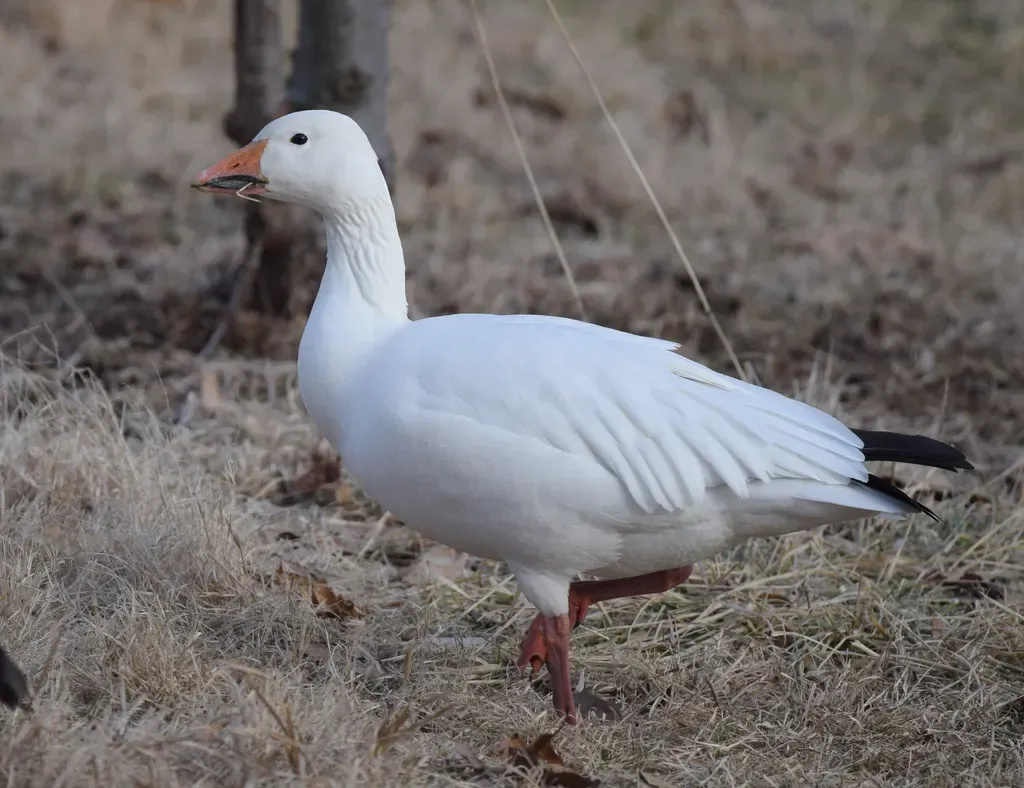
The snow goose (Anser caerulescens) is a North American goose named for its usually white plumage; a dark morph, the 'blue goose', occurs alongside it. Linnaeus named it Anas caerulescens, 'bluish', in 1758 from George Edwards' 'blue-winged goose', drawn from a Hudson Bay specimen; it was later placed in Chen and is now in the grey-goose genus Anser, as sister species to Ross's goose. Two subspecies are recognised: the lesser snow goose, breeding in north-east Siberia, northern Alaska and north-west Canada and wintering in the southern US, northern Mexico and Japan, and the larger greater snow goose of north-east Canada and north-west Greenland, which winters in the north-eastern US. Numbers have exploded. The breeding population of lesser snow geese exceeds 5 million, up more than 300 percent since the mid-1970s and growing over five percent a year, probably because the birds shifted from coastal marshes to farmland in the 20th century. Their breeding tundra around Hudson Bay and their saltmarsh wintering grounds are now severely degraded, harming other species. In Sweden snow geese are seen regularly, but no record has been judged certainly wild; most European birds are thought to be escapes from collections.
Chapter 02
Identification
The white morph is all white except for black wingtips; the blue morph is bluish grey with only the head, neck and tail tip white, and immature blues are drab slate grey. Both have rose-red legs and feet and a pink bill with black cutting edges, the black 'grin patch' that separates them from white farmyard geese and from the smaller Ross's goose. Feeding birds often have rust-stained heads from the soil. They are very vocal and can be heard more than a mile away. The lesser snow goose stands 64–79 cm and weighs 2.05–2.70 kg; the greater averages about 3.2 kg and 79 cm and can weigh 4.5 kg, and both span 135–165 cm. The two morphs interbreed: the dark colour comes from a single dominant gene, and young birds tend to choose a mate coloured like their parents.
Chapter 03
Behaviour
Outside the nesting season snow geese feed in flocks, on leftover grain in winter, and they migrate in huge flocks, stopping at traditional staging areas in spectacular numbers. In spring they fly very high along narrow corridors, more than 4,800 km from the wintering grounds to the tundra. Lesser snow geese travel the Central, Mississippi and Pacific flyways; the greater snow goose uses the Atlantic Flyway. Pairs usually form in the second year and start breeding in the third, and females return to breed where they hatched. They nest in colonies from late May, a down-lined hollow on high ground holding three to five eggs, incubated by the female for 22–25 days; the goslings leave the nest within hours, fly at 42–50 days and stay with the family until two or three years old. Arctic foxes and skuas are the main nest predators, and geese nesting near snowy owls or rough-legged hawks do better. Bald eagles readily attack wintering geese.
Chapter 04
Hunting
Since the late 1990s the US and Canada have tried to bring lesser snow and Ross's geese down to sustainable numbers through hunting. The Light Goose Conservation Order was established in 1997 and federally mandated in 1999; higher bag limits, longer seasons and new methods have all been introduced, without reducing the overall population. In Arkansas the order runs from 1–5 February and 8 February–25 April 2027 for snow, blue and Ross's geese, with no bag or possession limit, electronic calls and unplugged shotguns allowed and shooting from half an hour before sunrise to half an hour after sunset. Virginia will not offer the order in 2026–2027, though its regular light goose season is open. In the Atlantic Flyway the regular light goose season may fall between 1 October and 10 March, up to 107 days in three segments, with a daily bag of 25 and no possession limit; 'light geese' covers lesser and greater snow geese, blue geese and Ross's geese. The snow goose is also open in Alaska's 2026 subsistence harvest. In Sweden the snögås has no open season under the Hunting Ordinance, so it is protected.
Field data
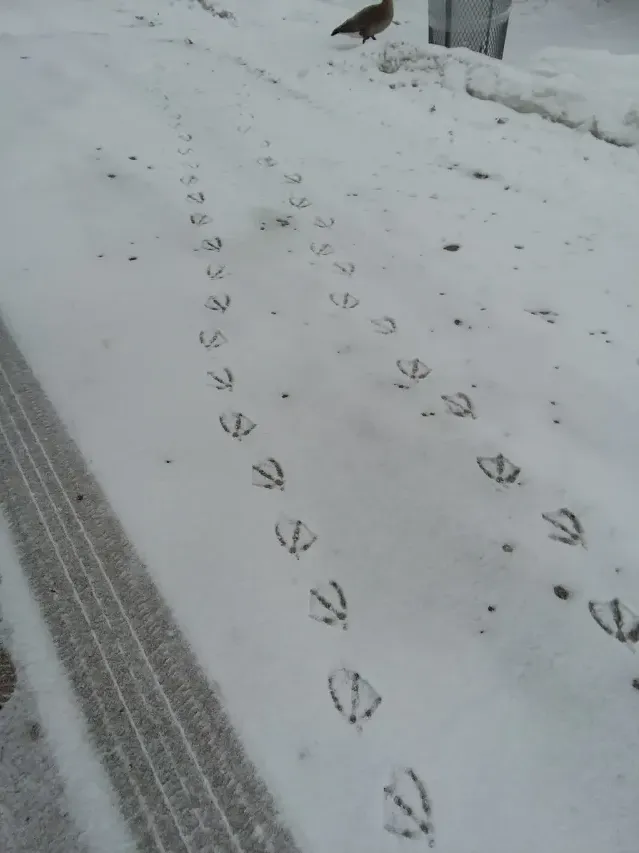
Tracks
A photograph of real sign left by Snow goose. Prints vary with gait, ground and how long they have been there — treat this as one example, not a template.
Track photo:Ellie308CC BY-SA 4.0
Sources
Sources: Snow goose — Wikipedia, Snögås — Wikipedia (sv), Arkansas Game and Fish Commission: Light Goose Conservation Order, Virginia Department of Wildlife Resources: Light Goose Conservation Order, U.S. Fish & Wildlife Service: General Decision Frameworks for Annual Migratory Game Bird Hunting Seasons — Atlantic Flyway (27 August 2026), U.S. Department of the Interior: Migratory Game Bird Hunting Memorandum 2026–02, 2026–2027 seasons in certain States, U.S. Fish & Wildlife Service: Regulations for the 2026 Alaska Subsistence Spring/Summer Migratory Bird Harvest, Jaktförordning (1987:905) — Sveriges riksdag — read 2026-10-29
Cross-reference
Related species
Its closest relatives in the compendium, nearest kinship first.
Waterfowl
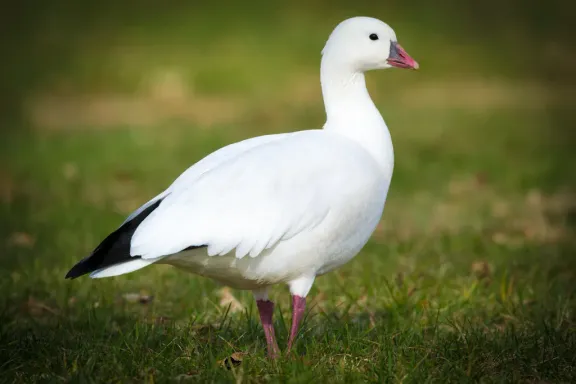
Ross’s goose
Anser rossii
Same genus (Anser)
Waterfowl
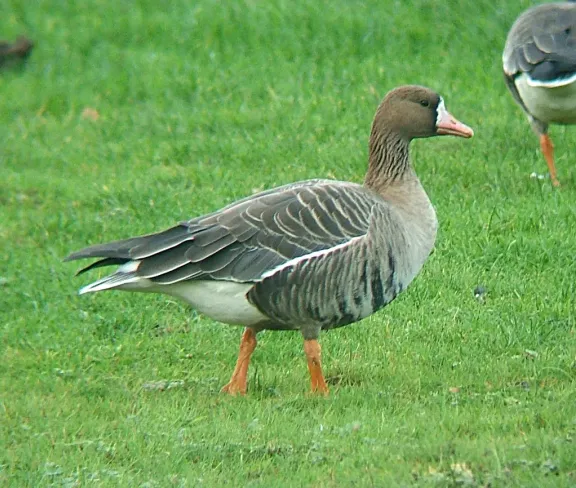
Greater white-fronted goose
Anser albifrons
Same genus (Anser)
Waterfowl
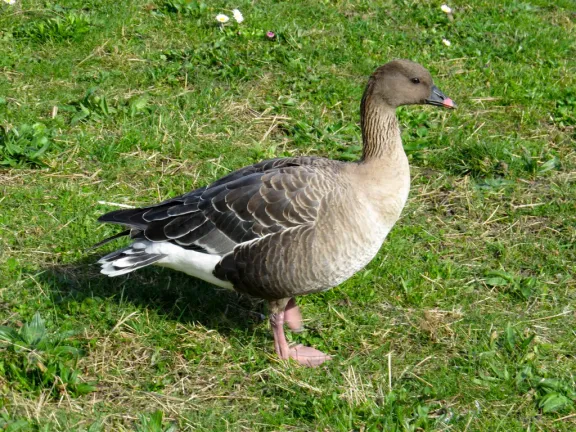
Pink-footed goose
Anser brachyrhynchus
Same genus (Anser)
Waterfowl
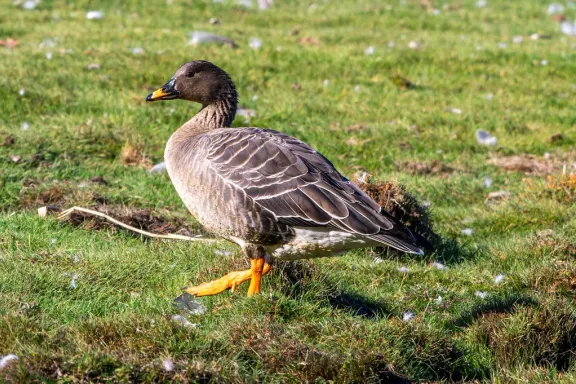
Bean goose
Anser fabalis
Same genus (Anser)
Waterfowl
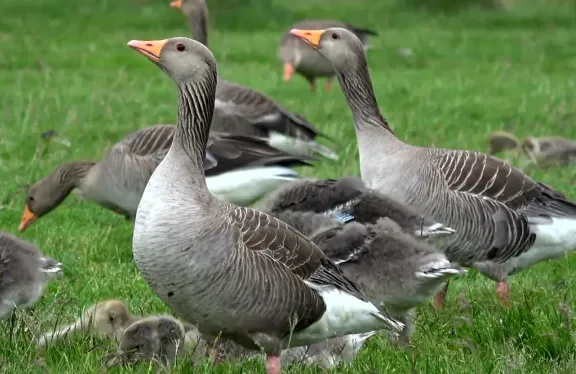
Greylag goose
Anser anser
Same genus (Anser)
Waterfowl
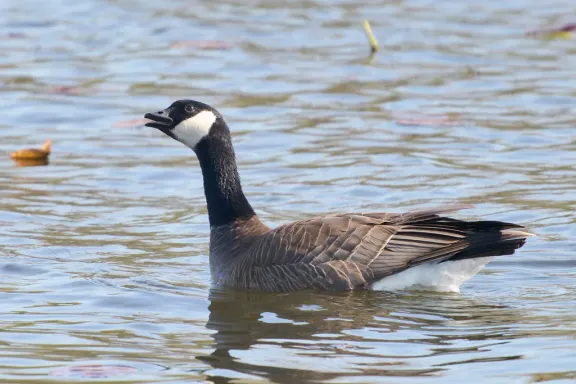
Cackling goose
Branta hutchinsii
Same subfamily (Anserinae)