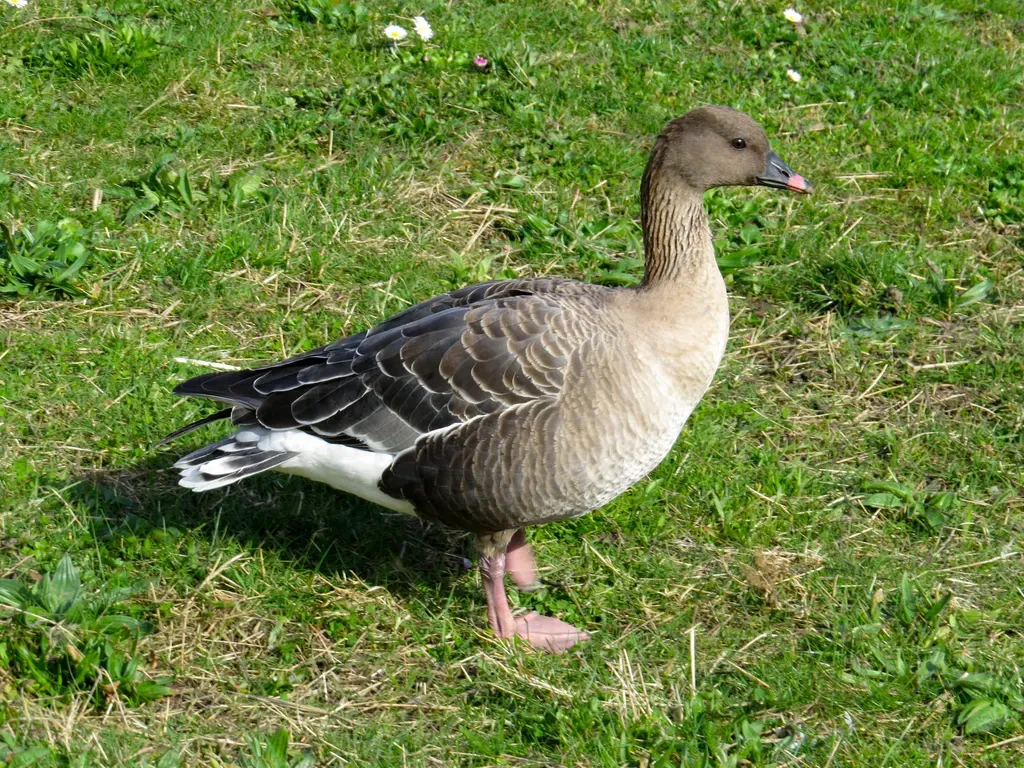
Photo:MPFCC BY-SA 4.0
Waterfowl
Pink-footed goose
Anser brachyrhynchus
- Group
- Waterfowl
- Size class
- Small (under 10 kg)
- Family
- Anatidae
Range
- Europe
- Arctic
Habitat
- Farmland
Range
Countries it is found in
23 countries
- Austria
- Belgium
- Denmark
- Estonia
- Faroe Islands
- Finland
- France
- Germany
- Greenland
- Iceland
- Ireland
- Isle of Man
- Italy
- Netherlands
- Norway
- Poland
- Russia
- Serbia
- Spain
- Svalbard & Jan Mayen
- Sweden
- United Kingdom
- United States
Range from:Wikipedia country bird lists — read 2026-08-05
Chapter 01
Overview
The pink-footed goose (Anser brachyrhynchus) breeds in eastern Greenland, Iceland, Svalbard and, recently, Novaya Zemlya, and winters in north-west Europe. Brachyrhynchus is Greek for 'short bill'. Its closest relative is the larger taiga bean goose. There are two largely separate populations: Greenland and Iceland birds winter in Britain and Ireland, Svalbard birds in the Netherlands and Denmark. The Novaya Zemlya colony was founded within ten years by Svalbard birds, one of the most dramatic climate-driven range shifts known in a migratory bird.
Chapter 02
Identification
A medium-sized goose, 60–75 cm long with a 135–170 cm wingspan and weighing 1.8–3.4 kg. The short bill is bright pink in the middle with a black base and tip — the pattern of the tundra bean goose, but pink where that species is orange — and the feet are pink. The body is mid grey-brown, the head and neck a richer, darker brown, the rump and vent white, and the grey tail broadly tipped white. The pale bluish-grey upperwing recalls a greylag's. It is very vocal in flight.
Chapter 03
Behaviour
It nests on cliffs near glaciers, out of reach of Arctic foxes, or on islets in lakes. Three to five eggs are incubated for 25–28 days, and the goslings walk with their parents to the nearest lake, fledging after about 56 days. Southbound migration runs from mid-September to early October, northbound from mid-April to early May. The diet is almost wholly vegetable. In winter huge flocks graze oilseed rape, sugar beet, potatoes and grasses; the damage can be extensive, though gleaning harvest leftovers also curbs crop disease.
Chapter 04
Hunting
Numbers have risen spectacularly over the last fifty years, largely because of increased protection from shooting on the wintering grounds: birds wintering in Britain and Ireland grew from 30,000 in 1950 to 292,000 in October 2004. In Sweden the spetsbergsgås has no general open season in the hunting ordinance.
Sources
Sources: Pink-footed goose — Wikipedia, Spetsbergsgås — Wikipedia (svenska), Jaktförordning (1987:905) — Sveriges riksdag — read 2026-10-29
Cross-reference
Related species
Its closest relatives in the compendium, nearest kinship first.
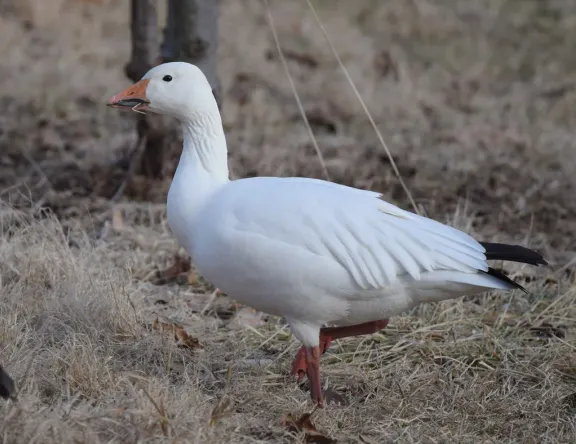
Waterfowl
Snow goose
Anser caerulescens
Same genus (Anser)
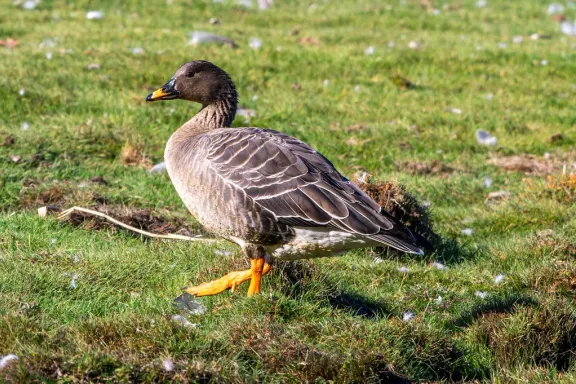
Waterfowl
Bean goose
Anser fabalis
Same genus (Anser)
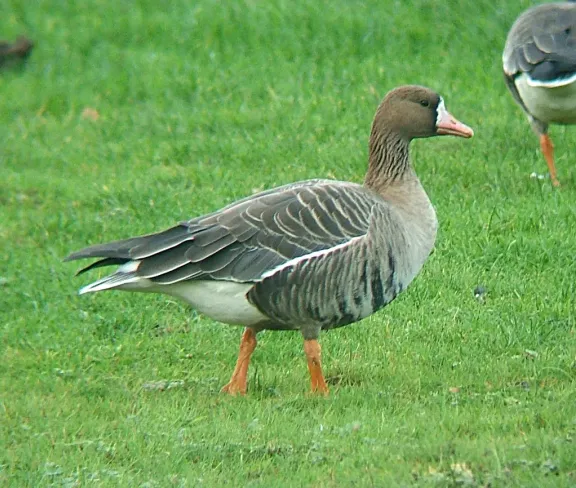
Waterfowl
Greater white-fronted goose
Anser albifrons
Same genus (Anser)
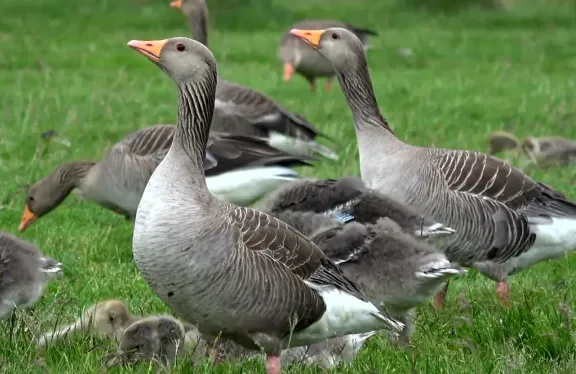
Waterfowl
Greylag goose
Anser anser
Same genus (Anser)
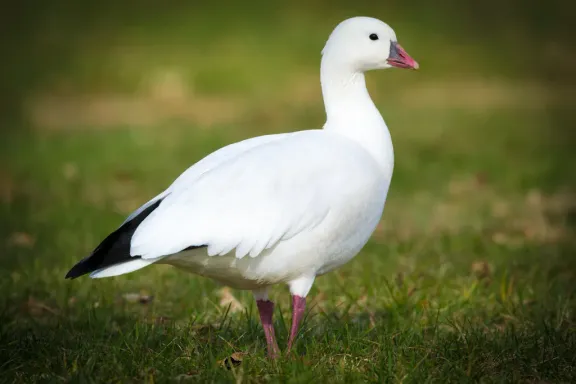
Waterfowl
Ross’s goose
Anser rossii
Same genus (Anser)
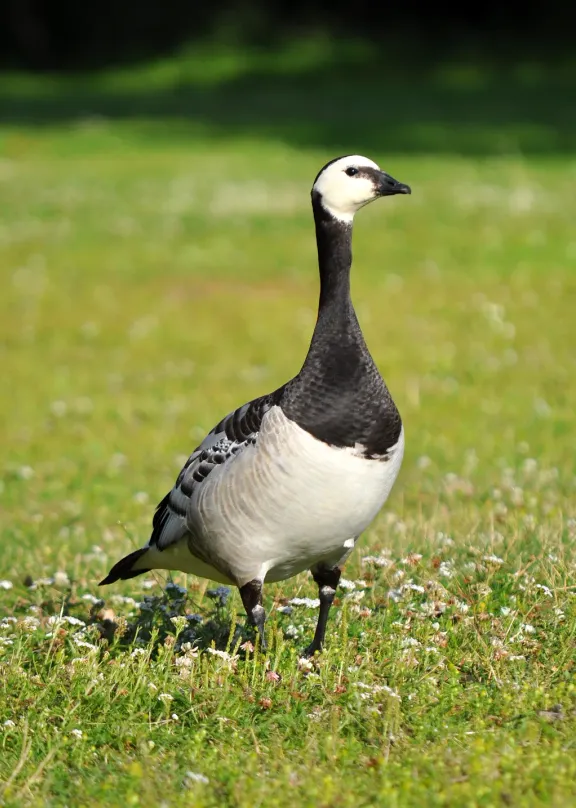
Waterfowl
Barnacle goose
Branta leucopsis
Same subfamily (Anserinae)