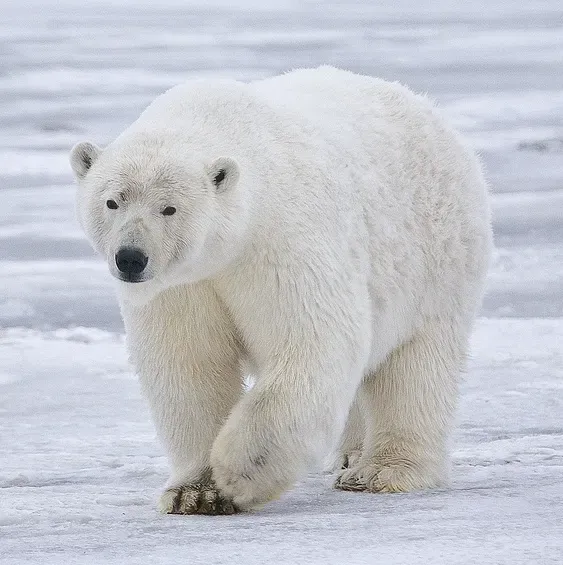
Photo:Alan WilsonCC BY-SA 3.0
Predators & furbearers
Polar bear
Ursus maritimus
- Group
- Predators & furbearers
- Size class
- Giant (300 kg+)
- Family
- Ursidae
Range
- Arctic
- North America
Habitat
- Tundra
- Coast
Range
Countries it is found in
6 countries
- Canada
- Greenland
- Norway
- Russia
- Svalbard & Jan Mayen
- United States
Range from:ASM Mammal Diversity Database, GBIF occurrence records — read 2026-08-05
Chapter 01
Overview
The polar bear (Ursus maritimus) is the largest living bear and land carnivore, a close relative of the brown bear that can still interbreed with it. It lives on the sea ice of the Arctic and is counted a marine mammal for its dependence on the sea: its range takes in Greenland, Canada, Alaska, Russia and Svalbard, south to James Bay and Newfoundland and Labrador, and it has been recorded within 25 km of the North Pole. Biologists divide it into at least 18 subpopulations. A 14,000-year-old polar bear femur found in a marl pit on Kullaberg in Skåne in 1852 suggests the species reached southern Sweden at the end of the last glaciation; in modern times stray bears have come as far south as Finnmark, where an emaciated young male was shot on Lille Ekkerøy in 1953. The IUCN lists the polar bear as vulnerable, with 22,000 to 31,000 animals, and names climate change, pollution and energy development as its main threats. Shrinking sea ice drives bears ashore before they have fattened, cuts their access to seals and brings more of them into conflict with people. It has been listed as threatened under the US Endangered Species Act since 2008 and as of special concern in Canada since 1991.
Chapter 02
Identification
Males are generally 200–250 cm long and weigh 300–800 kg; females are much smaller, 180–200 cm and 150–300 kg, though a fattened pregnant female can reach 500 kg. Adults stand 130–160 cm at the shoulder, and the heaviest on record, a male shot at Kotzebue Sound in Alaska in 1960, reportedly weighed 1,002 kg. Next to a brown bear it is slimmer, with a narrower, flatter skull, a longer neck, a lower shoulder hump and a curved 'Roman nose'. The fur is white to yellowish — the hairs carry no pigment, and their hollow, transparent guard hairs scatter light — over black skin and a fat layer 5–10 cm thick. The paws are large, the front ones broader than the back, with hairy soles for grip on snow and ice and small, sharp, hooked claws.
Chapter 03
Behaviour
The polar bear is the most carnivorous of bears and lives mainly on ringed seals, eating chiefly the blubber; it also takes bearded and harp seals, young walruses, belugas, narwhals, birds, eggs and carrion. It stalks seals hauled out on the ice with its head held low and then charges, waits at breathing holes and ice edges, swims up under seals on floes, and in spring breaks into the snow lairs of ringed seal pups. It walks and gallops but does not trot, reaches about 40 km/h at a run, and swims at up to 6 km/h, on average for 3.4 days and 154 km at a time. Adults are solitary apart from mothers with cubs and mating pairs, though males on land may travel and rest together. Mating takes place on the sea ice between March and May; between August and October the pregnant female digs a maternity den in snow or earth, and only she hibernates. She usually bears two cubs, which stay with her for up to two and a half years. From 1870 to 2014 there were about 73 recorded attacks on people, 20 of them fatal, most by hungry subadult males.
Chapter 04
Hunting
Polar bears were hunted at least 8,000 years ago, and before firearms Arctic peoples took them with lances, bows and dogs, sometimes from boats or at the den, using the fur, meat, fat, tendons, bones and teeth. Commercial hunting followed: Russia traded polar bear goods from 1556, about 22,000 bears were killed on Svalbard from the 1870s to the 1970s, and the Hudson's Bay Company is estimated to have sold 15,000 coats. In 1973 Canada, Denmark for Greenland, the Soviet Union, Norway and the US signed the Agreement on the Conservation of Polar Bears, which banned most hunting but allowed Indigenous hunting by traditional methods. In Alaska, sport hunting in the 1950s and 1960s helped drive numbers down, and since the Marine Mammal Protection Act of 1972 only Alaska Natives may hunt polar bears, for subsistence; the meat is eaten and the fur made into clothing and blankets. In Canada the right to harvest belongs to Indigenous peoples under their land claims, with quotas in most regions, and every human-caused death — subsistence, defence of life, accidents, poaching — counts against the regional quota. In Nunavut and the Northwest Territories a community may give some of its tags to non-Indigenous hunters on Inuit-guided hunts by dog sled, under 10 percent of the harvest in recent years. Greenland sets a yearly subsistence quota, its municipalities issue licences, only single adult bears may be taken, trophy hunting is not allowed and polar bear products may not be exported.
Field data
Tracks
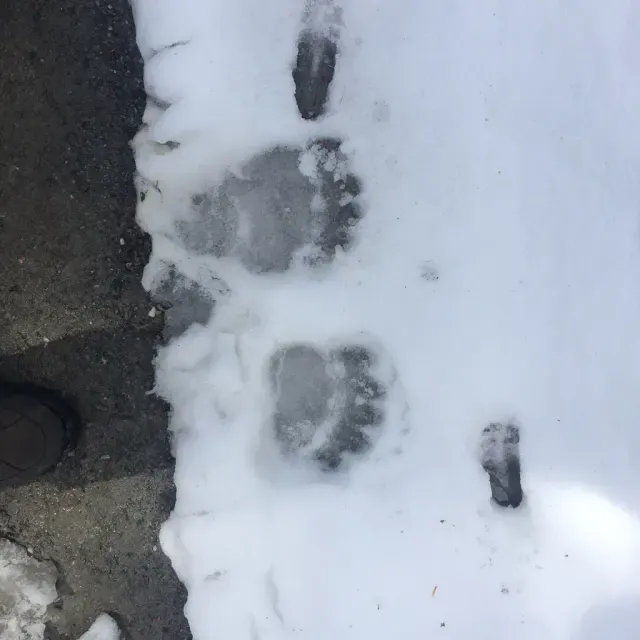
A photograph of real sign left by Polar bear. Prints vary with gait, ground and how long they have been there — treat this as one example, not a template.
Track photo:Karsten RohwederCC BY
On the table
Meat & cooking
Table grade 2 of 52/5
- Sold as meat in a legal market
- Has a named traditional dish
- Published way to handle and cook it
- Eaten in more than one country
- No known health advisory
Before you eat it: Never eat the liver: it stores so much vitamin A from the bear's prey that Arctic explorers fell ill and some died after eating it. The meat carries trichinella too — the Government of Nunavut warns that most polar bears have the parasite, that freezing or fermenting will not kill it, and that the meat must be cooked until no pink or red remains.
Sources
Sources: Polar bear — Wikipedia, Isbjörn — Wikipedia (sv), Alaska Department of Fish and Game: Polar bear species profile, Alaska Department of Fish and Game: Polar bear uses, U.S. Fish & Wildlife Service: Polar bear (Ursus maritimus), Agreement on the Conservation of Polar Bears: National management — Canada, Agreement on the Conservation of Polar Bears: National management — Greenland, Polar Bears Canada (Polar Bear Administrative Committee): Guided hunting in Canada, Nunatsiaq News: Eating polar bear? Make sure it's well-cooked, GN warns (5 March 2018) — read 2026-10-29
Cross-reference
Related species
Its closest relatives in the compendium, nearest kinship first.
Predators & furbearers
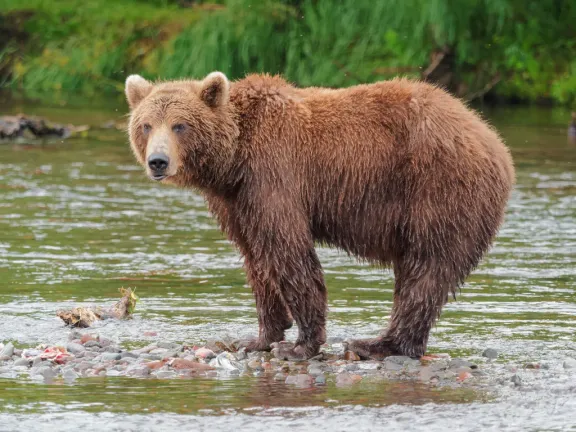
Brown bear
Ursus arctos
Same genus (Ursus)
Predators & furbearers
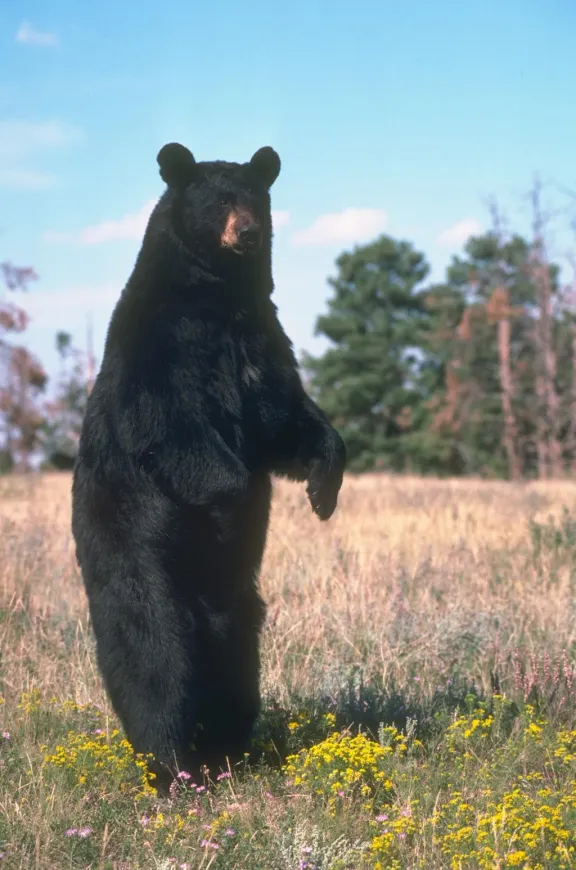
American black bear
Ursus americanus
Same genus (Ursus)
Predators & furbearers
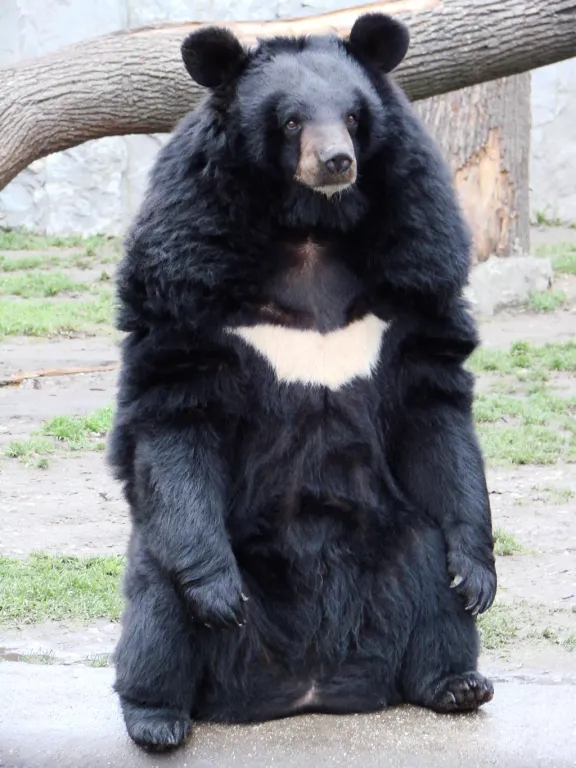
Asiatic black bear
Ursus thibetanus
Same genus (Ursus)
Predators & furbearers
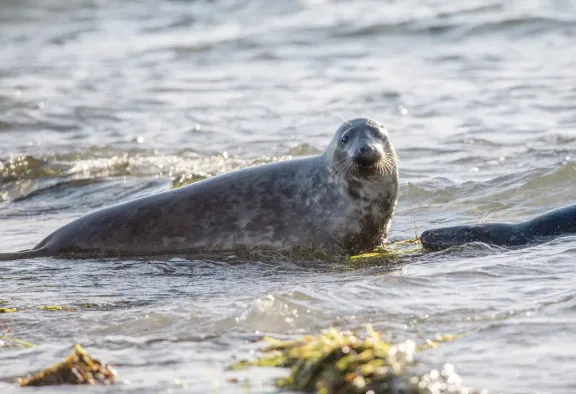
Grey seal
Halichoerus grypus
Same order (Carnivora)
Predators & furbearers
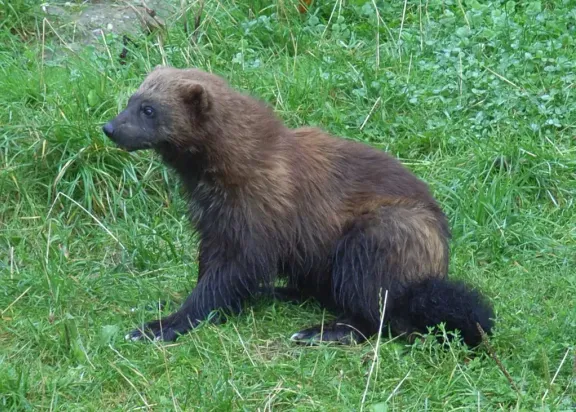
Wolverine
Gulo gulo
Same order (Carnivora)
Predators & furbearers
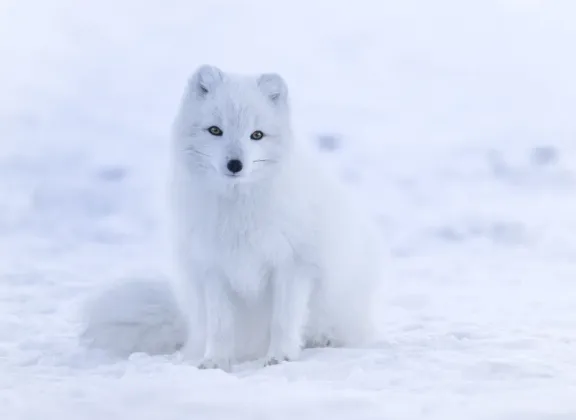
Arctic fox
Vulpes lagopus
Same order (Carnivora)