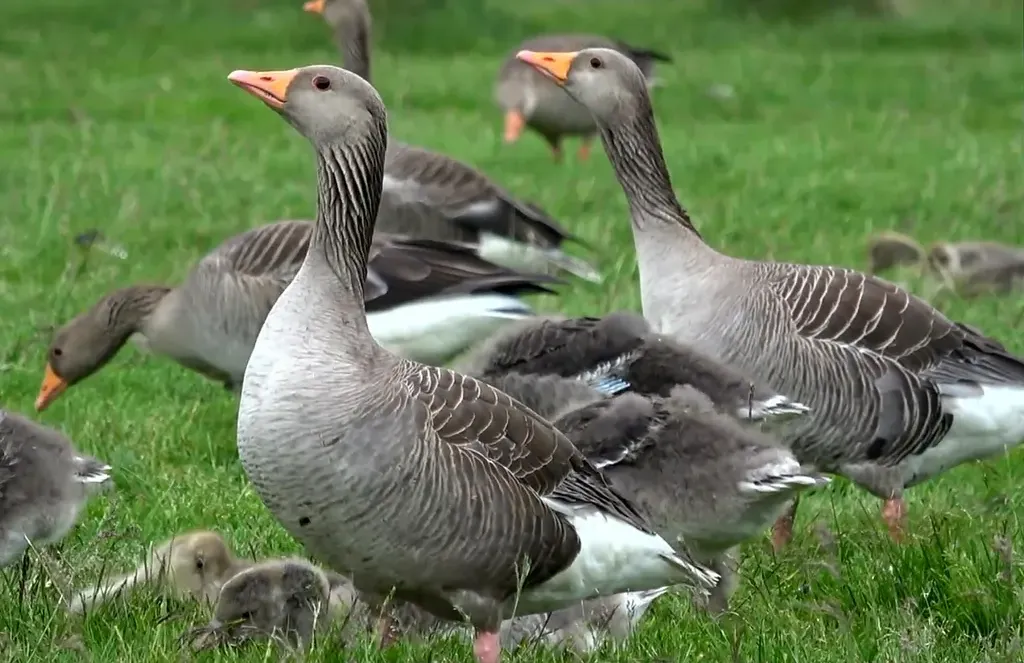
Photo:W. BulachCC BY-SA 4.0
Waterfowl
Greylag goose
Anser anser
- Group
- Waterfowl
- Size class
- Small (under 10 kg)
- Family
- Anatidae
Range
- Europe
- Asia
Habitat
- Farmland
- Wetland
Range
Countries it is found in
91 countries
- Afghanistan
- Åland Islands
- Albania
- Algeria
- Argentina
- Armenia
- Austria
- Azerbaijan
- Bahrain
- Bangladesh
- Belarus
- Belgium
- Bhutan
- Bosnia & Herzegovina
- Bulgaria
- China
- Croatia
- Cyprus
- Czechia
- Denmark
- Egypt
- Estonia
- Falkland Islands
- Faroe Islands
Range from:Wikipedia country bird lists, GBIF occurrence records — read 2026-08-05
Chapter 01
Overview
The greylag goose (Anser anser) is a large goose and the type species of the genus Anser. It has mottled and barred grey and white plumage, an orange beak and pink legs, measures 74 to 91 cm and averages 3.3 kg. Its distribution is widespread. Linnaeus described it in 1758, placing it with the ducks as Anas anser; the epithet is simply Latin for goose. It is now one of eleven geese in the genus Anser.
Chapter 02
Identification
The largest and bulkiest of the grey geese of the genus Anser, though more lightly built and more agile than its domestic descendant. The body is rotund and bulky, the neck thick and long, the head and bill large. Legs and feet are pink, and the bill orange or pink with a white or brown nail — the hard horny tip of the upper mandible. Length is 74 to 91 cm.
Chapter 03
Behaviour
Greylags are largely herbivorous and feed chiefly on grasses. Short, actively growing grass is the more nutritious, which is why they are so often found grazing in pasture alongside sheep or cattle. Because grass is a poor food, they have to spend much of their time feeding: the herbage passes rapidly through the gut and is voided frequently. The tubers of sea clubrush are also taken.
On the table
Meat & cooking
Table grade 5 of 55/5
- Sold as meat in a legal market
- Has a named traditional dish
- Published way to handle and cook it
- Eaten in more than one country
- No known health advisory
Traditional preparations
- Roast goose
- Wild goose is roasted whole or the breast taken off and cooked rare; the bird is far leaner than a farmed goose and dries out quickly. Roast goose — Wikipedia
- Confit and rillettes
- Legs and tougher cuts are traditionally preserved in fat, which suits a bird that has flown a long way. Confit — Wikipedia
Sources
Sources: Greylag goose — Wikipedia — read 2026-08-05
Cross-reference
Related species
Its closest relatives in the compendium, nearest kinship first.
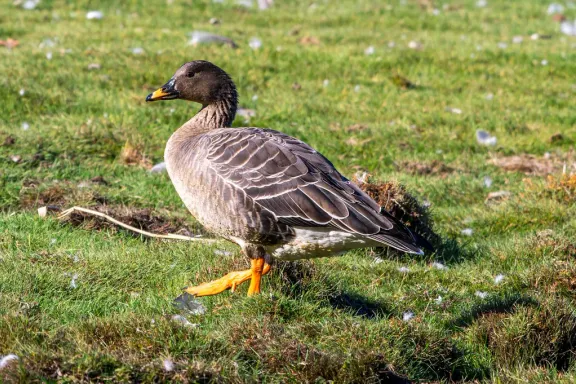
Waterfowl
Bean goose
Anser fabalis
Same genus (Anser)
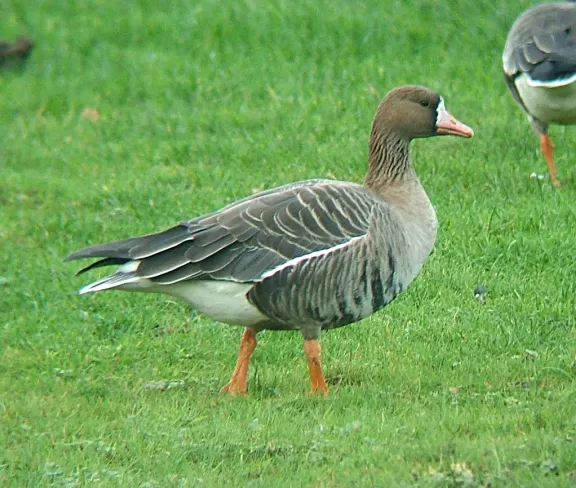
Waterfowl
Greater white-fronted goose
Anser albifrons
Same genus (Anser)
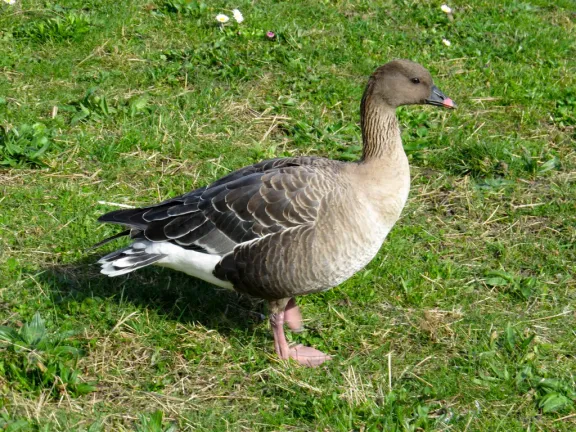
Waterfowl
Pink-footed goose
Anser brachyrhynchus
Same genus (Anser)
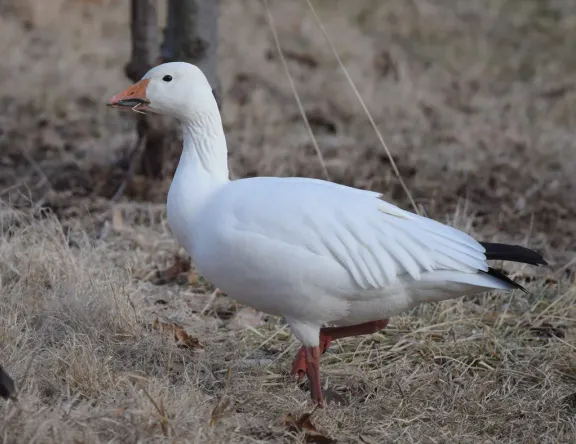
Waterfowl
Snow goose
Anser caerulescens
Same genus (Anser)
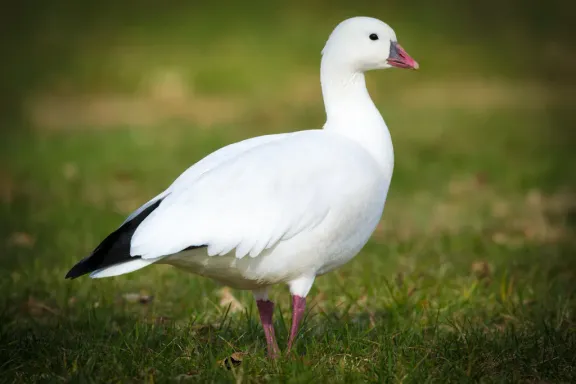
Waterfowl
Ross’s goose
Anser rossii
Same genus (Anser)
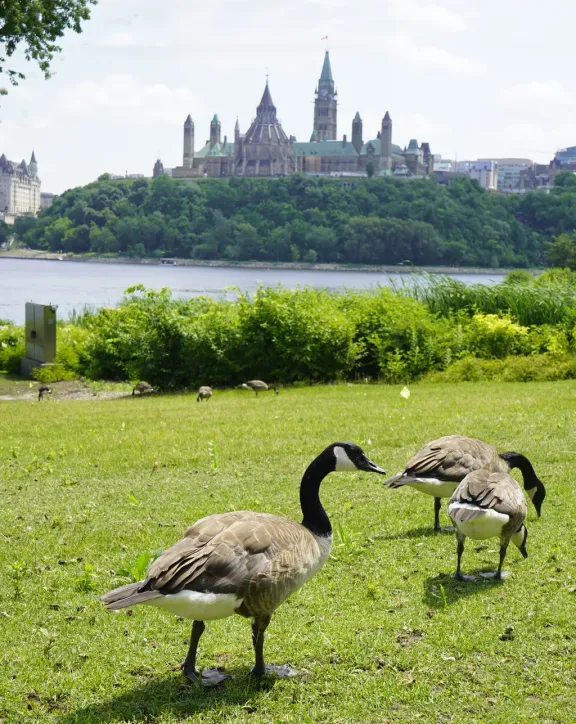
Waterfowl
Canada goose
Branta canadensis
Same subfamily (Anserinae)