Waterfowl
Common pochard
Aythya ferina
- Group
- Waterfowl
- Size class
- Small (under 10 kg)
- Family
- Anatidae
Range
- Europe
- Asia
Habitat
- Wetland
Range
Countries it is found in
92 countries
- Afghanistan
- Albania
- Algeria
- Armenia
- Austria
- Azerbaijan
- Bahrain
- Bangladesh
- Belarus
- Belgium
- Bhutan
- Bosnia & Herzegovina
- Bulgaria
- China
- Croatia
- Cyprus
- Czechia
- Denmark
- Egypt
- Eritrea
- Estonia
- Faroe Islands
- Finland
- France
Range from:Wikipedia country bird lists, GBIF occurrence records — read 2026-08-05
Chapter 01
Overview
The common pochard (Aythya ferina) is a medium-sized diving duck widespread across the Palearctic. It breeds chiefly in Scandinavia and the steppes of Siberia on marshes and lakes a metre or more deep, and winters further south and west. In winter it gathers in large flocks, often mixed with other diving ducks. Linnaeus named it Anas ferina; the epithet is Latin for 'wild game'. The IUCN rates it as vulnerable: despite a huge range, European numbers fell by 30–49 per cent over 23 years, through habitat loss, overhunting and introduced predators such as the American mink.
Chapter 02
Identification
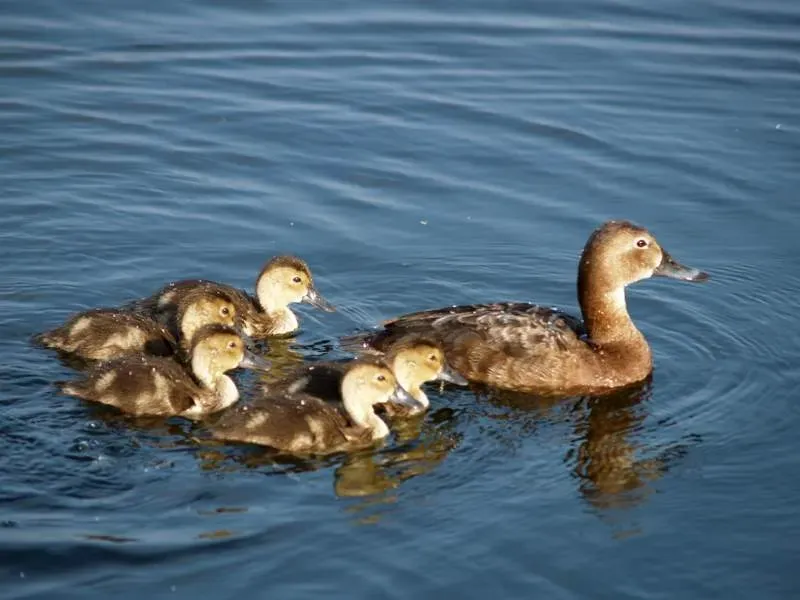
A plump, stocky, short-tailed diving duck, 42–49 cm long with a 72–82 cm wingspan, a sloping forehead and a relatively long bill. Winter birds weigh 467 to 1,240 g, males averaging larger. The drake has a chestnut head and neck, a black breast and tail and a pale grey, finely vermiculated body; his dark grey bill carries a wide blue-grey band and his eye is yellow-orange to red. The female's eye is brown. Legs and feet are grey in both sexes.
Chapter 03
Behaviour
Pochards feed on plants and seeds, small fish, molluscs and other aquatic invertebrates, mostly by diving and mostly at night. They often forage beside Bewick's and whooper swans, gleaning food the swans trample loose, which can double their intake. The female builds a platform nest in dense cover within 10 m of the water or over it, and lays 8–10 greenish-grey eggs that hatch after about 25 days. Egg dumping is common: in some areas up to 89 per cent of nests hold eggs laid by another female.
Chapter 04
Hunting
Overhunting is one of the reasons the IUCN gives for the pochard's decline, and the species falls under the African-Eurasian Migratory Waterbird Agreement (AEWA). Where it is shot, it counts among the wild ducks commonly eaten in Europe. In Sweden the brunand has no general open season in the hunting ordinance. It is red-listed there as endangered, with roughly 1,100 breeding pairs, down from about 5,000 in the mid-1970s.
On the table
Meat & cooking
Table grade 2 of 52/5
- Sold as meat in a legal market
- Has a named traditional dish
- Published way to handle and cook it
- Eaten in more than one country
- No known health advisory
Traditional preparations
- Roast wild duck
- The pochard is one of the wild ducks commonly eaten in Europe, alongside the pintail, teal, scaup, shoveler and wigeon; like other wild duck it is usually served rare. Duck as food — Wikipedia
Sources
Sources: Common pochard — Wikipedia, Brunand — Wikipedia (svenska), Jaktförordning (1987:905) — Sveriges riksdag, Duck as food — Wikipedia — read 2026-10-29
Cross-reference
Related species
Its closest relatives in the compendium, nearest kinship first.
Waterfowl
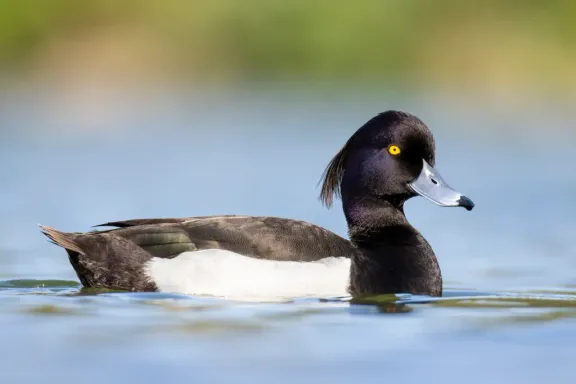
Tufted duck
Aythya fuligula
Same genus (Aythya)
Waterfowl
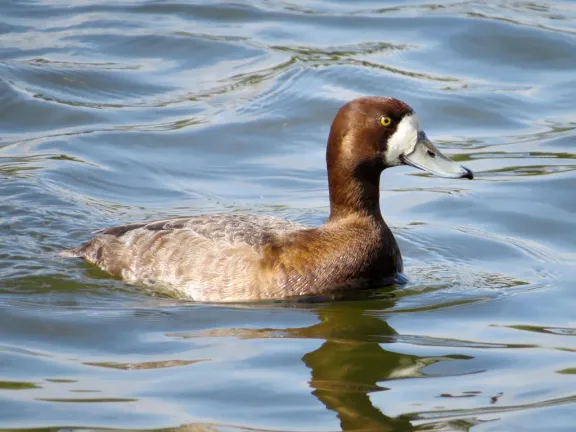
Greater scaup
Aythya marila
Same genus (Aythya)
Waterfowl
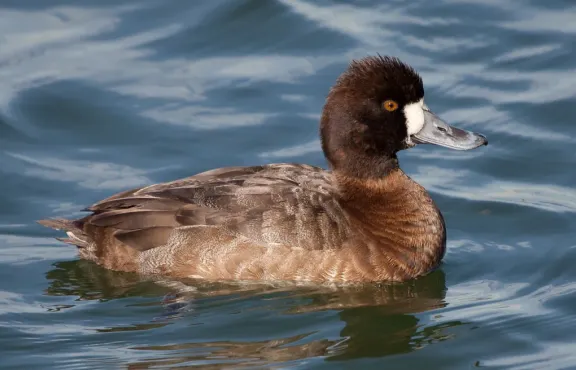
Lesser scaup
Aythya affinis
Same genus (Aythya)
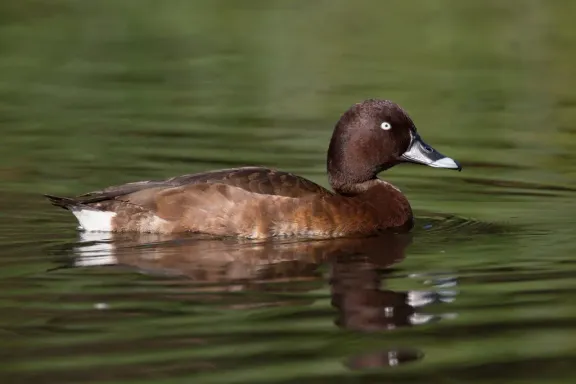
Waterfowl
Hardhead
Aythya australis
Same genus (Aythya)
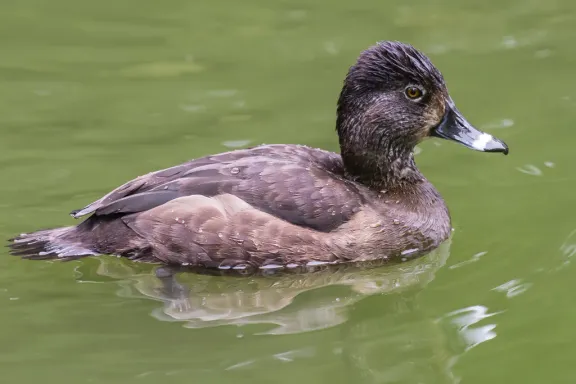
Waterfowl
Ring-necked duck
Aythya collaris
Same genus (Aythya)
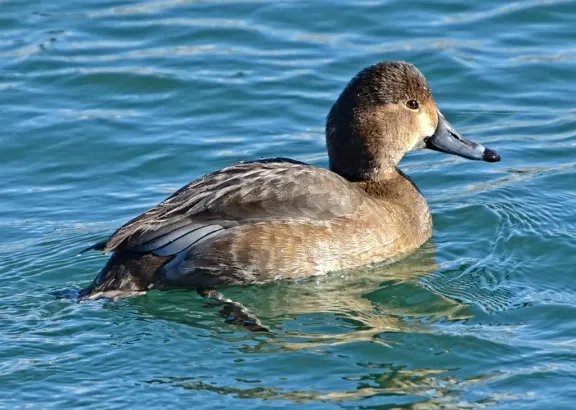
Waterfowl
Redhead
Aythya americana
Same genus (Aythya)