Upland birds
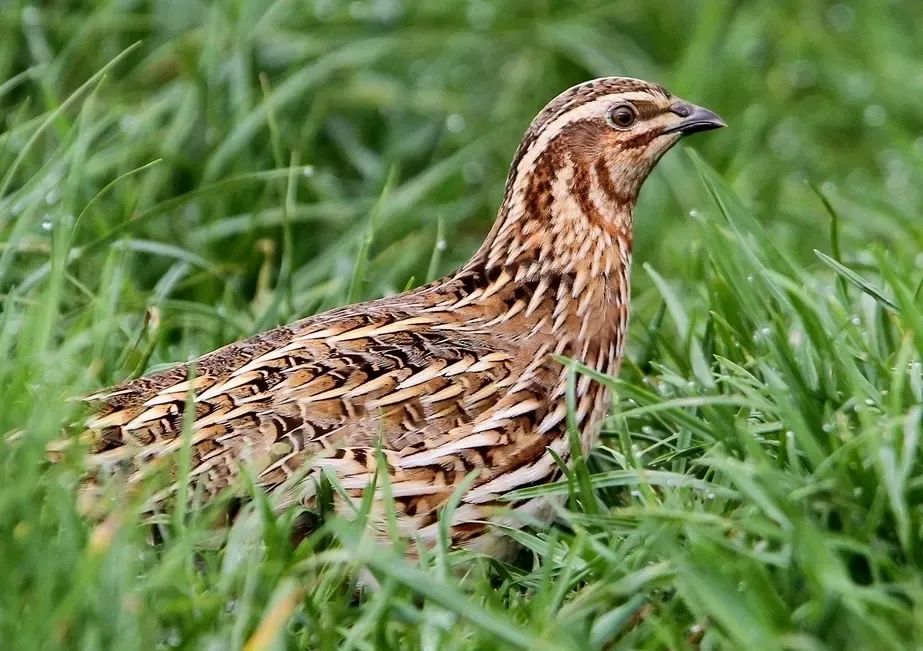
Common quail
Coturnix coturnix
- Group
- Upland birds
- Size class
- Small (under 10 kg)
- Family
- Phasianidae
Range
- Europe
- Africa
- Asia
Habitat
- Farmland
Range
Countries it is found in
125 countries
- Afghanistan
- Albania
- Algeria
- Andorra
- Angola
- Armenia
- Austria
- Azerbaijan
- Bahrain
- Bangladesh
- Belarus
- Belgium
- Bhutan
- Bosnia & Herzegovina
- Botswana
- Bulgaria
- Burkina Faso
- Cambodia
- Cape Verde
- Chad
- China
- Comoros
- Congo - Kinshasa
- Côte d’Ivoire
Range from:Wikipedia country bird lists — read 2026-08-05
Chapter 01
Overview
The common quail (Coturnix coturnix), or European quail, is a small ground-nesting gamebird of the pheasant family and, unusually for a gamebird, strongly migratory: it breeds across the Palearctic and winters in Africa and southern India. Five subspecies are recognised. It was long treated as one species with the Japanese quail, which looks much the same but has a very different call, and whose ranges meet in Mongolia and near Lake Baikal without apparent interbreeding. The IUCN lists it as least concern, with a world population of 15–35 million adults. In Sweden it breeds mainly on the open plains of Götaland and Svealand and on Öland, and more locally up the Norrland coast to about Västerbotten; numbers vary greatly from year to year, and in 2025 its Swedish Red List status was lowered from near threatened to least concern, with about 2,800 breeding birds.
Chapter 02
Identification
A small, compact, pear-shaped bird 16–18 cm long with a 32–35 cm wingspan and a weight of 70–140 g, heaviest before migration; the female is generally slightly heavier than the male. It is streaked brown with a white eyestripe and, in the male, a white chin, and has long wings for a gamebird. It is far more often heard than seen. The male's song, the 'wet-my-lips' of English and the vaktelslag of Swedish, is a loud whistled three-syllable phrase repeated in quick succession, uttered mostly in the morning and evening and sometimes at night.
Chapter 03
Behaviour
A terrestrial bird of open farmland and hay meadows, feeding on the ground on weed seeds, spilt grain and insects and their larvae. It is notoriously hard to see, keeping hidden in crops and creeping away rather than flying; even when flushed it keeps low and soon drops back into cover. Males arrive on the breeding grounds before females. In northern Europe laying begins in mid-May and, with repeat clutches, can run to the end of August. The female lays 8–13 eggs in a sparsely lined scrape, one a day, and incubates alone; they hatch together after 17–20 days and the precocial chicks fledge at about 19 days. Modern mechanised farming makes breeding harder, as sitting hens and eggs in the crop can be crushed by machinery.
Chapter 04
Hunting
The common quail is heavily hunted on passage through the Mediterranean, and very large numbers are caught in nets along Egypt's Mediterranean coast: in the 2012 autumn migration an estimated 3.4 million birds were caught in northern Sinai and perhaps as many as 12.9 million in Egypt as a whole. Its meat is considered tasty and its eggs a delicacy, though caged quail kept for meat and eggs are usually Japanese quail, and escapes can hybridise with wild birds. In Sweden the common quail has no open season in the Hunting Ordinance, either in its current form or in the version that takes effect on 1 July 2027.
Field data
Tracks
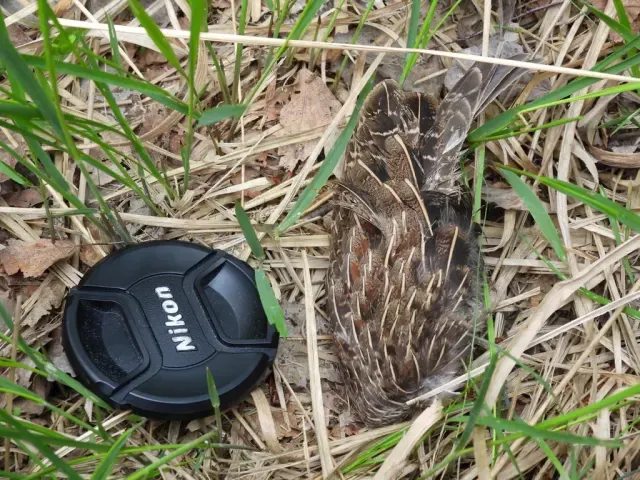
A photograph of real sign left by Common quail. Prints vary with gait, ground and how long they have been there — treat this as one example, not a template.
Track photo:Simone BoccaCC BY SA
On the table
Meat & cooking
Table grade 2 of 52/5
- Sold as meat in a legal market
- Has a named traditional dish
- Published way to handle and cook it
- Eaten in more than one country
- No known health advisory
Before you eat it: Quail meat can be poisonous: quail that have eaten certain plants — which ones is still debated — cause coturnism, an illness of muscle tenderness and muscle breakdown that may lead to kidney failure. Only about one in four people who eat the toxin fall ill. It is heat-stable and fat-soluble — four-month-old pickled quail and potatoes fried in quail fat have both poisoned people — and is limited to certain regions and migration directions.
Traditional preparations
- Quail on the bone
- Quail are usually eaten whole, bones and all, since the bones chew easily and the bird is too small to make removing them worthwhile. The common quail was once much favoured in French cooking and belongs to Polish, Maltese, Italian, Mexican, Spanish, Egyptian and Indian cuisine. Quail as food — Wikipedia
Sources
Sources: Common quail — Wikipedia, Vaktel — Wikipedia, Quail as food — Wikipedia, Coturnism — Wikipedia, Jaktförordning (1987:905) — Sveriges riksdag — read 2026-10-29
Cross-reference
Related species
Its closest relatives in the compendium, nearest kinship first.
Upland birds
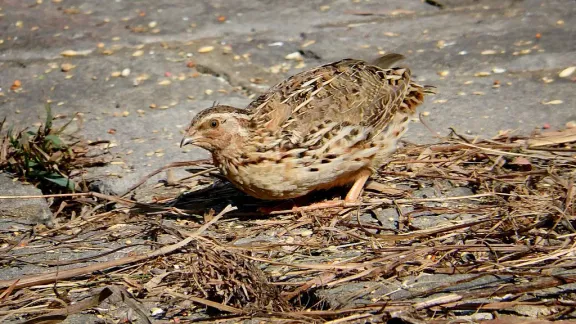
Japanese quail
Coturnix japonica
Same genus (Coturnix)
Upland birds
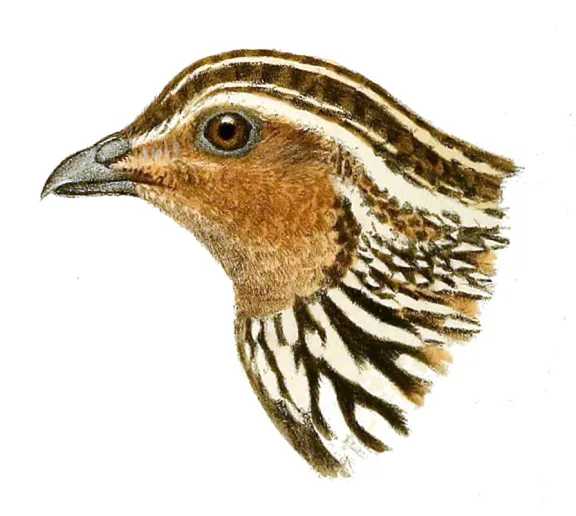
Stubble quail
Coturnix pectoralis
Same genus (Coturnix)
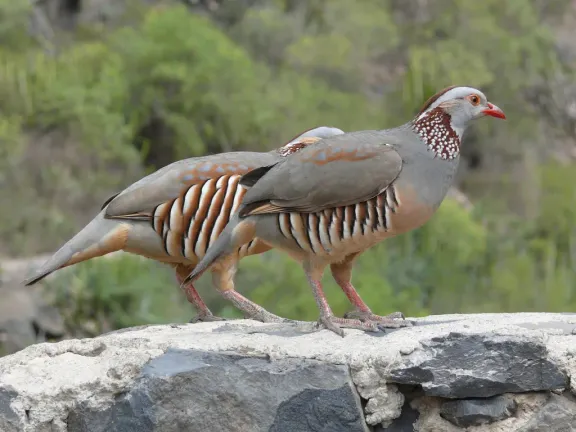
Upland birds
Barbary partridge
Alectoris barbara
Same subfamily (Perdicinae)
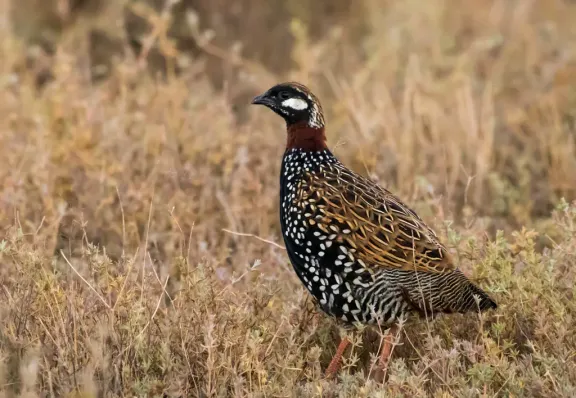
Upland birds
Black francolin
Francolinus francolinus
Same subfamily (Perdicinae)
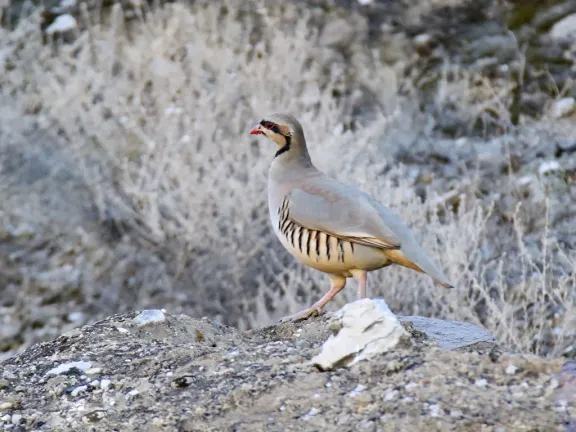
Upland birds
Chukar partridge
Alectoris chukar
Same subfamily (Perdicinae)
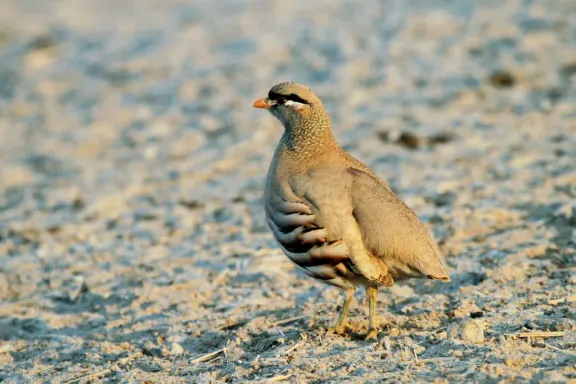
Upland birds
See-see partridge
Ammoperdix griseogularis
Same subfamily (Perdicinae)