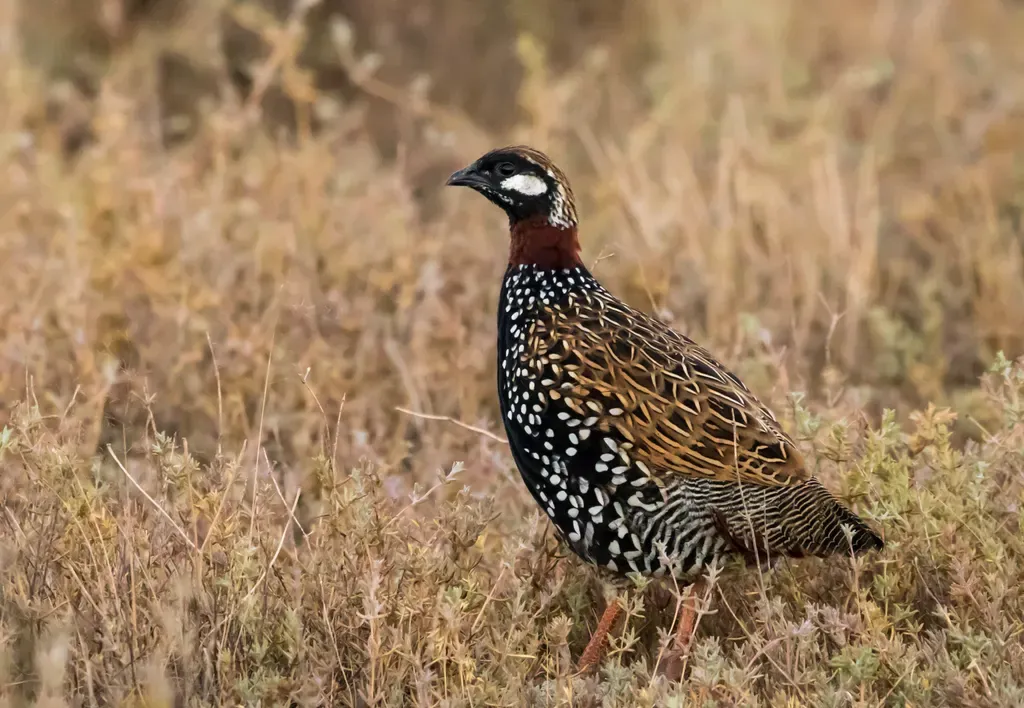
Photo:Elshad photoCC BY-SA 4.0
Upland birds
Black francolin
Francolinus francolinus
- Group
- Upland birds
- Size class
- Small (under 10 kg)
- Family
- Phasianidae
Range
- Asia
- Europe
Habitat
- Farmland
- Scrub
Range
Countries it is found in
22 countries
- Afghanistan
- Armenia
- Azerbaijan
- Bhutan
- Cyprus
- Georgia
- Greece
- Guam
- India
- Iran
- Iraq
- Israel
- Italy
- Jordan
- Kuwait
- Nepal
- Pakistan
- Syria
- Türkiye
- Turkmenistan
- United Arab Emirates
- United States
Range from:Wikipedia country bird lists — read 2026-08-05
Chapter 01
Overview
The black francolin (Francolinus francolinus), formerly called the black partridge, is a gamebird of the pheasant family. It is a resident breeder from Cyprus and southeastern Turkey east through Iraq and Iran to southwest Turkmenistan, Afghanistan, Pakistan, northern and eastern India and Bangladesh, in six subspecies; it is the state bird of Haryana, where it is known as kaala teetar. Its range was once larger, but over-hunting has shrunk it, and the western populations are fragmented. Europe holds an estimated 8,000 to 21,000 pairs, and the IUCN lists it as least concern. It lives in scrub and in crops tall enough to give cover yet open underneath for running, usually near water, from the lowlands to about 400 m, and on forest edges bordering grassland rather than in forest. It has been introduced to Louisiana, south Florida, Guam and the Hawaiian Islands.
Chapter 02
Identification
A partridge-sized bird of 33 to 36 cm and around 450 g, upright in posture. The male is black with a large white cheek patch, a chestnut collar and white spots on the flanks; the back and wings are scalloped in golden browns, the rounded black tail is barred white or grey, and the legs are reddish. The female is mainly brown and mottled, with a chestnut nape patch instead of a collar and no cheek patch. The grey francolin is grey-brown and buff, with a buff rather than black throat and no rufous collar. The call is a loud, rhythmic, creaking series given from a mound, rock or low branch, mostly in the mornings and evenings and almost all day in the breeding season, and other birds soon answer from all sides.
Chapter 03
Behaviour
The black francolin flies only when disturbed and prefers to creep away unseen; when flushed it bursts up like a pheasant, flying short and direct with glides on rounded wings. It forages on the ground for grain, grass seed, fallen berries, shoots, tubers, termites and ants. Pairs are monogamous and nest in tall grassland, mainly from late March to May, the male calling all day in April. The hen alone incubates a clutch of usually 10 to 14 olive or pale brown eggs for 18 to 19 days; both parents tend the chicks, and the young stay with them through their first winter.
Chapter 04
Hunting
Over-hunting is the reason the black francolin's native range has shrunk. In Hawaii it was introduced from India for sport hunting and is a listed game bird under Hawaii Administrative Rules chapter 13-122, hunted with a licence and game bird stamp in the state's game bird season — for 2025–26 from 1 November to 25 January, in many public hunting units only on weekends and state holidays, with daily bag limits set in the rules.
On the table
Meat & cooking
Table grade 2 of 52/5
- Sold as meat in a legal market
- Has a named traditional dish
- Published way to handle and cook it
- Eaten in more than one country
- No known health advisory
Traditional preparations
- Fried black francolin
- The black francolin is eaten fried in Azerbaijani cuisine. Black francolin — Wikipedia
Sources
Sources: Black francolin — Wikipedia, Svart frankolin — Wikipedia (sv), Hawaii DLNR: Announcement for the 2025–2026 game bird hunting season, Hawaii DLNR: Game birds — Palila Forest Discovery Trail — read 2026-10-29
Cross-reference
Related species
Its closest relatives in the compendium, nearest kinship first.
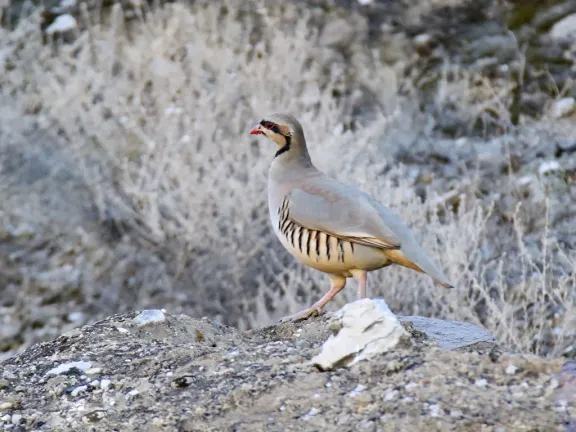
Upland birds
Chukar partridge
Alectoris chukar
Same subfamily (Perdicinae)
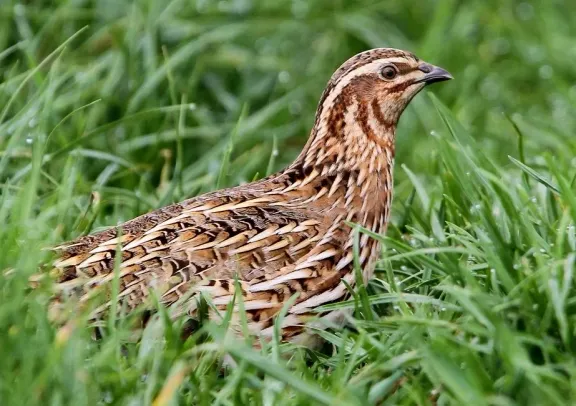
Upland birds
Common quail
Coturnix coturnix
Same subfamily (Perdicinae)
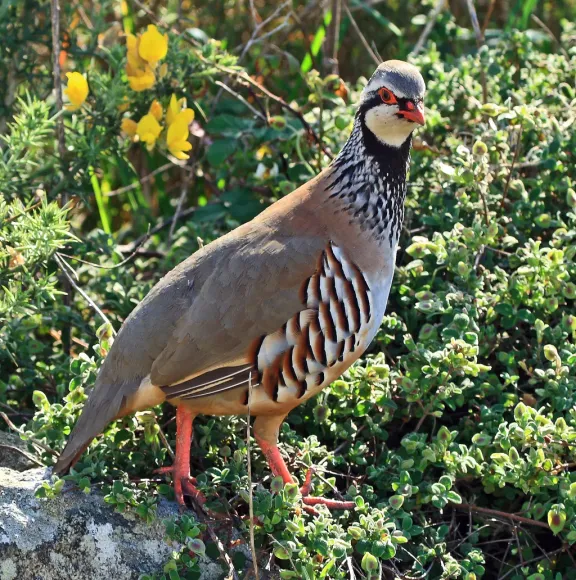
Upland birds
Red-legged partridge
Alectoris rufa
Same subfamily (Perdicinae)
Upland birds
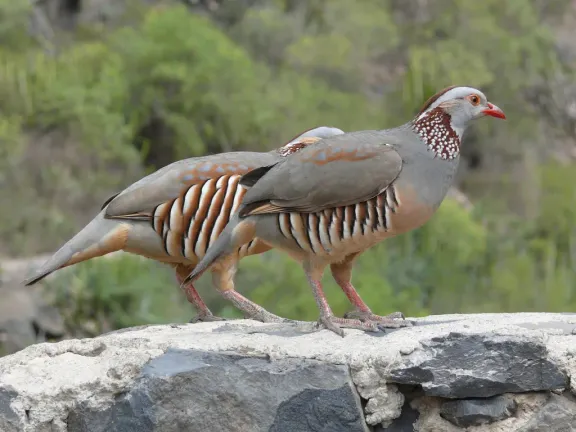
Barbary partridge
Alectoris barbara
Same subfamily (Perdicinae)
Upland birds
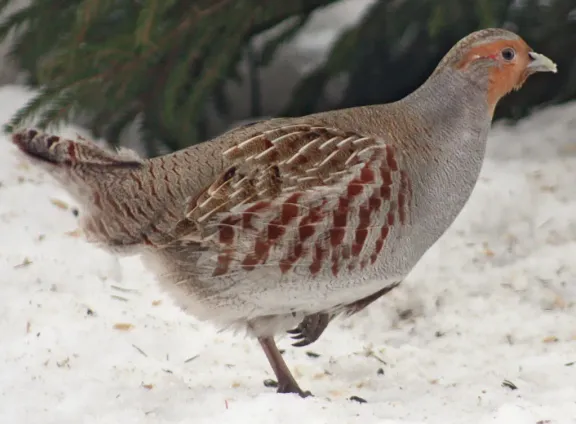
Grey partridge
Perdix perdix
Same subfamily (Perdicinae)
Upland birds
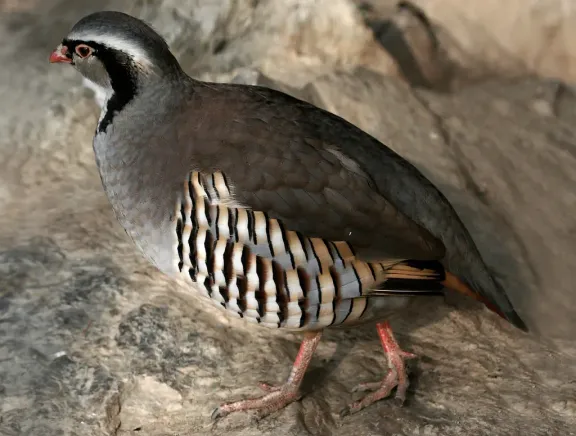
Rock partridge
Alectoris graeca
Same subfamily (Perdicinae)