Upland birds
Red-legged partridge
Alectoris rufa
- Group
- Upland birds
- Size class
- Small (under 10 kg)
- Family
- Phasianidae
Range
- Europe
Habitat
- Farmland
- Scrub
Range
Countries it is found in
11 countries
- Andorra
- France
- Germany
- Greece
- Italy
- Monaco
- Portugal
- San Marino
- Spain
- Switzerland
- United Kingdom
Range from:Wikipedia country bird lists — read 2026-08-05
Chapter 01
Overview
The red-legged partridge (Alectoris rufa), also called the French partridge to set it apart from the English or grey partridge, is a gamebird of the pheasant family and the westernmost of the Alectoris partridges. Linnaeus described it in 1758; the genus name is Ancient Greek for a farmyard chicken and rufa is Latin for red. Three subspecies are recognised, in France, northern Italy and Corsica and in the northern and southern halves of Iberia. It breeds naturally in south-western Europe and was introduced to Great Britain from France in the 18th century, where it has become an important gamebird. The population is estimated at five to seven million pairs, but it has fallen by some 20–29 per cent in ten years, and since 2020 the IUCN has listed it as near threatened.
Chapter 02
Identification
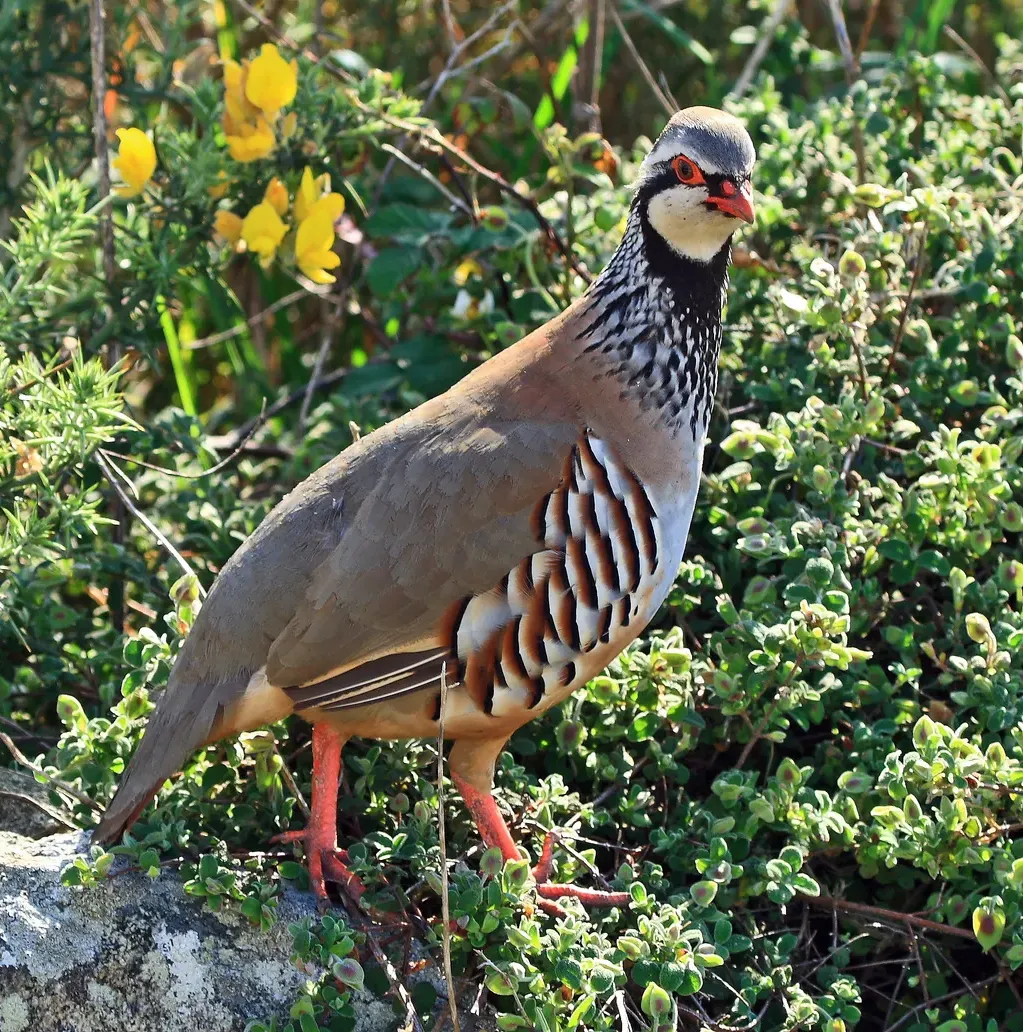
A rotund partridge, plain sandy-grey above, pale blue-grey on the breast and pinkish-buff on the belly, with eight to ten bold rufous and black bars on the flanks and pinkish-red legs, a bright red bill and a red eye-ring. The cream throat is framed by a black gorget that breaks up below into a broad patch of black streaks on the upper breast. That streaked lower edge is what separates it from the rock partridge and chukar, whose gorget is sharply defined. The call is a three-syllable ka-chu-chu.
Chapter 03
Behaviour
A non-migratory ground bird of dry lowlands — farmland, heath and open stony country — that forms flocks outside the breeding season and has been known to share ground with wild rabbits. When disturbed it would rather run than fly, and if it must fly it goes only a short way on rounded wings. Adults eat seeds, leaves and roots; the young in particular need insects for protein. The nest is on the ground. Laying runs from April to early May in Portugal, late April to May in England and May to mid-June in France. A hen can keep two clutches going at once, which is why the species is so easily reared in captivity.
Chapter 04
Hunting
Red-legged partridges are bred for shooting and sold and eaten as game, hung for sale at butchers such as one in Ludlow, Shropshire. Like the grey partridge they are reared in captivity and released for hunting, and have been introduced into large parts of North America for the same reason. Hunting, agricultural intensification and the release of farm-reared birds — many of them chukar hybrids — are among the threats behind its decline, and in Britain breeding chukars and red-legged/chukar hybrids is prohibited to protect wild red-legs. Birds have been recorded in Sweden, though they are not thought to have arrived naturally.
On the table
Meat & cooking
Table grade 4 of 54/5
- Sold as meat in a legal market
- Has a named traditional dish
- Published way to handle and cook it
- Eaten in more than one country
- No known health advisory
Traditional preparations
- Partridge pie
- Partridge was among the main ingredients of game pies from Roman times, and Mrs Beeton's 1861 Book of Household Management gives a simple recipe for grouse and partridge pie. Game pie — Wikipedia
Sources
Sources: Red-legged partridge — Wikipedia, Rödhöna — Wikipedia, Partridge — Wikipedia, Game pie — Wikipedia — read 2026-10-29
Cross-reference
Related species
Its closest relatives in the compendium, nearest kinship first.
Upland birds
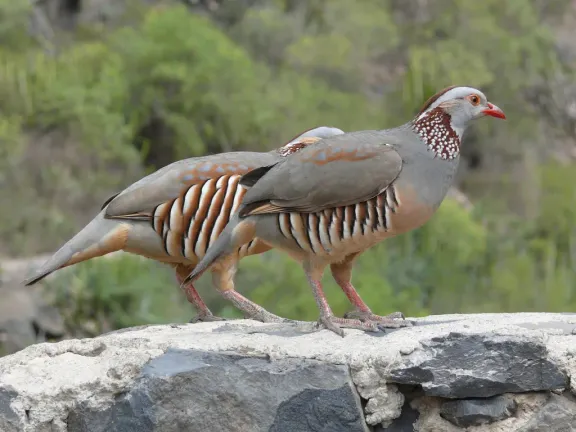
Barbary partridge
Alectoris barbara
Same genus (Alectoris)
Upland birds
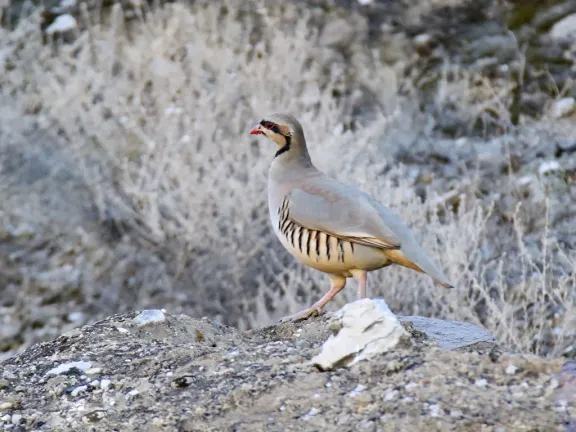
Chukar partridge
Alectoris chukar
Same genus (Alectoris)
Upland birds
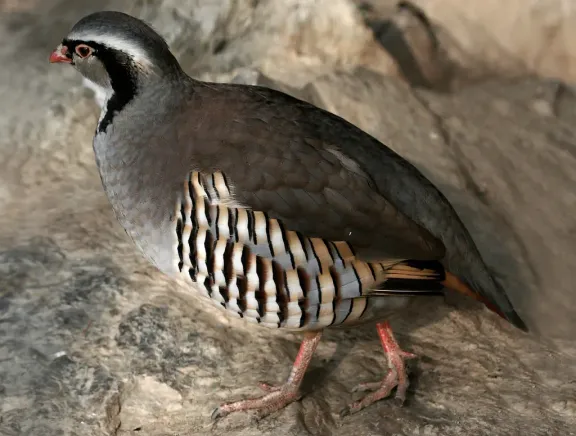
Rock partridge
Alectoris graeca
Same genus (Alectoris)
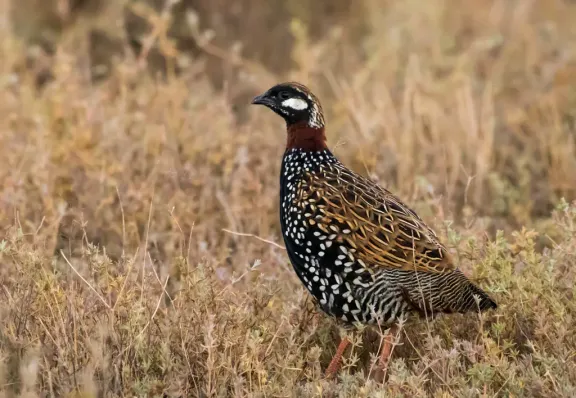
Upland birds
Black francolin
Francolinus francolinus
Same subfamily (Perdicinae)
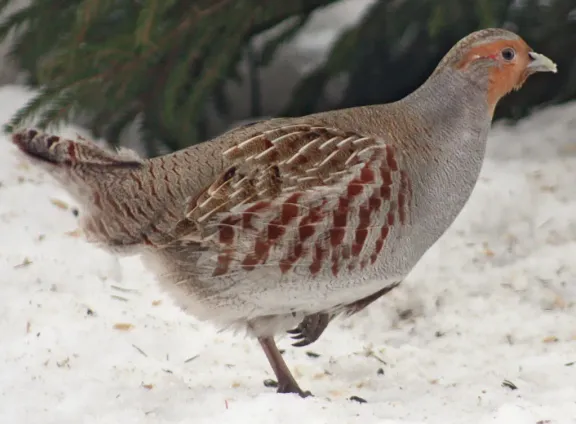
Upland birds
Grey partridge
Perdix perdix
Same subfamily (Perdicinae)
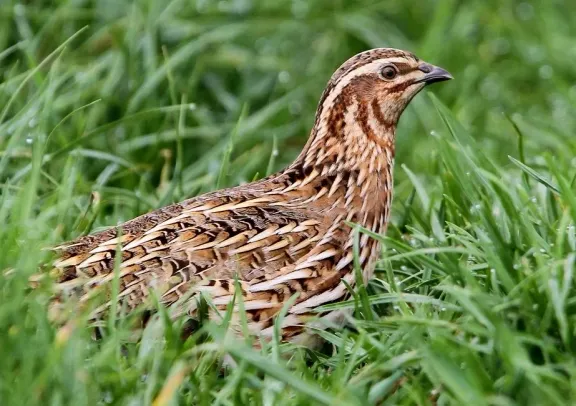
Upland birds
Common quail
Coturnix coturnix
Same subfamily (Perdicinae)