Waterfowl
Red-breasted merganser
Mergus serrator
- Group
- Waterfowl
- Size class
- Small (under 10 kg)
- Family
- Anatidae
Range
- North America
- Europe
Habitat
- Coast
Range
Countries it is found in
64 countries
- Åland Islands
- Albania
- Armenia
- Austria
- Azerbaijan
- Bahamas
- Belgium
- Bermuda
- Bosnia & Herzegovina
- Bulgaria
- Canada
- China
- Colombia
- Croatia
- Cuba
- Czechia
- Denmark
- Estonia
- Faroe Islands
- Finland
- France
- Georgia
- Germany
- Greece
Range from:Wikipedia country bird lists, GBIF occurrence records — read 2026-08-05
Chapter 01
Overview
The red-breasted merganser (Mergus serrator) breeds across much of the temperate to subarctic Northern Hemisphere and winters mostly on the coast, making it the Mergus species most at home on salt water. The epithet serrator is Latin for 'sawyer', after the saw-like edge of its bill. The red breast that names it is worn only by males in breeding plumage. The world population is stable and the IUCN rates it least concern, though European numbers have fallen by up to 30 per cent over three generations.
Chapter 02
Identification
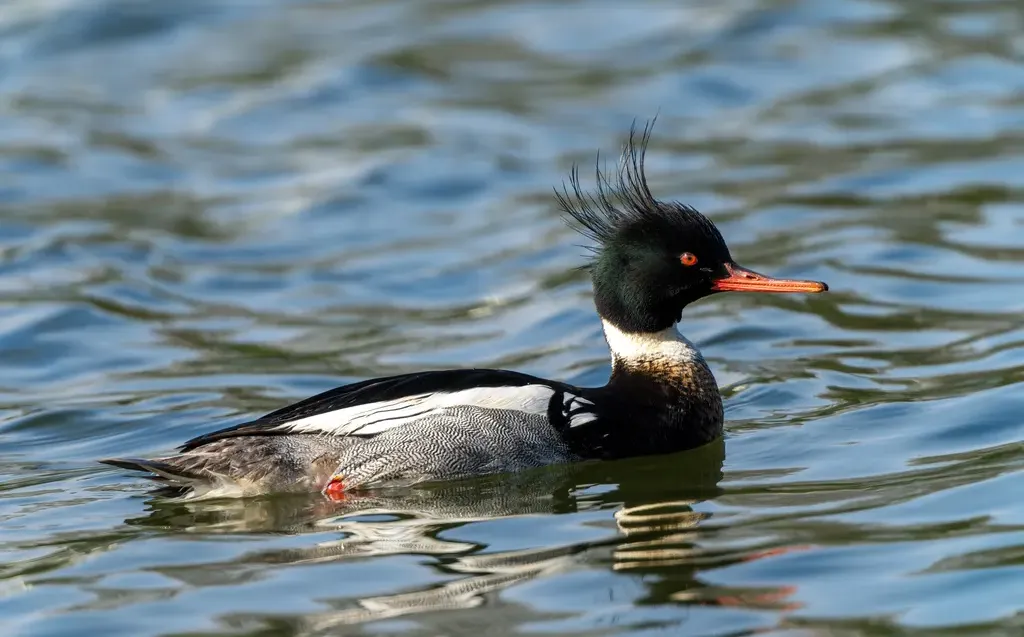
51–64 cm long with a 66–74 cm wingspan; males weigh 950–1,350 g and females 800–1,100 g. It has a spiky crest and a long, thin red bill with serrated edges. The drake has a dark head glossed green, a white neck, a rusty breast, a black back and white underparts. Females have a rusty head and greyish-brown body. They are easily confused with female goosanders, which show more contrast between dark head and pale breast and a pale chin patch the red-breasted lacks.
Chapter 03
Behaviour
It feeds by diving from the surface after small shoaling fish, gripping them with its serrated bill, and also takes crustaceans, worms and insects. It nests on the ground in sheltered spots within about 25 m of a lake, river or sheltered bay, often on islets. The female lays eight to ten eggs on average and incubates them for about 30 days; the young leave the nest within a day. Males leave the breeding grounds in June to moult at the coast, and outside the breeding season the birds form flocks.
Chapter 04
Hunting
In North America it is a game bird under the Migratory Bird Treaty and may be hunted in set seasons and places, though few hunters are interested and relatively few are taken. It is also hunted in Denmark. Anglers and fish farmers persecute it as a competitor, illegally so in Britain, especially Scotland. In Sweden the småskrake has no general open season in the hunting ordinance.
Sources
Sources: Red-breasted merganser — Wikipedia, Småskrake — Wikipedia (svenska), Jaktförordning (1987:905) — Sveriges riksdag — read 2026-10-29
Cross-reference
Related species
Its closest relatives in the compendium, nearest kinship first.
Waterfowl
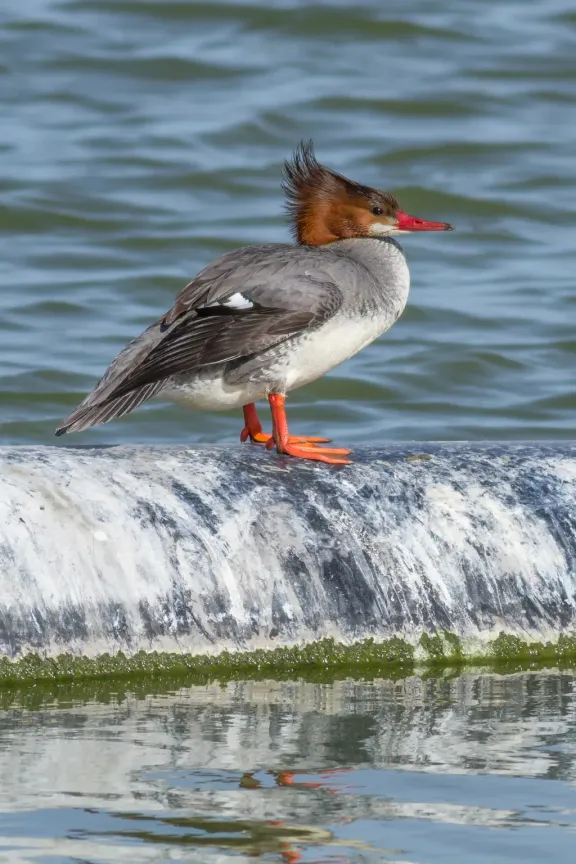
Common merganser (goosander)
Mergus merganser
Same genus (Mergus)
Waterfowl
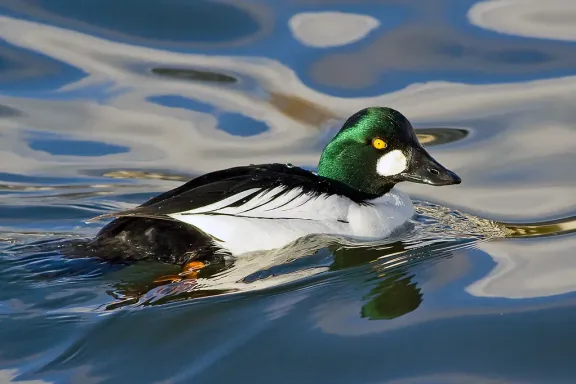
Common goldeneye
Bucephala clangula
Same subfamily (Anatinae)
Waterfowl
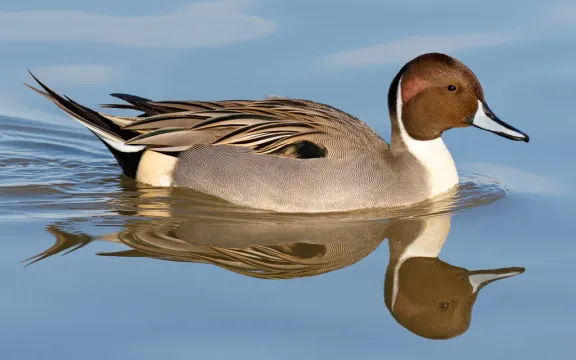
Northern pintail
Anas acuta
Same subfamily (Anatinae)
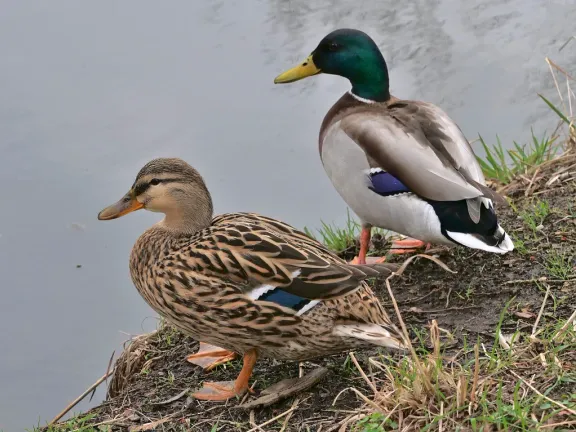
Waterfowl
Mallard
Anas platyrhynchos
Same subfamily (Anatinae)
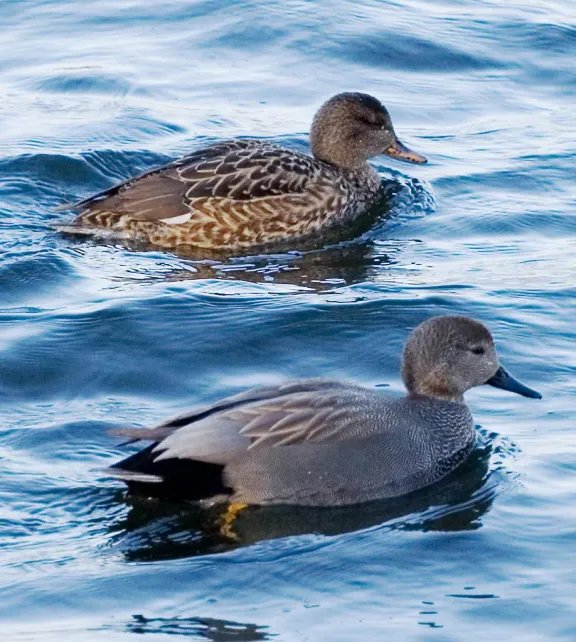
Waterfowl
Gadwall
Mareca strepera
Same subfamily (Anatinae)
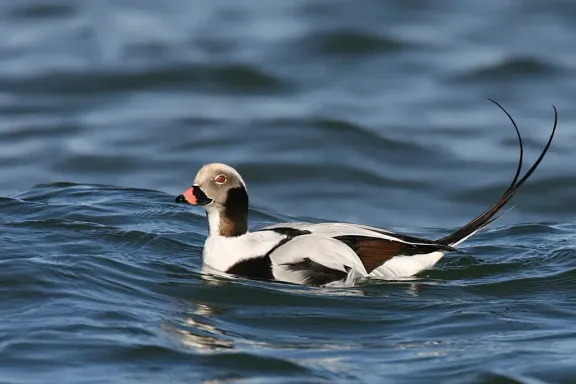
Waterfowl
Long-tailed duck
Clangula hyemalis
Same subfamily (Anatinae)