Waterfowl
Common merganser (goosander)
Mergus merganser
- Group
- Waterfowl
- Size class
- Small (under 10 kg)
- Family
- Anatidae
Range
- North America
- Europe
Habitat
- Wetland
Range
Countries it is found in
67 countries
- Afghanistan
- Åland Islands
- Albania
- Armenia
- Austria
- Azerbaijan
- Belarus
- Belgium
- Bermuda
- Bhutan
- Bosnia & Herzegovina
- Bulgaria
- Canada
- China
- Croatia
- Cuba
- Czechia
- Denmark
- Estonia
- Faroe Islands
- Finland
- France
- Georgia
- Germany
Range from:Wikipedia country bird lists, GBIF occurrence records — read 2026-08-05
Chapter 01
Overview
The common merganser or goosander (Mergus merganser) is a large duck of rivers and lakes in the forests of Europe, Asia and North America. It eats mainly fish and nests in tree holes; 'goosander' is the Eurasian name, 'common merganser' the North American one. Linnaeus named it in 1758; merganser joins the Latin mergus, an unspecified waterbird, and anser, 'goose'. The species is not threatened, and its breeding range has spread south from Scandinavia since about 1850, reaching Scotland in 1871 and England in 1941.
Chapter 02
Identification
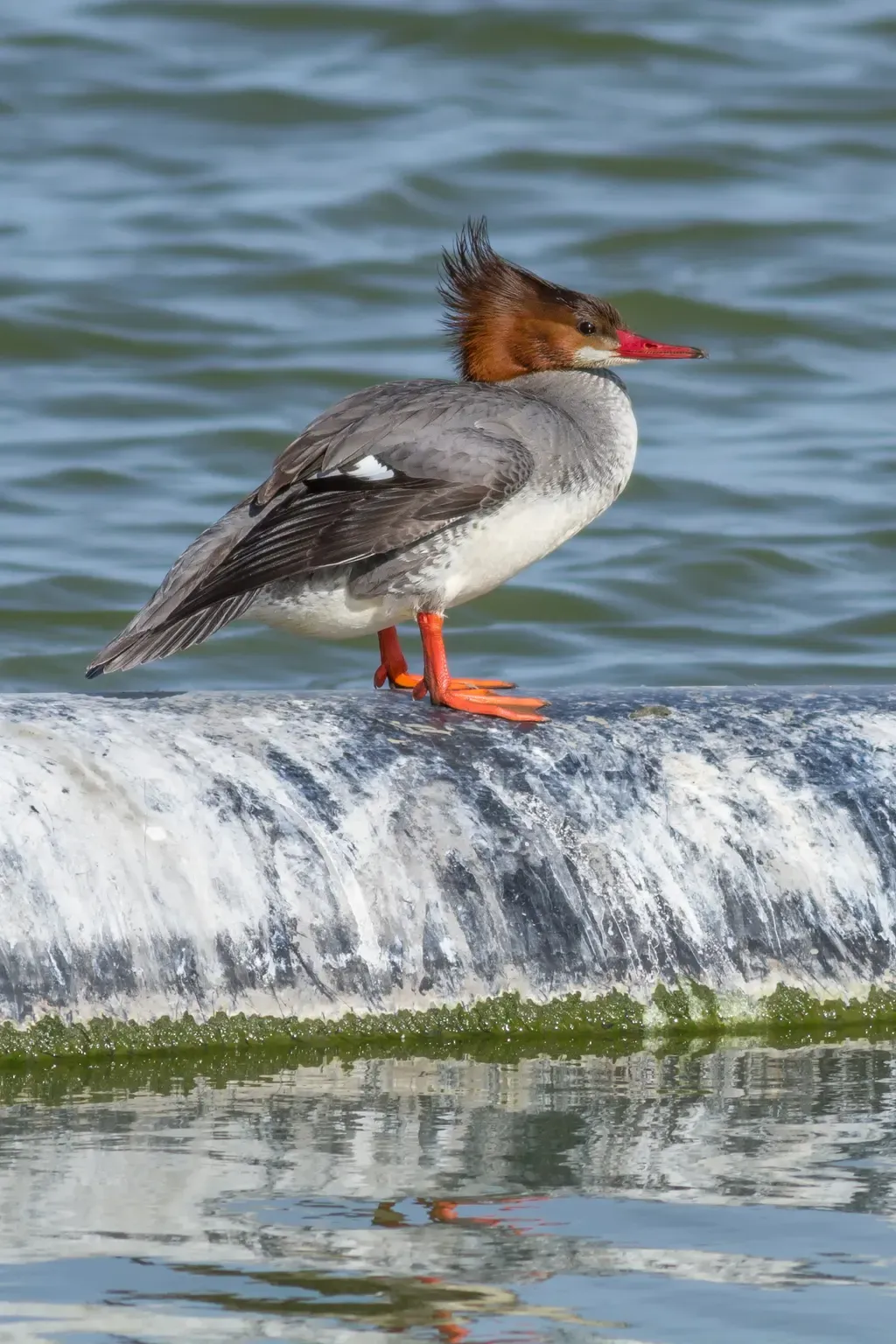
58–72 cm long with a 78–97 cm wingspan and weighing 0.9–2.1 kg, males slightly the larger. Its crest usually lies smooth and rounded behind the head. The breeding drake has a white body with a variable salmon-pink tinge, a black head glossed green, a grey rump and tail, and wings white on the inner half and black on the outer. Females and eclipse males are largely grey with a reddish-brown head, white chin and white secondaries. Bill and legs are red to brownish-red, brightest on adult males.
Chapter 03
Behaviour
A 'sawbill': the serrated edges of its bill grip slippery fish, and it also takes molluscs, crustaceans, worms, insect larvae and amphibians. Flocks often fish together, forming a semicircle or a line and driving fish into the shallows. It nests in tree cavities and readily uses large nest boxes with a 15 cm entrance. The female lays 8–12 eggs as a rule and carries the ducklings to water on her back straight after hatching; they fledge at 60–70 days. Most Western European males fly north to moult in the fjords of Finnmark.
Chapter 04
Hunting
In Sweden the storskrake shares its open season with the goldeneye: 21 August to 31 January across the country, from 20 August at 11.00 in the border-river area of Norrbotten. From 1 July 2027 the season outside that area runs to 20 February. It may only be shot from one hour before sunrise to one hour after sunset. Elsewhere the species faces illegal persecution by game-fishing interests in some regions.
Field data
Tracks
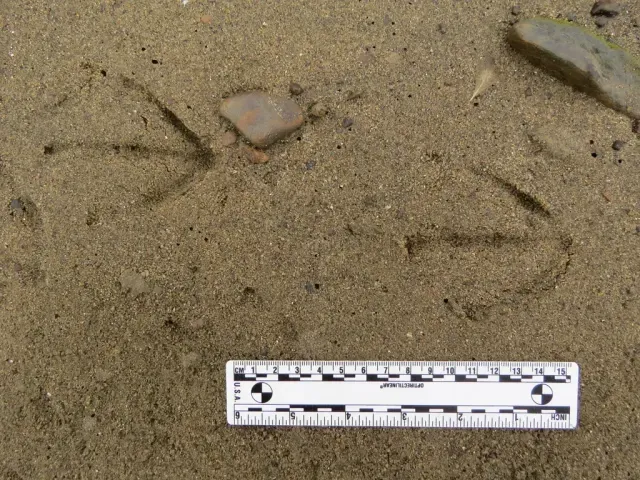
A photograph of real sign left by Common merganser (goosander). Prints vary with gait, ground and how long they have been there — treat this as one example, not a template.
Track photo:Garth HarwoodCC BY
Sources
Sources: Common merganser — Wikipedia, Storskrake — Wikipedia (svenska), Jaktförordning (1987:905) — Sveriges riksdag — read 2026-10-29
Cross-reference
Related species
Its closest relatives in the compendium, nearest kinship first.
Waterfowl
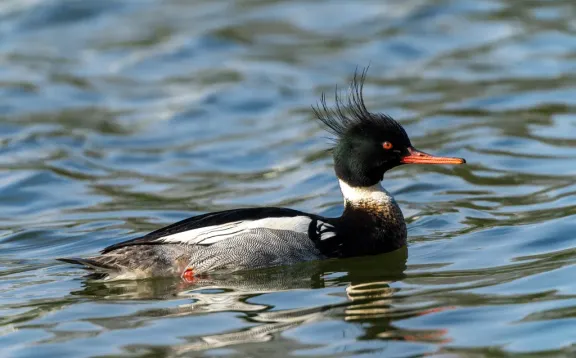
Red-breasted merganser
Mergus serrator
Same genus (Mergus)
Waterfowl
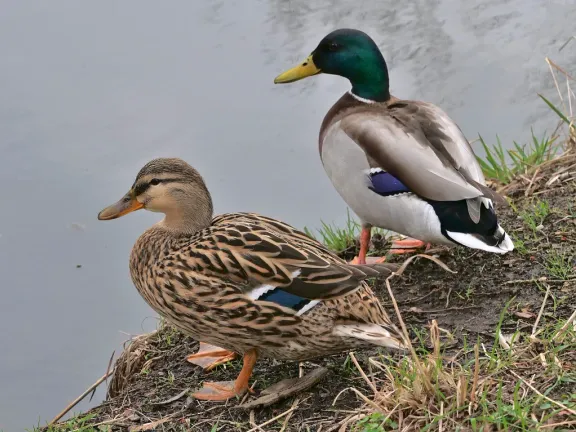
Mallard
Anas platyrhynchos
Same subfamily (Anatinae)
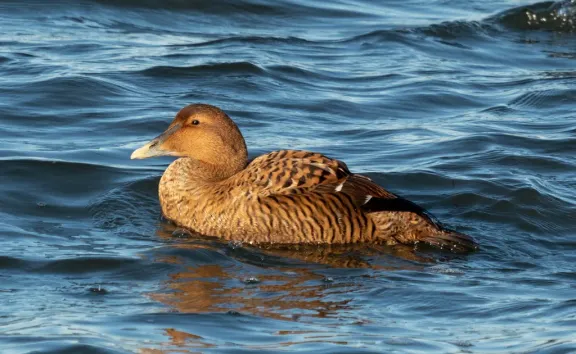
Waterfowl
Common eider
Somateria mollissima
Same subfamily (Anatinae)
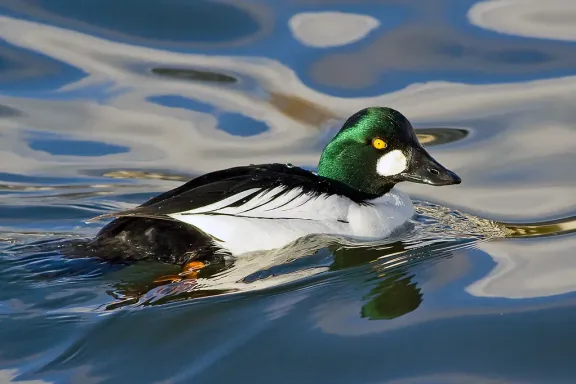
Waterfowl
Common goldeneye
Bucephala clangula
Same subfamily (Anatinae)
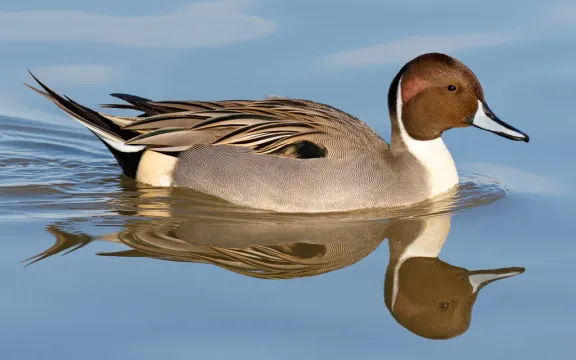
Waterfowl
Northern pintail
Anas acuta
Same subfamily (Anatinae)
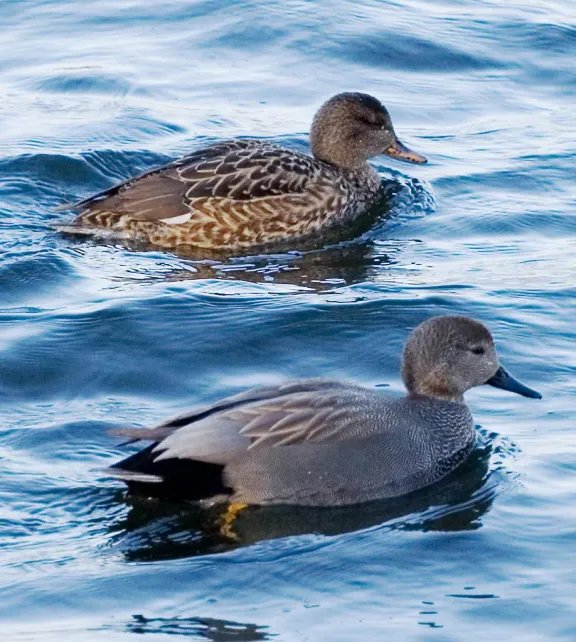
Waterfowl
Gadwall
Mareca strepera
Same subfamily (Anatinae)