Waterfowl
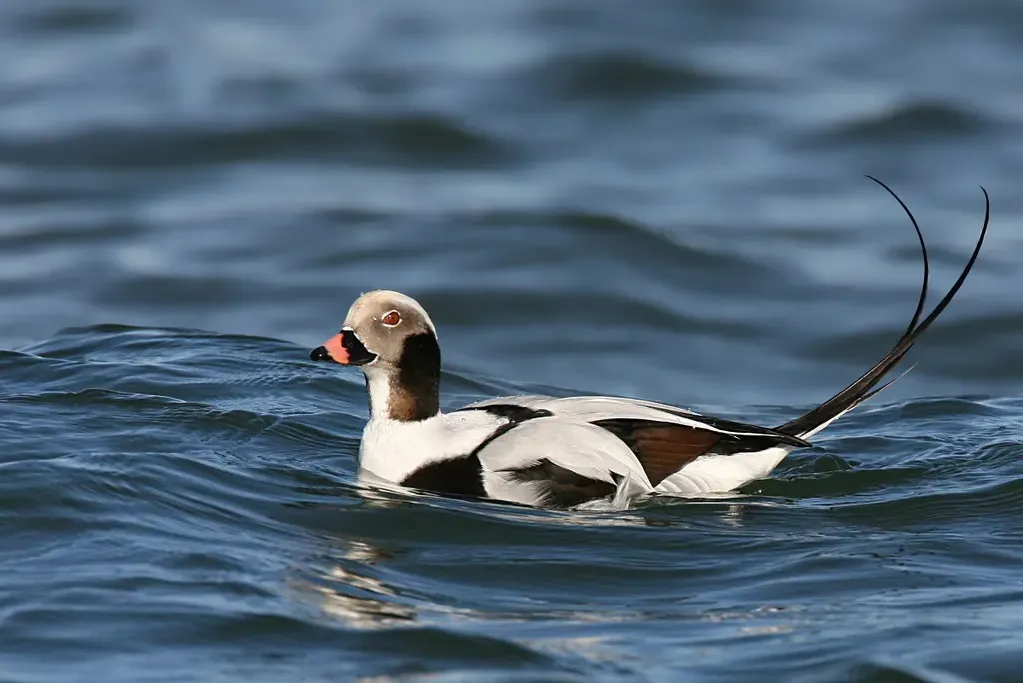
Long-tailed duck
Clangula hyemalis
- Group
- Waterfowl
- Size class
- Small (under 10 kg)
- Family
- Anatidae
Range
- North America
- Europe
- Arctic
Habitat
- Coast
Range
Countries it is found in
41 countries
- Åland Islands
- Albania
- Austria
- Bermuda
- Bosnia & Herzegovina
- Canada
- Czechia
- Denmark
- Estonia
- Faroe Islands
- Finland
- France
- Germany
- Greece
- Greenland
- Iceland
- Ireland
- Isle of Man
- Italy
- Japan
- Kazakhstan
- Latvia
- Lithuania
- Moldova
Range from:Wikipedia country bird lists, GBIF occurrence records — read 2026-08-05
Chapter 01
Overview
The long-tailed duck (Clangula hyemalis) is a medium-sized sea duck that breeds on Arctic tundra and taiga and winters along the northern coasts of the Atlantic and Pacific. It is the only member of its genus; Clangula is a diminutive of the Latin for 'to resound', and hyemalis means 'of winter'. The Baltic Sea is its most important wintering area, with about 4.5 million birds. Numbers wintering there have fallen markedly, partly through drowning in gillnets, and the IUCN lists the species as vulnerable.
Chapter 02
Identification
Adults have white underparts, but the rest of the plumage passes through a complex moult. The drake has a long pointed tail of 10 to 15 cm and a dark grey bill crossed by a pink band. In winter he shows a dark cheek patch on a mostly white head and neck; in summer the head, neck and back are dark with a white cheek patch. The female has a brown back and a short pointed tail, with a white head and dark crown in winter. The drake is vocal, with a musical yodelling call.
Chapter 03
Behaviour
A gregarious bird, forming large flocks in winter and on migration. It dives for molluscs, crustaceans and some small fish, using its wings underwater, and can reach depths of 60 m — far deeper than most ducks. It breeds by tundra pools and marshes, on sea coasts and on large mountain lakes; fishless lakes matter, since they hold the invertebrates adults and young feed on. The nest is on the ground near water, lined with down, and holds six to nine pale grey to olive eggs.
Chapter 04
Hunting
The long-tailed duck is still hunted across much of its range. Along the Swedish east coast it was once an important winter food for coastal households: nets were strung on long poles across narrow sounds to catch the birds in flight, a method Olaus Magnus described in 1555, and birds were also shot or clubbed in open leads in the ice. Today the alfågel has no general open season in Sweden's hunting ordinance, and its wintering population is red-listed there as endangered.
On the table
Meat & cooking
Table grade 1 of 51/5
- Sold as meat in a legal market
- Has a named traditional dish
- Published way to handle and cook it
- Eaten in more than one country
- No known health advisory
Sources
Sources: Long-tailed duck — Wikipedia, Alfågel — Wikipedia (svenska), Jaktförordning (1987:905) — Sveriges riksdag — read 2026-10-29
Cross-reference
Related species
Its closest relatives in the compendium, nearest kinship first.
Waterfowl
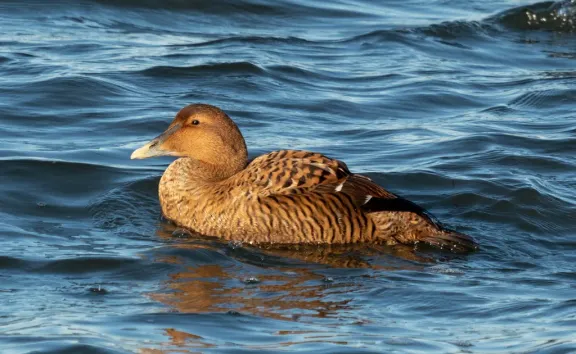
Common eider
Somateria mollissima
Same subfamily (Anatinae)
Waterfowl
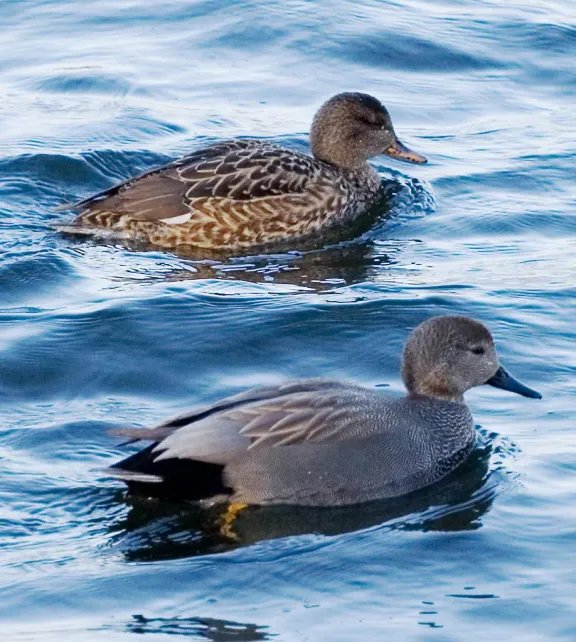
Gadwall
Mareca strepera
Same subfamily (Anatinae)
Waterfowl
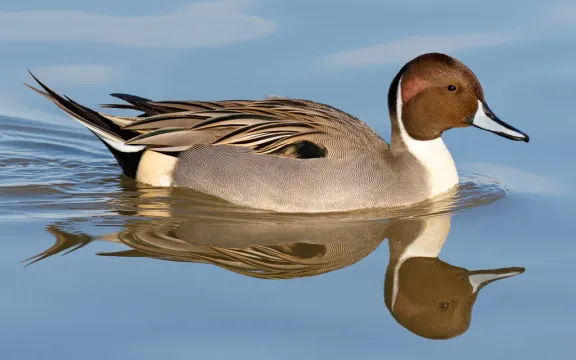
Northern pintail
Anas acuta
Same subfamily (Anatinae)
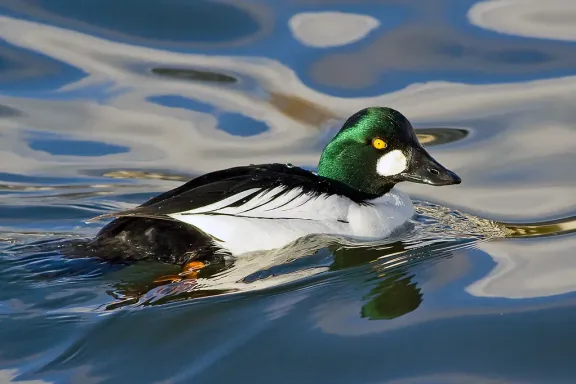
Waterfowl
Common goldeneye
Bucephala clangula
Same subfamily (Anatinae)
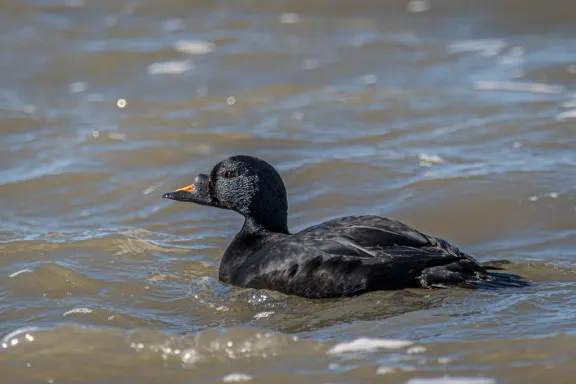
Waterfowl
Common scoter
Melanitta nigra
Same subfamily (Anatinae)
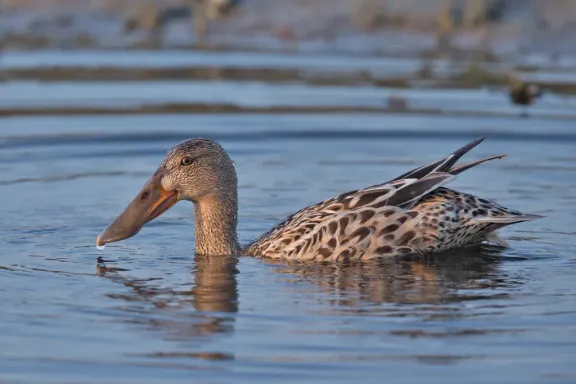
Waterfowl
Northern shoveler
Spatula clypeata
Same subfamily (Anatinae)