Waterfowl
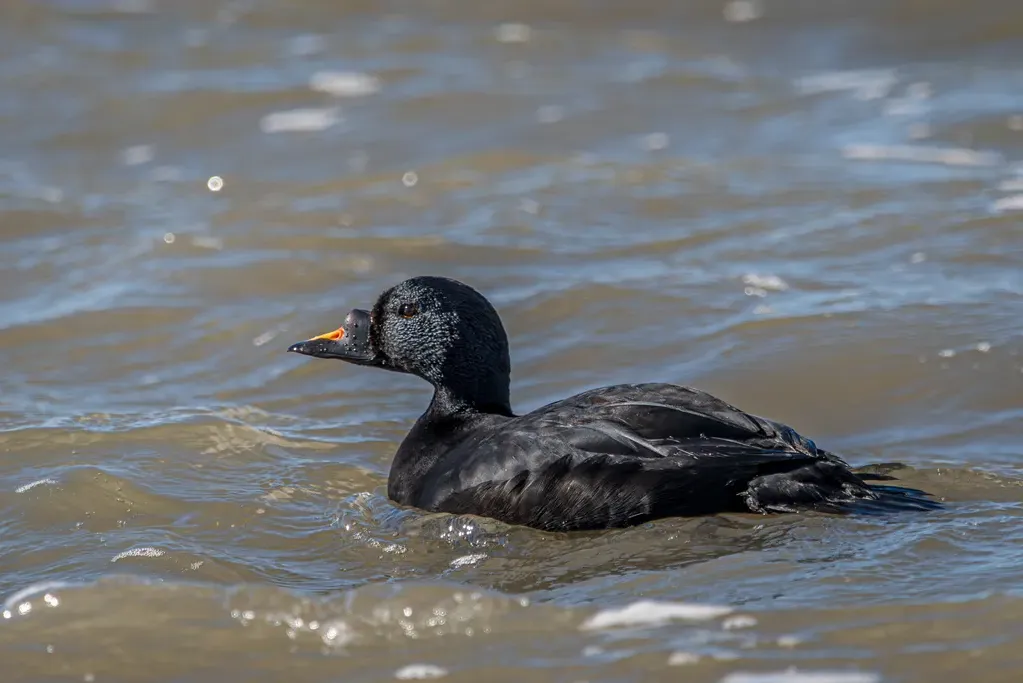
Common scoter
Melanitta nigra
- Group
- Waterfowl
- Size class
- Small (under 10 kg)
- Family
- Anatidae
Range
- Europe
- Arctic
Habitat
- Coast
Range
Countries it is found in
34 countries
- Austria
- Belgium
- Bosnia & Herzegovina
- Bulgaria
- Canada
- Czechia
- Denmark
- Estonia
- Faroe Islands
- Finland
- France
- Germany
- Greece
- Iceland
- Ireland
- Isle of Man
- Italy
- Latvia
- Liechtenstein
- Lithuania
- Morocco
- Netherlands
- Norway
- Poland
Range from:Wikipedia country bird lists — read 2026-08-05
Chapter 01
Overview
The common scoter (Melanitta nigra) is a large sea duck, 43–54 cm long, which breeds across the far north of Europe and the Palearctic east to the Olenyok River and winters on European coasts as far south as Morocco. The black scoter of North America and eastern Siberia was formerly treated as a subspecies. Linnaeus described it in 1758 as Anas nigra; nigra simply means 'black'. It falls under the African-Eurasian Migratory Waterbird Agreement (AEWA). The IUCN rates it least concern, though Baltic winter counts nearly halved between 1988–1993 and 2007–2009.
Chapter 02
Identification
A bulky sea duck with a large bill. The drake is all black, with a bulbous bill showing some yellow around the nostrils — and no white anywhere, which separates him from every other scoter except the black scoter. The female is brown with pale cheeks, the pale areas more extensive than on other female scoters. The common and black scoters have diagnosably distinct calls.
Chapter 03
Behaviour
It winters in large, tightly packed flocks on coastal water, and the birds tend to take off and dive together. It dives for crustaceans and molluscs, and on fresh water also takes aquatic insects and small fish. In Sweden it breeds in the upper conifer belt and in the willow and birch zones of the mountains. The lined nest is on the ground near the sea, a lake or a river, and holds six to eight eggs.
Chapter 04
Hunting
The sjöorre has an open season across all of Sweden from 21 September to 31 January, and may only be shot from one hour before sunrise to one hour after sunset. In parts of nineteenth-century France the Catholic Church accepted the scoter as a substitute for fish on Fridays. The birds came inshore on the flood tide to dive for small bivalves, were caught in nets, and were sold for fast days — exempted, it was said, because of their fishy flavour.
On the table
Meat & cooking
Table grade 2 of 52/5
- Sold as meat in a legal market
- Has a named traditional dish
- Published way to handle and cook it
- Eaten in more than one country
- No known health advisory
Sources
Sources: Common scoter — Wikipedia, Sjöorre — Wikipedia (svenska), Jaktförordning (1987:905) — Sveriges riksdag — read 2026-10-29
Cross-reference
Related species
Its closest relatives in the compendium, nearest kinship first.
Waterfowl
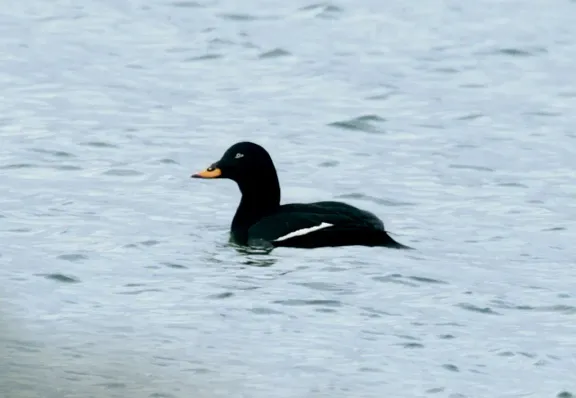
Velvet scoter
Melanitta fusca
Same genus (Melanitta)
Waterfowl
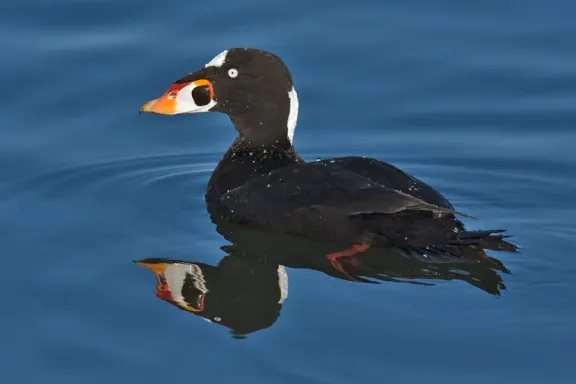
Surf scoter
Melanitta perspicillata
Same genus (Melanitta)
Waterfowl
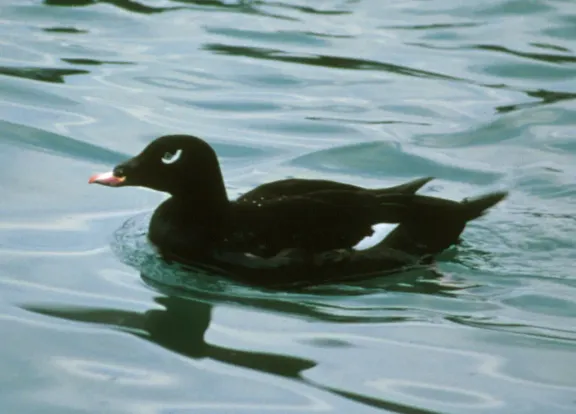
White-winged scoter
Melanitta deglandi
Same genus (Melanitta)
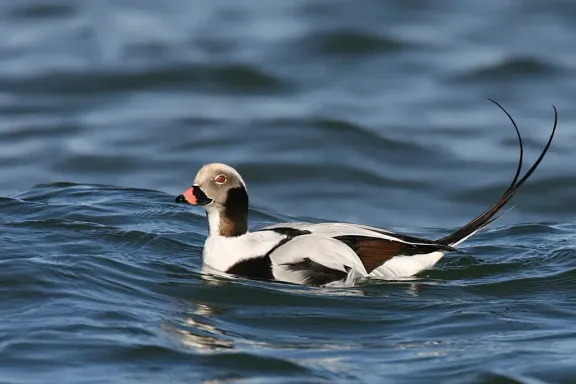
Waterfowl
Long-tailed duck
Clangula hyemalis
Same subfamily (Anatinae)
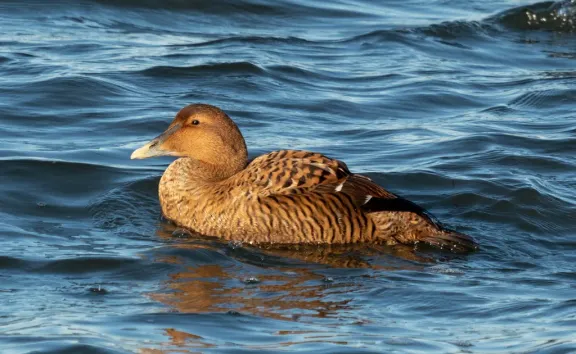
Waterfowl
Common eider
Somateria mollissima
Same subfamily (Anatinae)
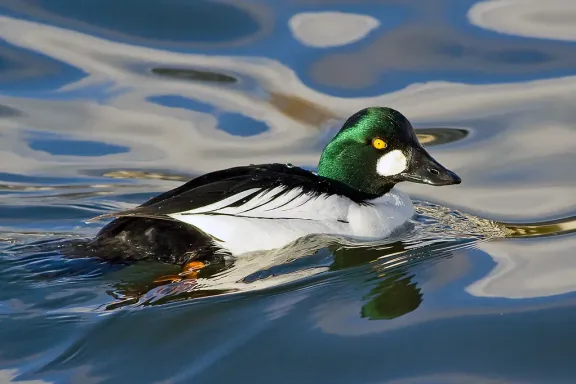
Waterfowl
Common goldeneye
Bucephala clangula
Same subfamily (Anatinae)