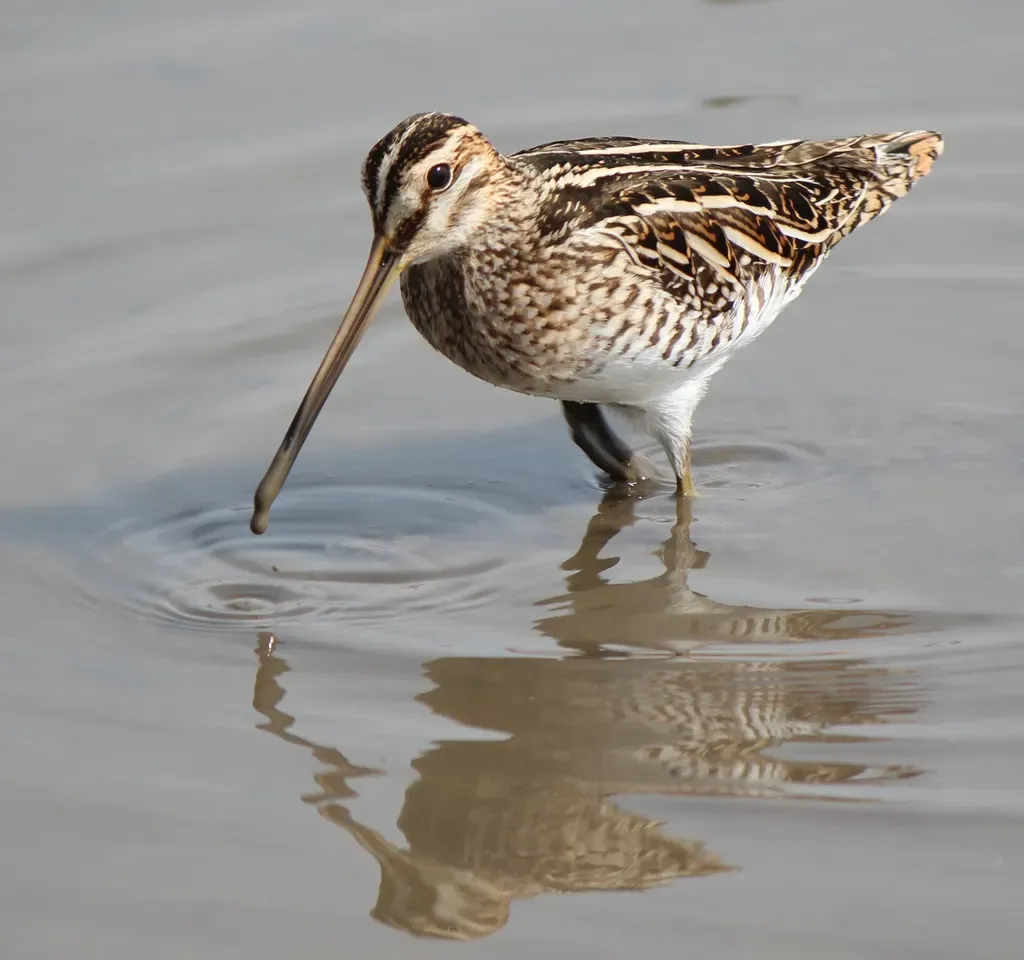
Photo:AlpsdakeCC BY-SA 3.0
Upland birds
Common snipe
Gallinago gallinago
- Group
- Upland birds
- Size class
- Small (under 10 kg)
- Family
- Scolopacidae
Range
- Europe
- Asia
Habitat
- Wetland
Range
Countries it is found in
130 countries
- Afghanistan
- Albania
- Algeria
- Armenia
- Austria
- Azerbaijan
- Bahrain
- Bangladesh
- Belarus
- Belgium
- Bhutan
- Bosnia & Herzegovina
- British Indian Ocean Territory
- Brunei
- Bulgaria
- Burkina Faso
- Burundi
- Cambodia
- Cameroon
- Cape Verde
- Central African Republic
- Chad
- China
- Congo - Brazzaville
Range from:Wikipedia country bird lists, GBIF occurrence records — read 2026-08-05
Chapter 01
Overview
The common snipe (Gallinago gallinago) is a small, stocky wader of the Old World that breeds in marshes, bogs, tundra and wet meadows across the Palearctic, from Iceland and northern Fennoscandia to Kamchatka. It is migratory: European birds winter in southern and western Europe and Africa, Asian birds in tropical southern Asia. Two subspecies are recognised, and the North American Wilson's snipe was formerly counted as a third. With 7–11 million adults the species is not globally threatened, but it is declining, with local extinctions on the southern edge of its European range through drainage and intensive farming. In Sweden it has been listed as near threatened since 2025, after an estimated fall of about 17.5 per cent in 15 years.
Chapter 02
Identification
Adults are 25–27 cm long with a 44–47 cm wingspan and weigh 80–140 g, up to 180 g before migration. The bill is very long and straight, 5.5–7 cm; the legs are short and greenish-grey. The body is mottled brown with straw-yellow stripes above and pale below, and the head has a dark stripe through the eye with pale stripes above and below it and a pale central crown-stripe. Wilson's snipe of North America has eight pairs of tail feathers to the common snipe's seven. Flushed, it shows a broad white trailing edge to the wing and gives a sharp 'scape'.
Chapter 03
Behaviour
Shy and well camouflaged, it keeps close to ground vegetation and flushes only when approached closely, then climbs and goes off in a series of aerial zig-zags to confuse predators, often flying far. It forages in soft mud, probing or picking food by sight, mainly insects and earthworms with some plant material. In courtship the male flies high in circles and makes shallow dives, the spread outer tail feathers vibrating to produce the 'drumming' that has given the bird names such as 'heather-bleater' in Scotland and taivaanvuohi, 'sky goat', in Finnish. The nest is well hidden on the ground; the female incubates four eggs for 18–21 days, and each parent then looks after half the brood until fledging at 10–20 days.
Chapter 04
Hunting
Camouflage lets a snipe stay hidden from hunters in marshland, and it is alert and easily startled; once it flies, its erratic flight makes wing-shooting difficult. The difficulty of hunting snipe gave rise to the word 'sniper', which first meant a hunter skilled in marksmanship and concealment. In Sweden the common snipe has no open season in the Hunting Ordinance, either in its current form or in the version that takes effect on 1 July 2027.
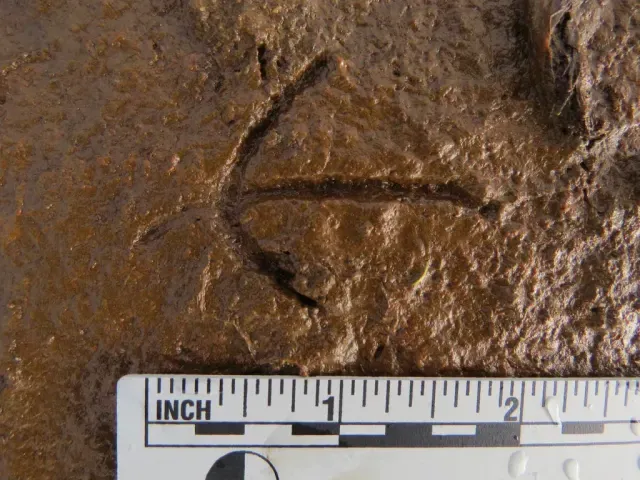
Field data
Tracks
A photograph of real sign left by Common snipe. Prints vary with gait, ground and how long they have been there — treat this as one example, not a template.
Track photo:Garth HarwoodCC BY
Sources
Sources: Common snipe — Wikipedia, Enkelbeckasin — Wikipedia, Snipe — Wikipedia, Jaktförordning (1987:905) — Sveriges riksdag — read 2026-10-29
Cross-reference
Related species
Its closest relatives in the compendium, nearest kinship first.
Upland birds
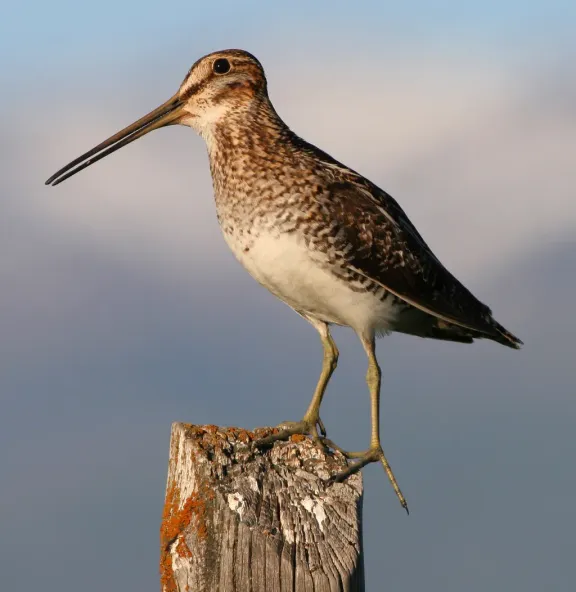
Wilson’s snipe
Gallinago delicata
Same genus (Gallinago)
Upland birds
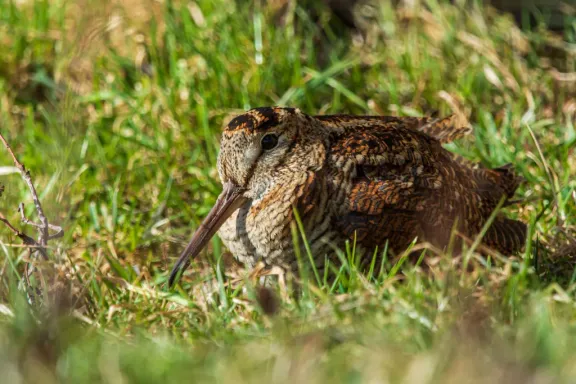
Eurasian woodcock
Scolopax rusticola
Same family (Scolopacidae)
Upland birds
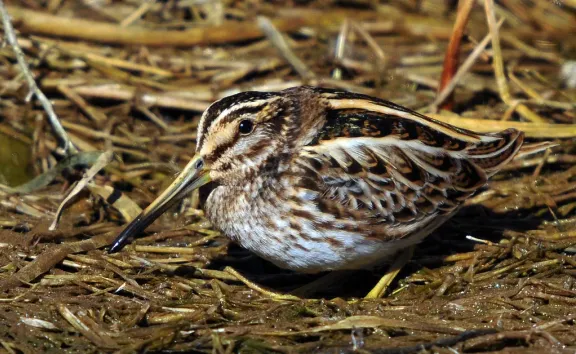
Jack snipe
Lymnocryptes minimus
Same family (Scolopacidae)
Upland birds
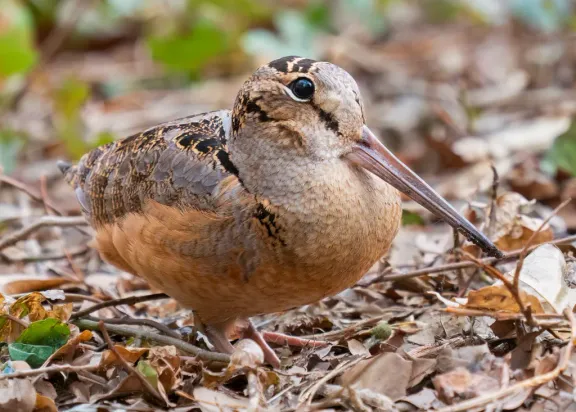
American woodcock
Scolopax minor
Same family (Scolopacidae)