Upland birds
Common starling
Sturnus vulgaris
- Group
- Upland birds
- Size class
- Small (under 10 kg)
- Family
- Sturnidae
Range
- Europe
- North America
Habitat
- Farmland
Range
Countries it is found in
108 countries
- Afghanistan
- Åland Islands
- Albania
- Algeria
- Andorra
- Argentina
- Armenia
- Aruba
- Australia
- Austria
- Azerbaijan
- Bahamas
- Bahrain
- Barbados
- Belarus
- Belgium
- Bermuda
- Bosnia & Herzegovina
- Brazil
- Bulgaria
- Canada
- Chile
- China
- Croatia
Range from:Wikipedia country bird lists, GBIF occurrence records — read 2026-08-05
Chapter 01
Overview
The common starling (Sturnus vulgaris) is a medium-sized passerine native to temperate Europe and the Palearctic east to western Mongolia. It has been introduced as an invasive species to Australia, New Zealand, North America, Argentina, South Africa and Fiji, and the IUCN lists it among the world's 100 worst invasive species. The world population, estimated at 310 million in 2004, is not thought to be falling significantly. In its northern range the story is different. Major declines have been recorded since 1980 in Sweden, Finland and the Baltic states, driven by intensive farming and fewer grassland invertebrates for the chicks. The starling has bred in northern Sweden since 1850; the Swedish population was put at just over 400,000 pairs in 2018, and it has been red-listed as vulnerable in Sweden since 2015.
Chapter 02
Identification
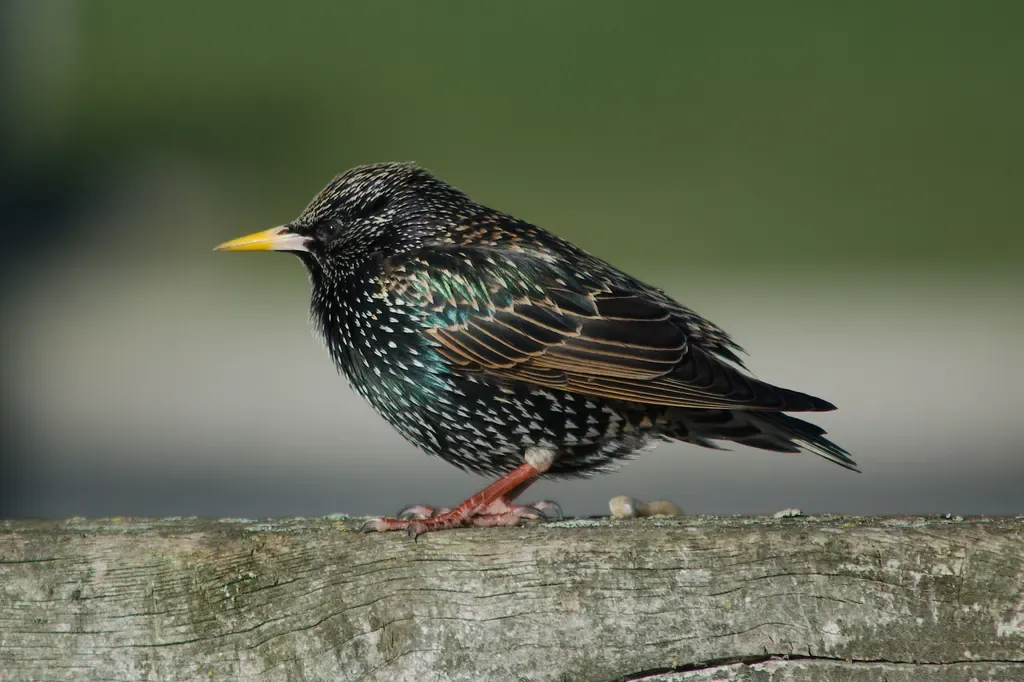
A stocky bird 19–23 cm long, with a 31–44 cm wingspan and a weight of 58–101 g. The plumage is iridescent black glossed purple or green, spangled with white especially in winter; the spots wear off towards the breeding season. The bill is black in winter and yellow in summer, and the legs are pinkish-red. Juveniles are plain grey-brown. It is told from thrushes and small crows by its short tail, sharp blade-like bill, round-bellied shape and strong legs. In flight the pointed, triangular wings are distinctive, and on the ground it walks with a waddling gait rather than hopping. The song is a long, varied chatter full of whistles, clicks and mimicry.
Chapter 03
Behaviour
Starlings are highly gregarious, especially in autumn and winter, gathering in murmurations — dense, shape-shifting flocks thought to defend against falcons and sparrowhawks — and in roosts of up to 1.5 million birds in city centres, woods and reedbeds. In south-western Jutland more than a million birds gather in spring before the northern Scandinavian birds leave, a spectacle known locally as sort sol, black sun. The starling is largely insectivorous, probing short grass for invertebrates, but takes seeds, fruit and food waste too; flocks roller-feed, the birds at the back flying over to the front. It nests in a cavity, lays four or five glossy pale blue eggs and usually raises one or two broods, only one north of 48°N.
Chapter 04
Hunting
Starlings can damage orchards and vineyards — grapes, cherries, olives — and pull up sprouting grain, so they have long been controlled, though with limited lasting effect. In Spain the species is hunted commercially as food and has a closed season; in France it is classed as a pest that may be killed for most of the year; in Great Britain it is protected. In the United States it is exempt from the Migratory Bird Treaty Act, and 1.7 million were poisoned, shot or trapped there in 2008. On Gotland the starling was a popular food in the latter half of the 19th century. In Sweden the stare has no open season. The hunting ordinance's bilaga 4 lets it, like the blackbird, be shot all year inside a garden or other commercial berry or fruit growing facility and within 200 metres of it, where that is needed to prevent damage there.
Field data
Tracks
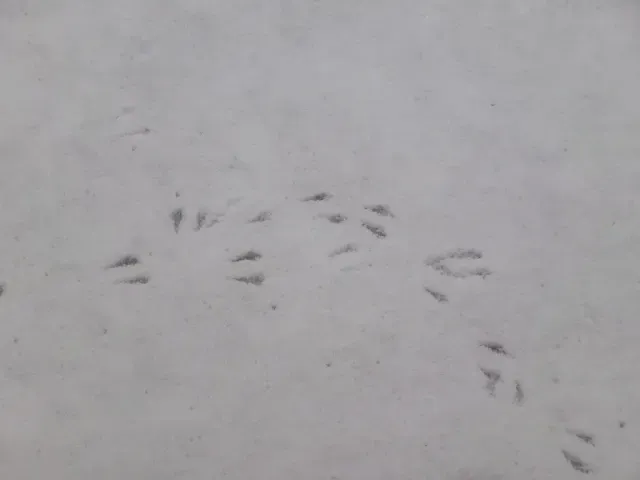
A photograph of real sign left by Common starling. Prints vary with gait, ground and how long they have been there — treat this as one example, not a template.
Track photo:Texas Bird FamilyCC BY
On the table
Meat & cooking
Table grade 3 of 53/5
- Sold as meat in a legal market
- Has a named traditional dish
- Published way to handle and cook it
- Eaten in more than one country
- No known health advisory
Sources
Sources: Common starling — Wikipedia, Stare — Wikipedia (svenska), Jaktförordning (1987:905) — Sveriges riksdag — read 2026-10-29
Cross-reference
Related species
Its closest relatives in the compendium, nearest kinship first.
Upland birds
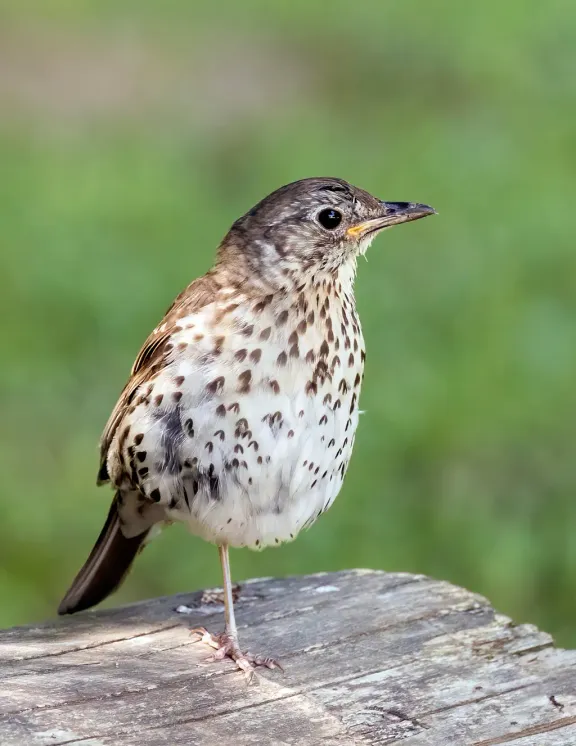
Song thrush
Turdus philomelos
Same order (Passeriformes)
Upland birds
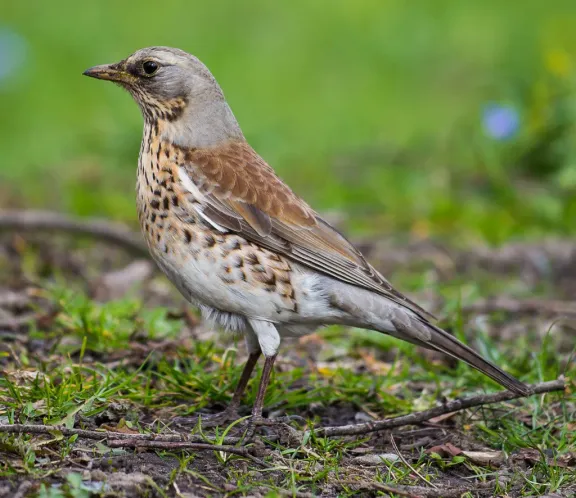
Fieldfare
Turdus pilaris
Same order (Passeriformes)
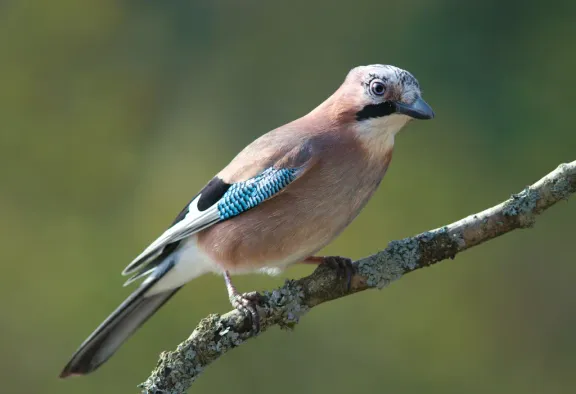
Upland birds
Eurasian jay
Garrulus glandarius
Same order (Passeriformes)
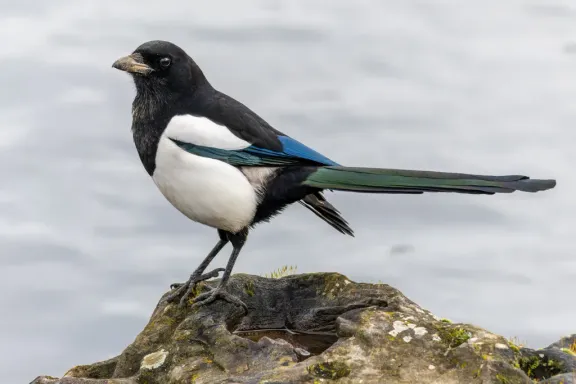
Upland birds
Eurasian magpie
Pica pica
Same order (Passeriformes)
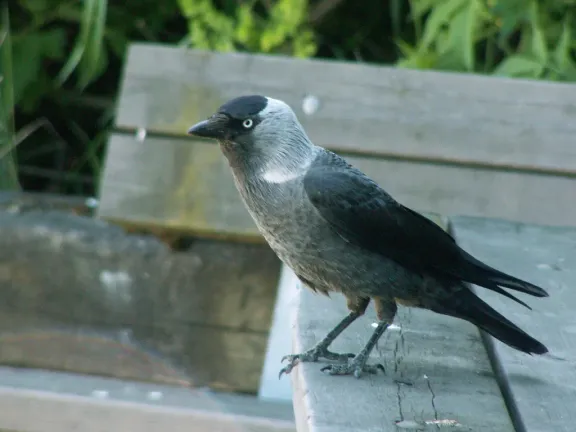
Upland birds
Western jackdaw
Coloeus monedula
Same order (Passeriformes)
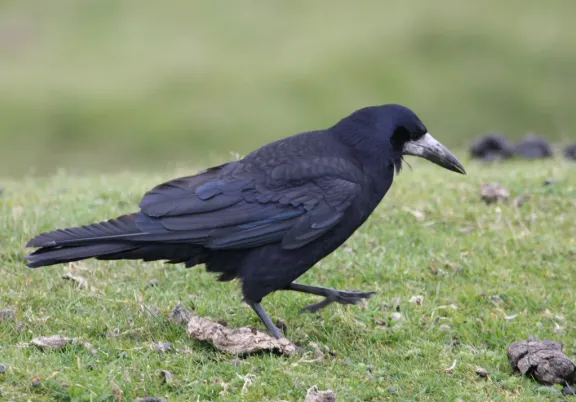
Upland birds
Rook
Corvus frugilegus
Same order (Passeriformes)