Waterfowl
Velvet scoter
Melanitta fusca
- Group
- Waterfowl
- Size class
- Small (under 10 kg)
- Family
- Anatidae
Range
- Europe
- Asia
Habitat
- Coast
Range
Countries it is found in
41 countries
- Åland Islands
- Austria
- Azerbaijan
- Belgium
- Bosnia & Herzegovina
- Bulgaria
- Croatia
- Czechia
- Denmark
- Estonia
- Faroe Islands
- Finland
- France
- Georgia
- Germany
- Greece
- Hungary
- Ireland
- Isle of Man
- Italy
- Kazakhstan
- Kyrgyzstan
- Latvia
- Lithuania
Range from:Wikipedia country bird lists, GBIF occurrence records — read 2026-08-05
Chapter 01
Overview
The velvet scoter (Melanitta fusca) is a large sea duck breeding across the far north of Europe and the Palearctic west of the Yenisey, and wintering on temperate coasts as far south as Britain and on the Black and Caspian Seas. Its genus name means 'black duck' in Greek, and fusca is Latin for 'dusky'. Linnaeus described it in 1758 and restricted its type locality to the Swedish coast. It was once lumped with the white-winged and Stejneger's scoters. The IUCN lists it as vulnerable.
Chapter 02
Identification
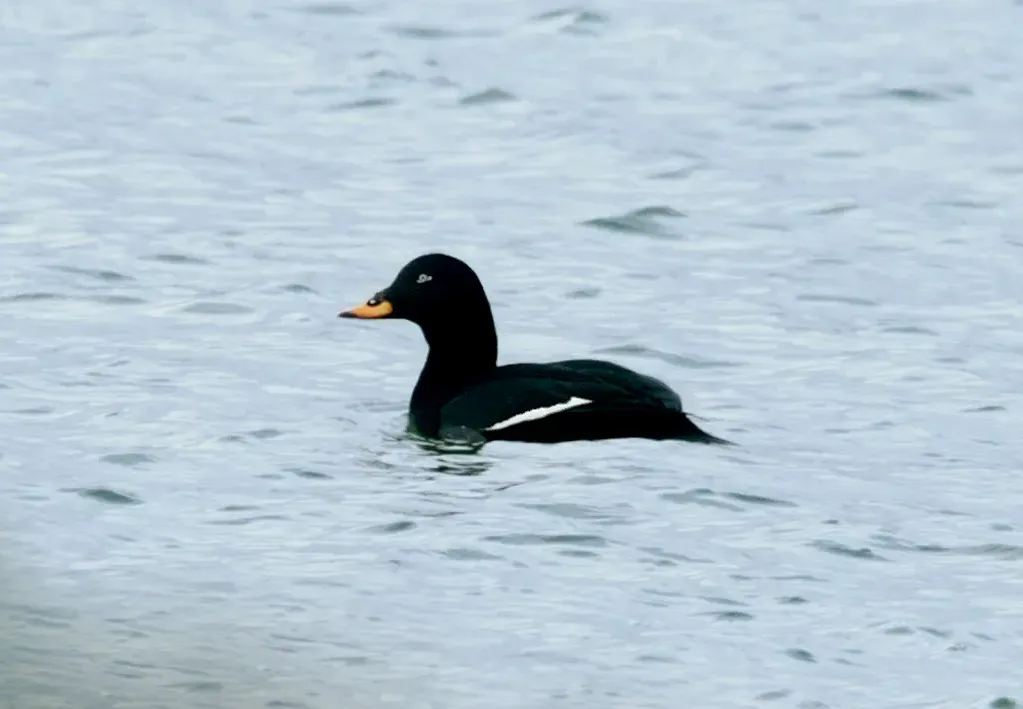
A relatively large sea duck, 51–56 cm long with a 90–99 cm wingspan, a thick neck, a long broad bill and a pointed tail. The drake is glossy black with large white wing patches and a small white patch behind the eye, and his bill is partly orange. The female has the same pattern but lacks the gloss and is duller and browner. On the water flocks are tightly packed, and the birds tend to take off together.
Chapter 03
Behaviour
It dives for crustaceans and molluscs, favouring clear, sheltered water; most birds winter at sea in shallow inshore water over large mussel beds. The female builds a well-hidden nest in thick vegetation near the sea, a lake or a river, and lays 7–9 creamy white eggs, incubating them for 27–28 days. Laying is late, in May–June in the Nordic countries. The young feed themselves and become independent after 30–40 days; birds first breed at two years.
Chapter 04
Hunting
The svärta has no general open season in Sweden's hunting ordinance. It falls under the African-Eurasian Migratory Waterbird Agreement (AEWA), and the IUCN rates it vulnerable. Oil spills are a particular danger, since the birds moult and winter in large flocks; mink predation on late broods has also driven its decline in the Swedish archipelago. Sweden moved it from vulnerable to least concern in 2025, the national population having recovered since about 2015.
Sources
Sources: Velvet scoter — Wikipedia, Svärta — Wikipedia (svenska), Jaktförordning (1987:905) — Sveriges riksdag — read 2026-10-29
Cross-reference
Related species
Its closest relatives in the compendium, nearest kinship first.
Waterfowl
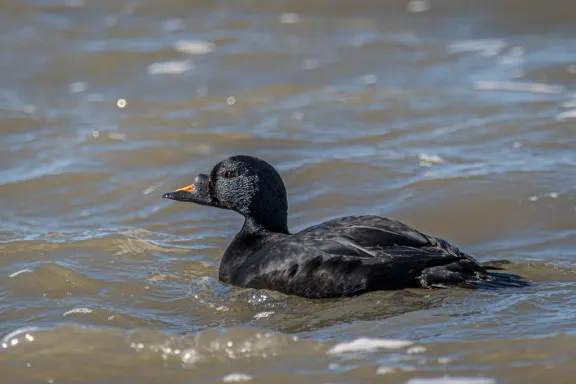
Common scoter
Melanitta nigra
Same genus (Melanitta)
Waterfowl
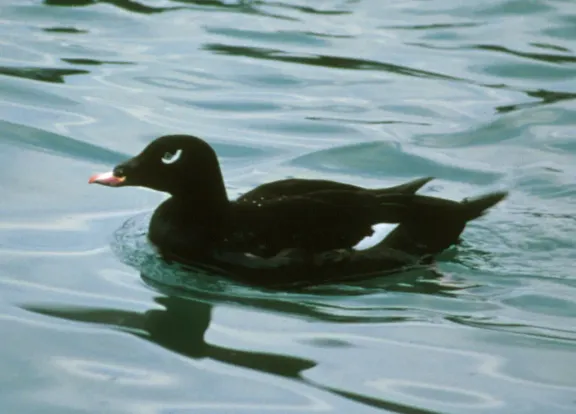
White-winged scoter
Melanitta deglandi
Same genus (Melanitta)
Waterfowl
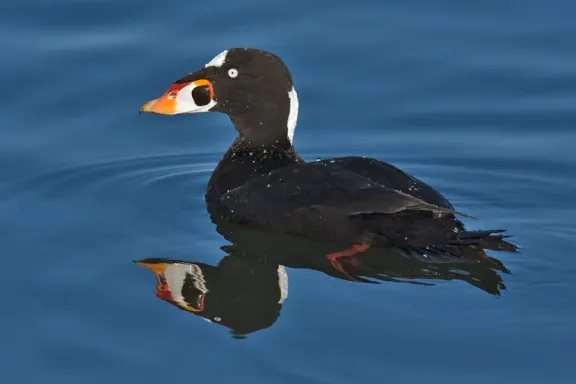
Surf scoter
Melanitta perspicillata
Same genus (Melanitta)
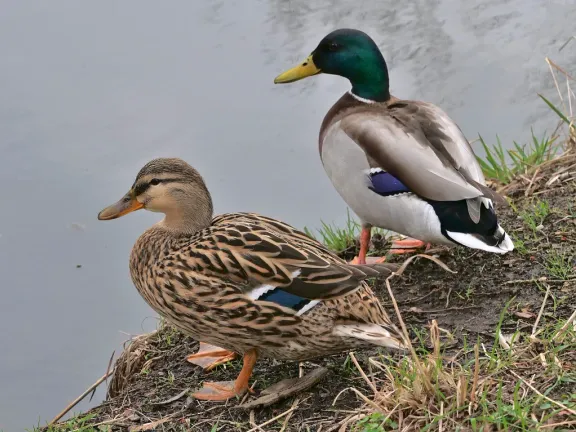
Waterfowl
Mallard
Anas platyrhynchos
Same subfamily (Anatinae)
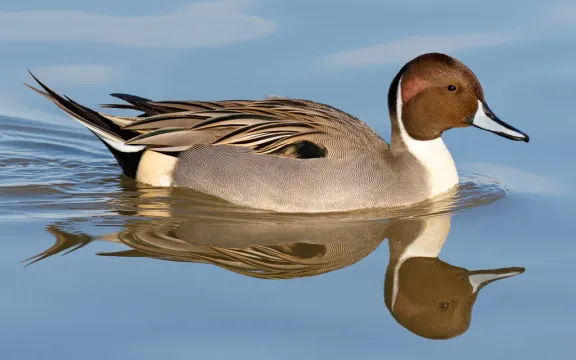
Waterfowl
Northern pintail
Anas acuta
Same subfamily (Anatinae)
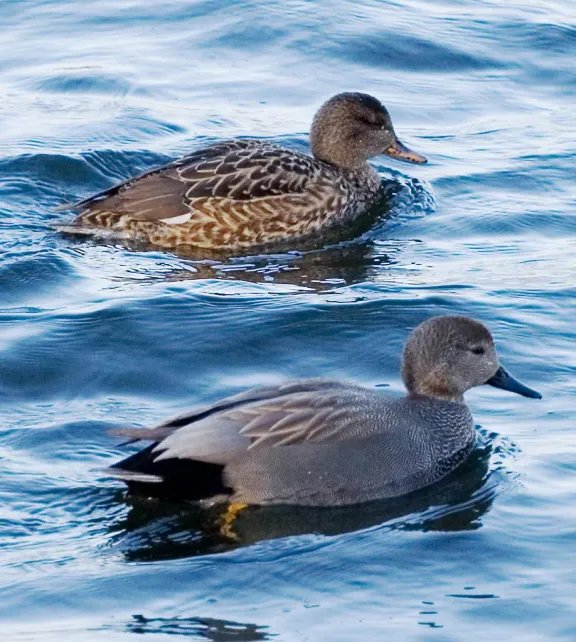
Waterfowl
Gadwall
Mareca strepera
Same subfamily (Anatinae)