Upland birds
See-see partridge
Ammoperdix griseogularis
- Group
- Upland birds
- Size class
- Small (under 10 kg)
- Family
- Phasianidae
Range
- Asia
Habitat
- Desert
- Mountain
Range
Countries it is found in
10 countries
- Afghanistan
- Iran
- Iraq
- Jordan
- Kuwait
- Pakistan
- Tajikistan
- Türkiye
- Turkmenistan
- Uzbekistan
Range from:Wikipedia country bird lists — read 2026-08-05
Chapter 01
Overview
The see-see partridge (Ammoperdix griseogularis) is a small gamebird of the pheasant family native from south-easternmost Turkey, north-eastern Syria, southern Armenia and Iraq north to south-western Kazakhstan and east through Iran to south-eastern Uzbekistan, western Tajikistan and Pakistan. It has no subspecies. Its closest relative is the sand partridge of Egypt and Arabia, and DNA studies place its genus as sister to a group that includes the Coturnix quails, the Alectoris partridges and the Pternistis francolins. It is a resident of dry, open and often hilly country — rocky mountain desert, stony slopes and wadis up to about 2,000 m — and breeds near water, usually on flatter ground than the sand partridge. Where it shares its range with the chukar it keeps to lower, warmer country. The IUCN lists it as least concern, with a world population estimated at 150,000–250,000 adults, though its trend is unknown.
Chapter 02
Identification
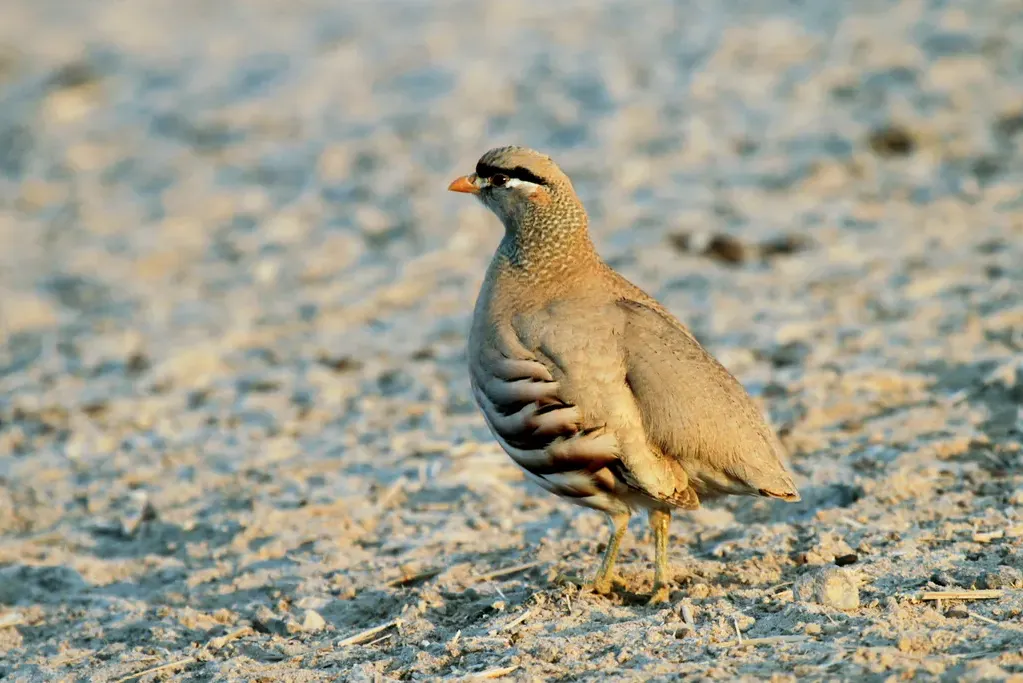
A rotund partridge 22–25 cm long, mainly sandy brown, with the wavy white-and-brown flank stripes typical of its genus. The male has a grey head with a black stripe through the eye and a white cheek patch, and the sides of the neck are speckled with white — the head pattern is the best way to tell it from the sand partridge. The female is a very washed-out version of the male and, with her weak head pattern, much harder to separate from the sand partridge. The song is a whistled hwit-hwit-hwit, which gives the bird its Swedish name.
Chapter 03
Behaviour
See-see partridges are usually seen in pairs or small groups of two to four, though flocks of more than fifty have been recorded. When disturbed they prefer to run rather than fly, and if they must fly they go only a short distance on rounded wings. The nest is a scantily lined scrape on the ground; clutches are given as six to nine eggs on average, and as many as 8–16. The hen incubates for about three weeks, and two broods a season occur. The diet is a wide variety of seeds along with shoots, leaves and berries, and some insects.
Field data
Tracks
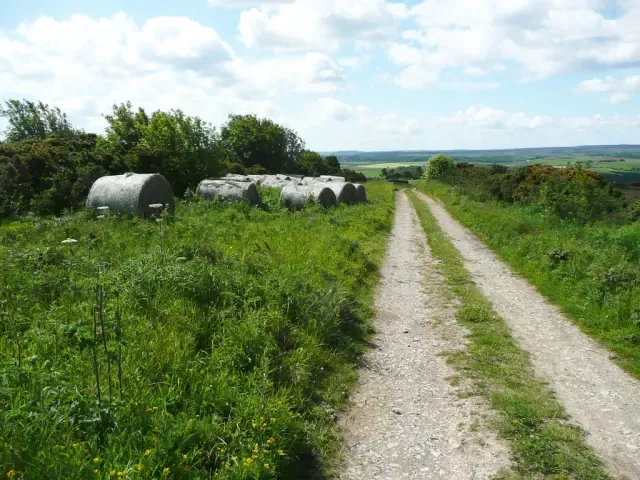
A photograph of real sign left by See-see partridge. Prints vary with gait, ground and how long they have been there — treat this as one example, not a template.
Track photo:Humphrey BoltonCC BY-SA 2.0
Sources
Sources: See-see partridge — Wikipedia, Visselhöna — Wikipedia (sv) — read 2026-10-29
Cross-reference
Related species
Its closest relatives in the compendium, nearest kinship first.
Upland birds
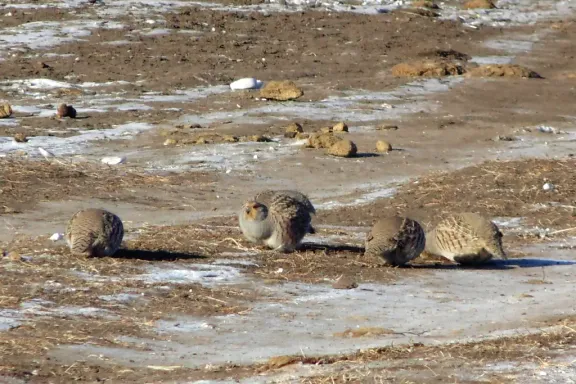
Daurian partridge
Perdix dauurica
Same subfamily (Perdicinae)
Upland birds
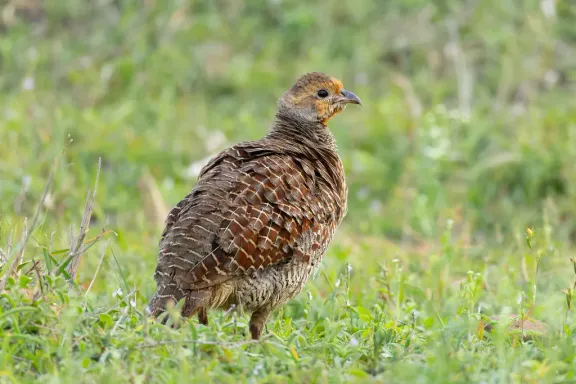
Grey francolin
Ortygornis pondicerianus
Same subfamily (Perdicinae)
Upland birds
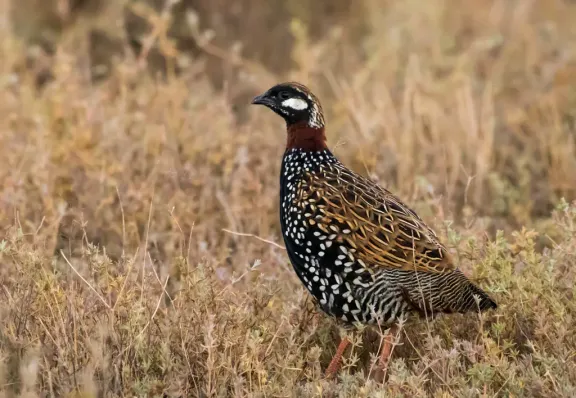
Black francolin
Francolinus francolinus
Same subfamily (Perdicinae)
Upland birds
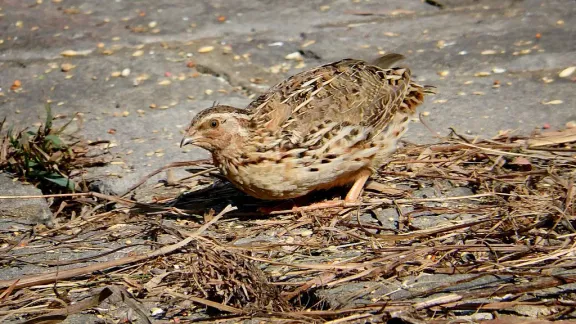
Japanese quail
Coturnix japonica
Same subfamily (Perdicinae)
Upland birds
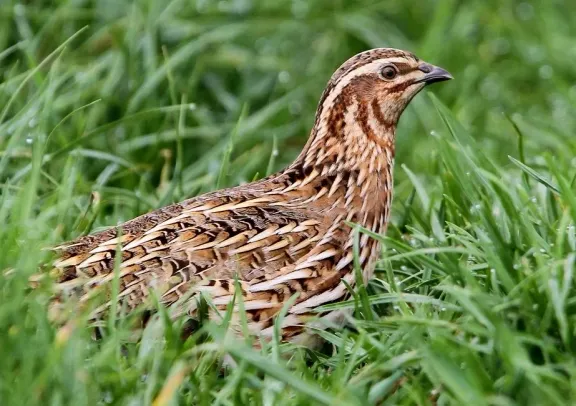
Common quail
Coturnix coturnix
Same subfamily (Perdicinae)
Upland birds
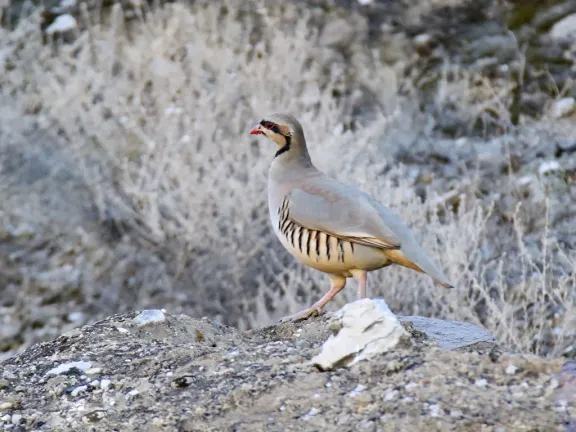
Chukar partridge
Alectoris chukar
Same subfamily (Perdicinae)