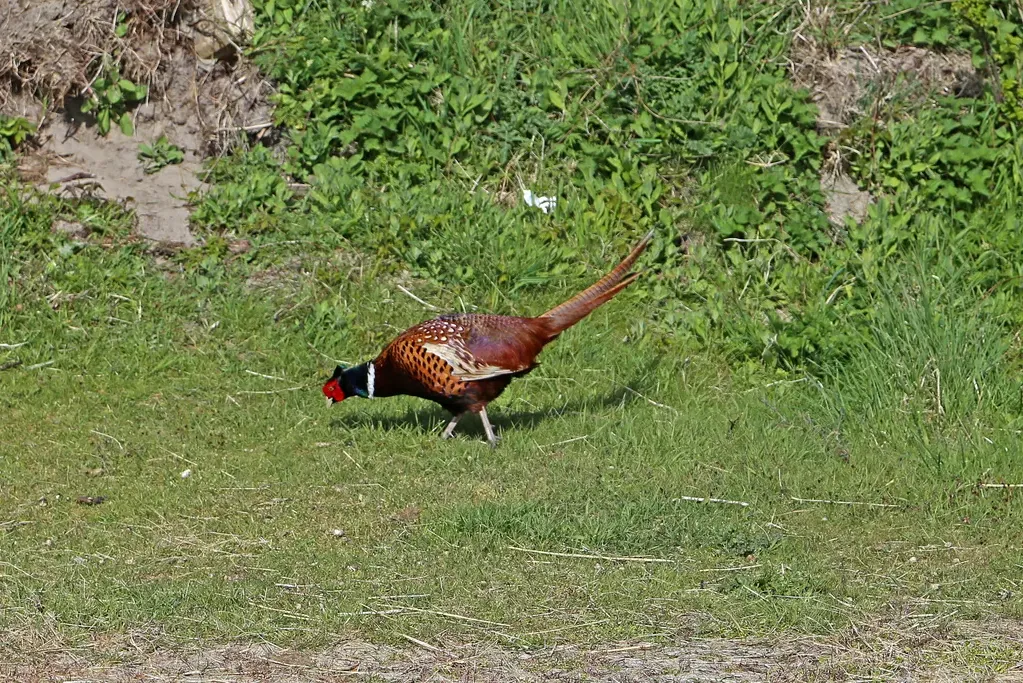
Photo:W. BulachCC BY-SA 4.0
Upland birds
Common pheasant
Phasianus colchicus
- Group
- Upland birds
- Size class
- Small (under 10 kg)
- Family
- Phasianidae
Range
- Asia
- Europe
- North America
- Oceania
Habitat
- Farmland
Range
Countries it is found in
76 countries
- Afghanistan
- Albania
- Andorra
- Armenia
- Australia
- Austria
- Azerbaijan
- Bahamas
- Belarus
- Belgium
- Bosnia & Herzegovina
- Bulgaria
- Canada
- Chile
- China
- Croatia
- Cuba
- Cyprus
- Czechia
- Denmark
- Finland
- France
- French Polynesia
- Georgia
Range from:Wikipedia country bird lists, GBIF occurrence records — read 2026-08-05
Chapter 01
Overview
The common pheasant (Phasianus colchicus) — ring-necked or blue-headed pheasant — is a bird of the pheasant family. The species name colchicus is Latin for 'of Colchis', the country on the Black Sea where pheasants first became known to Europeans. Linnaeus described it in 1758, and the bird was already so well known that the laconic 'a red pheasant with blue head' served as a sufficient description. There are about 30 subspecies in five to eight groups, told apart by the male plumage — whether there is a white neck-ring or a white eyebrow stripe, and the colour of rump, wing coverts, crown, chest, upper back and flanks. Introduced populations have mixed those alleles thoroughly, according to what stock was released and what the local climate and habitat then did with it.
Chapter 02
Identification
There are many colour forms of the cock, from nearly white to almost black in melanistic birds. This is a consequence of captive breeding and hybridisation between subspecies and with the green pheasant, reinforced by continual releases from varying sources — the 'ring-necked pheasants' of Europe, North America and Australia are not a taxon at all but a stereotyped hybrid swarm. Body weight runs from 0.5 to 3 kg, with the cock heavier than the hen.
Chapter 03
Hunting
Where pheasants are released into country holding species that they threaten, such as prairie chickens and grey partridge, a range of management strategies has been proposed: mowing grass to reduce the nesting cover pheasants prefer, reducing their roosting habitat, shooting them in organised hunts, and trapping and removing them from places where they concentrate near threatened birds.
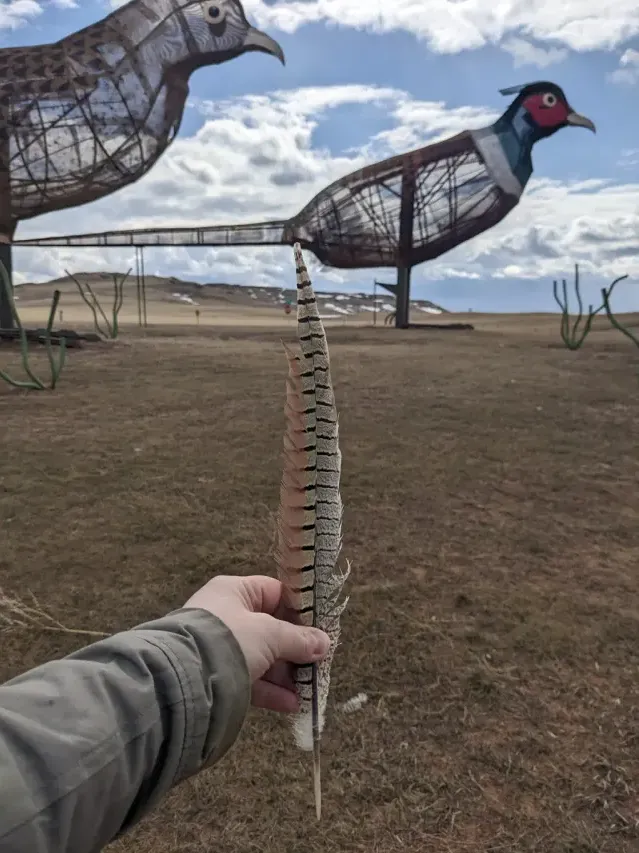
On the table
Meat & cooking
Table grade 5 of 55/5
- Sold as meat in a legal market
- Has a named traditional dish
- Published way to handle and cook it
- Eaten in more than one country
- No known health advisory
Traditional preparations
- Salmis
- The classic French treatment of game birds — roasted briefly, then jointed and finished in a sauce built from the carcass. Salmis — Wikipedia
- Game pie
- Legs and trim, the parts that dry out on a fast roast, go into raised and braised game pies. Game pie — Wikipedia
Sources
Sources: Common pheasant — Wikipedia — read 2026-08-05
Cross-reference
Related species
Its closest relatives in the compendium, nearest kinship first.
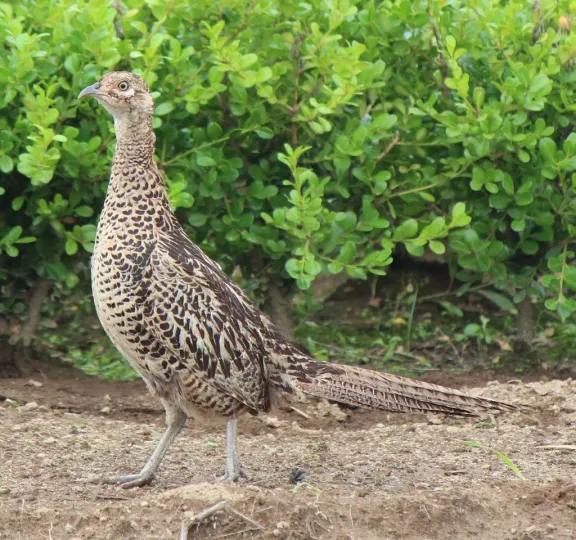
Upland birds
Green pheasant
Phasianus versicolor
Same genus (Phasianus)
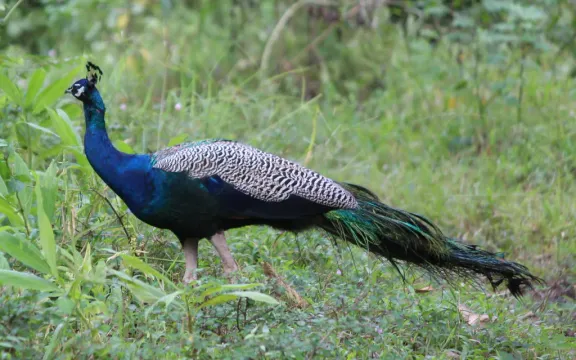
Upland birds
Indian peafowl
Pavo cristatus
Same subfamily (Phasianinae)
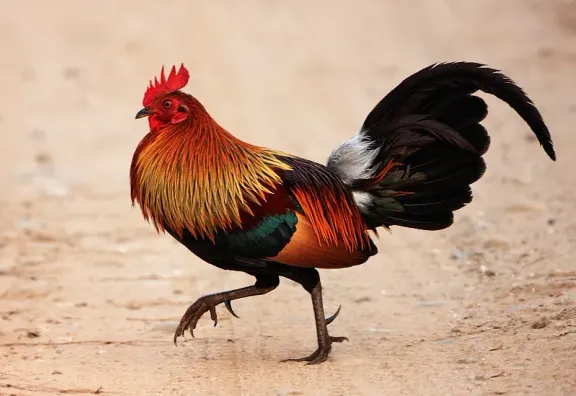
Upland birds
Red junglefowl
Gallus gallus
Same subfamily (Phasianinae)
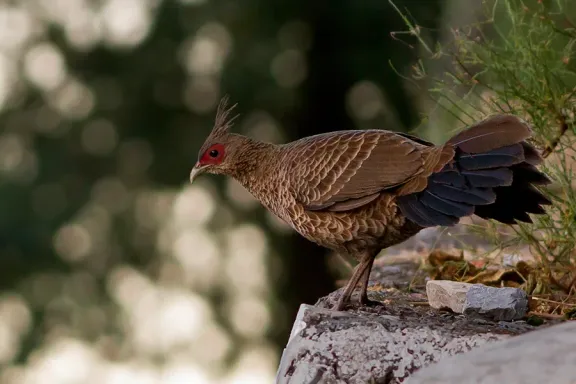
Upland birds
Kalij pheasant
Lophura leucomelanos
Same subfamily (Phasianinae)
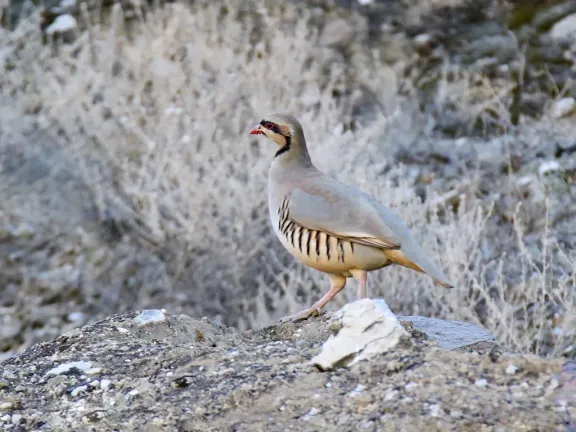
Upland birds
Chukar partridge
Alectoris chukar
Same family (Phasianidae)
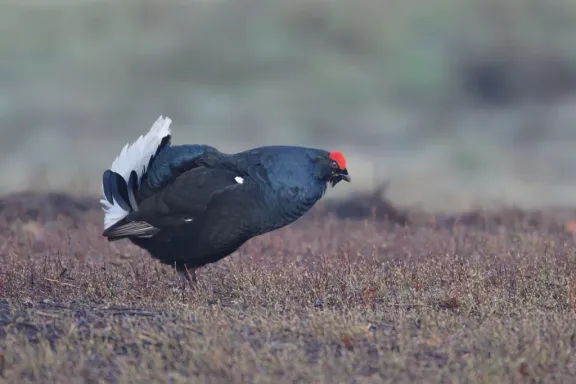
Upland birds
Black grouse
Lyrurus tetrix
Same family (Phasianidae)