Upland birds
Red junglefowl
Gallus gallus
- Group
- Upland birds
- Size class
- Small (under 10 kg)
- Family
- Phasianidae
Range
- Asia
- Oceania
Habitat
- Rainforest
- Farmland
Range
Countries it is found in
68 countries
- American Samoa
- Australia
- Bahamas
- Bangladesh
- Barbados
- Bhutan
- British Indian Ocean Territory
- British Virgin Islands
- Cambodia
- Caribbean Netherlands
- Cayman Islands
- China
- Christmas Island
- Cocos (Keeling) Islands
- Congo - Kinshasa
- Cook Islands
- Dominican Republic
- Fiji
- French Polynesia
- Grenada
- Guadeloupe
- Guam
- Haiti
- India
Range from:Wikipedia country bird lists, GBIF occurrence records — read 2026-08-05
Chapter 01
Overview
The red junglefowl (Gallus gallus), formerly the bankiva, is a tropical gamebird of the pheasant family and the main wild ancestor of the domestic chicken, first domesticated from it about 8,000 years ago; grey, Sri Lankan and green junglefowl made lesser contributions. Linnaeus described it in 1758, and five subspecies are recognised. Its native range runs from Pakistan, India, Nepal, Bhutan and Bangladesh east across southern China to Myanmar and Indochina and south through Malaysia, Singapore, the Philippines and Indonesia to Timor-Leste, and it has been introduced to Australia, Hawaiʻi, Fiji, Puerto Rico and many other islands. It favours disturbed habitats and edges — regenerating forest, slash-and-burn regrowth, bamboo, and tea and oil-palm plantations — and is often found near settlements. The IUCN lists it as least concern, though it is thought to be declining; hybridisation with free-ranging domestic chickens, habitat loss and hunting threaten local populations, and it is near threatened in Singapore.
Chapter 02
Identification
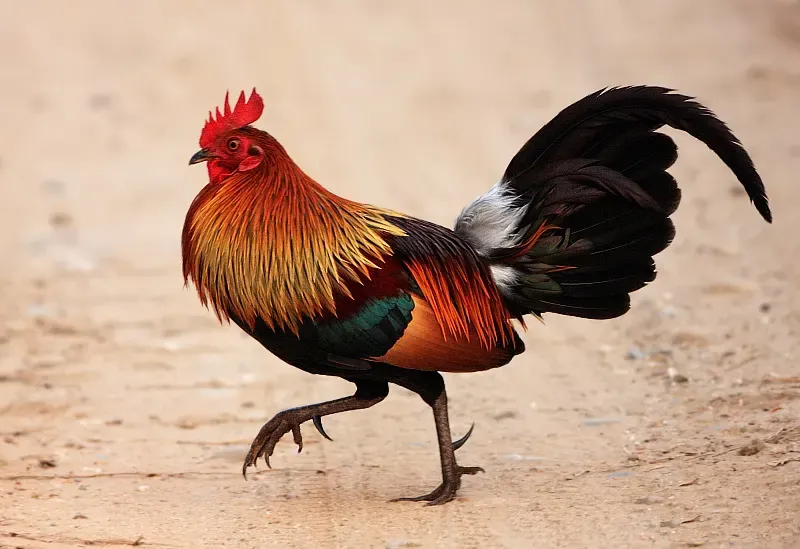
Much smaller than a domestic chicken: cocks weigh about 1.5 kg and hens about 1 kg, and the whole bird may be 70 cm long. The cock has long golden hackles on the neck and back, black wings covered with chestnut and glossy green feathers, and a tail of 14 iridescent feathers shimmering blue, purple and green, some long and curved and up to 28 cm. He carries a large red comb and wattles and sharp spurs on the back of the legs. Colour varies with subspecies. The hen is drab and camouflaged, reddish-yellow on the head and neck streaked with black, with only a trace of comb. From June to October the cock moults into an eclipse plumage with black back feathers and small red-orange plumes on the mantle. Its crow is shorter than a domestic rooster's and cuts off abruptly at the end.
Chapter 03
Behaviour
Red junglefowl are shy of people and live in flocks of one to a few males and several females, with a strict hierarchy in which the top cock crows first. They feed on the ground on fallen fruit and seeds, grasses, leaves, roots and tubers, many arthropods — a single crop has held about 1,000 termites — and small lizards, and occasionally forage in fruiting trees. They dust-bathe to balance the oil in their plumage, and fly mostly to reach their roosts in trees at sunset or to escape danger. They mostly breed in the dry season, winter or spring, though year-round breeding occurs in Malaysian oil-palm plantations. The hen lays an egg a day and alone cares for eggs and chicks; the eggs hatch after 21 days, the chicks fledge at four to five weeks and are driven off by their mother at twelve weeks. Cocks court hens by 'tidbitting', repeatedly picking up and dropping food while calling.
Chapter 04
Hunting
Wild red junglefowl remain an important source of meat and eggs within their native range, and hunting for food, along with the pet trade, threatens local populations, particularly where the species is not legally protected. The wild form is sometimes used in cockfighting.
Field data
Tracks
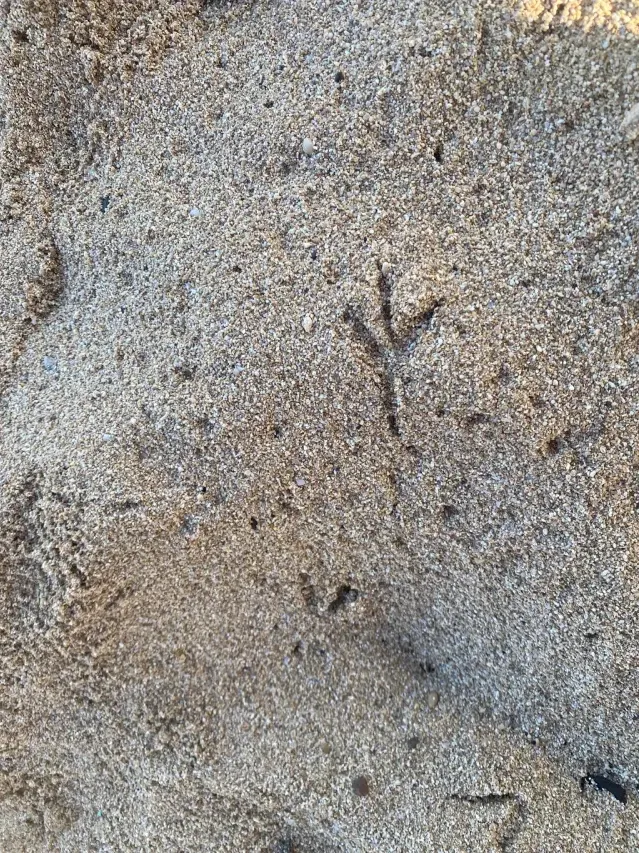
A photograph of real sign left by Red junglefowl. Prints vary with gait, ground and how long they have been there — treat this as one example, not a template.
Track photo:no rights reservedCC0
On the table
Meat & cooking
Table grade 2 of 52/5
- Sold as meat in a legal market
- Has a named traditional dish
- Published way to handle and cook it
- Eaten in more than one country
- No known health advisory
Sources
Sources: Red junglefowl — Wikipedia, Röd djungelhöna — Wikipedia (sv) — read 2026-10-29
Cross-reference
Related species
Its closest relatives in the compendium, nearest kinship first.
Upland birds
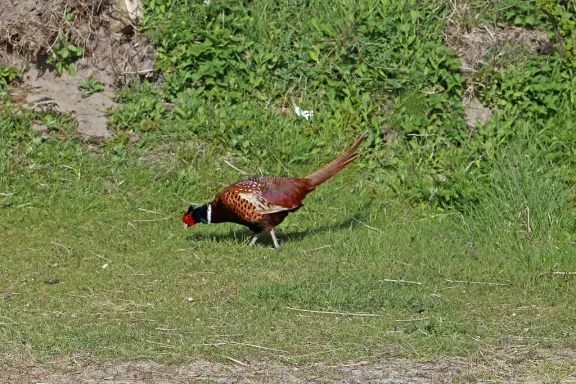
Common pheasant
Phasianus colchicus
Same subfamily (Phasianinae)
Upland birds
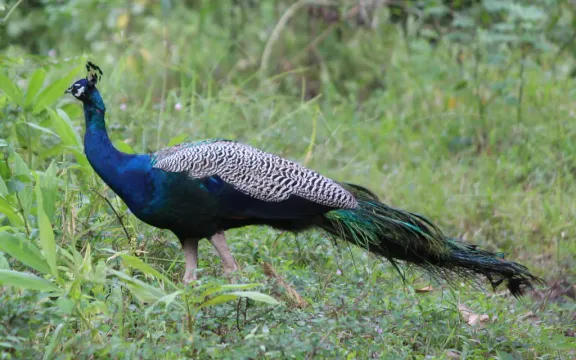
Indian peafowl
Pavo cristatus
Same subfamily (Phasianinae)
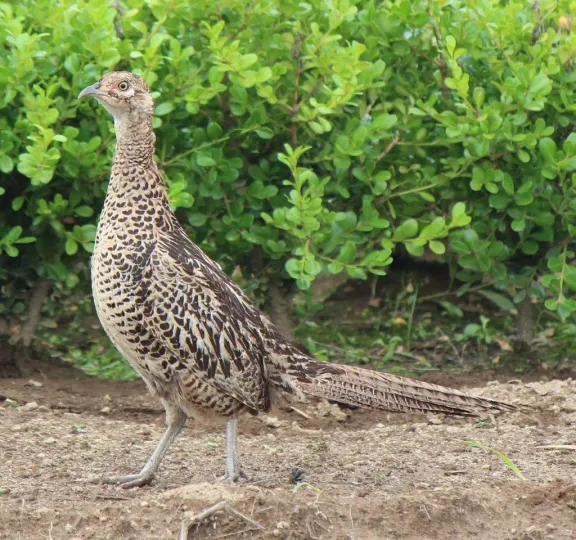
Upland birds
Green pheasant
Phasianus versicolor
Same subfamily (Phasianinae)
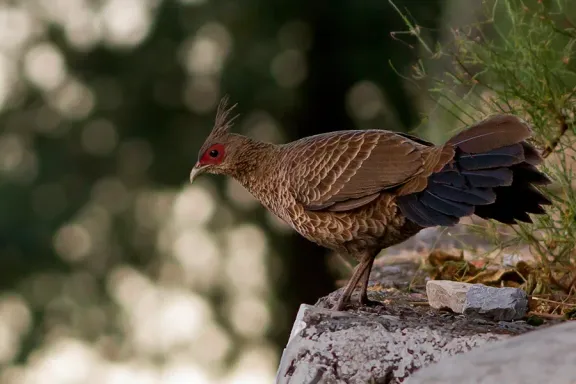
Upland birds
Kalij pheasant
Lophura leucomelanos
Same subfamily (Phasianinae)
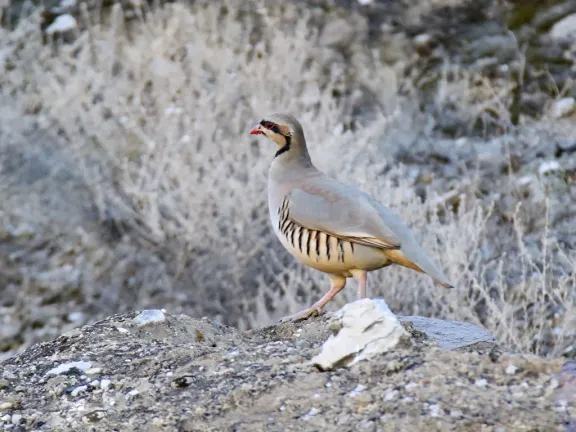
Upland birds
Chukar partridge
Alectoris chukar
Same family (Phasianidae)
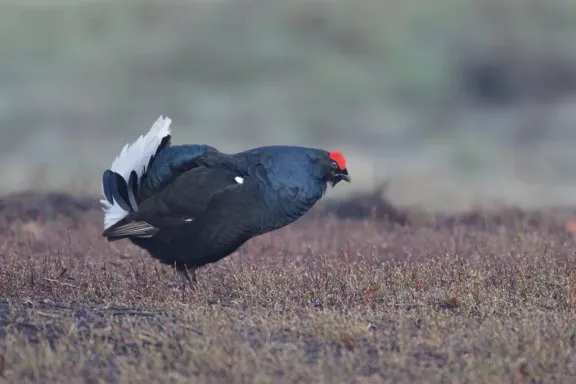
Upland birds
Black grouse
Lyrurus tetrix
Same family (Phasianidae)