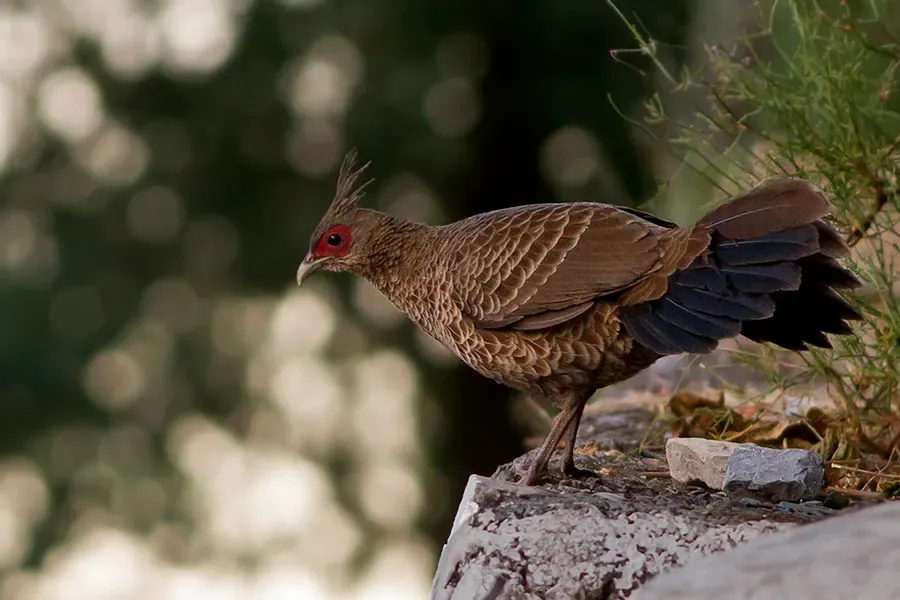
Photo:Dibyendu AshCC BY-SA 3.0
Upland birds
Kalij pheasant
Lophura leucomelanos
- Group
- Upland birds
- Size class
- Small (under 10 kg)
- Family
- Phasianidae
Range
- Asia
- North America
Habitat
- Forest
Range
Countries it is found in
9 countries
- Bangladesh
- Bhutan
- China
- India
- Myanmar (Burma)
- Nepal
- Pakistan
- Thailand
- United States
Range from:Wikipedia country bird lists — read 2026-08-05
Chapter 01
Overview
The kalij pheasant (Lophura leucomelanos), or simply kalij — spelled kaleege in old texts — is a pheasant of forests and thickets, above all in the Himalayan foothills, from Pakistan, India and Nepal east to western Thailand. Nine subspecies are recognised, and it is one of the most variable of all pheasants in appearance. It is closely related to the silver pheasant and hybridises with it; DNA work has confirmed that the eastern forms lineata and crawfurdi, once placed with the silver pheasant, belong to the kalij. The species is widespread, but three eastern subspecies are considered threatened and moffitti is virtually unknown in the wild. The IUCN lists it as least concern while noting a decline from habitat loss and hunting. It was introduced to Hawaiʻi in 1962 as a gamebird, and in 2021 Jammu and Kashmir declared it the bird of the Union Territory; in Kashmiri it is wan kokur, 'wild cock'.
Chapter 02
Identification
Males measure 63–74 cm, of which the tail is 21–35 cm, and females 50–60 cm; like other Lophura it has a bushy, downcurved tail. Both sexes have a bare red face and grey legs — the legs separate it from the red-legged silver pheasant. In the western and central subspecies the male is mostly glossy blue-black, usually with white on the rump or underparts, and the westernmost race, hamiltoni, has a white crest. In the eastern group the crest and underparts are glossy blue-black but the tail and upperparts are white or very pale grey, densely vermiculated with black. Females are brown, from dull to reddish, either boldly marked whitish and black below or scaly with pale feather edges. The male's call is a crowing kurr kurr kurchi kurr.
Chapter 03
Behaviour
The kalij lives in a wide range of forest types with dense undergrowth. It is omnivorous, taking everything from bamboo seeds to small snakes, but above all termites, figs, bamboo seeds and forest yams. Besides the male's crowing it makes a variety of whistling, squealing and cackling calls.
Chapter 04
Hunting
Introduced to Hawaiʻi in 1962 as a gamebird, the kalij is today a listed game bird on Hawaiʻi Island and Oʻahu. In Hawaiʻi game birds may be hunted only with shotguns or bow and arrow, from half an hour before sunrise to half an hour after sunset during the seasons the Department of Land and Natural Resources announces, on public land and on private land with the owner's permission. Hunters need a Hawaiʻi hunting licence, which requires a hunter education course, plus a current Wildlife Conservation Stamp and Game Bird Stamp. In its native range it is thought to be declining because of habitat destruction and hunting, though not fast enough to be considered threatened.
Sources
Sources: Kalij pheasant — Wikipedia, Kalijfasan — Wikipedia (sv), Game Bird Hunting — Hawaiʻi DLNR Division of Forestry and Wildlife — read 2026-10-29
Cross-reference
Related species
Its closest relatives in the compendium, nearest kinship first.
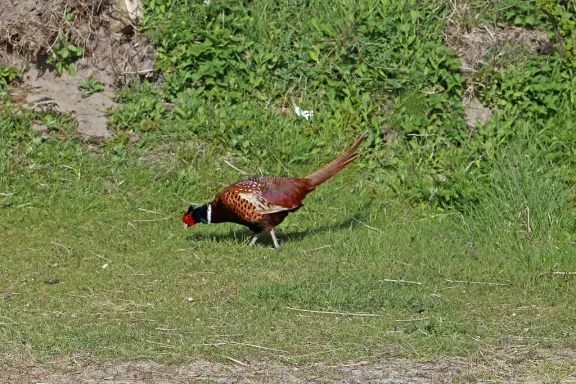
Upland birds
Common pheasant
Phasianus colchicus
Same subfamily (Phasianinae)
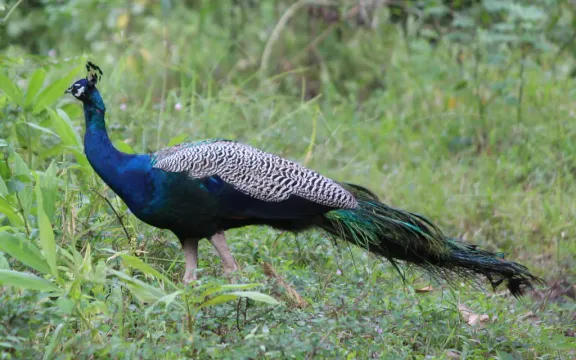
Upland birds
Indian peafowl
Pavo cristatus
Same subfamily (Phasianinae)
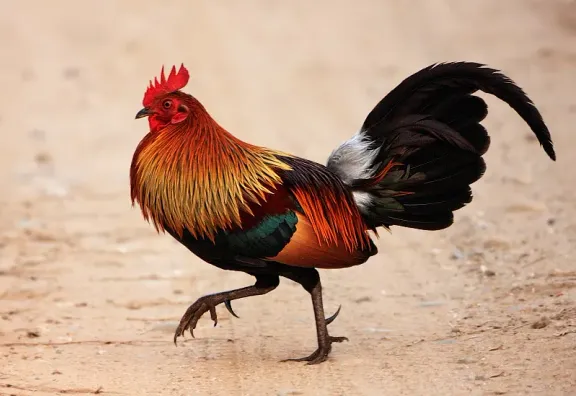
Upland birds
Red junglefowl
Gallus gallus
Same subfamily (Phasianinae)
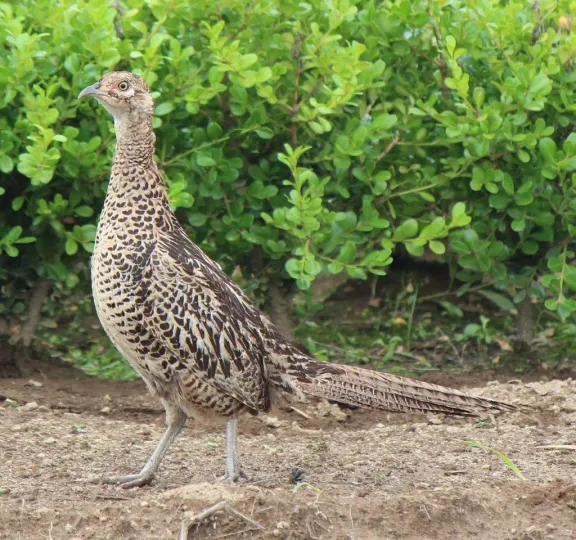
Upland birds
Green pheasant
Phasianus versicolor
Same subfamily (Phasianinae)
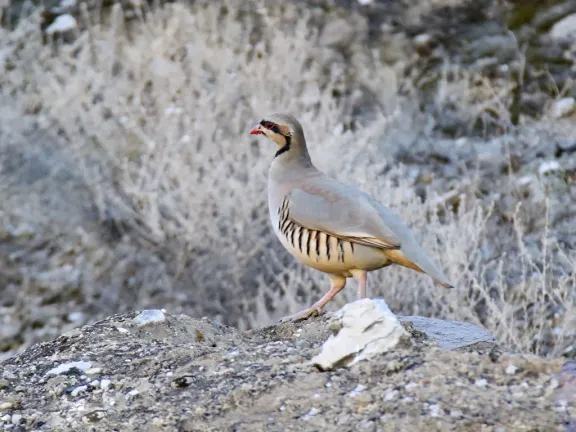
Upland birds
Chukar partridge
Alectoris chukar
Same family (Phasianidae)
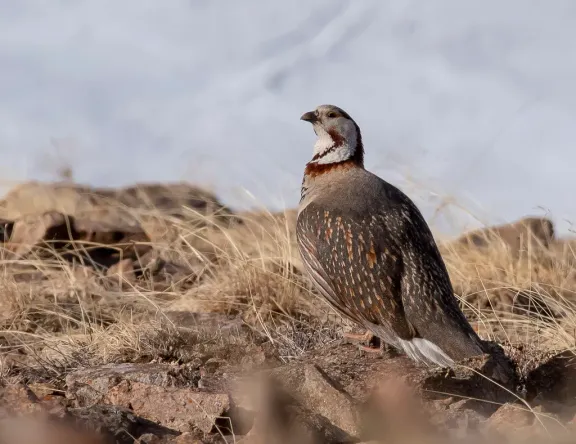
Upland birds
Himalayan snowcock
Tetraogallus himalayensis
Same family (Phasianidae)