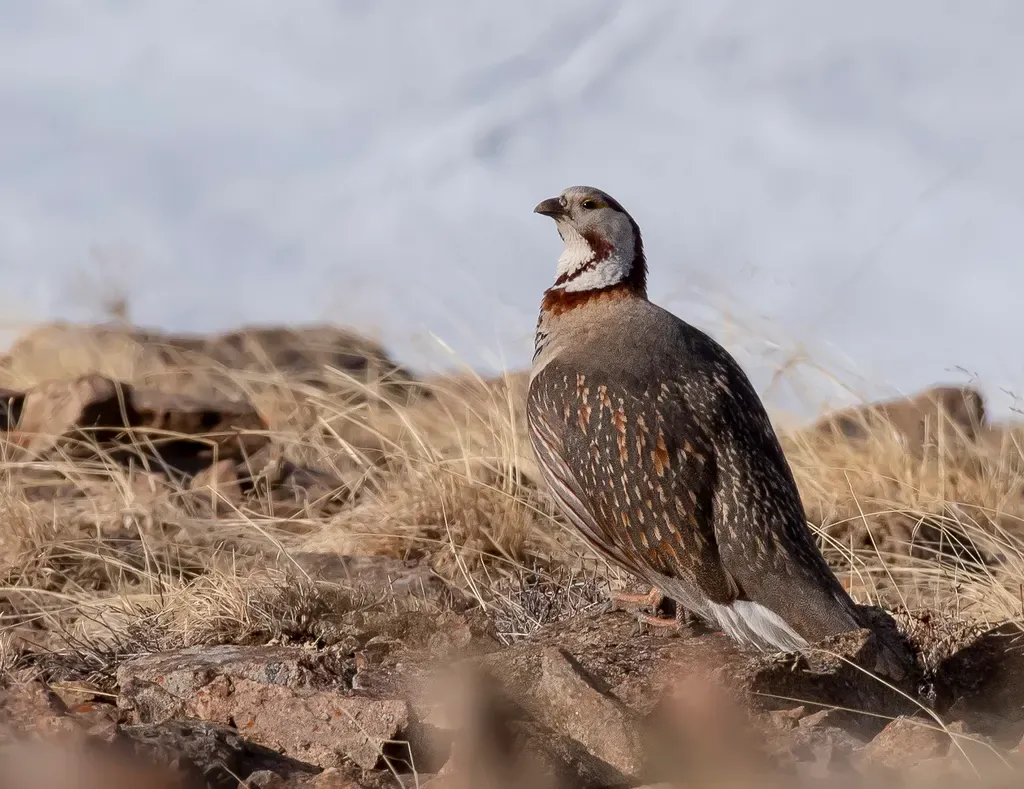
Photo:Griha HasanovCC BY 4.0
Upland birds
Himalayan snowcock
Tetraogallus himalayensis
- Group
- Upland birds
- Size class
- Small (under 10 kg)
- Family
- Phasianidae
Range
- Asia
- North America
Habitat
- Mountain
Range
Countries it is found in
10 countries
- Afghanistan
- China
- India
- Kazakhstan
- Kyrgyzstan
- Nepal
- Pakistan
- Tajikistan
- United States
- Uzbekistan
Range from:Wikipedia country bird lists — read 2026-08-05
Chapter 01
Overview
The Himalayan snowcock (Tetraogallus himalayensis) is a large gamebird of the pheasant family found across the Himalayas and parts of the adjoining Pamir, Tien Shan and Kunlun ranges, overlapping in places with the slightly smaller Tibetan snowcock. Its range is fragmented, the main populations separated by the Taklamakan desert, and the isolated groups differ enough in plumage that five or six subspecies have been named. It lives on alpine pastures and steep rocky ridges above the treeline and close to the snowline — in the Himalayas between 4,000 and 5,000 m in summer, coming down to 2,400 m in severe winters. The IUCN lists it as least concern. In the 1960s it was brought to Nevada as a gamebird, and a wild population has established itself in the Ruby Mountains.
Chapter 02
Identification
A big grey partridge-like bird, 55–74 cm long and weighing 2–3.1 kg. The white throat and sides of the head are framed by a chestnut moustachial stripe and a broad chestnut band running from the eye over the ear into a collar — a pattern that recalls the much smaller chukar. The upperparts are grey with rufous edges on the rump and wing feathers, the upper breast grey with dark crescents, the flanks streaked black, chestnut and white, and the undertail coverts white. Legs and the skin around the eye are yellow. The sexes look alike, but the hen is smaller and lacks the cock's large spur. In flight, white primaries tipped black and rufous outer tail feathers stand out; the Tibetan snowcock shows a white trailing edge to the secondaries instead. Its song is a loud, rising three-part whistle.
Chapter 03
Behaviour
Outside the breeding season snowcocks move in small groups, and several may share a hill. In the morning they fly downhill to drink, then work their way slowly uphill on foot through the day, picking at tender grass blades, shoots, bulbs and berries; at the top of the ridge they fly across to the next hill, land some way down and start climbing again. Approached from below they run uphill; approached from above they launch off the crest and dive down the valley on open wings, picking up great speed. Flocks are larger on rocky ground, where golden eagles are the threat. Breeding runs from April to June. The nest is a bare scrape under a stone or bush, preferably near the crest of a ridge on the leeward side, holding 5 to 12 eggs that the hen alone incubates. The monogamous cock stands guard on a nearby rock and whistles a warning when disturbed, and a sitting hen will not leave the nest until approached very closely.
Chapter 04
Hunting
In 1961 the Nevada Fish and Game Commission judged the Himalayan landscape similar enough to Nevada's to make the snowcock a good gamebird for introduction. Birds were trapped wild in Hunza in Pakistan; early shipments suffered heavy losses, so birds were reared at the Mason Valley game farm, and between 1965 and 1979 more than 2,000 were released. A wild population of 200 to 500 birds now lives in the Ruby Mountains, foraging above the treeline. Nevada's 2026 snowcock season runs from 1 September to 30 November in Elko and White Pine counties, sunrise to sunset, with a daily and possession limit of two. It is open to non-residents, but every hunter must first get a free snowcock use permit online from ndowlicensing.com after 1 July and return the questionnaire on the season's hunt by 31 December. There is also a falconry season for the species.
Sources
Sources: Himalayan snowcock — Wikipedia, Himalayasnöhöna — Wikipedia (sv), Upland Game Bird, Rabbit, Dove & Crow — Nevada Small Game Hunting Regulations — read 2026-10-29
Cross-reference
Related species
Its closest relatives in the compendium, nearest kinship first.
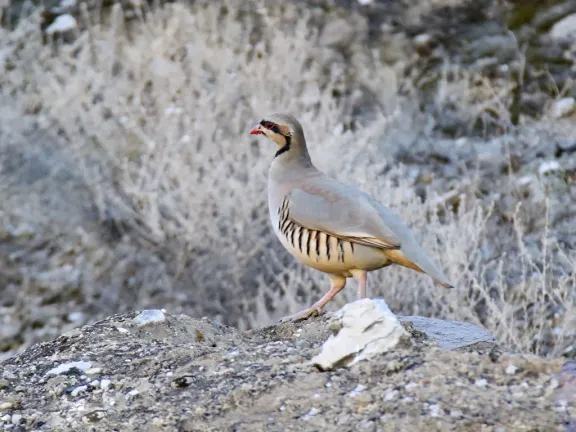
Upland birds
Chukar partridge
Alectoris chukar
Same subfamily (Perdicinae)
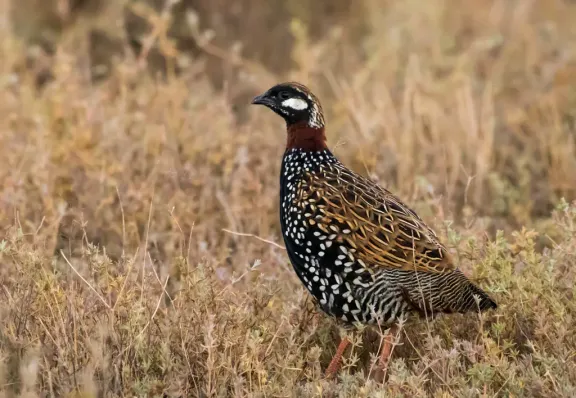
Upland birds
Black francolin
Francolinus francolinus
Same subfamily (Perdicinae)
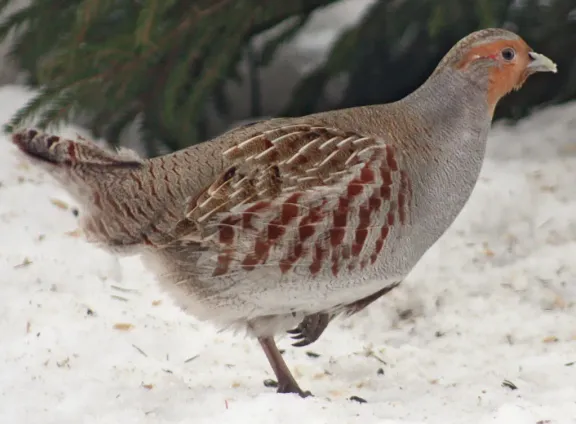
Upland birds
Grey partridge
Perdix perdix
Same subfamily (Perdicinae)
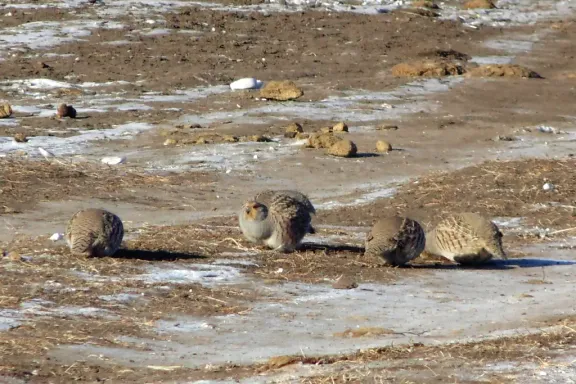
Upland birds
Daurian partridge
Perdix dauurica
Same subfamily (Perdicinae)
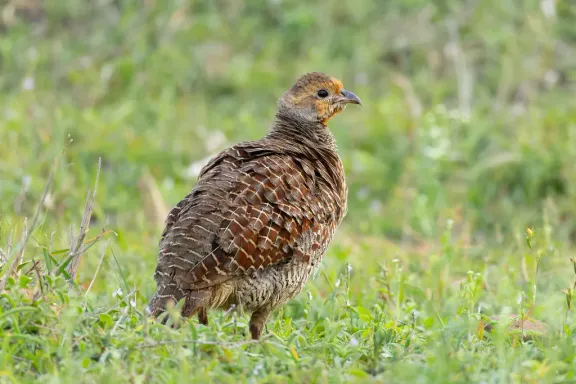
Upland birds
Grey francolin
Ortygornis pondicerianus
Same subfamily (Perdicinae)
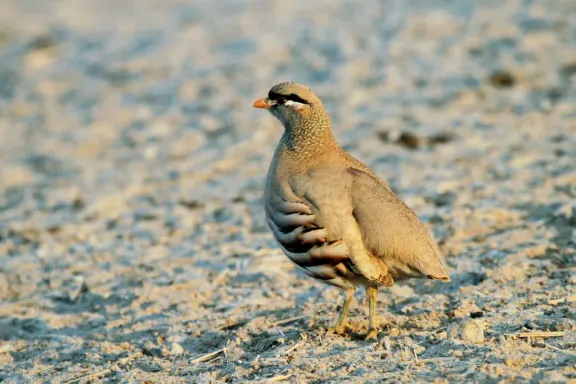
Upland birds
See-see partridge
Ammoperdix griseogularis
Same subfamily (Perdicinae)