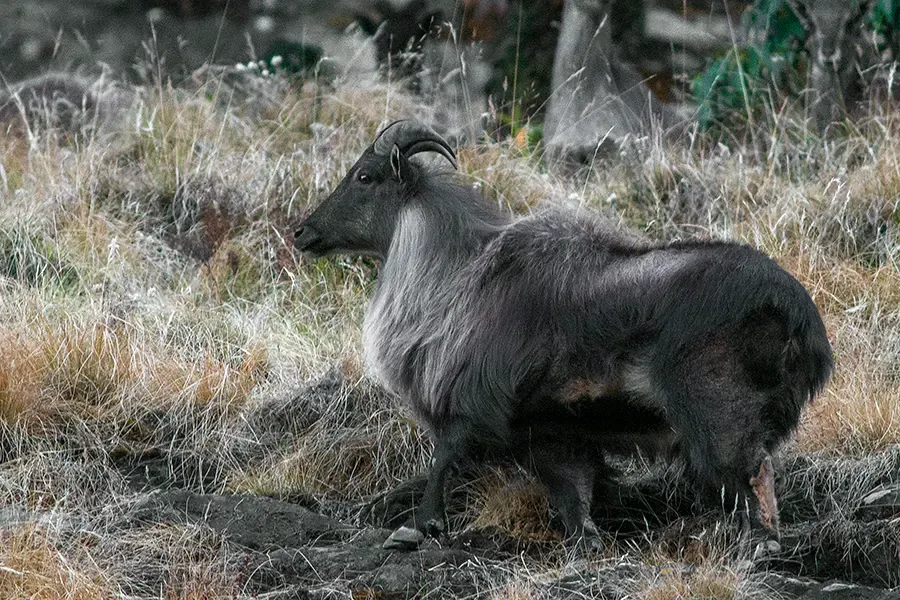
Photo:Dibyendu AshCC BY-SA 3.0
Big game
Himalayan tahr
Hemitragus jemlahicus
- Group
- Big game
- Size class
- Medium (10–70 kg)
- Family
- Bovidae
Range
- Asia
- Oceania
Habitat
- Mountain
Range
Countries it is found in
3 countries
- China
- India
- Nepal
Range from:ASM Mammal Diversity Database — read 2026-08-05
Chapter 01
Overview
The Himalayan tahr (Hemitragus jemlahicus) is a wild goat of the Himalayas, native to southern Tibet, northern India, western Bhutan and Nepal. It lives on grassy mountainsides, scrub and open woodland, mainly at 2,500–5,000 m, and moves down to lower slopes in winter when snow covers the vegetation higher up. No subspecies are currently recognised, and genetic work places it with the true goats. The IUCN lists it as near threatened, its population declining through hunting and habitat loss — by a little under 30 per cent over the three generations before 2020. It has been introduced to New Zealand, Argentina, South Africa and the United States. In New Zealand, released around Mount Cook in 1904 for sport, it has spread across part of the Southern Alps, where its heavy grazing of native plants does significant damage.
Chapter 02
Identification
A robust, goat-like animal with relatively short, strong legs, a small head, small pointed ears and large eyes. Head and body measure 90–140 cm, the shoulder height is 65–100 cm and the tail 9–12 cm. The sexes differ markedly: males average about 73 kg and females 36 kg. The long coat is reddish to greyish-brown with a thick woolly undercoat; in winter males carry a striking mane on the neck that reaches down over the forelegs. The summer coat is shorter and paler. Both sexes have horns that curve backwards, up to 46 cm long, the females' usually shorter. The hooves have a rubbery core for gripping smooth rock and a hard keratin rim for rough ground. Tahr typically live 14 or 15 years, females longer than males.
Chapter 03
Behaviour
Most active early in the morning and late in the afternoon, tahr rest through the day hidden among rocks or dense vegetation. They are shy, agile climbers and live in groups of about 15, occasionally up to 80, while older males mostly live alone. They graze grasses and browse leaves and some fruit, up to 75 per cent of the diet being grasses, and their short legs help them balance while reaching into shrubs. Where introduced, they move to lower ground at night to feed and back up by day to rest. The rut runs from October to January. Young males roam and mate opportunistically, while mature males over four years old court and fight for females, losing much of their fat reserves in the process; size, weight, testosterone and coat colour all influence which males dominate, lighter-coated males gaining more access to females. After a gestation of 180–242 days the female usually bears a single kid, which can stand soon after birth.
Chapter 04
Hunting
In its native range many tahr are shot each year for their meat. In New Zealand the animal is still hunted for sport, and hunting is the primary means of control. The Department of Conservation's 1993 Himalayan Thar Control Plan named aerial game recovery and recreational and safari hunting as the main tools, divided the range into two exclusion zones and seven management units held at 1–2.5 tahr per km², and aimed to keep numbers below 10,000 across the South Island; DOC has since advertised tahr hunting and created 59 tahr-hunting areas. DOC also culls: 12,000 tahr between July 2019 and February 2020, and more than 7,000 between July and November 2020, drawing protests from hunters and a High Court case over consultation. DOC says thousands of tahr will remain for hunters across 425,000 ha of public conservation land outside the national parks, plus 133,000 ha of Crown pastoral lease and private land, while numbers are brought back within the 1993 plan's limits and Aoraki/Mount Cook and Westland Tai Poutini National Parks are protected. Taking a trophy into or out of New Zealand may need CITES documents. In South Africa most of the Cape Peninsula population, descended from two zoo escapees of the 1930s, has been culled to make way for the klipspringer.
On the table
Meat & cooking
Table grade 1 of 51/5
- Sold as meat in a legal market
- Has a named traditional dish
- Published way to handle and cook it
- Eaten in more than one country
- No known health advisory
Sources
Sources: Himalayan tahr — Wikipedia, Himalayatahr — Wikipedia (sv), Department of Conservation (New Zealand): Tahr hunting — read 2026-10-29
Cross-reference
Related species
Its closest relatives in the compendium, nearest kinship first.
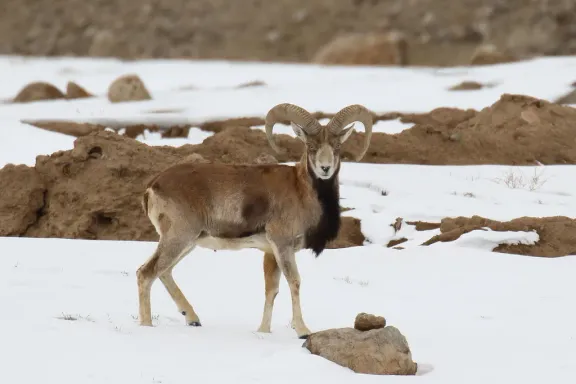
Big game
Urial
Ovis vignei
Same subfamily (Caprinae)
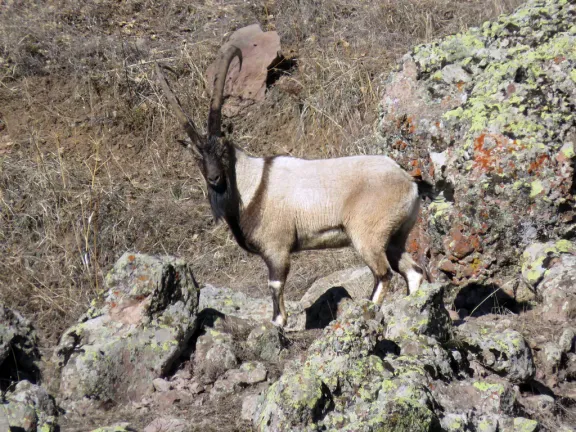
Big game
Bezoar ibex
Capra aegagrus
Same subfamily (Caprinae)
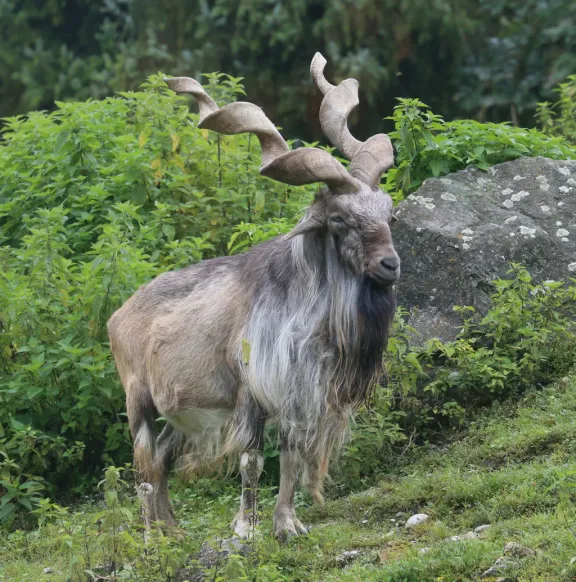
Big game
Markhor
Capra falconeri
Same subfamily (Caprinae)
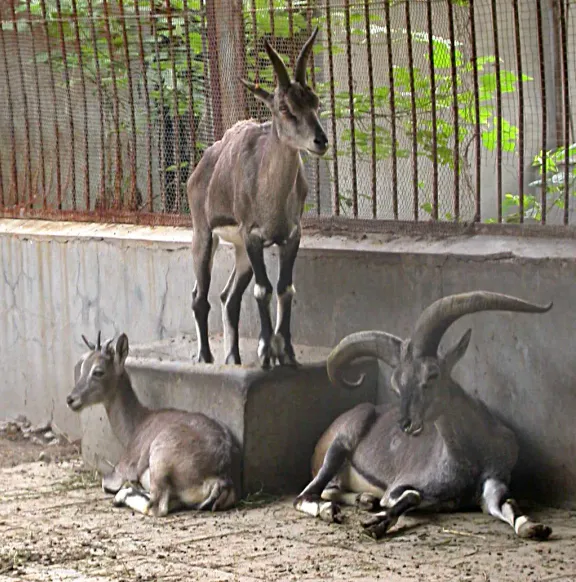
Big game
Blue sheep (bharal)
Pseudois nayaur
Same subfamily (Caprinae)
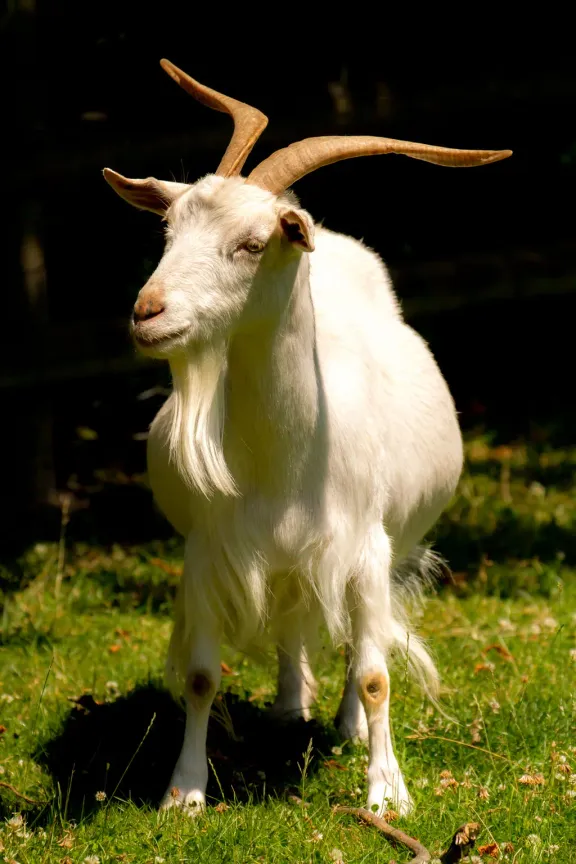
Big game
Feral goat
Capra hircus
Same subfamily (Caprinae)
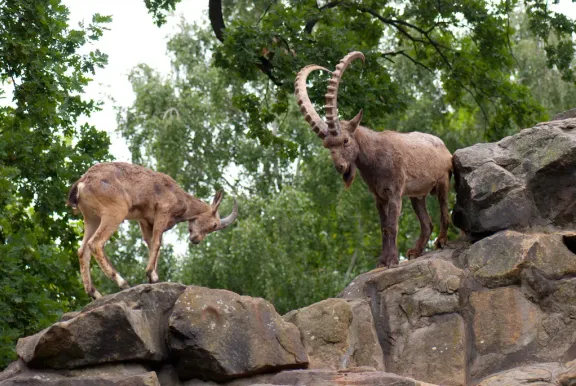
Big game
Siberian ibex
Capra sibirica
Same subfamily (Caprinae)