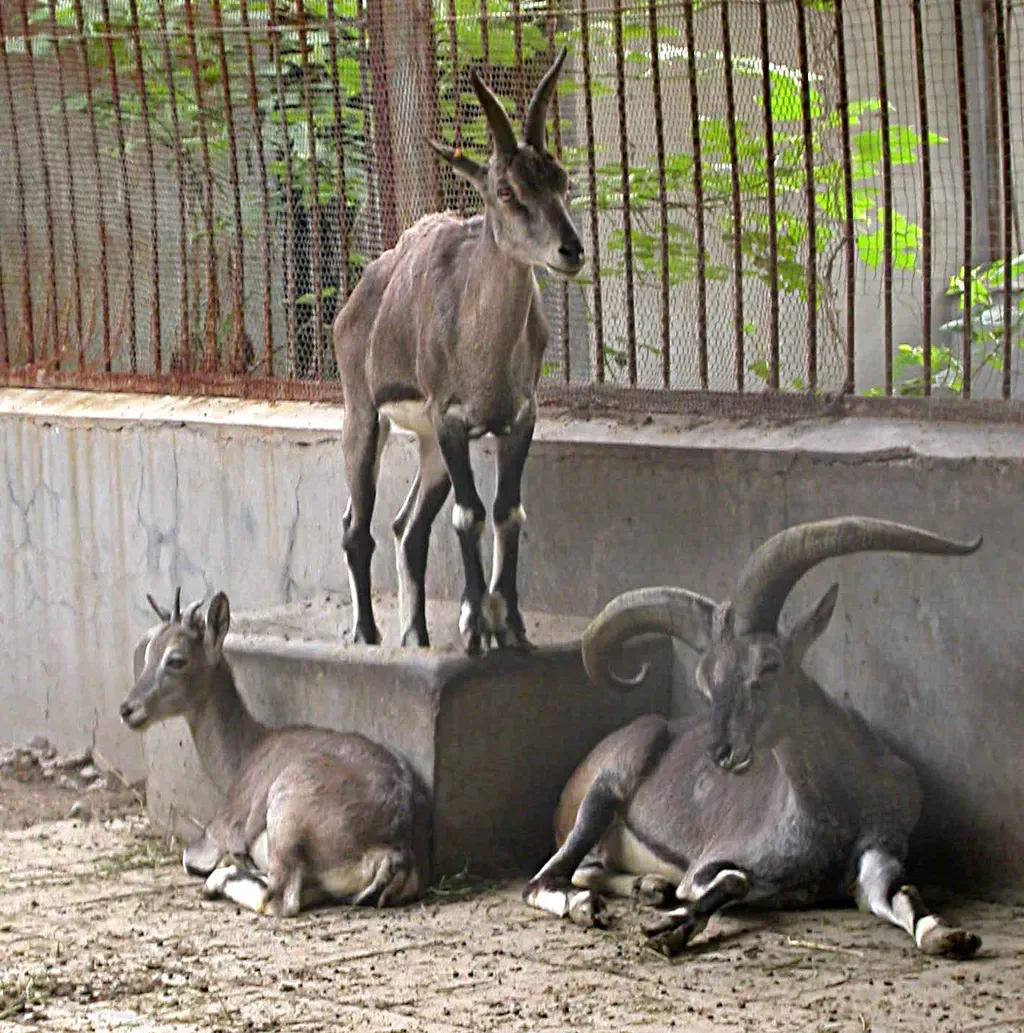
Photo:snowyowlsCC BY-SA 2.0
Big game
Blue sheep (bharal)
Pseudois nayaur
- Group
- Big game
- Size class
- Medium (10–70 kg)
- Family
- Bovidae
Range
- Asia
Habitat
- Mountain
Range
Countries it is found in
5 countries
- Bhutan
- China
- India
- Nepal
- Pakistan
Range from:ASM Mammal Diversity Database — read 2026-08-05
Chapter 01
Overview
The bharal (Pseudois nayaur), or blue sheep, is a caprine of the high Himalayas, living on alpine meadows and rocky slopes in Bhutan, China, India, Myanmar, Nepal and Pakistan, usually at 2,200–5,500 m. "Bharal" is its Hindi name; "blue sheep" comes from the bluish tint of its coat. Despite the name it is the only member of its genus and genetically closer to the goats (Capra) than to the sheep. Two subspecies are recognised, the Himalayan blue sheep (P. n. nayaur) and the Chinese blue sheep (P. n. szechuanensis), and the Helanshan blue sheep of the Helan Mountains may be a third. The dwarf blue sheep of the upper Yangtze gorge, once described as a species of its own, is now treated as a variant of the Chinese form. The IUCN lists the bharal as least concern; poaching and competition with livestock are threats, but its isolated, rugged habitat limits them. Estimates of the total run from 45,000 to 400,000 animals, against more than a million before the 1960s.
Chapter 02
Identification
A medium-sized caprine, 115–165 cm long with a 10–20 cm tail, standing 69–91 cm at the shoulder and weighing 35–75 kg; males are slightly larger than females. The dense coat is slate grey, sometimes with a bluish sheen. The underparts and backs of the legs are white, the chest and fronts of the legs black, and a charcoal stripe divides the grey back from the white belly. The ears are small and the bridge of the nose dark. Both sexes have horns with shallow ridges on the upper surface. The ram's horns grow up and apart, then turn sideways and curve back, reaching 80 cm; the ewe's are much shorter and straighter, up to 20 cm. The dwarf variant is smaller, rams around 35 kg, with darker, silvery grey coats and thinner, more upright horns.
Chapter 03
Behaviour
Active through the day, the bharal alternates between feeding and resting on grassy slopes. With excellent camouflage and little cover around it, it often stands motionless when approached; once noticed it scrambles up to the cliffs and freezes again against the rock. It is mainly a grazer, switching to forbs and shrubs when grass is scarce, and where it shares ground with livestock the overlap in diet lowers its numbers. In Nepal densities of 0.9–2.7 animals per km² rise to as many as 10 in winter, when herds gather in the valleys. Ewes and young form herds of five to fifteen, while rams mostly live alone outside the rut, which runs from late November to mid-January; then they grow aggressive and use tending, blocking and coursing to win ewes. The bharal is the favoured prey of the snow leopard, and is also taken by the Himalayan wolf and leopard, with foxes and eagles taking a few lambs.
Chapter 04
Hunting
Hunting drove the population down from more than a million animals before the 1960s, and poaching remains one of the threats the IUCN names. In Pakistan's Gilgit-Baltistan the blue sheep is part of the trophy hunting programme launched in 1990: for the 2025–26 season the Wildlife and Parks Department put 14 blue sheep permits up for auction at a base price of US$30,000, up from US$9,000 the year before, with nearly 80 per cent of revenues allocated to conservation and development.
Sources
Sources: Bharal — Wikipedia, Blåfår — Wikipedia (sv), ProPakistani: Gilgit-Baltistan Increases Markhor Trophy Hunting Permit Fee to $200,000 (3 September 2025) — read 2026-10-29
Cross-reference
Related species
Its closest relatives in the compendium, nearest kinship first.
Big game
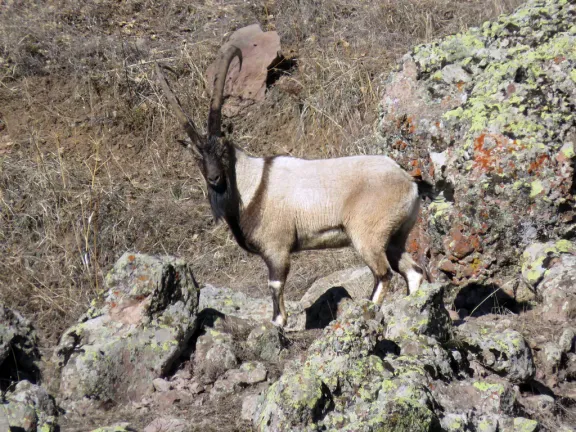
Bezoar ibex
Capra aegagrus
Same subfamily (Caprinae)
Big game
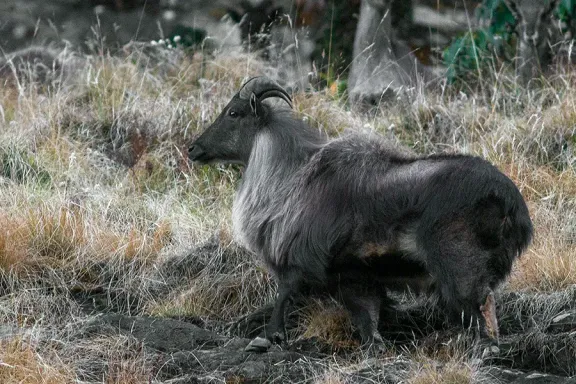
Himalayan tahr
Hemitragus jemlahicus
Same subfamily (Caprinae)
Big game
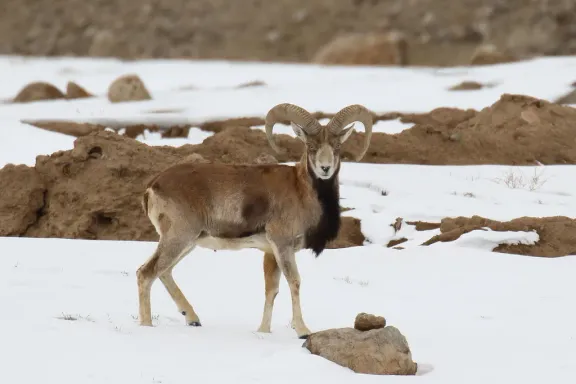
Urial
Ovis vignei
Same subfamily (Caprinae)
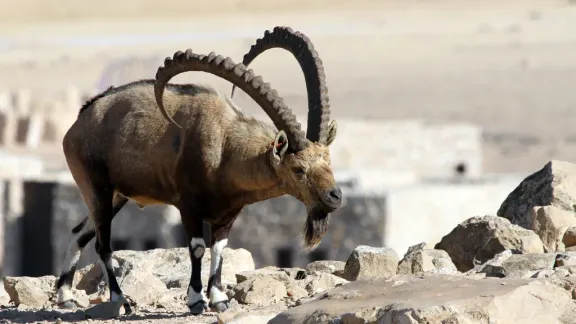
Big game
Nubian ibex
Capra nubiana
Same subfamily (Caprinae)
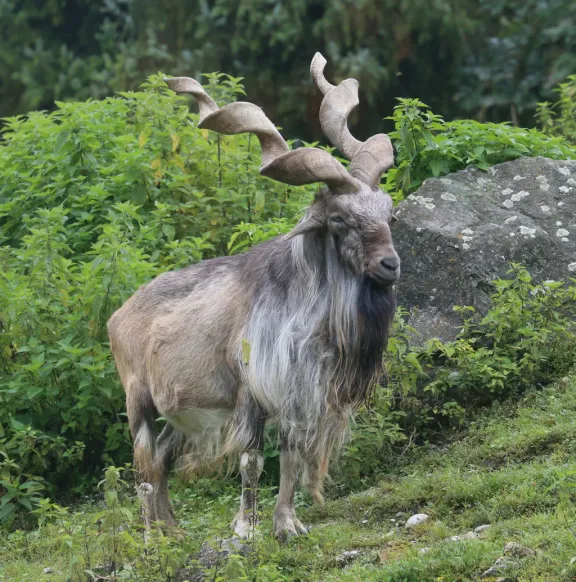
Big game
Markhor
Capra falconeri
Same subfamily (Caprinae)
Big game
European mouflon
Ovis gmelini musimon
Same subfamily (Caprinae)