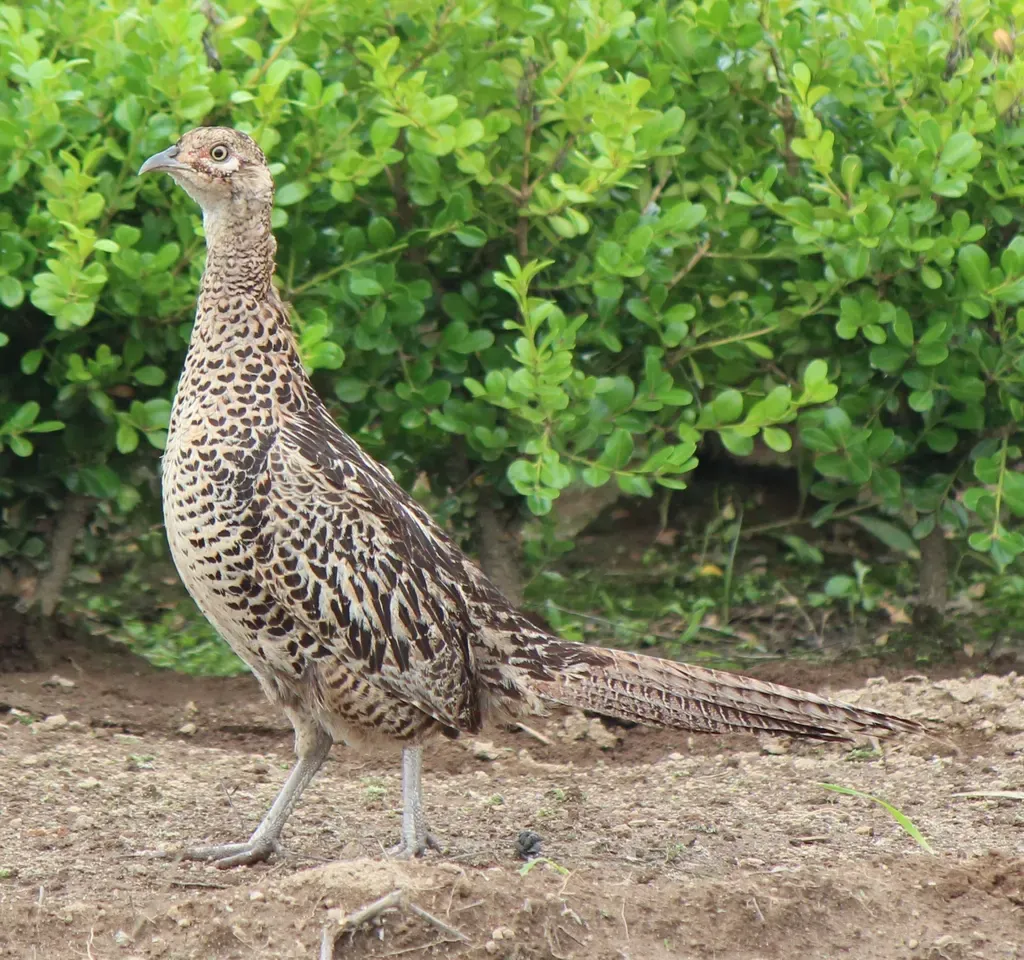
Photo:AlpsdakeCC BY-SA 3.0
Upland birds
Green pheasant
Phasianus versicolor
- Group
- Upland birds
- Size class
- Small (under 10 kg)
- Family
- Phasianidae
Range
- Asia
Habitat
- Farmland
Range
Countries it is found in
2 countries
- Iran
- Japan
Range from:Wikipedia country bird lists — read 2026-08-05
Chapter 01
Overview
The green pheasant (Phasianus versicolor), kiji in Japanese, is endemic to the Japanese archipelago and is Japan's national bird; it appeared on the 10,000 yen note. Some authorities treat it as a subspecies of the common pheasant, but it is increasingly recognised as a species of its own. Three or four subspecies are described, from the darkest southern birds of Kyushu and western Honshu to the lightest northern ones. It hybridises occasionally with the copper pheasant, and interbreeding with common pheasants is the origin of the melanistic common pheasants found in England. It lives throughout Honshu, Shikoku and Kyushu and on some smaller islands, in woodland and forest edge, brush, grassland, farmland, riverside thickets, tea plantations and parkland, often close to people. In Japan it outcompetes introduced common pheasants, which are less suited to its range. It has been introduced in Hawaiʻi, where the population is stable, and unsuccessfully in North America. The IUCN lists it as least concern.
Chapter 02
Identification
Very like the common pheasant, but the cock has dark green underparts, neck, mantle and flanks, a greener rump and differently marked wing coverts, with a bluish-purple hood, clear ear tufts, red wattles and a long, pale grey-banded tail. The hen is smaller and shorter-tailed, brownish-black with dark brown feathers fringed pale brown, and more spotted and marbled below than a common pheasant hen. Both sexes have shorter tails than the common pheasant. The cock measures about 81.5 cm, of which the tail is 27–42.5 cm, and the hen about 58 cm. Southern cocks are the darkest and greenest, Pacific birds lighter with more purple and blue, and northern cocks the lightest, with a more bronze crown and mantle; hens follow the same pattern more faintly.
Chapter 03
Behaviour
In the wild green pheasants eat worms, insects and other small animals as well as grain and plants, probably with a larger share of wild seeds, fruit, berries and nuts than the common pheasant takes. They may be both monogamous and polygamous. Breeding runs from March or April to June — from mid-March on southern Kyushu — and birds can breed at about a year old. A clutch holds six to fifteen eggs, incubated for 23–25 days. The way a hen walks together with her chicks is seen in Japan as a symbol of harmony.
Chapter 04
Hunting
The kiji is one of the 26 bird species designated as game in Japan; only designated game species may be hunted. A hunter needs a hunting licence for the method used — nets, traps, firearms or air guns — and must register with the prefecture where they intend to hunt and pay the hunting tax. The statutory season runs from 15 October to 15 April (from 15 September in Hokkaido), but prefectures may ban or limit the take of individual game species. Calling pheasants with a pheasant whistle is prohibited, as is using a tape recorder or other electronic sound device to take kiji or copper pheasant. In Japan it is used locally for food and sport hunting, and as a pet or display bird. In Hawaiʻi it is a game bird on Maui and Lānaʻi, hunted under the state's shotgun-and-bow rules for game birds with a licence, Wildlife Conservation Stamp and Game Bird Stamp.
On the table
Meat & cooking
Table grade 1 of 51/5
- Sold as meat in a legal market
- Has a named traditional dish
- Published way to handle and cook it
- Eaten in more than one country
- No known health advisory
Sources
Sources: Green pheasant — Wikipedia, Grön fasan — Wikipedia (sv), 狩猟制度の概要 — Ministry of the Environment, Japan, Game Bird Hunting — Hawaiʻi DLNR Division of Forestry and Wildlife — read 2026-10-29
Cross-reference
Related species
Its closest relatives in the compendium, nearest kinship first.
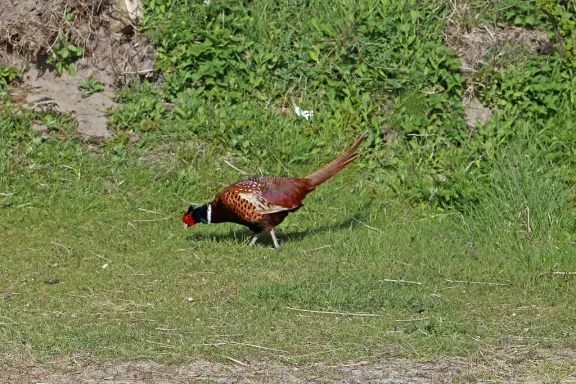
Upland birds
Common pheasant
Phasianus colchicus
Same genus (Phasianus)
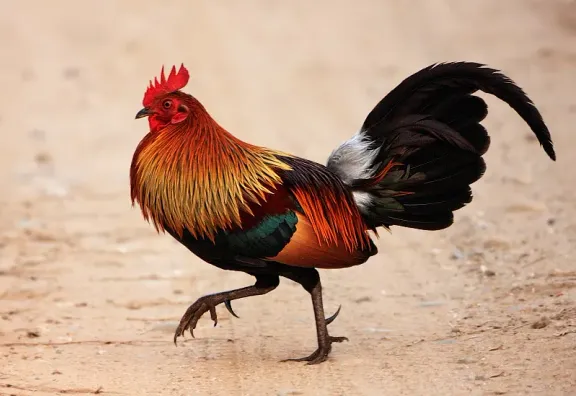
Upland birds
Red junglefowl
Gallus gallus
Same subfamily (Phasianinae)
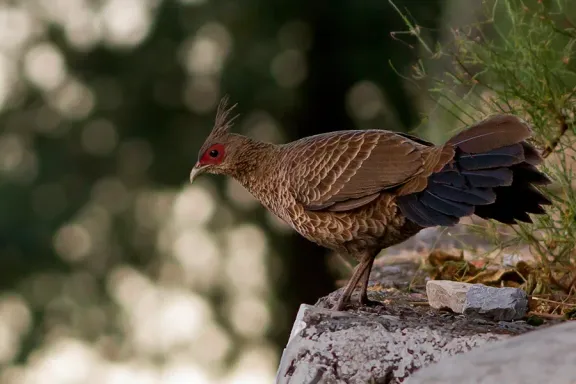
Upland birds
Kalij pheasant
Lophura leucomelanos
Same subfamily (Phasianinae)
Upland birds
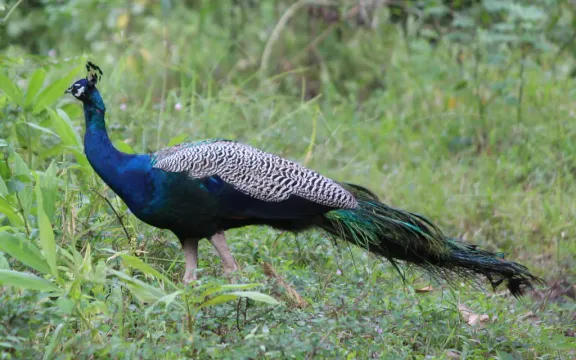
Indian peafowl
Pavo cristatus
Same subfamily (Phasianinae)
Upland birds
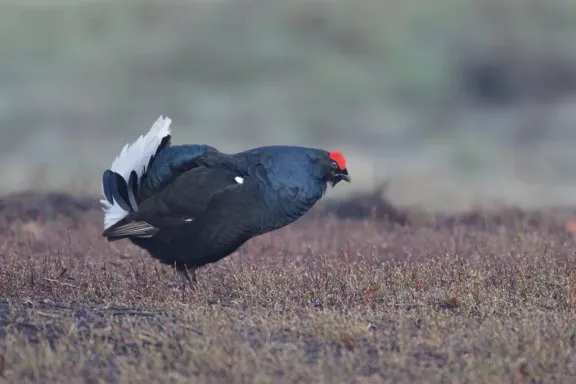
Black grouse
Lyrurus tetrix
Same family (Phasianidae)
Upland birds
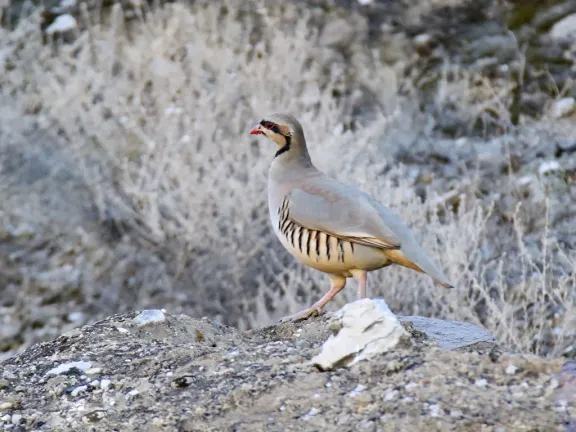
Chukar partridge
Alectoris chukar
Same family (Phasianidae)