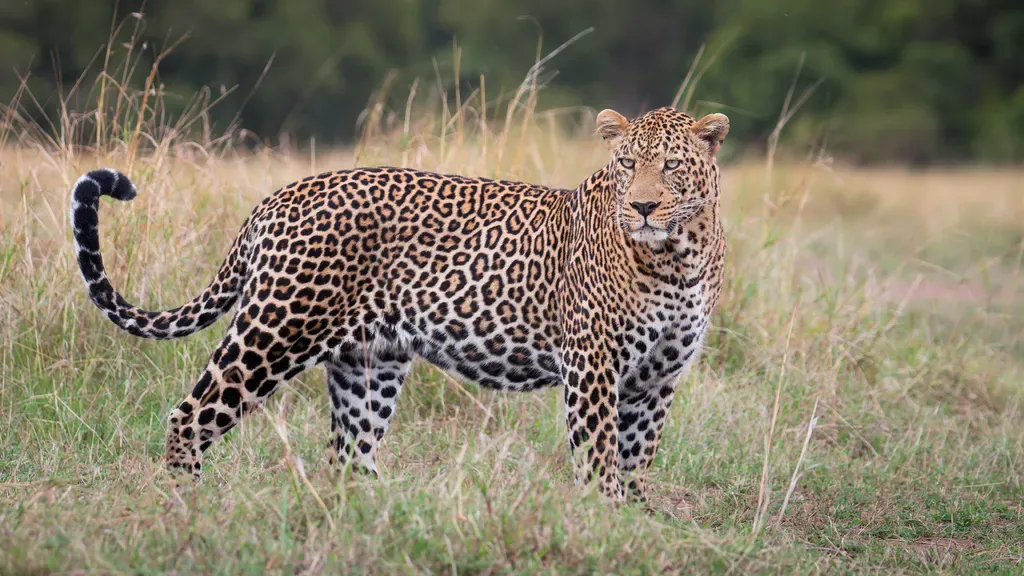
Photo:Sumeet MogheCC BY-SA 4.0
Predators & furbearers
Leopard
Panthera pardus
- Group
- Predators & furbearers
- Size class
- Medium (10–70 kg)
- Family
- Felidae
Range
- Africa
- Asia
Habitat
- Savanna
- Mountain
- Forest
Range
Countries it is found in
62 countries
- Afghanistan
- Angola
- Armenia
- Azerbaijan
- Bangladesh
- Benin
- Bhutan
- Botswana
- Burkina Faso
- Burundi
- Cambodia
- Cameroon
- Central African Republic
- Chad
- China
- Congo - Brazzaville
- Congo - Kinshasa
- Côte d’Ivoire
- Djibouti
- Egypt
- Equatorial Guinea
- Eritrea
- Eswatini
- Ethiopia
Range from:ASM Mammal Diversity Database — read 2026-08-05
Chapter 01
Overview
The leopard (Panthera pardus) is one of the five living cats of the genus Panthera, with eight subspecies recognised across Africa and Asia. It evolved in Africa in the Early Pleistocene, spread into Eurasia, and once lived across Europe before dying out there at the close of the Late Pleistocene. It is at home almost anywhere with cover, from rainforest to steppe, desert edge and mountains. The IUCN lists it as vulnerable. Habitat loss and fragmentation, a shrinking prey base, conflict with livestock herders, trophy hunting and poaching for skins and bones all weigh on it, and contemporary records place it in only about a quarter of its historical range. Between 2002 and 2012 at least four leopards a week were estimated to be poached in India for the illegal trade.
Chapter 02
Identification
A slender, muscular cat with relatively short legs and a broad head. The coat runs from pale yellowish to deep gold, marked with dark spots grouped into rosettes — round in East Africa, squarer in southern Africa and larger in Asia — and every animal's pattern is its own. Desert leopards are paler, forest and mountain ones darker. The belly is white and the long tail, white underneath, is white-tipped. Black leopards — the black panthers — carry a recessive gene for melanism. Jaguar rosettes, by contrast, are darker and hold smaller spots inside. Males stand 60–70 cm at the shoulder and typically weigh 30.9–72 kg, exceptionally up to 91 kg; females stand 57–64 cm and weigh 20.5–43 kg. Head and body measure 92–183 cm, with a tail of 66–102 cm. Cape leopards are small, males reaching only 20–45 kg.
Chapter 03
Behaviour
Solitary and territorial, leopards meet only to mate, and are active mainly from dusk to dawn, resting by day in thickets, among rocks or along branches. A leopard may walk 25 km in a night. Its best-known call is a sawing roar of deep, repeated strokes. It climbs well, descends trees headfirst, runs at over 58 km/h and leaps more than 6 m. It prefers prey of 10–40 kg — impala, bushbuck, duiker, chital — and more than 100 prey species are recorded. It stalks to within about 5 m, pounces, and kills small prey with a bite to the nape and larger animals by the throat. Big kills are dragged up trees, into bushes or caves, out of reach of lions and hyenas; one leopard hauled a young giraffe of nearly 125 kg 5.7 m up a tree. Lions account for up to 22 per cent of leopard deaths in Sabi Sand Game Reserve, and in Asia tigers and dholes dominate it. Females usually start breeding at two and a half to three years. Gestation is 90 to 105 days, litters are two to four cubs, born in a cave, rock crevice or hollow tree, and the young stay with their mother for 18 to 24 months.
Chapter 04
Hunting
The leopard is on CITES Appendix I. Hunting it is banned in Botswana and Afghanistan, and in eleven sub-Saharan countries trade is restricted to the skins and body parts of 2,560 animals. South Africa's own CITES allowance was 150 trophy export permits a year; for 2016 its Department of Environmental Affairs set every leopard hunting permit at zero after its Scientific Authority judged that, with numbers unknown and illegal killing poorly monitored, trophy hunting posed a high risk to the species.
Field data
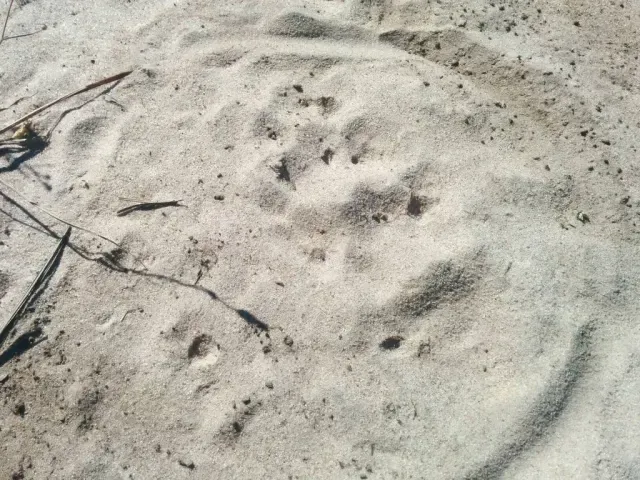
Tracks
A photograph of real sign left by Leopard. Prints vary with gait, ground and how long they have been there — treat this as one example, not a template.
Track photo:National Geographic Okavango Wilderness ProjectCC BY
Sources
Sources: Leopard — Wikipedia, Leopard — Wikipedia (sv), Daily Maverick: South Africa bans leopard trophy hunting (26 January 2016) — read 2026-10-29
Cross-reference
Related species
Its closest relatives in the compendium, nearest kinship first.
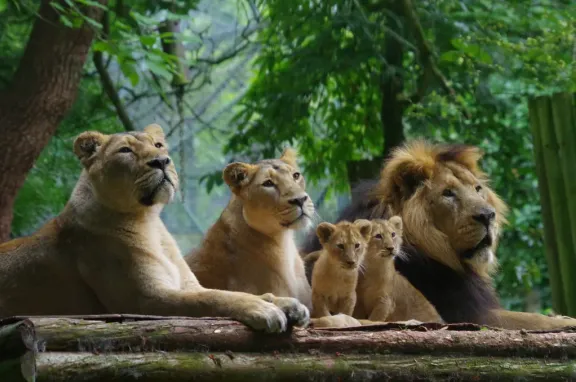
Predators & furbearers
Lion
Panthera leo
Same genus (Panthera)
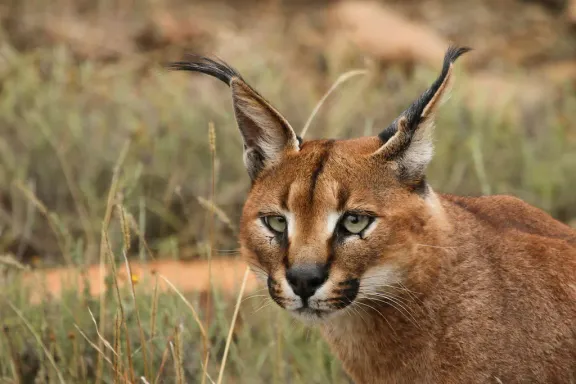
Predators & furbearers
Caracal
Caracal caracal
Same family (Felidae)
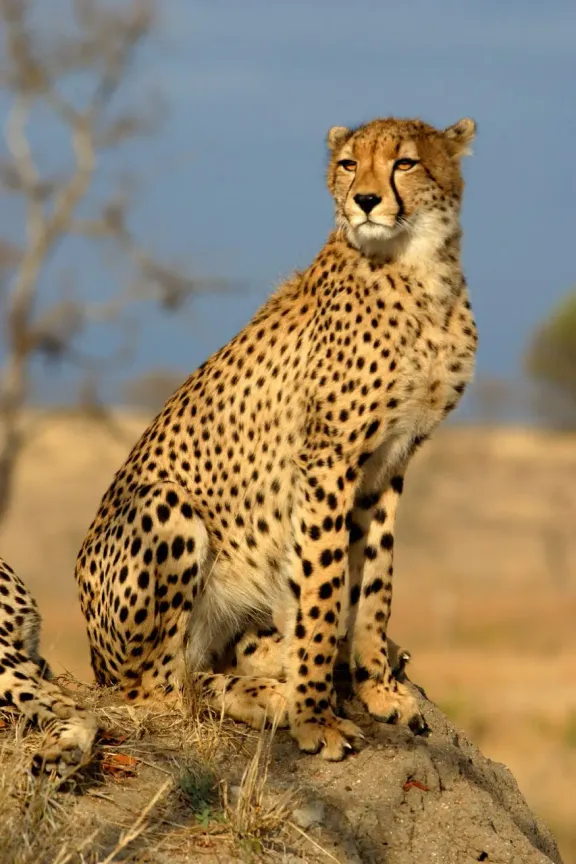
Predators & furbearers
Cheetah
Acinonyx jubatus
Same family (Felidae)
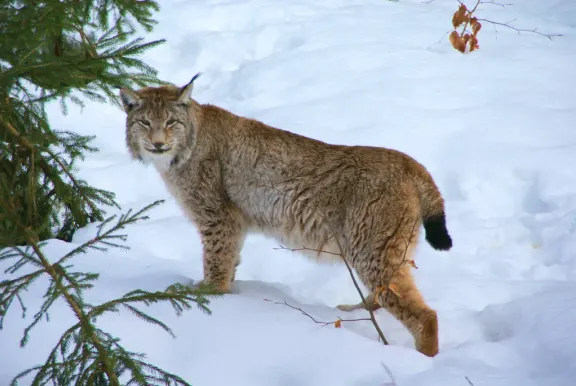
Predators & furbearers
Eurasian lynx
Lynx lynx
Same family (Felidae)
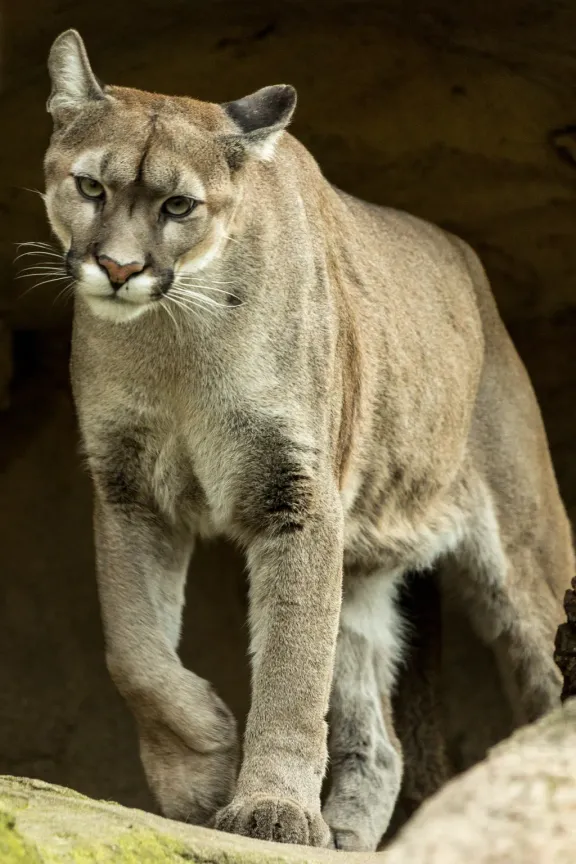
Predators & furbearers
Cougar
Puma concolor
Same family (Felidae)
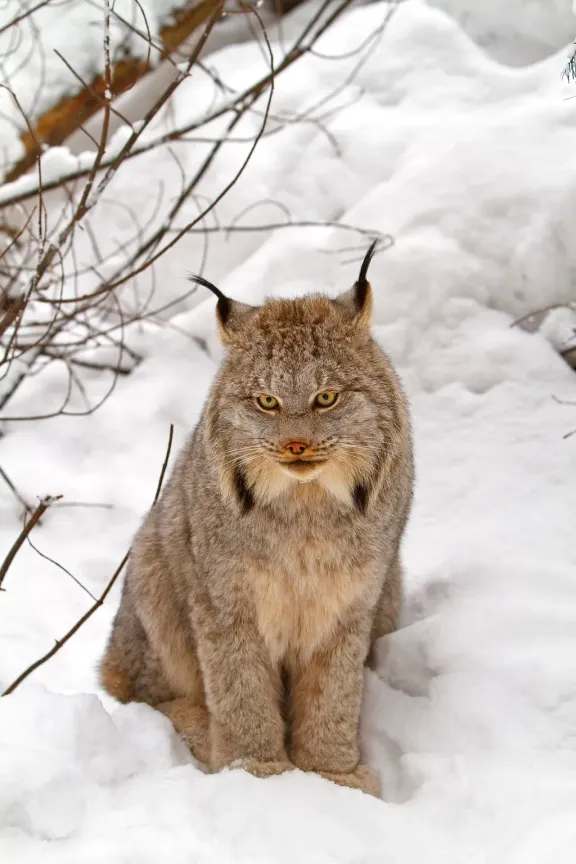
Predators & furbearers
Canada lynx
Lynx canadensis
Same family (Felidae)