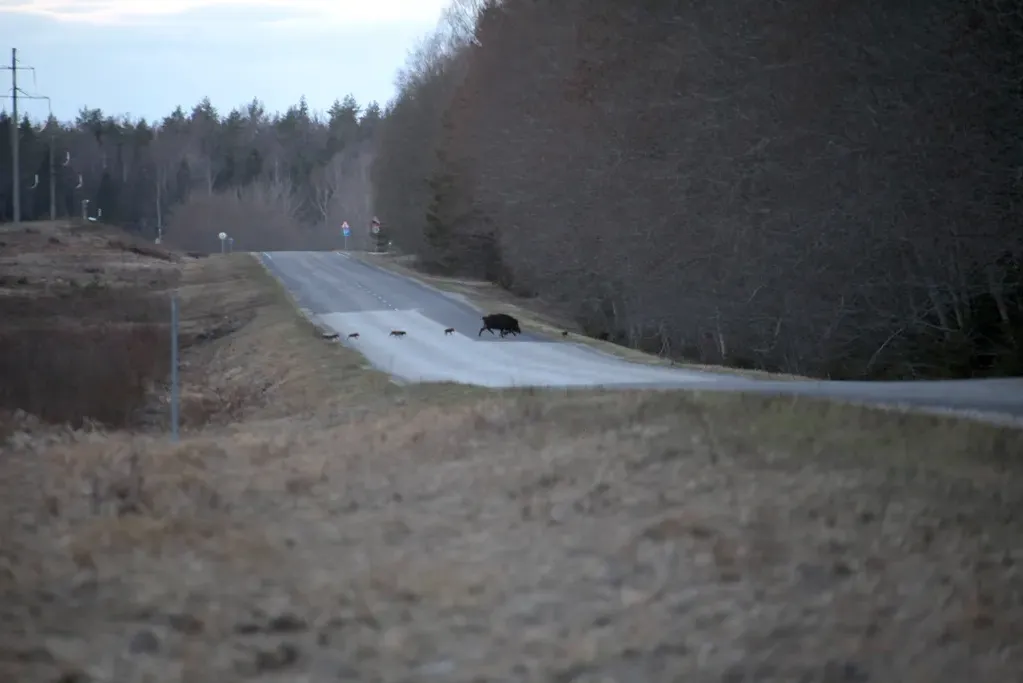
Photo:SillerkiilCC BY-SA 4.0
Big game
Wild boar
Sus scrofa
- Group
- Big game
- Size class
- Large (70–300 kg)
- Family
- Suidae
Range
- Europe
- Asia
- Africa
Habitat
- Forest
- Farmland
Range
Countries it is found in
88 countries
- Afghanistan
- Albania
- Algeria
- Andorra
- Argentina
- Armenia
- Australia
- Austria
- Azerbaijan
- Bahamas
- Bangladesh
- Belarus
- Belgium
- Bhutan
- Bosnia & Herzegovina
- Bulgaria
- Cambodia
- Chile
- China
- Colombia
- Croatia
- Cyprus
- Czechia
- Denmark
Range from:ASM Mammal Diversity Database, GBIF occurrence records — read 2026-08-05
Chapter 01
Overview
The wild boar (Sus scrofa) is a suid native to much of Eurasia and North Africa, introduced to the Americas and Oceania, and now one of the widest-ranging mammals on earth. The IUCN lists it as least concern on the strength of its range, numbers and adaptability, and across part of its introduced range it is frankly invasive. It probably originated in island Southeast Asia in the Early Pleistocene and spread onto the Eurasian mainland from there. It lives in everything from boreal taiga to desert, and in mountains it will occupy alpine ground — to 1,900 m in the Carpathians, 2,600 m in the Caucasus, and 3,600–4,000 m in Central Asia. To hold an area it needs three things: heavy brush for shelter from predators, water to drink and wallow in, and an absence of regular snowfall. In Europe its best ground is deciduous and mixed forest, ideally oak and beech enclosing marshes and meadows. In Britain it had become rare by the 11th century and was gone by the 17th; the populations living wild there today descend from escapes from boar farms since the early 1990s.
Chapter 02
Identification
A bulky, massively built pig on short, relatively thin legs. The trunk is short and robust and the hindquarters comparatively underdeveloped, with the region behind the shoulder blades rising into a hump and a neck so short and thick it is nearly immobile. The head takes up as much as a third of the total body length and is built to dig — it works as a plough while the neck muscles turn the soil, biting 8–10 cm into frozen ground and levering rocks of 40–50 kg. The eyes are small and deep-set, the ears long and broad. Adult males show well-developed canines protruding from the mouth. The medial hooves are larger and more elongated than the lateral ones, which is what lets an animal this heavy move quickly: a boar can run at 40 km/h.
Chapter 03
Behaviour
Boar are social and female-led. They live in sounders of barren sows and mothers with young under an old matriarch. Males leave the sounder at eight to fifteen months, while females either stay with their mother or set up nearby. Subadult males form loose groups; adult and elderly males are largely solitary outside the breeding season. Breeding runs from November to January in most areas, though the mating itself lasts about six weeks. Beforehand males build up their subcutaneous armour for fighting, the testicles double in size, and the glands secrete a foamy yellowish liquid. A ready male will travel long distances to find a sounder, eating little on the way, then drive off the young animals, chase the sows persistently and fight rivals hard. The diet is as broad as a human's: rhizomes, roots, tubers and bulbs dug year-round; nuts, berries and seeds, dug from under snow when necessary; leaves, bark, twigs and shoots; and in warm periods earthworms, insects, molluscs, fish, rodents, bird eggs, lizards, snakes, frogs and carrion. A 50 kg boar needs 4,000–4,500 calories a day, more in winter and pregnancy. In temperate country acorns and beechnuts are invariably the most important items, being rich in the carbohydrate needed to lay down fat for the lean months.
Chapter 04
Hunting
Hunting terminology gives boar different designations by age. Managing them is a pressing job in both their native and their introduced range, because they are disruptive to other systems when left alone. What makes them hard to manage is what makes them successful: they are adaptive generalists. They shift their daily pattern to avoid threats, becoming nocturnal to avoid people despite no evolutionary predisposition to it, and change their diet substantially according to what is available. That capacity to survive across very different landscapes is exactly what makes their movements — and any close-contact areas — difficult to predict. In central Europe there has been a push to re-evaluate the relationship rather than manage by removal alone, on the argument that the 'crop raider' framing has made people less willing to accept the economic reality of living alongside them.
Field data
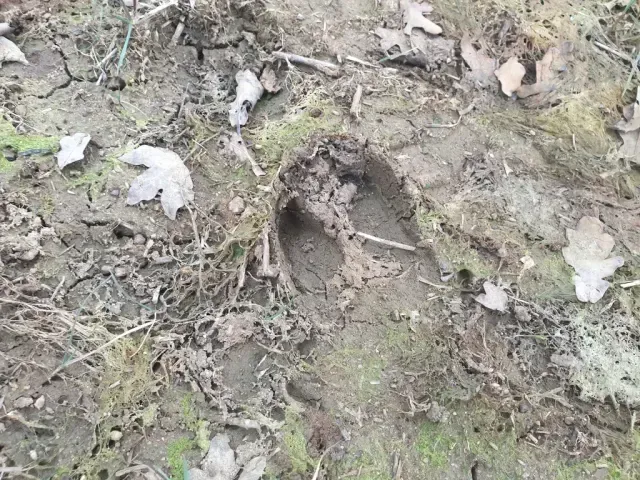
Tracks
A photograph of real sign left by Wild boar. Prints vary with gait, ground and how long they have been there — treat this as one example, not a template.
Track photo:Clément MaoucheCC BY
On the table
Meat & cooking
Table grade 4 of 54/5
- Sold as meat in a legal market
- Has a named traditional dish
- Published way to handle and cook it
- Eaten in more than one country
- No known health advisory
Before you eat it: Two separate warnings apply. Wild boar can carry trichinella, and Livsmedelsverket advises testing meat from boar you have shot yourself even when it is only for your own household; the parasite dies at around 60–65 °C in the oven, but over 70 °C is needed on a grill, and some cold-tolerant strains survive freezing. Separately, boar shot in parts of Västmanland, Uppsala and Gävleborg counties can carry high caesium-137; meat above 1500 Bq/kg may not be sold or given away, and every animal has to be measured individually because levels vary between boar shot in the same place.
Traditional preparations
- Vildsvinsstek
- The haunch and saddle roasted through — never served pink, because trichinella is killed by heat and nothing else reliably. Wild boar — Wikipedia
- Cured boar charcuterie
- Boar is the traditional base for air-dried hams and salami across southern Europe; the same testing rules apply before any of it is made. Charcuterie — Wikipedia
Sources
Sources: Wild boar — Wikipedia, Livsmedelsverket: Trikiner, Livsmedelsverket: Radioaktivt cesium i vildsvin — read 2026-08-05
Cross-reference
Related species
Its closest relatives in the compendium, nearest kinship first.
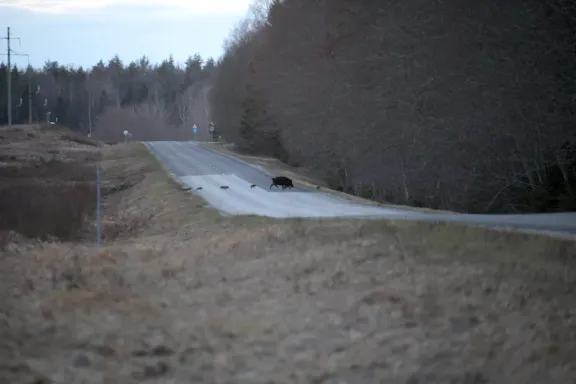
Big game
Feral hog
Sus scrofa
Same genus (Sus)
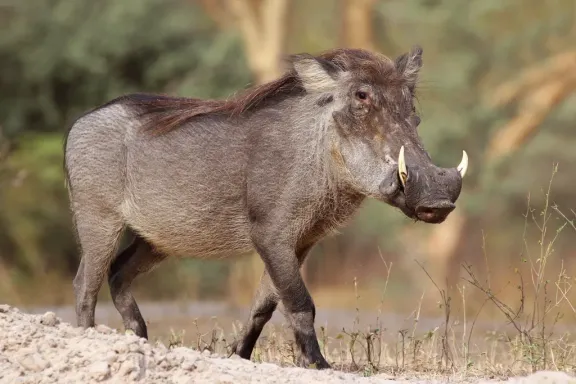
Big game
Common warthog
Phacochoerus africanus
Same family (Suidae)
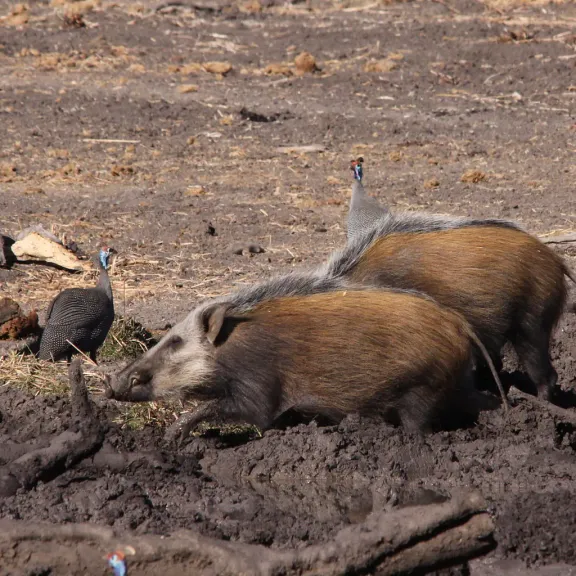
Big game
Bushpig
Potamochoerus larvatus
Same family (Suidae)
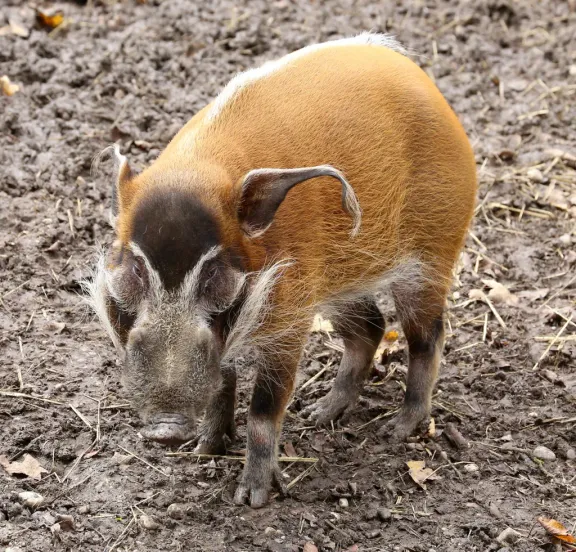
Big game
Red river hog
Potamochoerus porcus
Same family (Suidae)
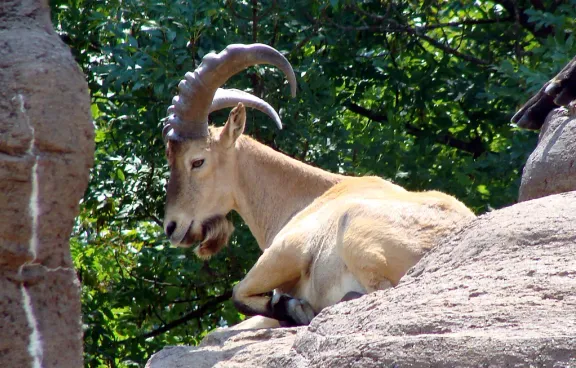
Big game
West Caucasian tur
Capra caucasica
Same order (Artiodactyla)
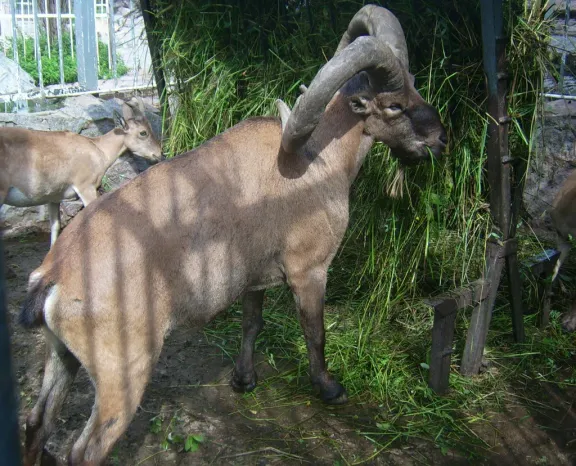
Big game
East Caucasian tur
Capra cylindricornis
Same order (Artiodactyla)