Big game
Takin
Budorcas taxicolor
- Group
- Big game
- Size class
- Giant (300 kg+)
- Family
- Bovidae
Range
- Asia
Habitat
- Mountain
- Forest
Range
Countries it is found in
2 countries
- China
- India
Range from:ASM Mammal Diversity Database — read 2026-08-05
Chapter 01
Overview
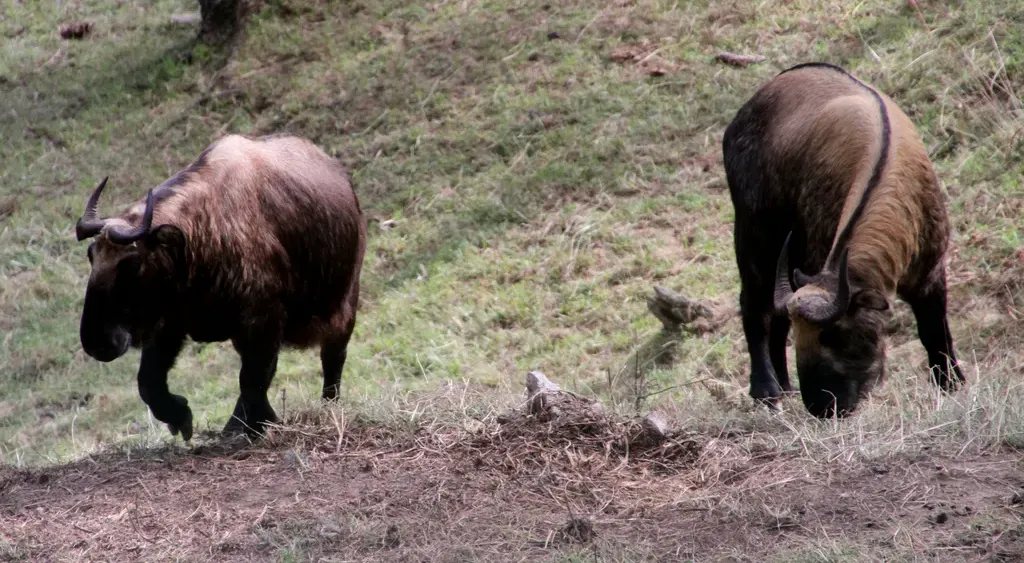
The takin (Budorcas taxicolor) is a massive caprine of the eastern Himalayas and the national animal of Bhutan. Despite its likeness to the muskox, mitochondrial studies place it closer to the sheep, the resemblance being convergent evolution. The genus name joins the Greek for ox and gazelle, and taxicolor means "badger-coloured". In 2022 researchers concluded that the takin is probably two species, the Himalayan takin (B. taxicolor) and the Chinese takin (B. tibetana); the Himalayan species includes the Mishmi takin of eastern Arunachal Pradesh and the Bhutan takin of western Arunachal Pradesh and Bhutan, with the Dihang-Dibang Biosphere Reserve a stronghold for both. It ranges from forested valleys to rocky, grassy alpine zones at 1,000–4,500 m, usually near the tree line, moving down to denser forest in winter. The IUCN lists it as vulnerable and China considers it endangered. It is threatened by overhunting and the destruction of its habitat, it is not naturally common, and its numbers appear to have fallen considerably; takin horns have turned up in the illegal wildlife trade in Myanmar, with 89 sets seen openly for sale in the Tachilek market across three surveys between 1999 and 2006.
Chapter 02
Identification
Among the largest and stockiest of the caprines, with a deep chest, short legs and large two-toed hooves, each with a well-developed spur. It stands 97–140 cm at the shoulder but measures a relatively short 160–220 cm in head and body, with a tail of 12–21.6 cm. Bulls weigh about 300–350 kg and cows 250–300 kg. The big head has a long, arched, swollen-looking nose — George Schaller likened the takin to a "bee-stung moose" — and nicknames include "cattle chamois" and "gnu goat". Both sexes have stout horns, ridged at the base, that run out sideways close to the skull before turning up to a short point; they are usually about 30 cm long but can reach 64 cm. The long, shaggy coat is light with a dark stripe along the back, and bulls have dark faces. Hair ranges from 3 cm on the flanks in summer to 24 cm under the head in winter. The whole body secretes an oily, strong-smelling substance used to scent-mark trees.
Chapter 03
Behaviour
Takin feed in the early morning and late afternoon on leaves, grasses, bamboo shoots and flowers, and have been seen standing on their hind legs to reach leaves more than 3 m up. Salt matters greatly, and groups may stay at a mineral deposit for several days. They live in family groups of around 20, while older males lead more solitary lives; in summer herds of up to 300 gather high on the slopes, especially around good feeding sites, salt licks and hot springs, and in winter they move down to forest and seek sunny spots at sunrise. Mating takes place in July and August. Males spar head to head for dominance, and both sexes use the scent of their own urine to signal rank. A single calf is born after about eight months. When disturbed a takin gives a cough-like alarm call, and the herd retreats into thick bamboo and lies down on the ground to hide.
Sources
Sources: Takin — Wikipedia, Taki — Wikipedia (sv) — read 2026-10-29
Cross-reference
Related species
Its closest relatives in the compendium, nearest kinship first.
Big game
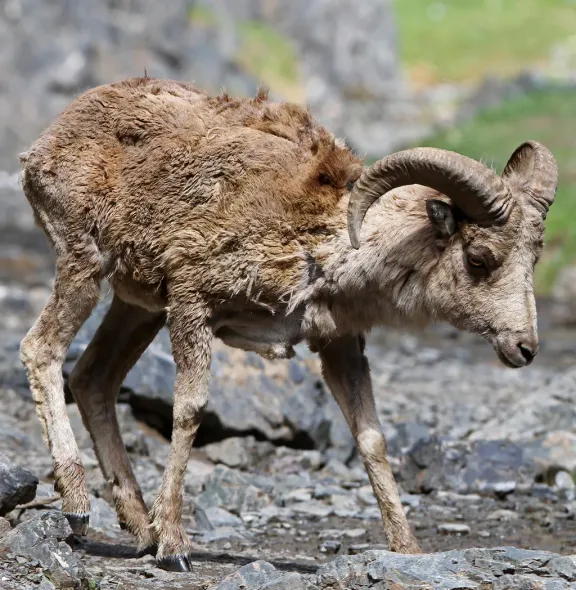
Argali
Ovis ammon
Same subfamily (Caprinae)
Big game
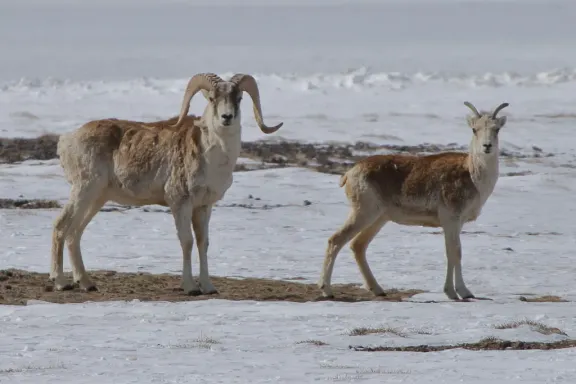
Marco Polo sheep
Ovis ammon polii
Same subfamily (Caprinae)
Big game
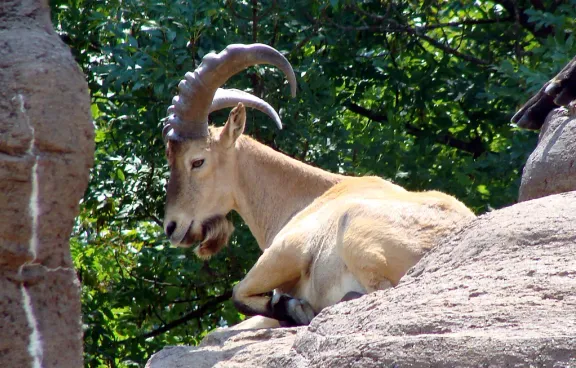
West Caucasian tur
Capra caucasica
Same subfamily (Caprinae)
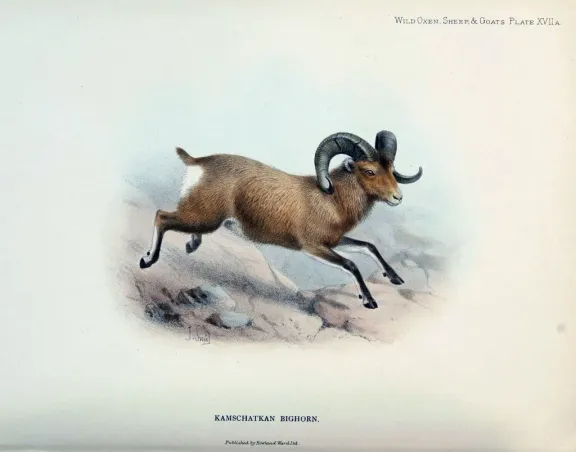
Big game
Snow sheep
Ovis nivicola
Same subfamily (Caprinae)
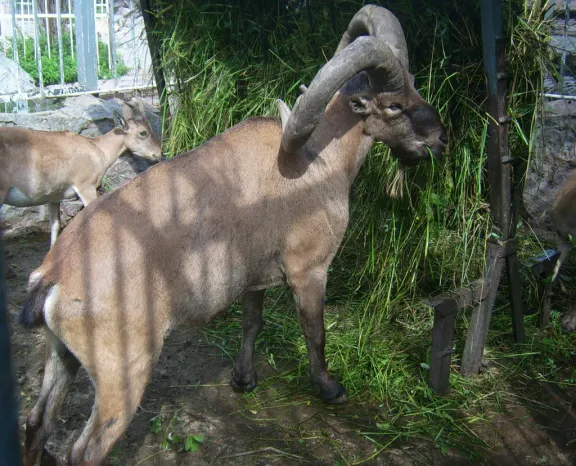
Big game
East Caucasian tur
Capra cylindricornis
Same subfamily (Caprinae)
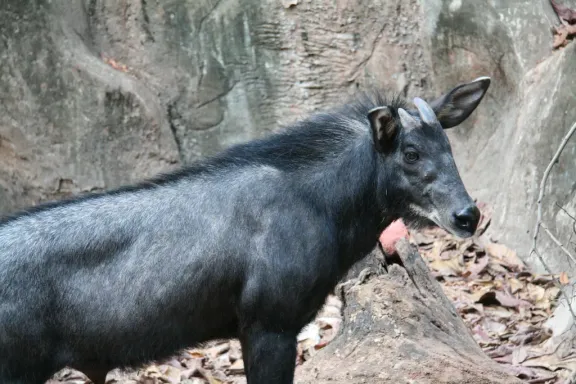
Big game
Mainland serow
Capricornis sumatraensis
Same subfamily (Caprinae)