Big game
Mainland serow
Capricornis sumatraensis
- Group
- Big game
- Size class
- Large (70–300 kg)
- Family
- Bovidae
Range
- Asia
Habitat
- Mountain
- Forest
Range
Countries it is found in
11 countries
- Bangladesh
- Bhutan
- Cambodia
- China
- India
- Indonesia
- Laos
- Malaysia
- Nepal
- Thailand
- Vietnam
Range from:ASM Mammal Diversity Database — read 2026-08-05
Chapter 01
Overview
The mainland serow (Capricornis sumatraensis) is a goat-antelope of forested mountains in the Himalayas, Southeast Asia and China, closely related to the red serow. In its broad sense it is recorded from central and southern China, India, Vietnam, Cambodia, Laos, Myanmar and Thailand to the Indonesian island of Sumatra. In Assam it lives in hill forest above 300 m, coming down to 100 m in winter; in the Nepal Himalayas it prefers 2,500–3,500 m, and in Tibet its range follows the forested ranges. Where the line is drawn is in flux. Swedish sources follow the newer split that keeps C. sumatraensis for the serows of the Malay Peninsula, southern Thailand, Malaysia and Sumatra, and treats the Chinese serow (C. milneedwardsii), red serow (C. rubidus) and Himalayan serow (C. thar) as species of their own. The IUCN lists the narrower species as vulnerable. Teeth from the Middle Pleistocene have been found at Khok Sung in Thailand.
Chapter 02
Identification
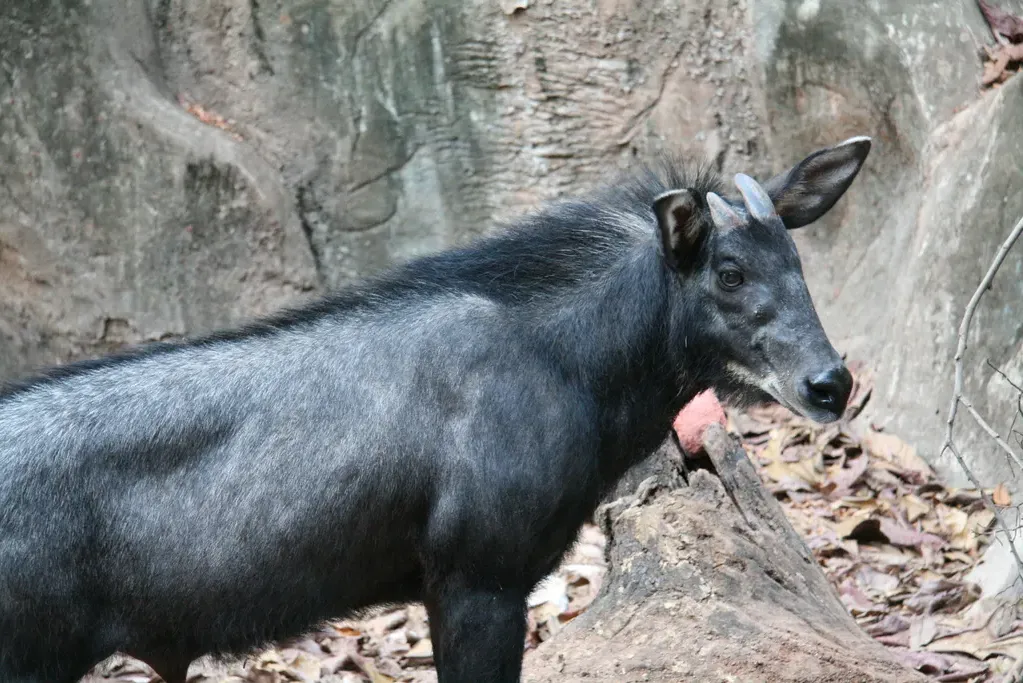
A goat-like animal about 91 cm at the shoulder, typically weighing around 91 kg, with a dense, blackish-grey coat that is paler below. Coarse, bristly guard hairs cover the soft underfur to varying degrees, and a mane runs from the horns along the neck to between the shoulder blades. The tail is only a short stump. The horns are short, light-coloured and curve slightly backwards, around 15 cm long in the English description and up to 25 cm in the Swedish one, which credits them to both sexes.
Chapter 03
Behaviour
The serow is territorial and lives alone or in small groups. Its activity is spread across the clock, with peaks both by day and by night. It is primarily a browser, eating leaves above all, along with grasses and other plant matter, as dental microwear in living and fossil animals confirms; Pleistocene fossils from Khok Sung suggest it was a forest animal then as now. Females give birth to a single young after a gestation of about eight months.
Chapter 04
Hunting
The serow is hunted for its meat, and for body parts believed to have healing properties, while deforestation destroys its habitat. It is protected under CITES Appendix I.
On the table
Meat & cooking
Table grade 1 of 51/5
- Sold as meat in a legal market
- Has a named traditional dish
- Published way to handle and cook it
- Eaten in more than one country
- No known health advisory
Sources
Sources: Mainland serow — Wikipedia, Sydlig serov — Wikipedia (sv) — read 2026-10-29
Cross-reference
Related species
Its closest relatives in the compendium, nearest kinship first.
Big game
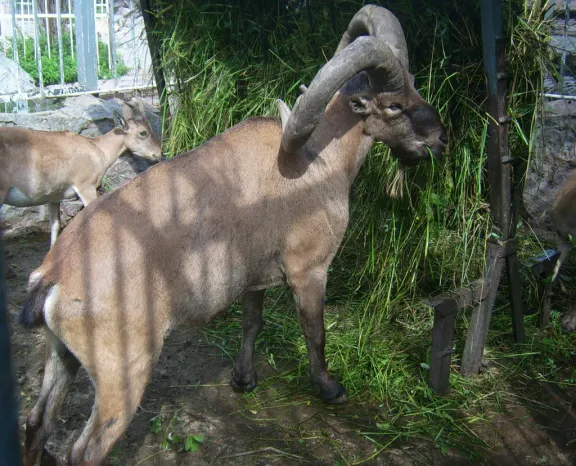
East Caucasian tur
Capra cylindricornis
Same subfamily (Caprinae)
Big game
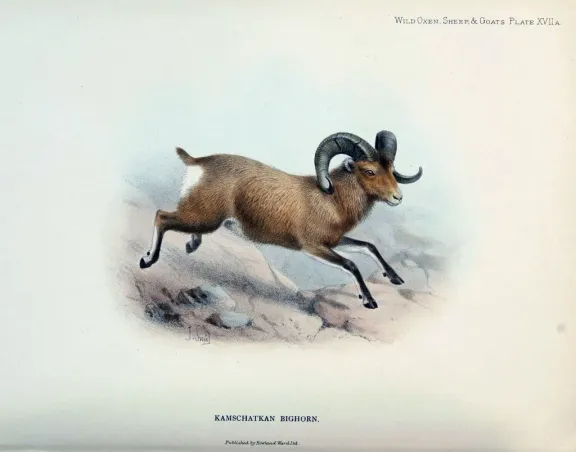
Snow sheep
Ovis nivicola
Same subfamily (Caprinae)
Big game
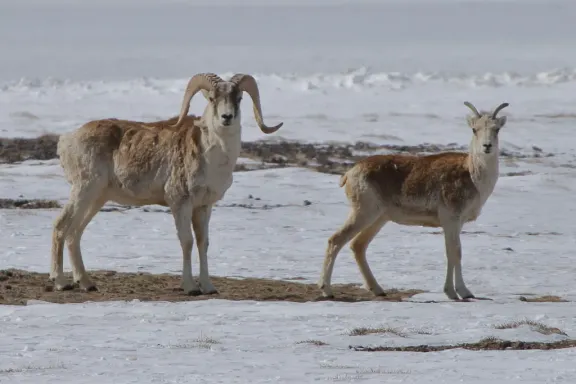
Marco Polo sheep
Ovis ammon polii
Same subfamily (Caprinae)
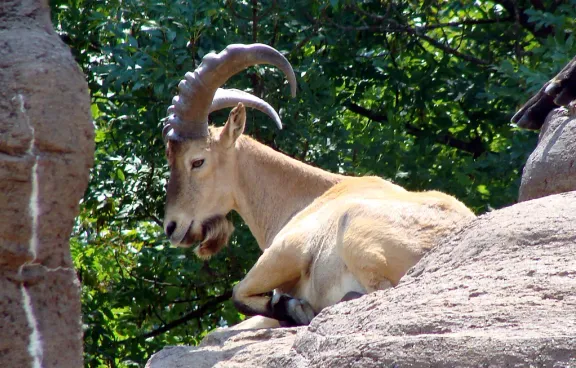
Big game
West Caucasian tur
Capra caucasica
Same subfamily (Caprinae)
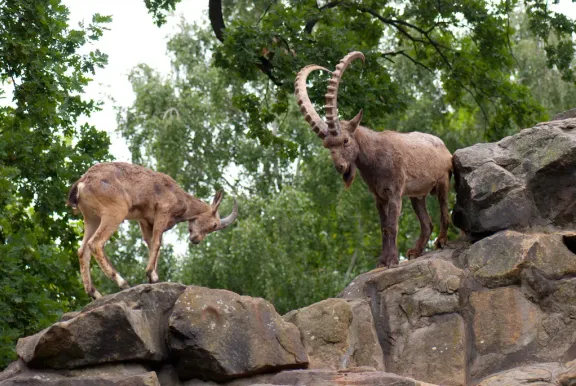
Big game
Siberian ibex
Capra sibirica
Same subfamily (Caprinae)
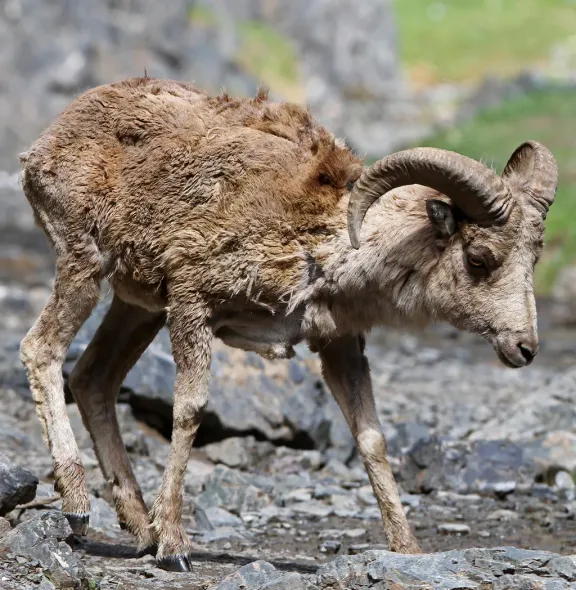
Big game
Argali
Ovis ammon
Same subfamily (Caprinae)