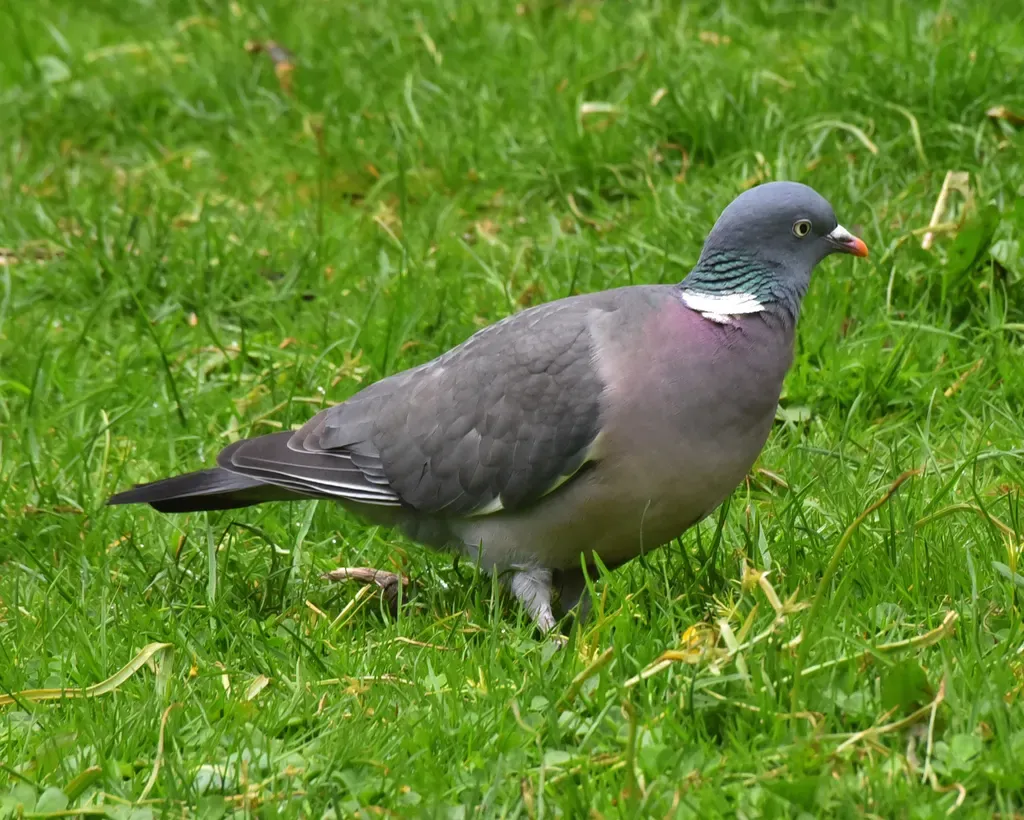
Photo:Don LoarieCC BY 4.0
Upland birds
Common woodpigeon
Columba palumbus
- Group
- Upland birds
- Size class
- Small (under 10 kg)
- Family
- Columbidae
Range
- Europe
Habitat
- Farmland
- Forest
Range
Countries it is found in
72 countries
- Afghanistan
- Åland Islands
- Albania
- Algeria
- Andorra
- Armenia
- Austria
- Azerbaijan
- Belarus
- Belgium
- Bosnia & Herzegovina
- Bulgaria
- Croatia
- Cyprus
- Czechia
- Denmark
- Estonia
- Faroe Islands
- Finland
- France
- Georgia
- Germany
- Greece
- Guernsey
Range from:Wikipedia country bird lists, GBIF occurrence records — read 2026-08-05
Chapter 01
Overview
The common wood pigeon (Columba palumbus) is a large pigeon native to the western Palearctic, in the genus Columba alongside the rock dove. It has a flexible diet, feeding mainly on plant material including cereals, and is therefore treated as an agricultural pest — and it is extensively hunted over much of its range. Linnaeus described it in 1758. The epithet palumbus is an alternate form of the Latin palumbes, a wood pigeon. Five subspecies are recognised, one now extinct.
Chapter 02
Identification
The three western European Columba pigeons — wood pigeon, stock dove and rock dove — look superficially alike but are quite distinct. The wood pigeon is identified at once by its larger size at 38–44.5 cm and 300–615 g, and by the white on its neck and wing. It is otherwise basically a grey bird with a pinkish breast. Wingspan runs from 68 to 80 cm.
Chapter 03
Behaviour
The flight is fast and regular, with the occasional sharp flick of the wing characteristic of pigeons, and it takes off with a loud clatter. It perches well. In the nuptial display it walks along a horizontal branch with the neck swelled, wings down and tail outstretched; in the display flight it climbs, cracks its wings smartly like a whip, and glides down on stiff wings. It breeds in trees in woodland, parks and gardens, laying two white eggs in a simple stick nest that hatch after 17 to 19 days, and seems to prefer trees near roads and rivers. In the breeding season males display aggression by jumping and flapping at each other. The plumage, especially on the head, becomes much darker through hot summers.
Chapter 04
Hunting
The wood pigeon is extensively hunted across much of its range, with millions shot each year, in part because it has long been regarded as an agricultural pest and particularly a pest of cereal crops. In 1953 the British government introduced a subsidy covering the cost of cartridges for wood pigeon shooters. It was abolished in 1969.
Field data
Tracks
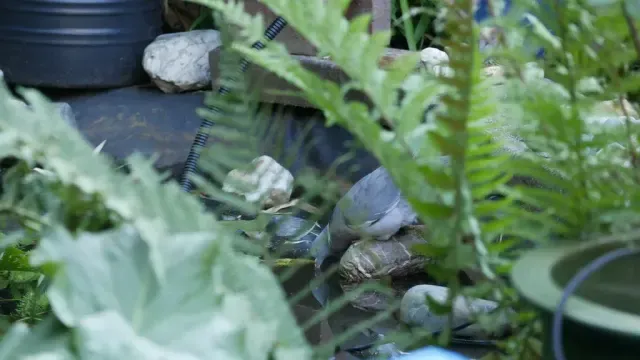
A photograph of real sign left by Common woodpigeon. Prints vary with gait, ground and how long they have been there — treat this as one example, not a template.
Track photo:2018-2026 SgobboVista. Inh.: Larissa und Sonja SgobboCC BY
On the table
Meat & cooking
Table grade 5 of 55/5
- Sold as meat in a legal market
- Has a named traditional dish
- Published way to handle and cook it
- Eaten in more than one country
- No known health advisory
Traditional preparations
- Roast pigeon
- The breast is the cut worth having and is cooked rare; pigeon is dark, lean meat that turns dry the moment it is taken past pink. Squab — Wikipedia
- Pigeon pâté
- The legs and trim go into pâtés and terrines, bound with pork fat the bird itself does not carry. Pâté — Wikipedia
Sources
Sources: Common wood pigeon — Wikipedia — read 2026-08-05
Cross-reference
Related species
Its closest relatives in the compendium, nearest kinship first.
Upland birds
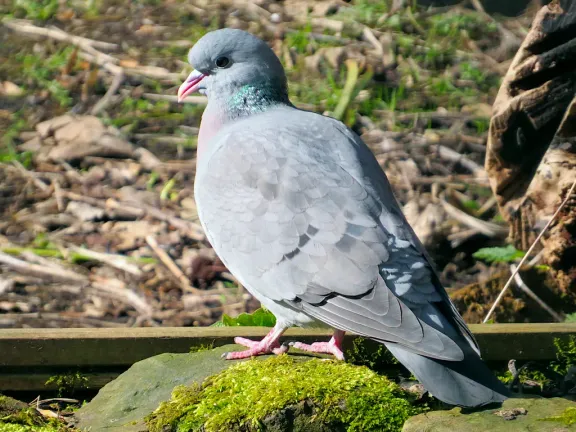
Stock dove
Columba oenas
Same genus (Columba)
Upland birds
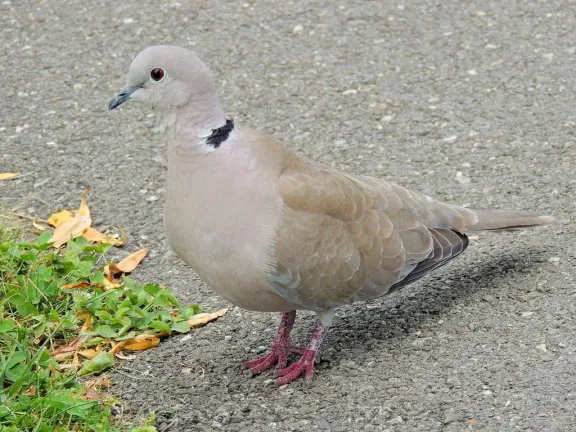
Eurasian collared dove
Streptopelia decaocto
Same family (Columbidae)
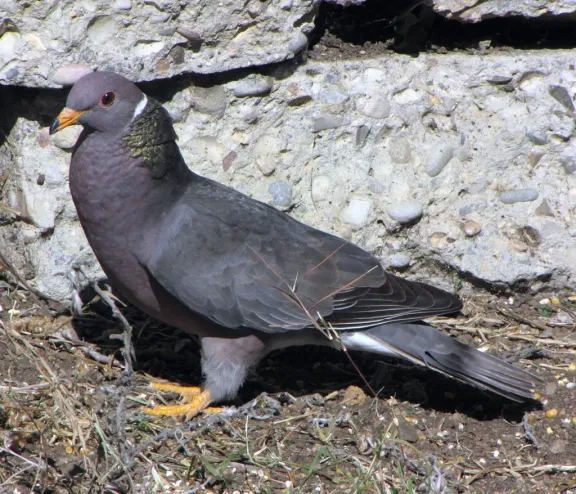
Upland birds
Band-tailed pigeon
Patagioenas fasciata
Same family (Columbidae)
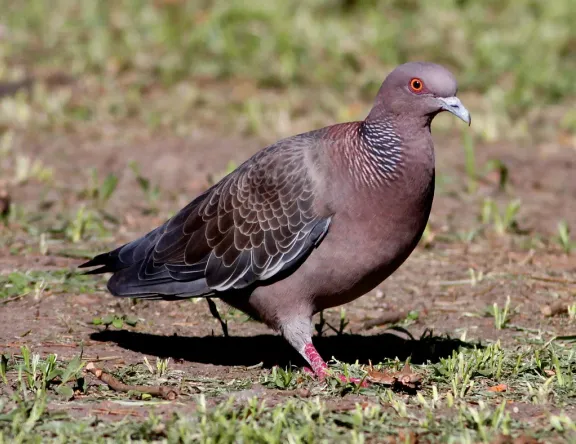
Upland birds
Picazuro pigeon
Patagioenas picazuro
Same family (Columbidae)
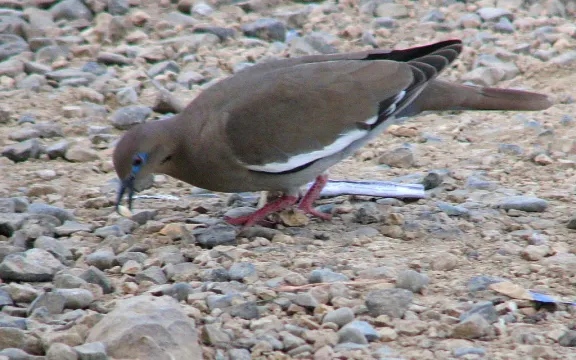
Upland birds
White-winged dove
Zenaida asiatica
Same family (Columbidae)
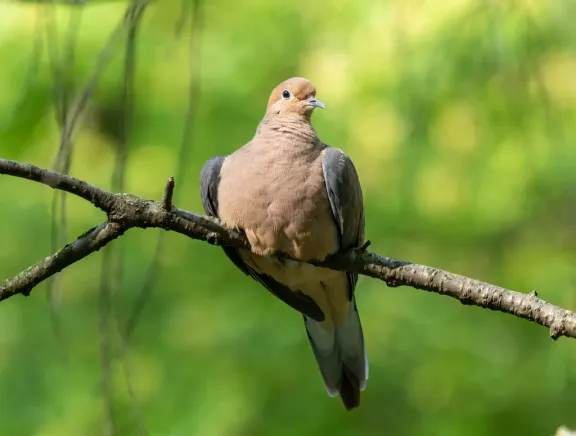
Upland birds
Mourning dove
Zenaida macroura
Same family (Columbidae)