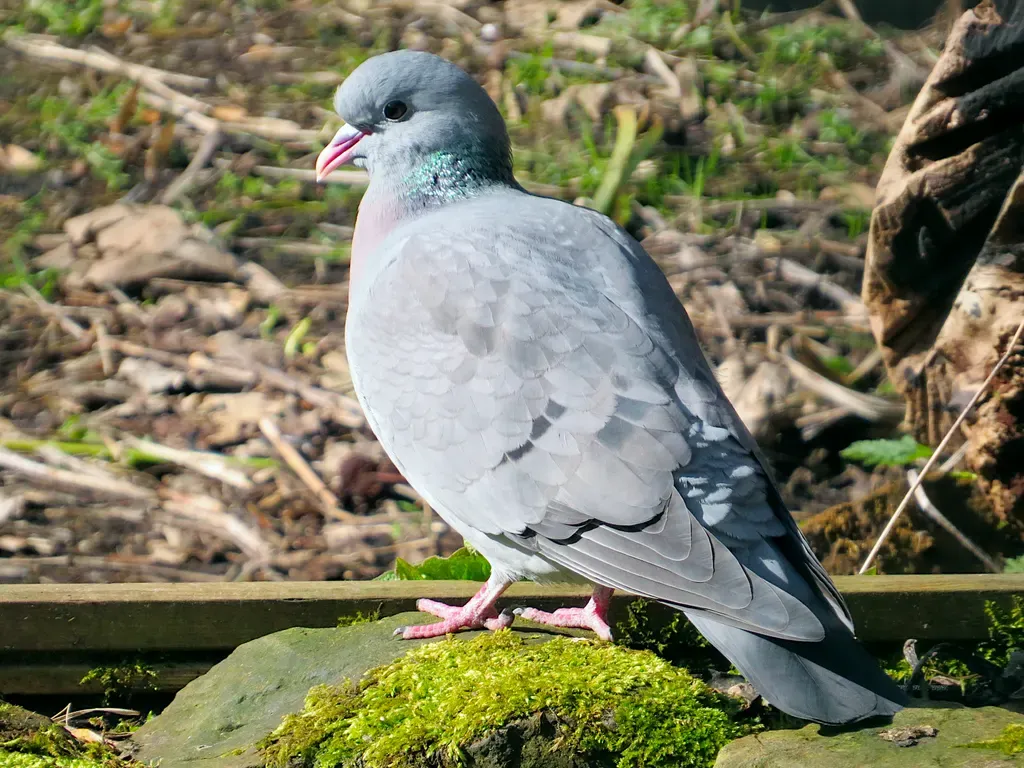
Photo:MPFCC BY-SA 4.0
Upland birds
Stock dove
Columba oenas
- Group
- Upland birds
- Size class
- Small (under 10 kg)
- Family
- Columbidae
Range
- Europe
Habitat
- Farmland
Range
Countries it is found in
60 countries
- Albania
- Andorra
- Armenia
- Austria
- Azerbaijan
- Belarus
- Belgium
- Bosnia & Herzegovina
- Bulgaria
- Croatia
- Czechia
- Denmark
- Estonia
- Faroe Islands
- Finland
- France
- Georgia
- Germany
- Greece
- Guernsey
- Hungary
- Iran
- Iraq
- Ireland
Range from:Wikipedia country bird lists, GBIF occurrence records — read 2026-08-05
Chapter 01
Overview
The stock dove (Columba oenas) is a pigeon of the western Palearctic, ranging north to central Scandinavia and south to north-west Africa, and the type species of the genus Columba. Western and southern populations stay put, while north-eastern birds migrate; the Scandinavian population leaves in September and October for winter quarters in southern France and northern Spain. In Sweden it breeds sparsely from Skåne north to central Värmland, south-eastern Dalarna and Gästrikland, and is far commoner in the south and east than in the west. It was once Sweden's commonest dove, but the population fell with the loss of nesting habitat; it was estimated at 12,000 pairs in 2018 and is no longer red-listed.
Chapter 02
Identification
A blue-grey pigeon 28–34 cm long with a wingspan of 60–66 cm, males weighing 303–365 g and females 286–290 g. It has two short, incomplete dark wing bars, a broad dark band at the tip of the tail, a lightly pinkish-purple breast and an iridescent green-to-purple patch on the side of the neck. The eye is dark and the bill pink with a yellow tip. It is told from the wood pigeon by its smaller size and the lack of white on neck and wing, and from the rock dove by its grey rump and dark grey underwing. In flight the grey wing shows a dark trailing edge. The call is a short, deep, grunting ooo-uu-ooh, quite unlike the wood pigeon's cooing.
Chapter 03
Behaviour
The stock dove nests in holes, usually in old trees, which ties it to old forest; it also uses rabbit burrows, ruins, cliff crevices and nest boxes, lays two eggs and raises two or three broods a year. It forms small flocks of a few to a few tens of birds, never the thousands a wood pigeon flock can reach, and often mixes with wood pigeons. The flight is quick and regular, and in the circling spring display flight the wings crack like a whip. It feeds mainly on plant material — seedlings, grain, peas, acorns, beech mast and weed seeds — mostly on open fields, and may fly kilometres from the nest to forage.
Chapter 04
Hunting
The stock dove is not considered threatened in Europe but is listed in Schedule 2 of the EU Birds Directive and Annex III of the Berne Convention. France saw a sharp decline in the 1970s, and 100,000–200,000 birds winter there. In Sweden the stock dove has no open season in the hunting ordinance, and it is not among the birds named for skyddsjakt on the hunter's own initiative in its bilaga 4.
Sources
Sources: Stock dove — Wikipedia, Skogsduva — Wikipedia (svenska), Jaktförordning (1987:905) — Sveriges riksdag — read 2026-10-29
Cross-reference
Related species
Its closest relatives in the compendium, nearest kinship first.
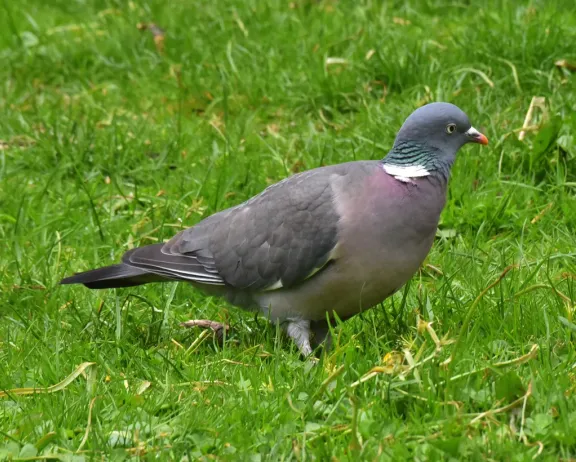
Upland birds
Common woodpigeon
Columba palumbus
Same genus (Columba)
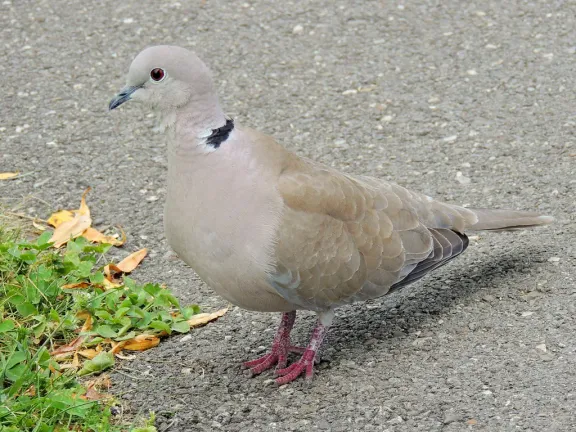
Upland birds
Eurasian collared dove
Streptopelia decaocto
Same family (Columbidae)
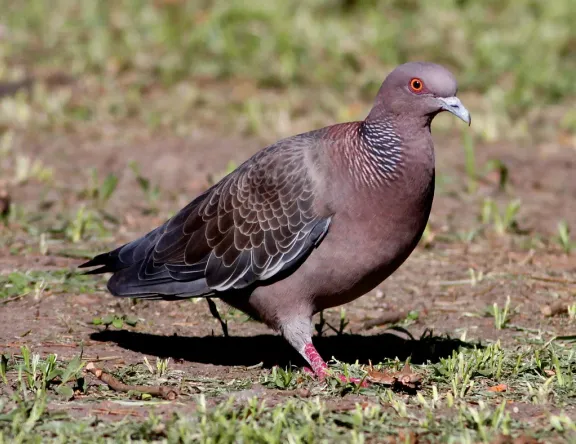
Upland birds
Picazuro pigeon
Patagioenas picazuro
Same family (Columbidae)
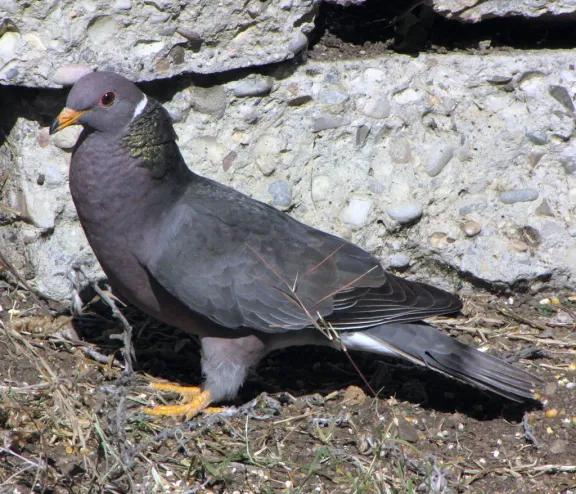
Upland birds
Band-tailed pigeon
Patagioenas fasciata
Same family (Columbidae)
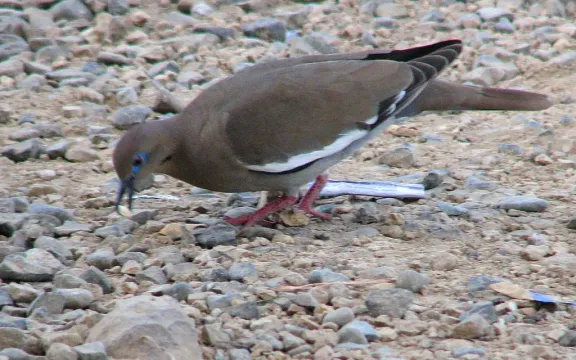
Upland birds
White-winged dove
Zenaida asiatica
Same family (Columbidae)
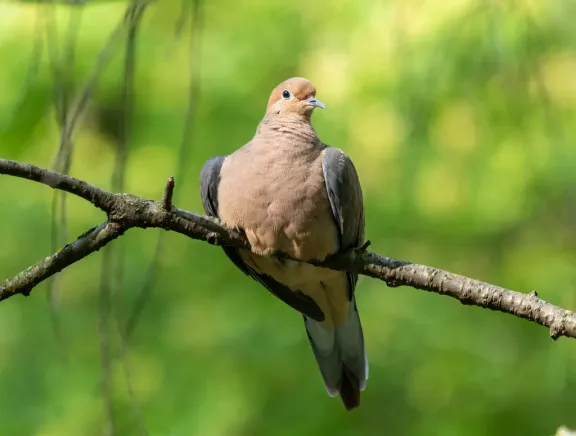
Upland birds
Mourning dove
Zenaida macroura
Same family (Columbidae)