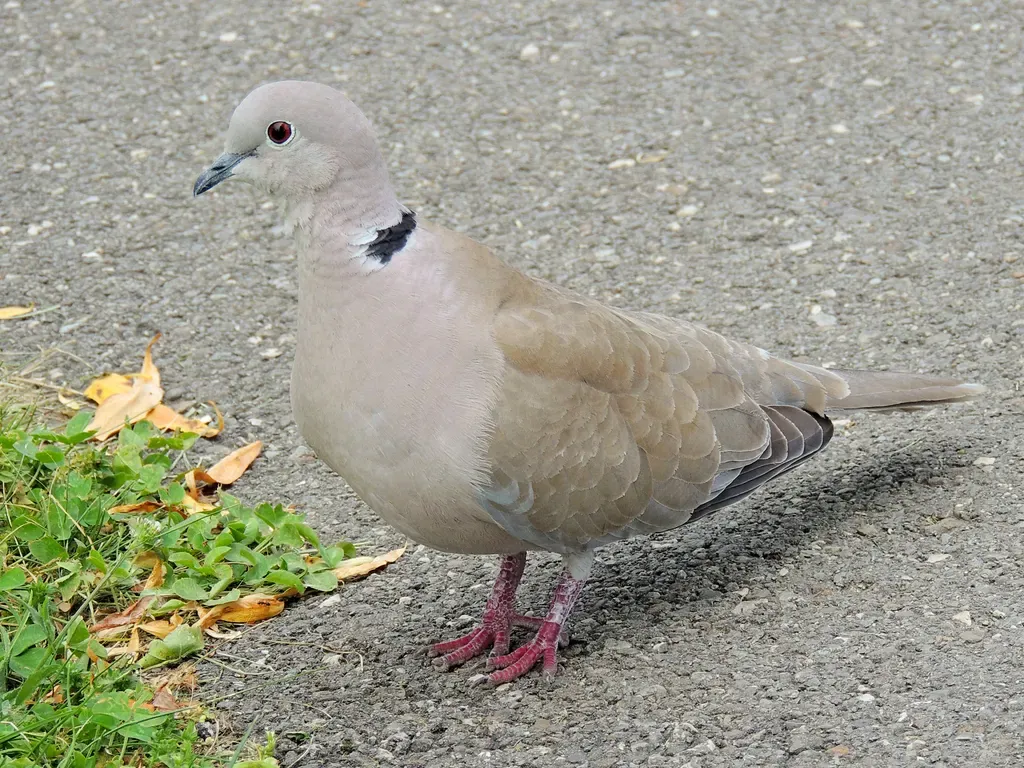
Photo:xulescu_gCC BY-SA 2.0
Upland birds
Eurasian collared dove
Streptopelia decaocto
- Group
- Upland birds
- Size class
- Small (under 10 kg)
- Family
- Columbidae
Range
- Europe
- Asia
- North America
Habitat
- Farmland
Range
Countries it is found in
127 countries
- Afghanistan
- Albania
- Algeria
- Andorra
- Antigua & Barbuda
- Armenia
- Austria
- Azerbaijan
- Bahamas
- Bahrain
- Bangladesh
- Barbados
- Belarus
- Belgium
- Belize
- Bermuda
- Bhutan
- Bosnia & Herzegovina
- British Virgin Islands
- Bulgaria
- Canada
- Cape Verde
- Caribbean Netherlands
- Cayman Islands
Range from:Wikipedia country bird lists, GBIF occurrence records — read 2026-08-05
Chapter 01
Overview
The Eurasian collared dove (Streptopelia decaocto) is a grey-buff dove named for the black, white-edged half-collar on its nape. Its range at the end of the 19th century ran from eastern Turkey to southern China and south to Sri Lanka; in the 20th century it spread explosively north-west across Europe, reaching Germany in 1945, Great Britain in 1952 and beyond the Arctic Circle in Norway. Fewer than 50 birds that escaped in the Bahamas in 1974 seeded a population now found in nearly every US state. The first Swedish record was in 1949 and the first breeding in Skåne in the early 1950s. It now lives in towns and villages in southern and central Sweden and locally along the Norrland coast to Luleå, but numbers have fallen; in 2025 it was red-listed in Sweden as near threatened, with about 6,200 breeding birds.
Chapter 02
Identification
A medium-sized, slender dove averaging 32 cm with a 47–55 cm wingspan and weighing 125–240 g. It is grey-buff to pinkish-grey, slightly darker above, with a blue-grey patch under the wing and a long tail edged broadly white below. The black half-collar is the mark to look for; juveniles have it only poorly developed and a brown rather than red iris. The legs are short and red and the bill black. The call is a three-note goo-GOO-goo, stressed on the second syllable, and it gives a harsh screech in flight just before landing. Cooing collared doves in early spring are sometimes mistaken for early cuckoos.
Chapter 03
Behaviour
Collared doves breed close to people — almost all nests are within a kilometre of inhabited buildings — laying two white eggs in a flimsy stick nest. The female incubates by night and the male by day for 14–18 days, and three to four broods a year are common. Birds can breed when only a few months old. The male's display flight is a near-vertical climb followed by a long circling glide on lowered wings. It feeds mostly on seed and grain, gathering where grain is spilled around farms and livestock feed; winter flocks usually number 10 to 50 birds.
Chapter 04
Hunting
In North America, where it was introduced, the Eurasian collared dove is treated as invasive. It is a known carrier of the parasite Trichomonas gallinae and of pigeon paramyxovirus type 1, which can pass to native birds at feeders and to domestic poultry. In Sweden the turkduva has no open season in the hunting ordinance and is not among the species named for skyddsjakt on the hunter's own initiative in its bilaga 4.
Field data
Tracks
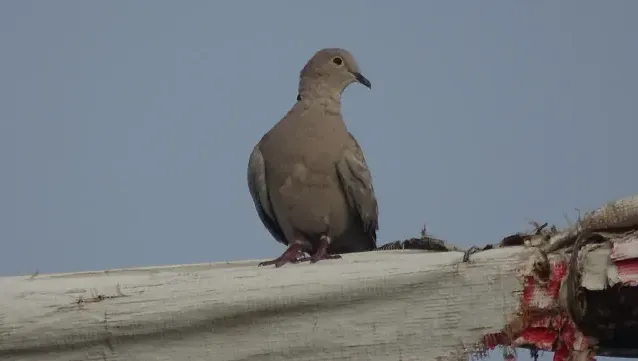
A photograph of real sign left by Eurasian collared dove. Prints vary with gait, ground and how long they have been there — treat this as one example, not a template.
Track photo:Grupo PhoenixCC BY SA
Sources
Sources: Eurasian collared dove — Wikipedia, Turkduva — Wikipedia (svenska), Jaktförordning (1987:905) — Sveriges riksdag — read 2026-10-29
Cross-reference
Related species
Its closest relatives in the compendium, nearest kinship first.
Upland birds
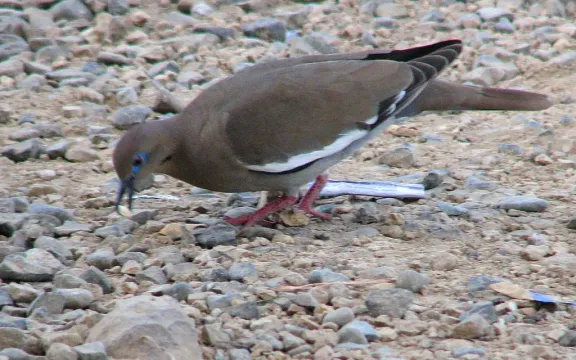
White-winged dove
Zenaida asiatica
Same family (Columbidae)
Upland birds
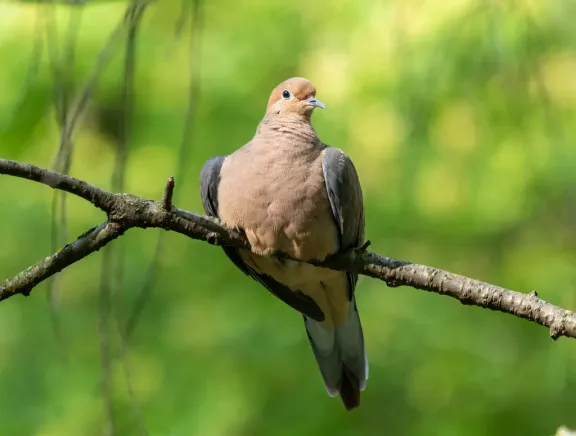
Mourning dove
Zenaida macroura
Same family (Columbidae)
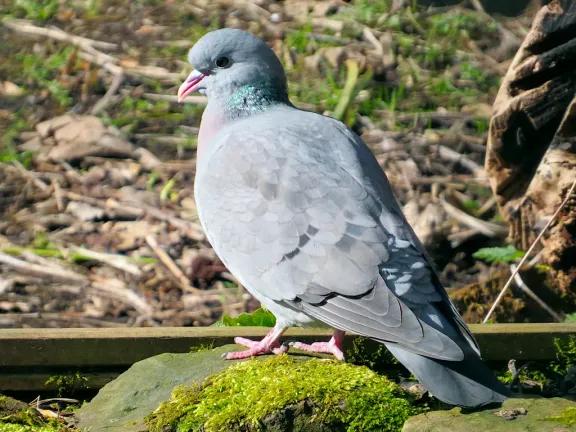
Upland birds
Stock dove
Columba oenas
Same family (Columbidae)
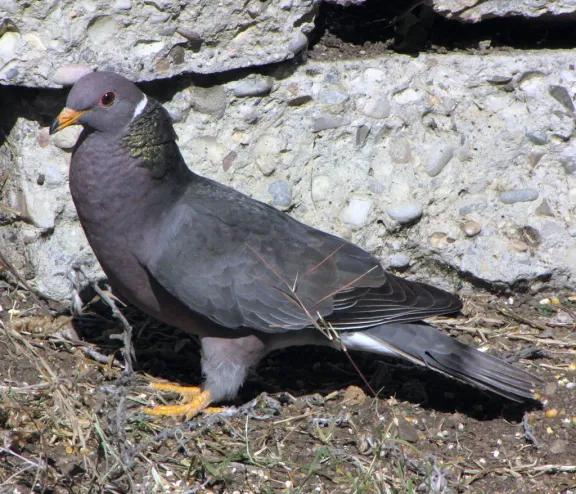
Upland birds
Band-tailed pigeon
Patagioenas fasciata
Same family (Columbidae)
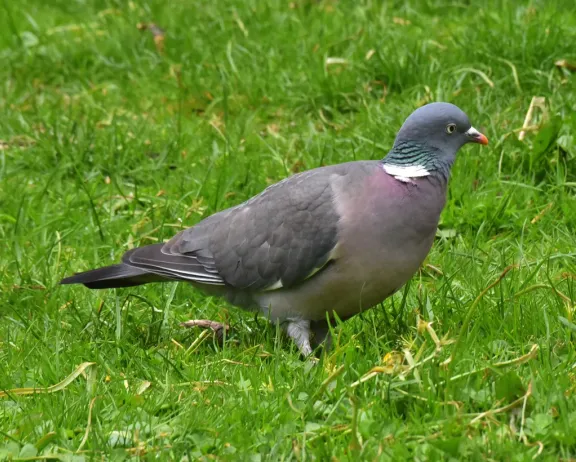
Upland birds
Common woodpigeon
Columba palumbus
Same family (Columbidae)
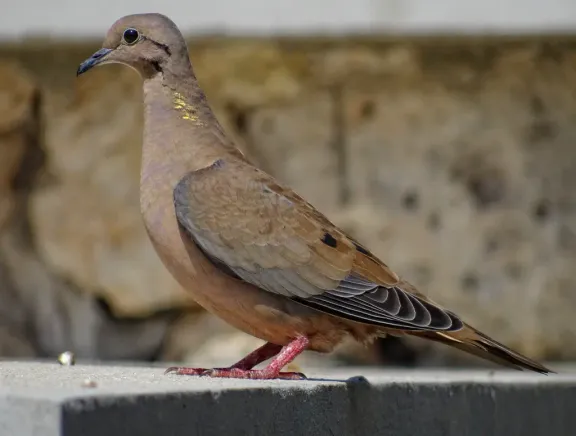
Upland birds
Eared dove
Zenaida auriculata
Same family (Columbidae)