Big game
Elk (wapiti)
Cervus canadensis
- Group
- Big game
- Size class
- Giant (300 kg+)
- Family
- Cervidae
Range
- North America
- Asia
Habitat
- Mountain
- Forest
Range
Countries it is found in
8 countries
- Bhutan
- Canada
- China
- Kazakhstan
- Kyrgyzstan
- Mongolia
- Russia
- United States
Range from:ASM Mammal Diversity Database — read 2026-08-05
Chapter 01
Overview
The elk or wapiti (Cervus canadensis) is the second-largest deer, after the moose, and one of the largest land mammals of North America and Central and East Asia. The English word elk first meant the European moose, Alces alces, and North American colonists moved it onto this deer; 'wapiti' comes from Shawnee and Cree words for 'white rump', after the pale patch the animals raise in alarm or display. Long treated as a subspecies of the red deer, it was shown by mitochondrial DNA studies from 1998 onwards to be a separate species, closer to Thorold's deer and the sika than to the red deer; its wider rump patch and paler antlers tell the two apart. It ranges from Central Asia through Siberia and East Asia and across North America, and the IUCN lists it as least concern. North America held an estimated 10 million before European colonisation and about a million by 2014, after reintroductions in Pennsylvania, Kentucky, Michigan and elsewhere. In the Late Pleistocene it lived across Eurasia as far west as France, and relict populations survived in southern Sweden and the Alps until around 3,000 years ago. Two wapiti were released at Skeppsta in Södermanland by Oscar Dickson in 1876; they bred but were soon poached out, and were gone in the 1880s. In Argentina and New Zealand, where it was introduced, the IUCN counts it among the world's 100 worst invaders.
Chapter 02
Identification
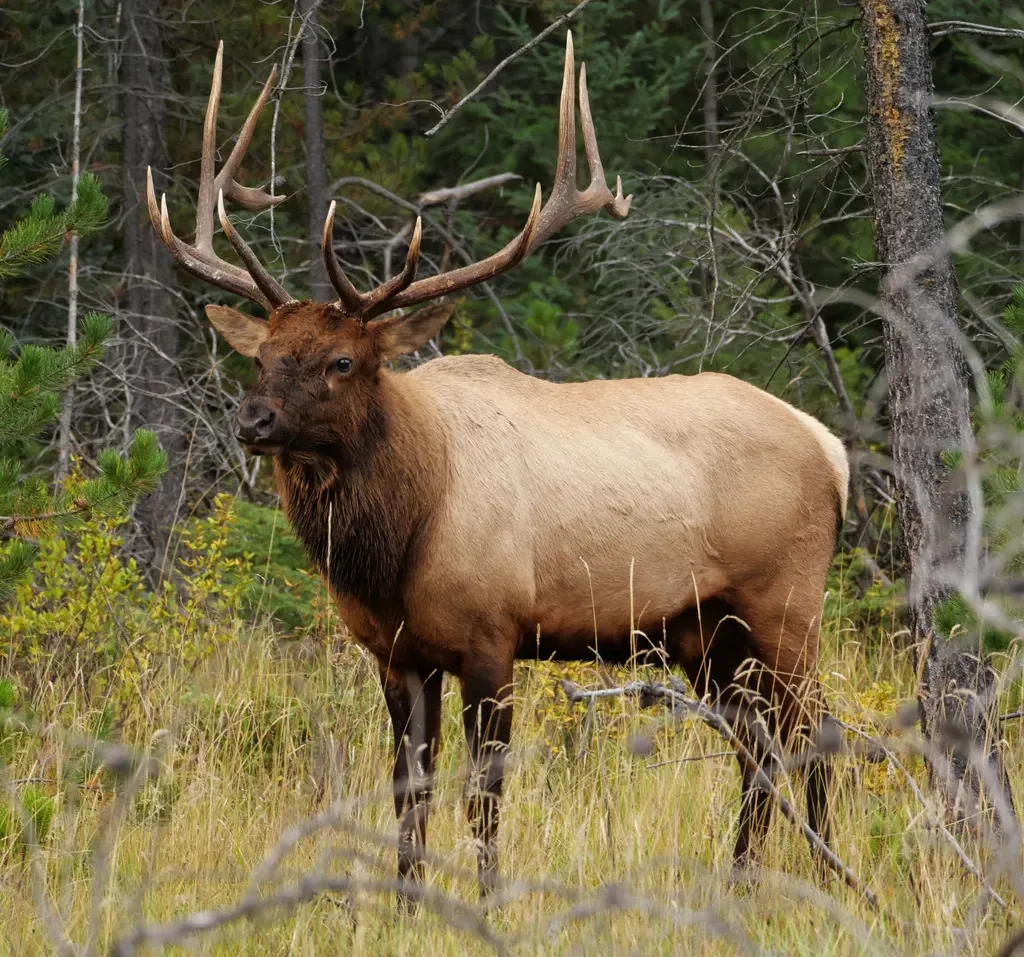
A thick-bodied deer on slender legs with a short tail, standing 0.75–1.5 m at the shoulder and 1.6–2.7 m long. Bulls weigh 178–497 kg and cows 171–292 kg; the Roosevelt elk west of the Cascades is the largest subspecies, its bulls typically 318–499 kg and in Alaska estimated at up to 600 kg, while the tule elk of California is far smaller. All elk have a small, clearly defined pale rump patch; the coat is greyer and paler in winter and darker and redder in summer, and North American elk of both sexes grow a thin neck mane. Only bulls carry antlers, which grow by up to 2.5 cm a day under velvet in summer, harden by September and are shed in late winter as testosterone drops; a bull typically has about six tines on each side, and Roosevelt antlers can weigh 18 kg. Young bulls whose antlers have not yet forked are called spike bulls. Six subspecies lived in North America in historical times, of which four remain — Roosevelt, tule, Manitoban and Rocky Mountain — though DNA suggests there may be no more than three or four subspecies in all.
Chapter 03
Behaviour
Elk are among the most gregarious deer, with summer herds of up to 400. Cows and bulls live apart most of the year, cows in large herds and bulls in small groups or alone, and come together for the rut from late August into early winter. Bulls bugle — a loud, whistle-like call reaching 4,000 Hz, made by forcing air through the nasal cavities — wallow in urine-soaked pits to scent themselves, spar with their antlers and guard harems of 20 cows or more. Cows bark an alarm, and calves scream when attacked. Unlike moose and white-tailed deer, which are mainly browsers, elk are chiefly grazers, eating about 9.1 kg of vegetation a day — grasses all year, bark in winter, sedges, forbs and tree shoots in summer — mostly in the mornings and evenings. In the mountains they move up after the retreating snow in spring and back down in autumn; Yellowstone herds travel up to 270 km between summer and winter ranges, the longest elk migration in the continental US. Calves weigh about 16 kg at birth after eight to nine months and are spotted until late summer. Wolves, coyotes, bears and cougars are the main predators.
Chapter 04
Hunting
Elk were the main hunted animal, together with bison, in early Holocene central Alaska, and hunting of wild elk is probably the largest part of their economic value today. North American numbers bottomed out around 1900 and recovered once hunting was controlled; Colorado, which says it has the largest elk herd in North America, sells both limited licences through a draw and over-the-counter licences that are unlimited in number but restricted to certain units, seasons and methods of take. Some restaurants serve elk as a speciality and some grocery stores sell it; in 1989 about 20,000 animals in North America were kept in enclosures for their meat or antlers. Chronic wasting disease has been found in wild and farmed elk across their North American range. Colorado requires free testing of heads from deer taken in certain rifle hunts — elk are not part of that mandatory testing — and hunters can submit any other animal's head for testing for a $25 fee. In Sweden, wapitihjort is listed in Annex 4 of the Hunting Ordinance among the alien game species that may be hunted all year, 1 July–30 June, to prevent damage caused by non-native game.
Field data
Tracks
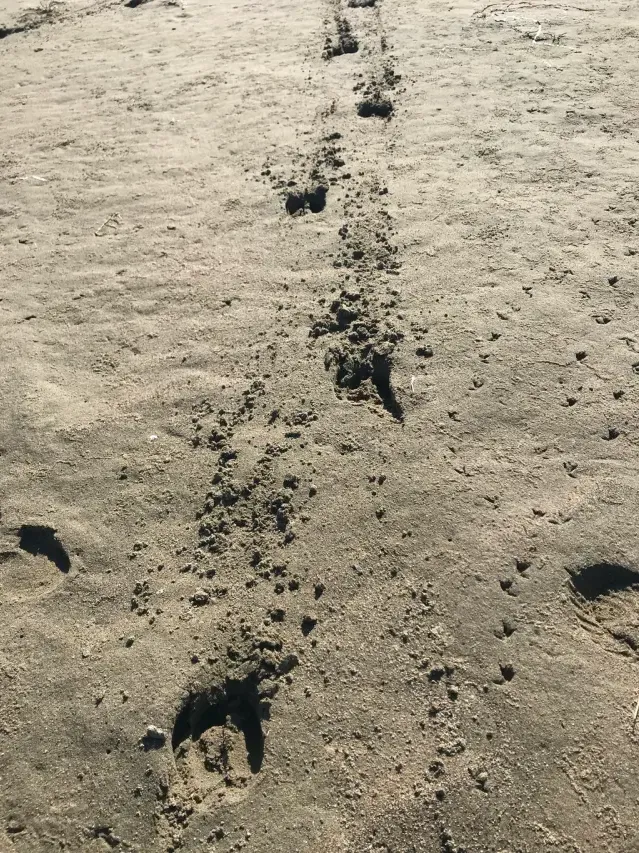
A photograph of real sign left by Elk (wapiti). Prints vary with gait, ground and how long they have been there — treat this as one example, not a template.
Track photo:LJ Moore-McClellandCC BY
On the table
Meat & cooking
Table grade 2 of 52/5
- Sold as meat in a legal market
- Has a named traditional dish
- Published way to handle and cook it
- Eaten in more than one country
- No known health advisory
Before you eat it: Elk can carry chronic wasting disease, a fatal prion disease found throughout their North American range. No human infection has ever been reported, but the CDC advises hunters to consider testing an elk before eating it, never to eat meat from an animal that tests positive or from one that looked sick or was found dead, to wear gloves when dressing it and avoid handling the brain and spinal cord, and to have the animal processed on its own.
Sources
Sources: Elk — Wikipedia, Vapiti — Wikipedia (sv), Colorado Parks and Wildlife: Elk hunting, Centers for Disease Control and Prevention: About chronic wasting disease, Jaktförordning (1987:905) — Sveriges riksdag — read 2026-10-29
Cross-reference
Related species
Its closest relatives in the compendium, nearest kinship first.
Big game
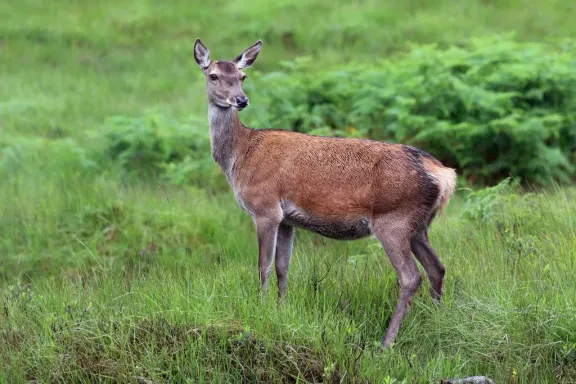
Red deer
Cervus elaphus
Same genus (Cervus)
Big game
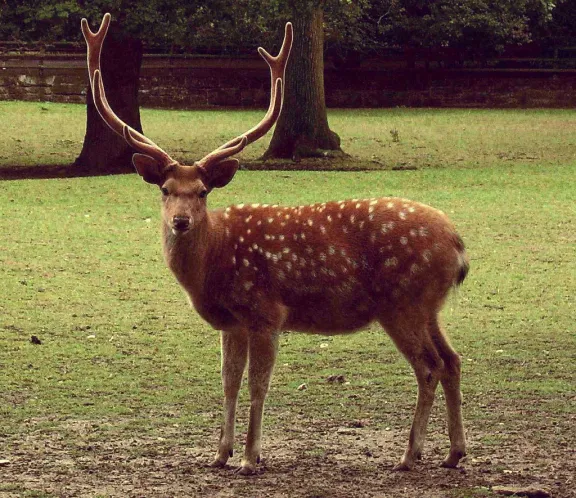
Sika deer
Cervus nippon
Same genus (Cervus)
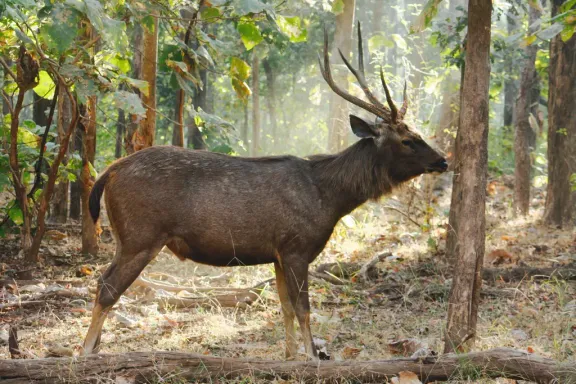
Big game
Sambar deer
Rusa unicolor
Same subfamily (Cervinae)
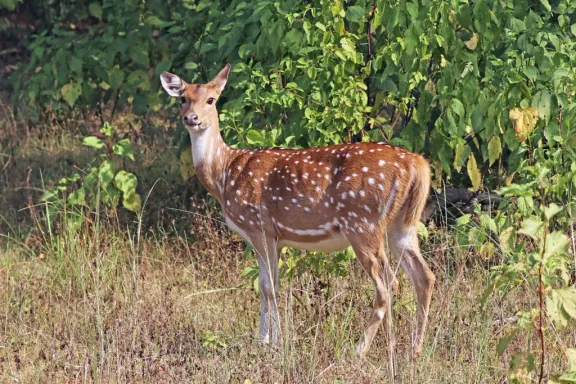
Big game
Axis deer (chital)
Axis axis
Same subfamily (Cervinae)
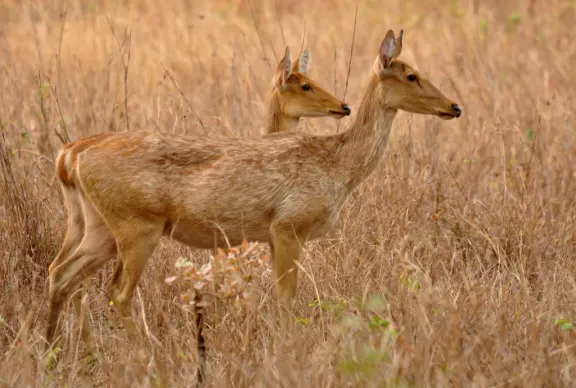
Big game
Barasingha
Rucervus duvaucelii
Same subfamily (Cervinae)
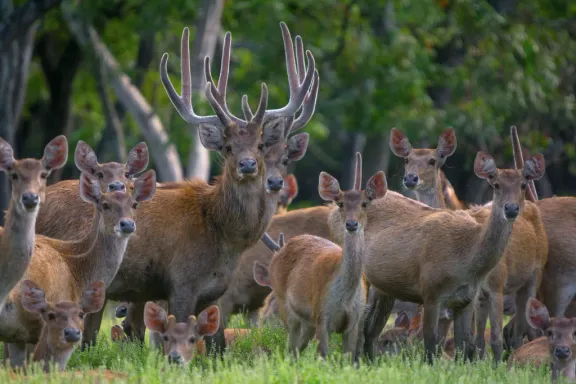
Big game
Rusa deer
Rusa timorensis
Same subfamily (Cervinae)