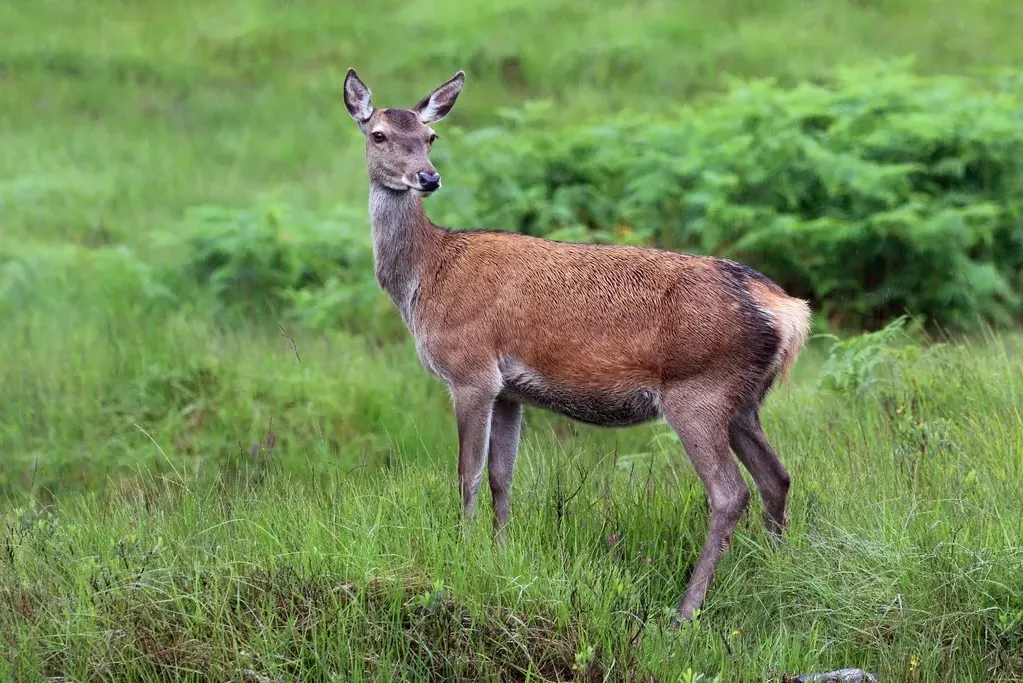
Big game
Red deer
Cervus elaphus
- Group
- Big game
- Size class
- Large (70–300 kg)
- Family
- Cervidae
Range
- Europe
- Asia
- Oceania
- South America
Habitat
- Forest
- Mountain
Range
Countries it is found in
51 countries
- Algeria
- Argentina
- Armenia
- Austria
- Azerbaijan
- Belarus
- Belgium
- Bosnia & Herzegovina
- Bulgaria
- Canada
- China
- Croatia
- Czechia
- Denmark
- Estonia
- France
- Georgia
- Germany
- Greece
- Hungary
- Iran
- Iraq
- Ireland
- Italy
Range from:ASM Mammal Diversity Database, GBIF occurrence records — read 2026-08-05
Chapter 01
Overview
The red deer (Cervus elaphus) is one of the largest deer species. The stag is called a hart, the female a hind. It inhabits most of Europe, the Caucasus, Anatolia, Iran and parts of western Asia, and it reaches the Atlas Mountains of North Africa — the only deer living in Africa. It has been introduced to Australia, New Zealand, the United States, Canada, Peru, Uruguay, Chile and Argentina. Genetic evidence shows that the red deer as traditionally defined is a species group rather than a single species, though how many species it contains is disputed; the wapiti, long treated as the same animal, is now clearly separate. Red deer appeared in Europe by the beginning of the Middle Pleistocene, around 800,000 years ago.
Chapter 02
Identification
The fourth-largest living deer, behind moose, wapiti and sambar. European red deer have a relatively long tail compared with their Asian and North American relatives, and the subspecies differ mainly in size and antler form — the Corsican deer smallest, the Caspian maral largest. Some of the biggest animals in central and western Europe come from the Carpathians. Only stags carry antlers. They begin growing in spring and are shed at the end of winter, typically measuring 71 cm and weighing 1 kg, though large heads reach 115 cm and 5 kg. Antler bone can add 2.5 cm in a day. Growing antler is sheathed in vascular skin — velvet — which is shed as testosterone falls in autumn. European antlers are distinctively straight and rugose, with the fourth and fifth tines forming a crown or cup in larger stags.
Chapter 03
Behaviour
Mature red deer stay in single-sex groups for most of the year. In Europe they winter at lower altitude in more wooded ground and move up in summer, where feed is better and the calving is done. The rut runs from August into early winter. Stags challenge each other by belling and walking in parallel, which lets both assess antlers, body size and fighting condition; if neither backs down the clash can be serious. A dominant stag urinates on himself and follows groups of hinds, and may hold as many as twenty. Only mature stags hold harems at all, with breeding success peaking around eight years of age — stags of two to four, and those over eleven, spend the rut on the edge of larger harems. Hinds reach maturity at two years. Gestation is 240 to 262 days and the calf weighs about 15 kg; it joins the herd after two weeks, is weaned at two months, and stays with the hind for close to a full year. All calves are born spotted and lose the spots by the end of summer.
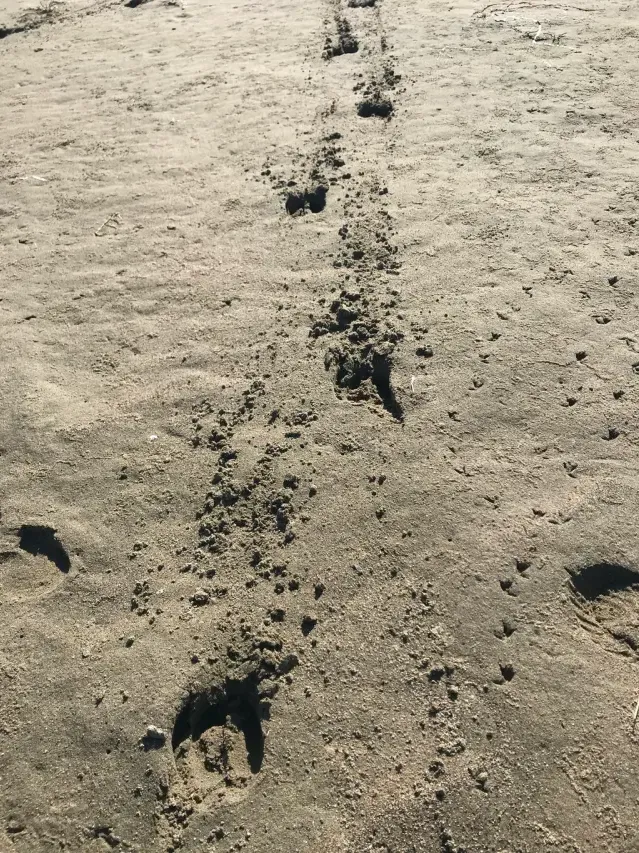
Field data
Tracks
A photograph of real sign left by Red deer. Prints vary with gait, ground and how long they have been there — treat this as one example, not a template.
Track photo:LJ Moore-McClellandCC BY
On the table
Meat & cooking
Table grade 5 of 55/5
- Sold as meat in a legal market
- Has a named traditional dish
- Published way to handle and cook it
- Eaten in more than one country
- No known health advisory
Traditional preparations
- Kronhjortsstek
- Red deer is the venison of the European table — the haunch roasted or the saddle cut into medallions. In many parts of the world the meat from red deer is used as a food source. Venison — Wikipedia
- Marinated braise
- Older stags repay a long acid marinade before slow cooking, the method behind sauerbraten and its game equivalents. Sauerbraten — Wikipedia
Sources
Sources: Red deer — Wikipedia — read 2026-08-05
Cross-reference
Related species
Its closest relatives in the compendium, nearest kinship first.
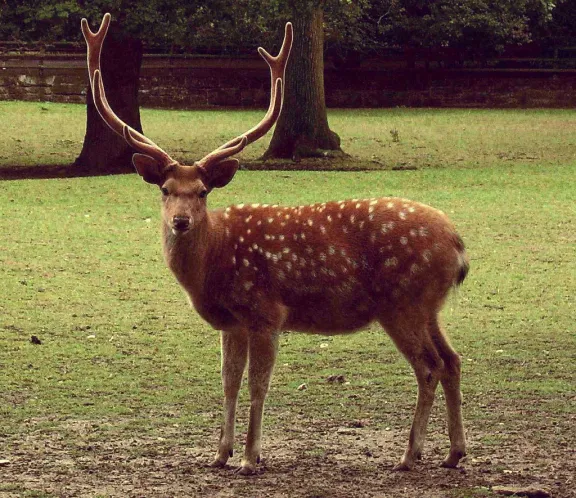
Big game
Sika deer
Cervus nippon
Same genus (Cervus)
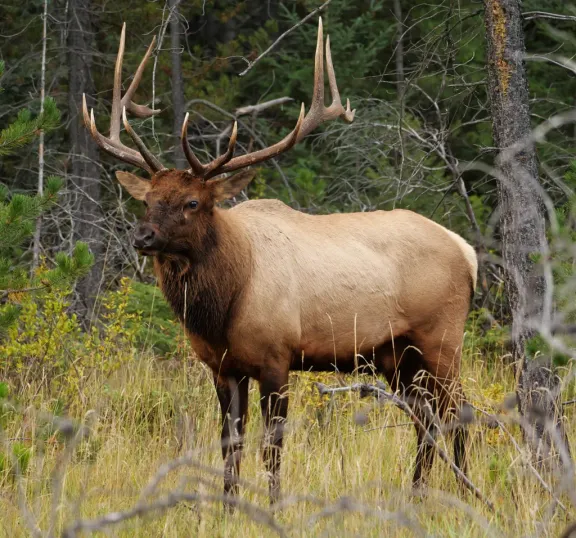
Big game
Elk (wapiti)
Cervus canadensis
Same genus (Cervus)
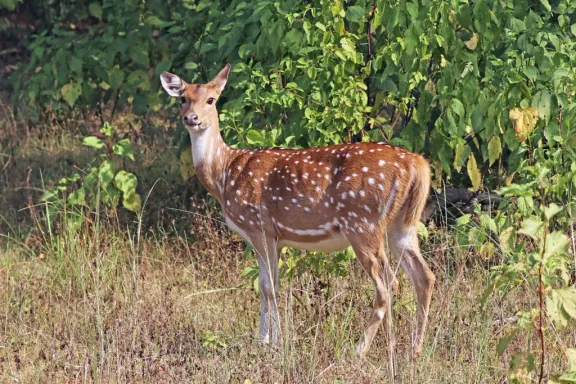
Big game
Axis deer (chital)
Axis axis
Same subfamily (Cervinae)
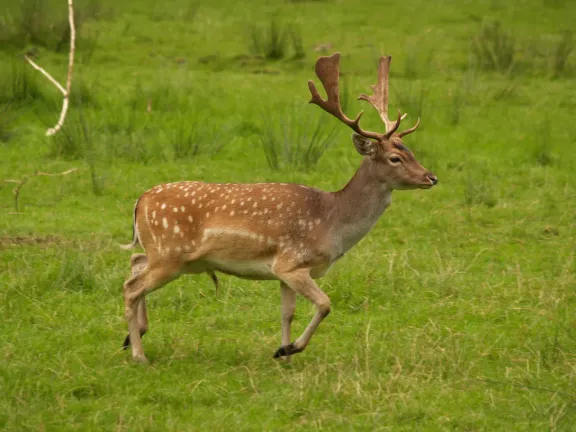
Big game
Fallow deer
Dama dama
Same subfamily (Cervinae)
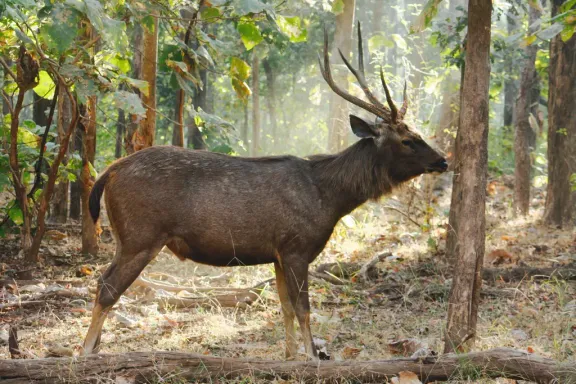
Big game
Sambar deer
Rusa unicolor
Same subfamily (Cervinae)
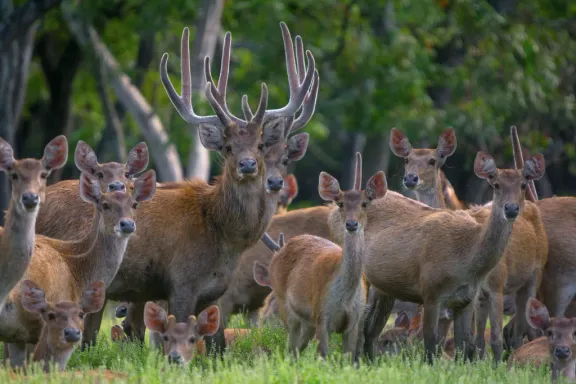
Big game
Rusa deer
Rusa timorensis
Same subfamily (Cervinae)