Big game
Axis deer (chital)
Axis axis
- Group
- Big game
- Size class
- Large (70–300 kg)
- Family
- Cervidae
Range
- Asia
- North America
- Oceania
- South America
Habitat
- Forest
- Grassland
Range
Countries it is found in
8 countries
- Argentina
- Bangladesh
- Bhutan
- Croatia
- India
- Nepal
- Sri Lanka
- Uruguay
Range from:ASM Mammal Diversity Database, GBIF occurrence records — read 2026-08-05
Chapter 01
Overview
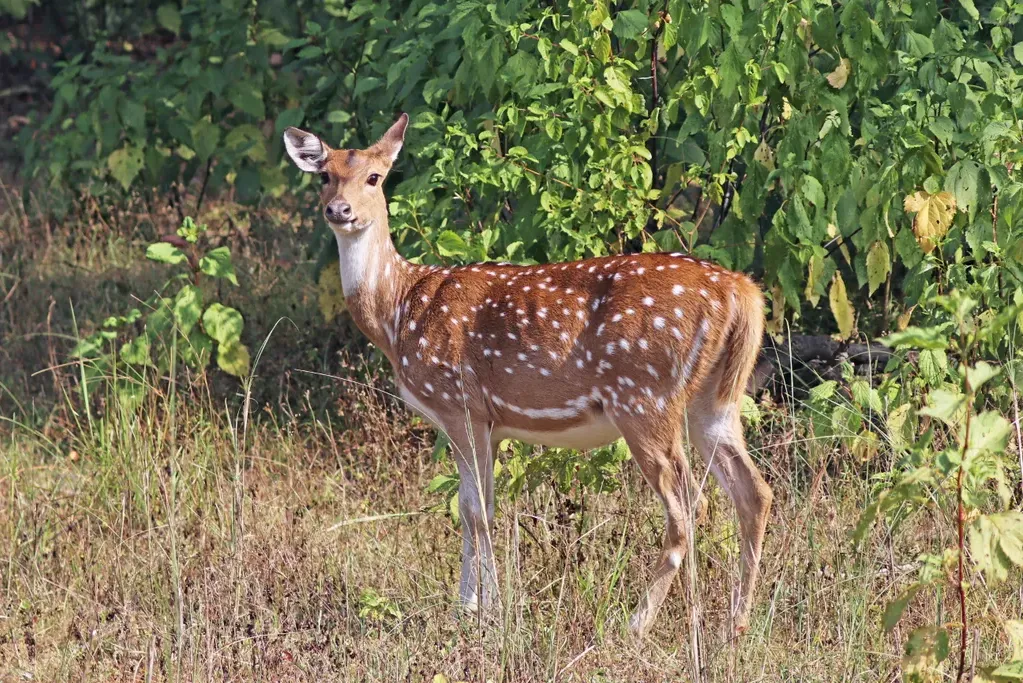
The chital or axis deer (Axis axis), also called the spotted deer, is native to the Indian subcontinent: India, Nepal, Bhutan, Bangladesh and Sri Lanka, from eastern Rajasthan and Gujarat to the Terai, Assam and the Sundarbans. It lives in deciduous and semi-evergreen forest and open grassland. The name comes from the Hindi cītal, from Sanskrit citrala, spotted — the same root as the cheetah's. Genetically its nearest relatives are the barasingha and Schomburgk's deer rather than the hog deer once grouped with it. The IUCN lists it as least concern, with many large populations and many protected areas, though hunting for meat and competition with livestock have caused local declines and extinctions. It is protected under Schedule III of India's Wildlife Protection Act and under Bangladesh's wildlife law. It has been introduced far and wide — Australia, where it was the first deer released, Argentina, Brazil, Uruguay, Mexico, Croatia's Brijuni Islands, and Texas, Florida and Hawaii in the United States — and since August 2022 the European Union has listed it as an invasive alien species of Union concern and banned its import.
Chapter 02
Identification
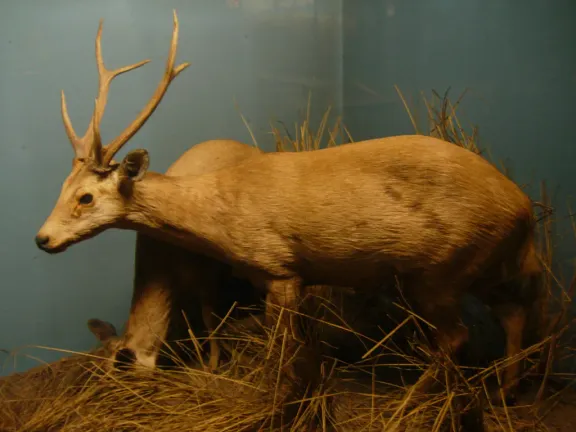
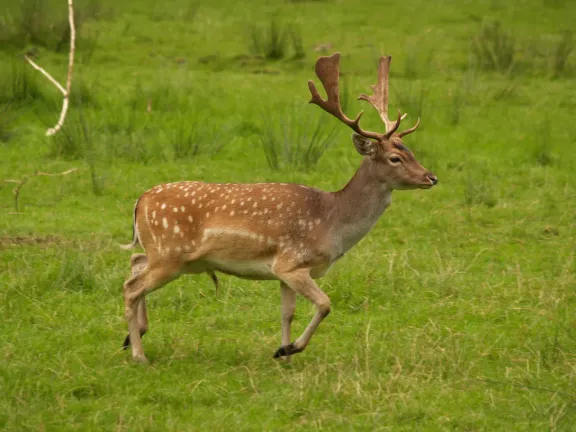
A moderately sized deer: stags stand 90–100 cm at the shoulder and hinds 65–75 cm, with a head-and-body length of about 1.7 m. Mature stags reach 98–110 kg, hinds 25–45 kg. The upper parts are golden to rufous and completely covered in white spots, which stay for life; the belly, rump, throat, inner legs, ears and underside of the tail are white, and a black stripe runs along the spine. Only stags carry antlers — three tines a side, the brow tine set almost at right angles to the beam, nearly 1 m long and cast every year. It can be mistaken for fallow deer, but fallow have blotches rather than neat spots, palmate antlers, a wholly white throat and no dark dorsal stripe. Against the hog deer it is leggier, with longer antlers and brow tines.
Chapter 03
Behaviour
Chital are active through the day, resting in shade in the heat and feeding from late afternoon until around midnight and again before sunrise. They travel in single file along set tracks, stay within about 300 m of cover, and when alarmed flee together with tails raised to show the white beneath before hiding in undergrowth; they can clear 1.5 m fences but prefer to go under. Herds are loose and matriarchal, usually small, though gatherings of 100 occur. They mainly graze, turning to browse from October to January, stand on their hind legs to reach branches, and gnaw bones and cast antlers for minerals. The chital is vocal: stags bellow and growl in the rut, and hinds and young bark persistently at predators. It answers the alarm calls of langurs and mynas, and herds keep company with langur troops, trading the monkeys' eyesight for their own sense of smell. Breeding goes on all year with regional peaks; a rutting stag fasts while guarding a hind in heat, and the newborn is hidden for only about a week. Tigers, leopards, pythons and dholes take adults.
Chapter 04
Hunting
In Victoria, chital may be hunted all year with no bag limit. On Hawaiʻi's Lānaʻi the state runs a lottery-based axis deer season of several hunts, archery among them, with a tag costing $20 for residents and $125 for visitors; the season can be modified or cancelled. Introduced to Maui in the 1950s to give more hunting, the deer grew by 20 to 30 per cent a year with no natural predators, and a company, Maui Nui, was founded in 2017 to hunt them and sell the venison: in 2022 it took 9,526 deer and sold about 200,000 kg of meat, shooting at night with infrared and accompanied by a USDA representative. Hawaiʻi law now forbids possessing, moving between islands or releasing wild deer. In Texas, chital were introduced in 1932 and by 1988 had self-sustaining herds in 27 counties of central and south Texas, most of all on the Edwards Plateau.
Field data
Tracks
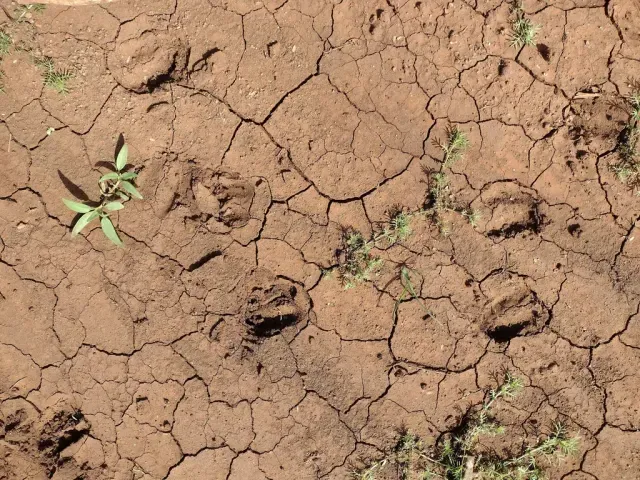
A photograph of real sign left by Axis deer (chital). Prints vary with gait, ground and how long they have been there — treat this as one example, not a template.
Track photo:Kevin FaccendaCC BY
On the table
Meat & cooking
Table grade 3 of 53/5
- Sold as meat in a legal market
- Has a named traditional dish
- Published way to handle and cook it
- Eaten in more than one country
- No known health advisory
Sources
Sources: Chital — Wikipedia, Axishjort — Wikipedia (sv), Game Management Authority (Victoria): When to hunt — deer, Hawaiʻi DLNR: Applications for 2023 Lānaʻi axis deer season open soon (1 August 2022) — read 2026-10-29
Cross-reference
Related species
Its closest relatives in the compendium, nearest kinship first.
Big game
Hog deer
Axis porcinus
Same genus (Axis)
Big game
Fallow deer
Dama dama
Same subfamily (Cervinae)
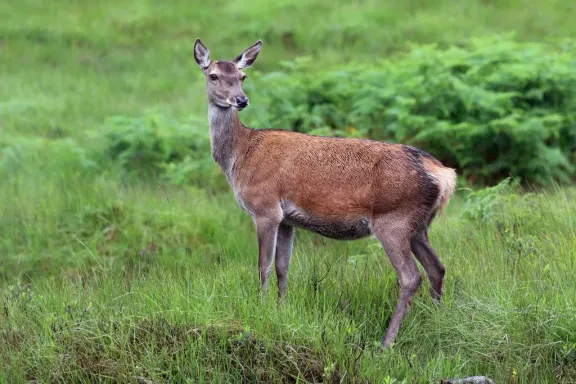
Big game
Red deer
Cervus elaphus
Same subfamily (Cervinae)
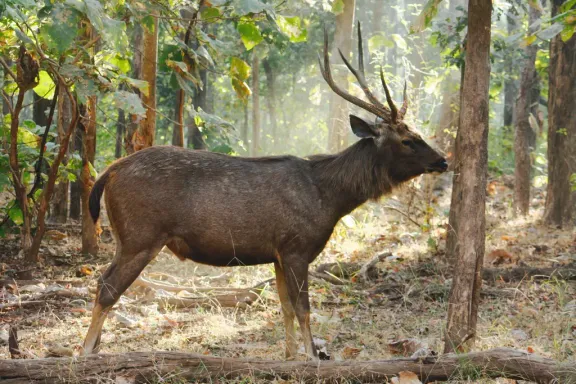
Big game
Sambar deer
Rusa unicolor
Same subfamily (Cervinae)
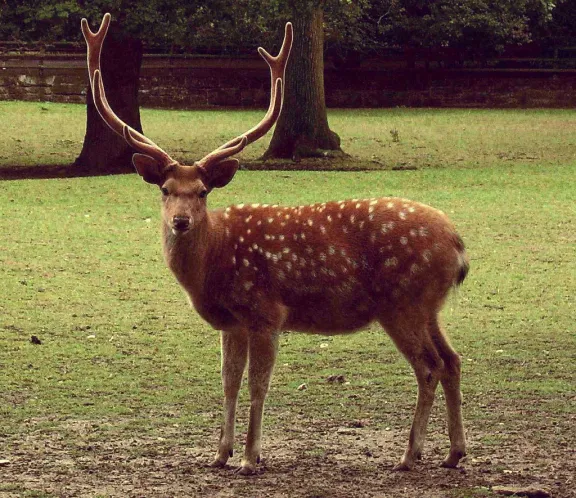
Big game
Sika deer
Cervus nippon
Same subfamily (Cervinae)
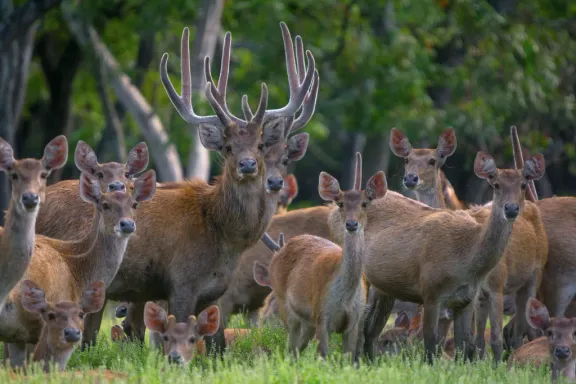
Big game
Rusa deer
Rusa timorensis
Same subfamily (Cervinae)