Big game
Hog deer
Axis porcinus
- Group
- Big game
- Size class
- Medium (10–70 kg)
- Family
- Cervidae
Range
- Asia
- Oceania
Habitat
- Grassland
- Wetland
Range
Countries it is found in
8 countries
- Bangladesh
- Bhutan
- Cambodia
- India
- Nepal
- Pakistan
- Sri Lanka
- Thailand
Range from:ASM Mammal Diversity Database — read 2026-08-05
Chapter 01
Overview
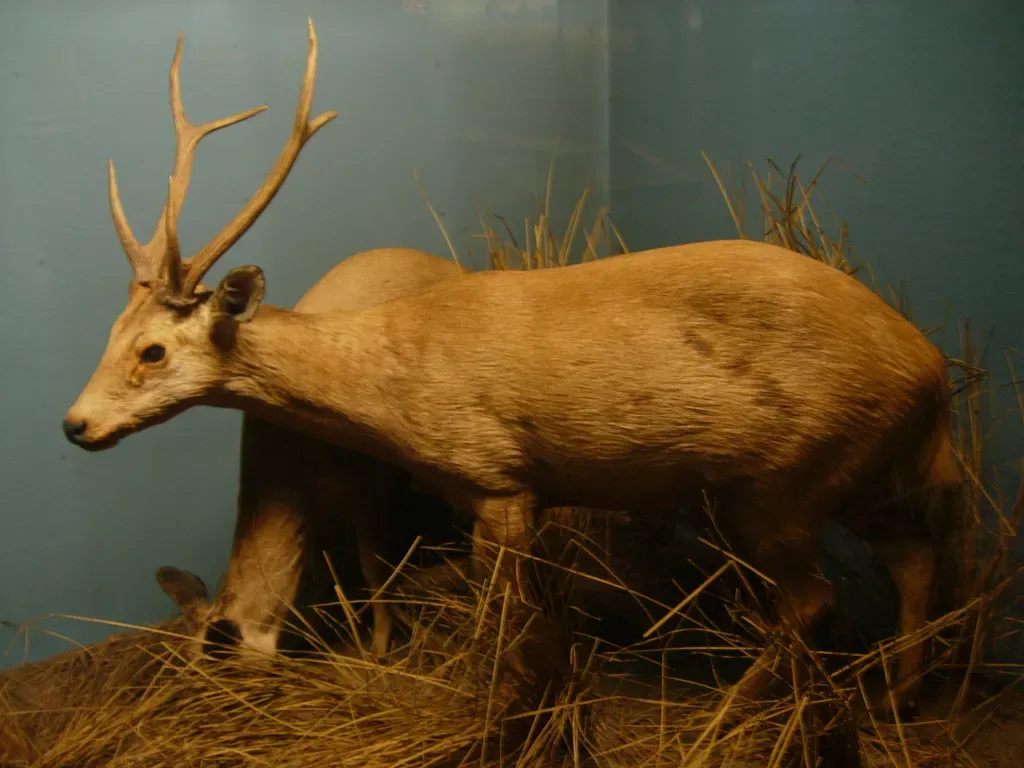
The hog deer (Axis porcinus), or Indian hog deer, is a small deer of the Indian subcontinent and the Indo-Gangetic Plain. It occurs in the Indus valley of Pakistan, northern India, Nepal, southern Bhutan, Bangladesh, Myanmar and China's Yunnan, has been reintroduced to Thailand and is locally extinct in Laos and Vietnam, with a small, isolated population in Cambodia's Prek Prasab Wildlife Sanctuary. It keeps to dense cover but is often seen on open ground near the forest edge. Introduced populations are established in Australia, the United States and Sri Lanka. Its name comes from the hog-like way it runs through the forest, head held low so as to duck under obstacles instead of leaping over them as most deer do. A proposal in 2004 to move it into a genus of its own, Hyelaphus, has not been widely accepted.
Chapter 02
Identification
Very solidly built, with a long body, relatively short legs and a back that slopes up from the shoulders to a high rump. A mature stag stands about 70 cm at the shoulder and weighs about 50 kg; hinds are much smaller, around 61 cm and 30 kg. The ears are rounded, and older animals grow pale in the face and neck. The thick winter coat is a uniform dark brown, lighter on the underparts and legs, turning a rich reddish brown from late spring. Many show a dark stripe from the head along the neck and spine, and in summer a row of light spots on either side of it. The short brown tail is tipped and lined with white, and the deer fans out the white hairs in a distinctive alarm display. Stags typically carry three-tined antlers — a brow tine and a main beam ending in inner and outer top tines — though more points are not uncommon.
Chapter 03
Behaviour
Hog deer usually live alone; only hinds with young sometimes form small groups, and where food is plentiful larger mixed gatherings form without aggression. That changes in the rut, when stags fight rivals for control of a hind. Unlike the chital, which flees in a group, hog deer scatter when alarmed. The tiger, leopard and clouded leopard are known predators, along with the Burmese python and the dhole.
Chapter 04
Hunting
In Victoria, Australia, hog deer have a short season of their own, open from half an hour before sunrise on 1 April to half an hour after sunset on 30 April. Hunters need a Game Licence endorsed for deer and must first get hog deer tags from the Game Management Authority — one for a stag and one for a hind each — and return the tag form within 28 days of the season's close. Dogs may not be used to hunt them.
Sources
Sources: Indian hog deer — Wikipedia, Chital — Wikipedia, Svinhjort — Wikipedia (sv), Game Management Authority (Victoria): Season in summary 2026, Game Management Authority (Victoria): Hog deer hunting fact sheet 2021 — read 2026-10-29
Cross-reference
Related species
Its closest relatives in the compendium, nearest kinship first.
Big game
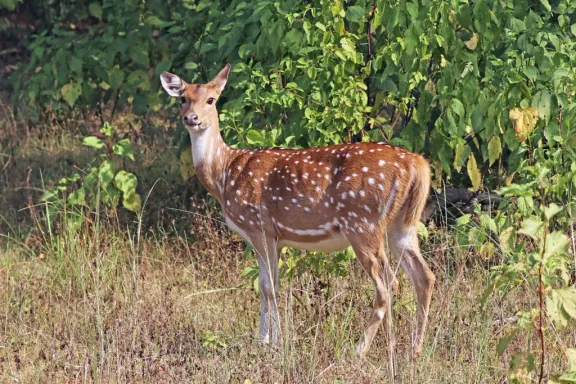
Axis deer (chital)
Axis axis
Same genus (Axis)
Big game
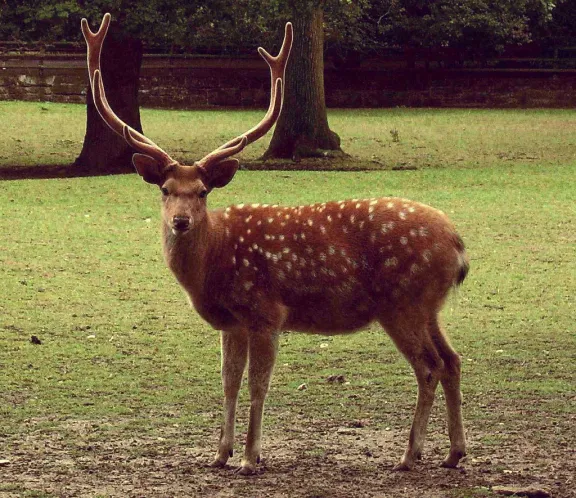
Sika deer
Cervus nippon
Same subfamily (Cervinae)
Big game
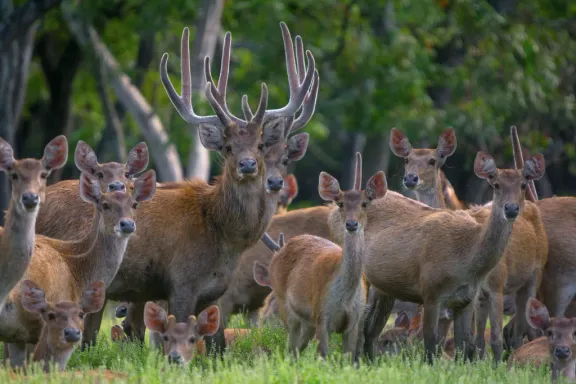
Rusa deer
Rusa timorensis
Same subfamily (Cervinae)
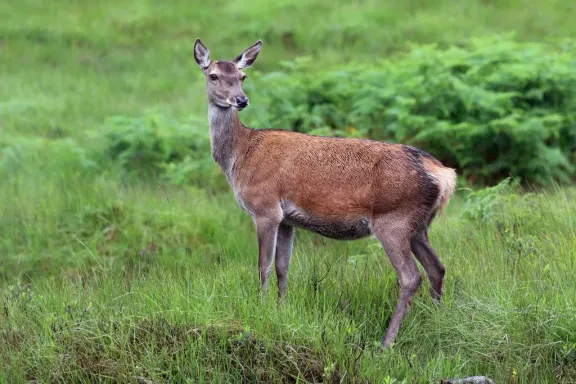
Big game
Red deer
Cervus elaphus
Same subfamily (Cervinae)
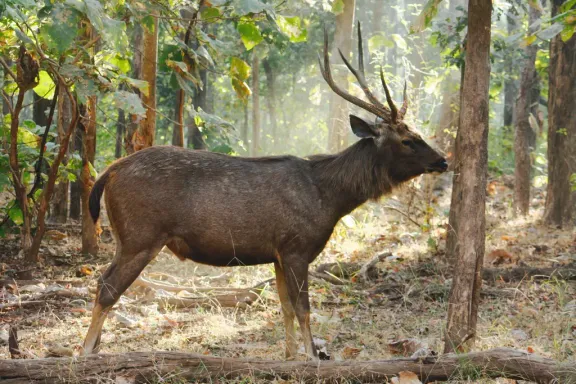
Big game
Sambar deer
Rusa unicolor
Same subfamily (Cervinae)
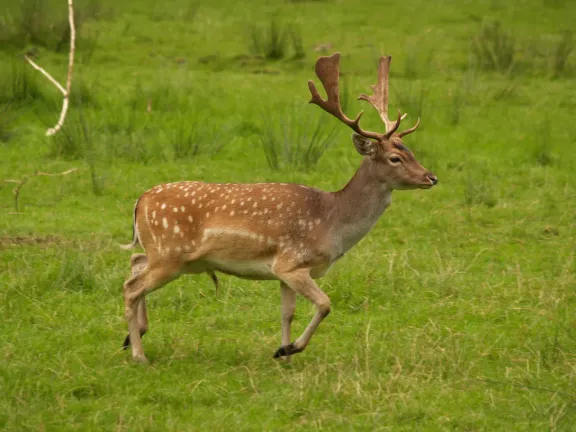
Big game
Fallow deer
Dama dama
Same subfamily (Cervinae)