Photo:RashityagiCC BY-SA 4.0
Big game
Sambar deer
Rusa unicolor
- Group
- Big game
- Size class
- Large (70–300 kg)
- Family
- Cervidae
Range
- Asia
- Oceania
- North America
Habitat
- Forest
- Rainforest
Range
Countries it is found in
16 countries
- Australia
- Bangladesh
- Bhutan
- Brunei
- Cambodia
- China
- India
- Indonesia
- Laos
- Malaysia
- Nepal
- Singapore
- Sri Lanka
- Taiwan
- Thailand
- Vietnam
Range from:ASM Mammal Diversity Database, GBIF occurrence records — read 2026-08-05
Chapter 01
Overview
The sambar (Rusa unicolor) is a large deer of the Indian subcontinent, southern China and South-East Asia, from the south-facing slopes of the Himalayas in Nepal, Bhutan and India through Myanmar, Thailand, Malaysia and Indochina to Sumatra and Borneo. It lives up to 3,500 m in every kind of forest from dry tropical woodland to rainforest and montane grassland, prefers dense cover of shrubs and grass, and seldom moves far from water. Its closest living relative is probably the Javan rusa, with which it can still produce fertile hybrids. The IUCN has listed it as vulnerable since 2008, after heavy declines from hunting, insurgency and industrial exploitation of its habitat. It has been introduced to Australia, New Zealand and the United States; in Victoria's high country numbers were put at 750,000 to a million in 2017, and the state lists it as a threat to biodiversity under its Flora and Fauna Guarantee Act.
Chapter 02
Identification
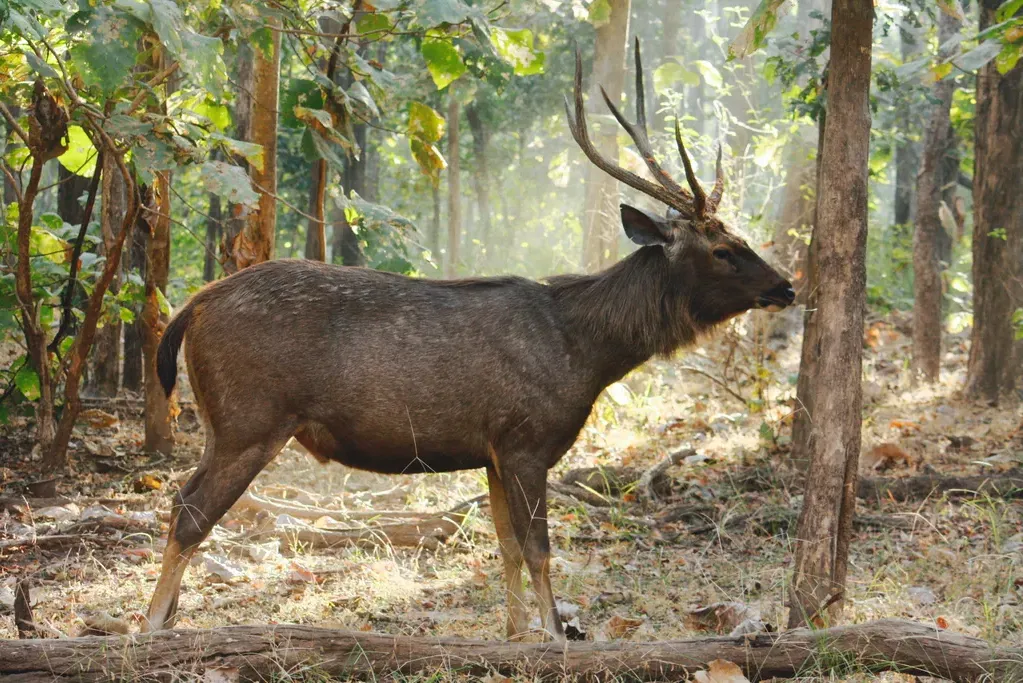
One of the largest deer: only moose and elk grow bigger. It stands 102–160 cm at the shoulder and typically weighs 100–350 kg, exceptionally up to 546 kg, with western animals larger than eastern and hinds smaller than stags. The shaggy coat runs from yellowish brown to dark grey, usually uniform, with a small dense mane that is heavier in stags. The tail is long for a deer, black above and whitish beneath. The large, rugged antlers have just three tines — a simple brow tine and a beam forked at the tip — and reach up to 110 cm. Adult stags and pregnant or nursing hinds carry an odd hairless, blood-red glandular spot halfway down the throat. Calves are usually unspotted.
Chapter 03
Behaviour
Sambar are nocturnal or crepuscular. Stags live alone for much of the year; hinds keep small groups, often just three or four animals and seldom more than 16. They graze and browse grasses, foliage, fruit and water plants, gather near water and swim well. Stags wallow, dig their antlers into urine-soaked soil, rub tree trunks and rear up to mark branches overhead. Hinds defend their young, and against dholes or dogs a sambar lowers its head, raises its mane and fights, preferably in shallow water; on sensing danger it stamps and gives a ringing alarm known as belling or pooking. Sambar mate all year, though calving peaks seasonally. A stag holds a territory but no harem, and rival males spar by locking antlers or rearing up and clashing down like goat-antelopes. Gestation is about eight months and a single calf of 5–8 kg is the rule. It is the favourite prey of the Bengal tiger, which can take nearly 45 per cent of its food biomass from sambar.
Chapter 04
Hunting
In Australia sambar hunting is a popular sport and big trophies are prized. Sambar are protected game in Victoria and New South Wales, where a game licence is needed. In Victoria they may be stalked all year with no bag limit, while hunting with hounds is open from 1 April to 30 November, apart from the Easter break, and needs a game licence endorsed for hounds. Hunters took 35,000 sambar from Victorian public land in 2008–2009, far short of the 40 per cent a year needed to halt growth, and landowners may now control problem deer without a game licence. New Zealand's Department of Conservation treats the North Island sambar as an iconic herd, mostly on private land, with no seasonal restriction but closures at times of fire risk. It warns that sambar can absorb several shots and still escape, and suggests calibres such as .243, .270, 7mm, .30-06, .308 and .303. The animals often sit tight until a hunter is very close or crawl away rather than run, so it advises hunting slowly, checking even small patches of cover; the rut runs from late May to December. On St. Vincent Island, Florida, about 130 permits a year for a three-day hunt keep the herd at 70–100 animals.
Field data
Tracks
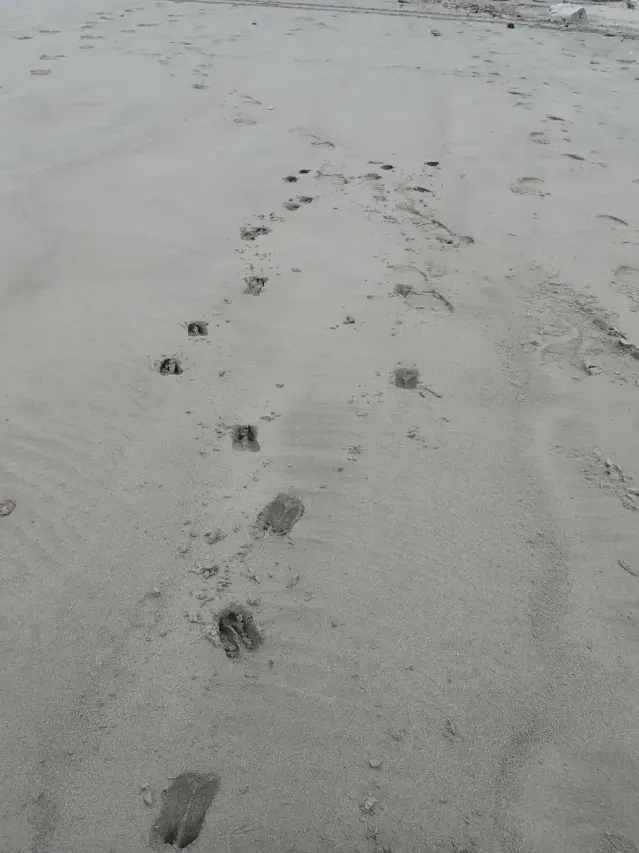
A photograph of real sign left by Sambar deer. Prints vary with gait, ground and how long they have been there — treat this as one example, not a template.
Track photo:Arnim LittekCC BY
Sources
Sources: Sambar deer — Wikipedia, Sambarhjort — Wikipedia (sv), Game Management Authority (Victoria): When to hunt — deer, Department of Conservation (New Zealand): Sambar deer — read 2026-10-29
Cross-reference
Related species
Its closest relatives in the compendium, nearest kinship first.
Big game
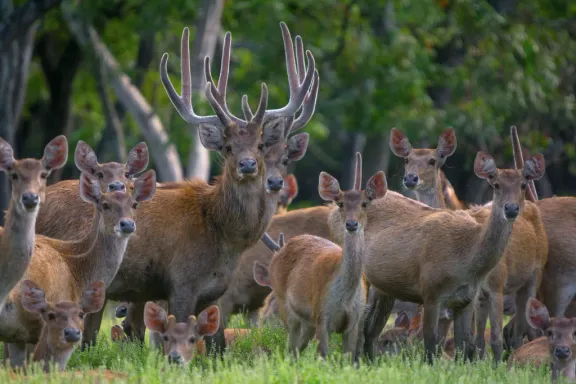
Rusa deer
Rusa timorensis
Same genus (Rusa)
Big game
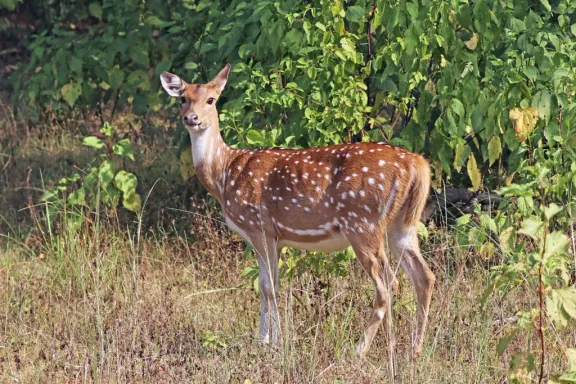
Axis deer (chital)
Axis axis
Same subfamily (Cervinae)
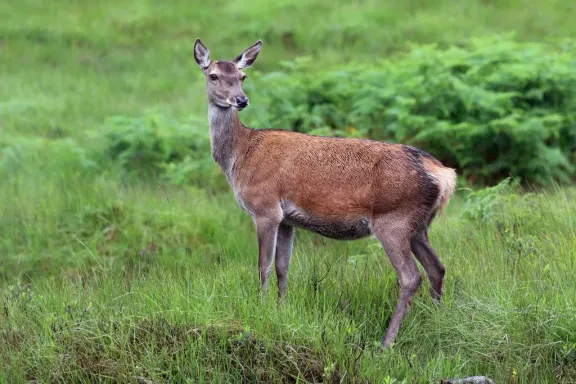
Big game
Red deer
Cervus elaphus
Same subfamily (Cervinae)
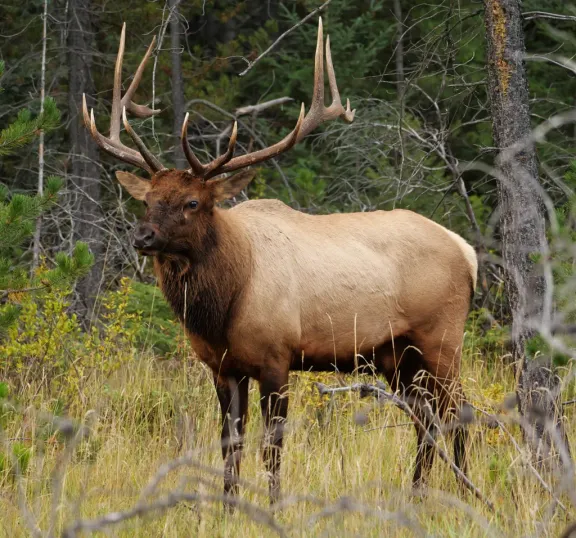
Big game
Elk (wapiti)
Cervus canadensis
Same subfamily (Cervinae)
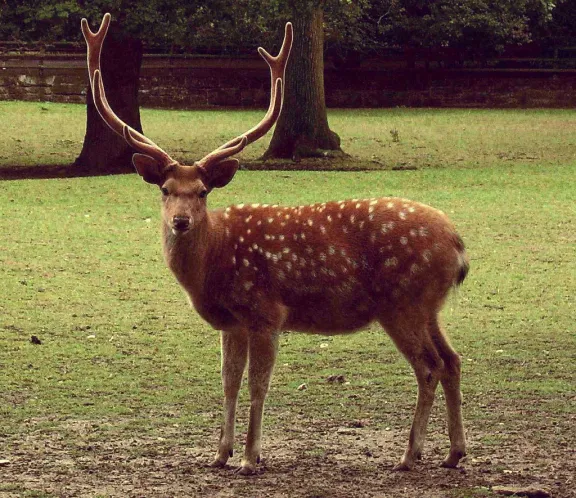
Big game
Sika deer
Cervus nippon
Same subfamily (Cervinae)
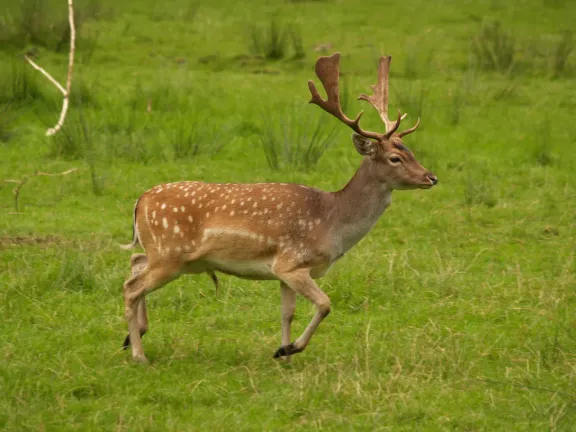
Big game
Fallow deer
Dama dama
Same subfamily (Cervinae)