Waterfowl
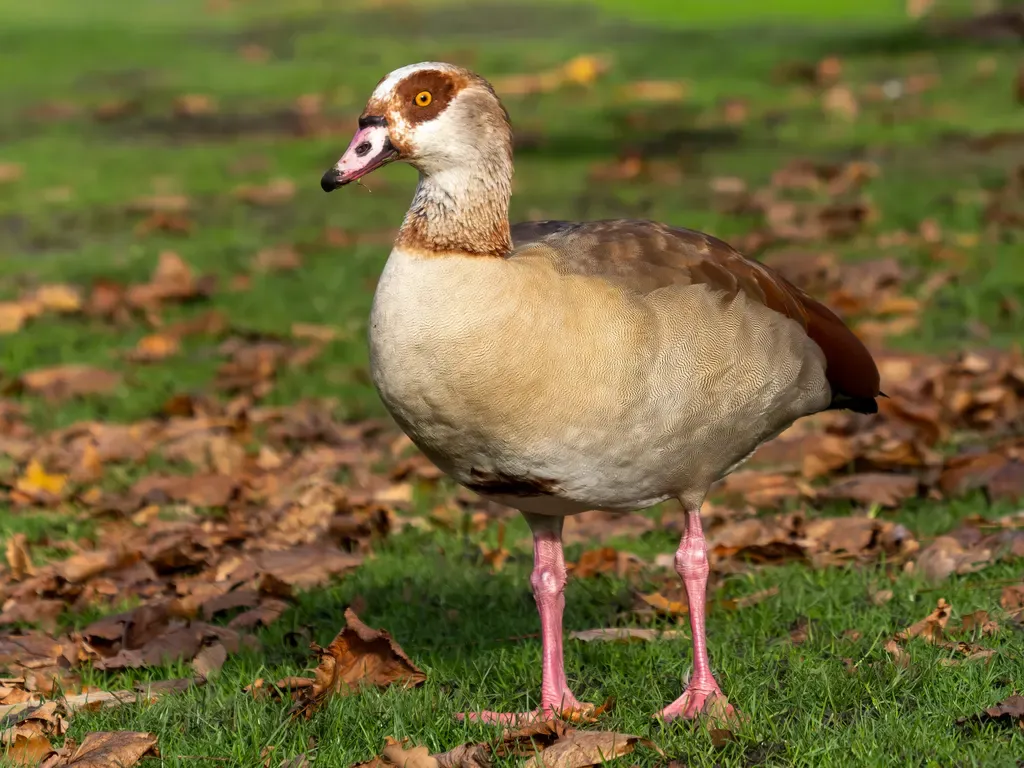
Egyptian goose
Alopochen aegyptiaca
- Group
- Waterfowl
- Size class
- Small (under 10 kg)
- Family
- Anatidae
Range
- Africa
- Europe
Habitat
- Wetland
- Farmland
Range
Countries it is found in
44 countries
- Belgium
- Benin
- Botswana
- Chad
- Congo - Kinshasa
- Czechia
- Djibouti
- Egypt
- Eritrea
- Eswatini
- Ethiopia
- France
- Germany
- Hungary
- Isle of Man
- Israel
- Italy
- Jordan
- Kenya
- Lesotho
- Lithuania
- Luxembourg
- Malawi
- Mauritius
Range from:Wikipedia country bird lists, GBIF occurrence records — read 2026-08-05
Chapter 01
Overview
The Egyptian goose (Alopochen aegyptiaca) is an African member of the duck, goose and swan family, and despite its name it is closest to the shelducks of the genus Tadorna; it is the only living species of its genus. It is native to sub-Saharan Africa and the Nile Valley, where it is widespread and common, in open country near fresh water from the lowlands up to 4,000 m in the Ethiopian Highlands. It was regularly painted in ancient Egyptian art, and it once lived in southeastern Europe until the early 1700s. Kept as an ornamental bird, it has been introduced well beyond its range. Britain's birds go back to 17th-century estates and parks; the mainland European population grew from introductions in the Netherlands in 1967 and Belgium in 1982 and spread into Germany, France, Denmark, Switzerland and beyond. It also breeds in Israel, the United Arab Emirates, Mauritius and several US states. In Sweden it turns up every year, mostly on spring passage, and has bred a few times in the south, most recently in 2014, without forming a settled population.
Chapter 02
Identification
A large, goose-like duck, 63 to 73 cm long and 1.5 to 2.3 kg, that swims well and looks heavy in flight. It has a rufous-brown back, greyish-beige underparts with a dark chestnut patch on the belly, and a pale head with a brown mask around the eye. The sexes look alike, though males are usually a little larger, and individual birds vary from greyer to browner. Much of the wing is white, but the white is hidden by the coverts at rest and flashes out when the bird is alarmed, aggressive or flying. The calls differ by sex: the male gives a hoarse, subdued quack and a breathy call in rapid series, like a steam engine, while the female's loud, raucous quack is heard most when she is guarding her young.
Chapter 03
Behaviour
Egyptian geese nest in many kinds of sites, especially holes in mature parkland trees, and usually pair for life. Both parents incubate the eggs for 28 to 30 days and guard the young, which feed themselves from hatching — at first largely on small aquatic invertebrates, so whole broods can die where botulinum toxin enters that food chain. Adults eat cereal crops, leaves and grasses, now and then locusts, worms and other small animals. Both sexes defend breeding territories fiercely against their own kind, chasing intruders into the air in aerial dogfights, and have been seen attacking drones; neighbouring pairs may even kill each other's young. In Africa its predators include leopards, lions, cheetahs, hyenas, crocodiles and Old World vultures.
Chapter 04
Hunting
Because it is aggressive towards other birds and can displace native species, the Egyptian goose was put on the European Union's list of invasive alien species of Union concern in 2017, and member states must try to eradicate it. In Great Britain it was declared a non-native species in 2009 and may be shot without special permission where it causes problems. In Sweden it has no open season in the Hunting Ordinance, and Svenska Jägareförbundet says it may be killed only by people appointed by the responsible authority. Since 2019 Jägareförbundet has been commissioned by Naturvårdsverket to remove the Egyptian geese that reach the country; the agency's decision of February 2026 lets the association's appointed hunters take up to 50 a year anywhere in Sweden, on any land, until 31 December 2027. Sightings, with a photograph if possible, can be reported to Jägareförbundet.
Sources
Sources: Egyptian goose — Wikipedia, Nilgås — Wikipedia (sv), Svenska Jägareförbundet: Nilgås (Alopochen aegyptiacus), Naturvårdsverket: Jakt efter invasiva främmande arter inom uppdrag för Svenska Jägareförbundet (NV-26-001857), Jaktförordning (1987:905) — Sveriges riksdag — read 2026-10-29
Cross-reference
Related species
Its closest relatives in the compendium, nearest kinship first.
Waterfowl
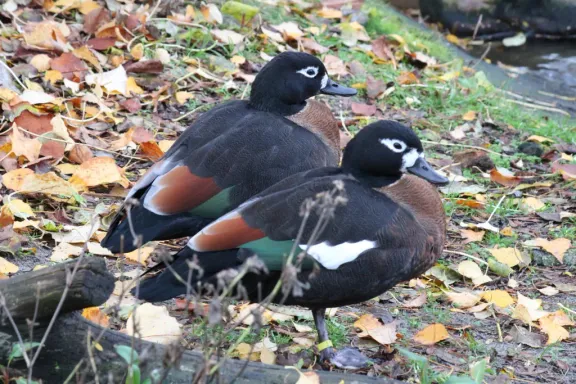
Australian shelduck
Tadorna tadornoides
Same subfamily (Tadorninae)
Waterfowl
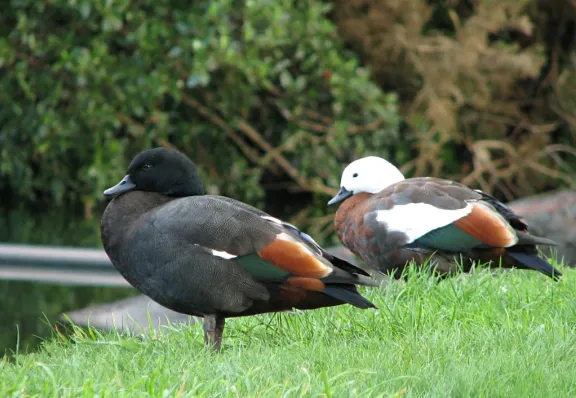
Paradise shelduck
Tadorna variegata
Same subfamily (Tadorninae)
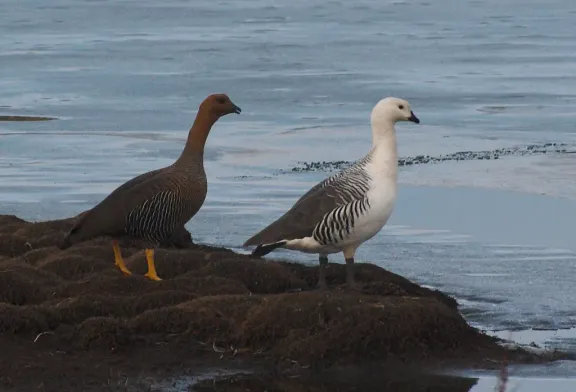
Waterfowl
Upland goose
Chloephaga picta
Same subfamily (Tadorninae)
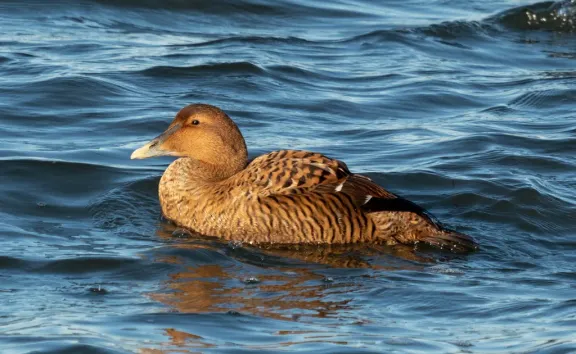
Waterfowl
Common eider
Somateria mollissima
Same family (Anatidae)
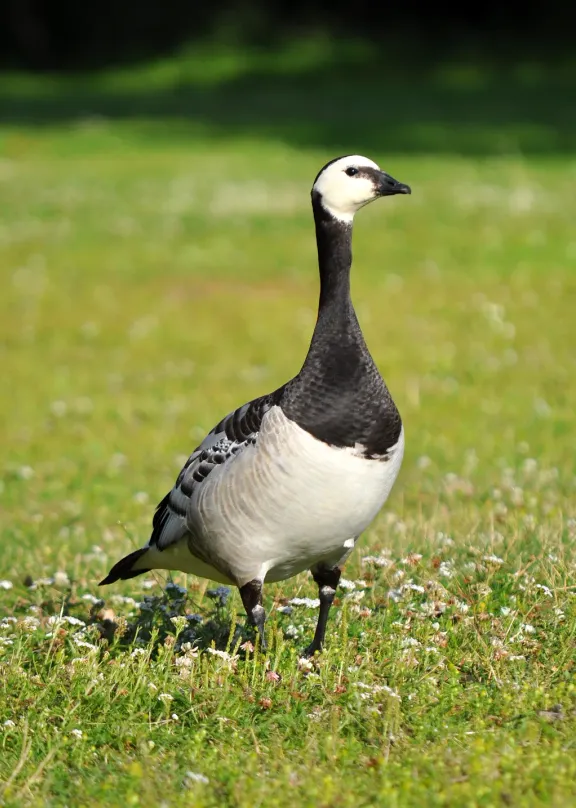
Waterfowl
Barnacle goose
Branta leucopsis
Same family (Anatidae)
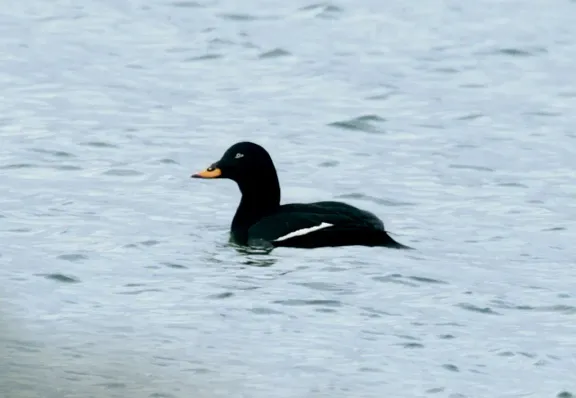
Waterfowl
Velvet scoter
Melanitta fusca
Same family (Anatidae)