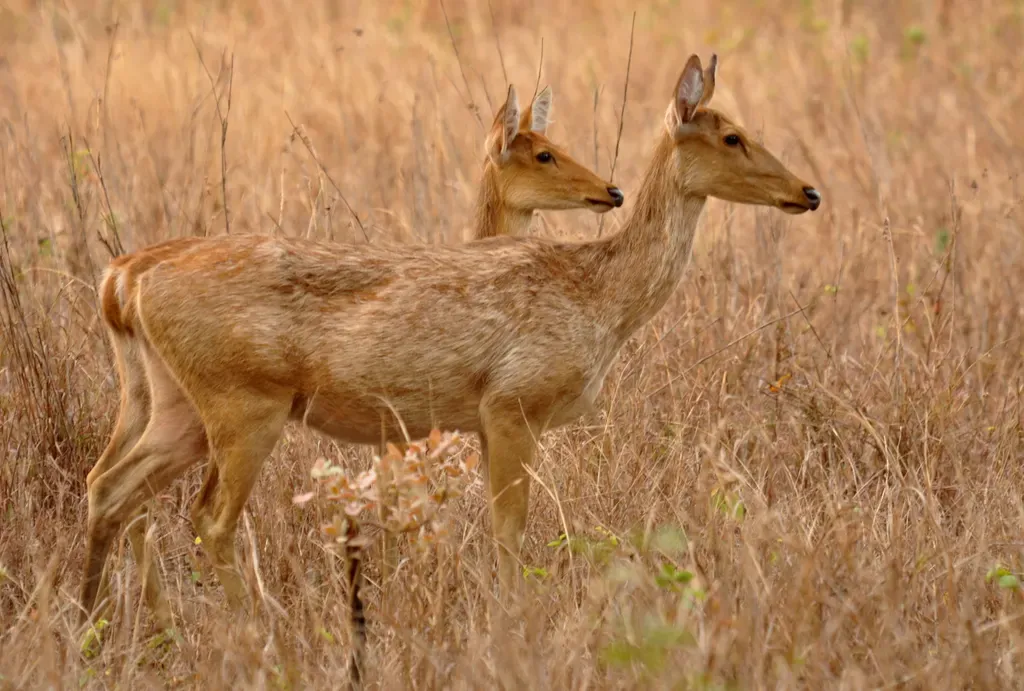
Big game
Barasingha
Rucervus duvaucelii
- Group
- Big game
- Size class
- Large (70–300 kg)
- Family
- Cervidae
Range
- Asia
Habitat
- Wetland
- Grassland
Range
Countries it is found in
2 countries
- India
- Nepal
Range from:ASM Mammal Diversity Database — read 2026-08-05
Chapter 01
Overview
The barasingha (Rucervus duvaucelii), or swamp deer, lives in fragmented populations in northern and central India and in two isolated pockets in south-western Nepal, at Shuklaphanta and Bardiya. It is extinct in Pakistan and Bangladesh and uncertain in Bhutan. It favours flat or rolling grassland, floodplain and marsh at the edge of forest. Its specific name honours the French naturalist Alfred Duvaucel. Three subspecies are recognised: the western swamp deer of the flooded grasslands of the Indo-Gangetic Plain, with splayed hooves; the southern or hard-ground swamp deer, with hard hooves for open sal forest, which survives naturally only in Kanha National Park; and the eastern swamp deer of Assam's Kaziranga and Manas. Unregulated hunting and the ploughing up of its grasslands caused major losses between the 1930s and 1960s. Kanha's herd fell to about 66 in 1970 and, after grassland and swamp restoration and limits on livestock grazing, approached 1,000 by the 2020s, allowing reintroductions to Satpura, Van Vihar and Bandhavgarh. It is the state animal of Madhya Pradesh and Uttar Pradesh.
Chapter 02
Identification
A large deer, 110–120 cm at the shoulder and nearly 180 cm in head and body. Stags weigh 170–280 kg and hinds about 130–145 kg. The rather woolly coat is yellowish brown above and paler below, turning bright rufous-brown in summer, with white spots along the spine and white on the throat, belly, inner thighs and under the tail. The neck is maned, hinds are paler than stags, and young are spotted. The antlers set it apart from every other Indian deer: they carry more than three tines, usually 10 to 14 on a mature stag and as many as 20. Its name, bārah-singgā, means twelve-horned in Hindi. An average antler measures about 76 cm round the curve, and the record about 104 cm.
Chapter 03
Behaviour
Swamp deer are mainly grazers, feeding on grasses and water plants throughout the day with peaks in the morning and from late afternoon into the evening, and resting in the shade of trees in the hot season. They drink twice a day in winter and the monsoon and three times or more in summer. In central India herds average 8–20 animals, up to 60, with twice as many hinds as stags, and adults gather in large herds during the rut. They post fewer sentries than chital or sambar and spend more of their time grazing; when alarmed they give shrill, baying calls. The breeding season runs from September to April. After 240–250 days a single calf is born between August and November, peaking in September and October in Kanha.
Chapter 04
Hunting
The barasingha is on CITES Appendix I, and in India it is listed under Schedule I of the Wildlife Protection Act of 1972. Outside protected areas, and where herds migrate with the seasons, it is still poached for its antlers and meat, which are sold in local markets. Unregulated hunting in the mid-20th century, together with the conversion of its wetlands to cropland, is why so little of its former range remains.
Sources
Sources: Barasingha — Wikipedia, Barasingahjort — Wikipedia (sv) — read 2026-10-29
Cross-reference
Related species
Its closest relatives in the compendium, nearest kinship first.
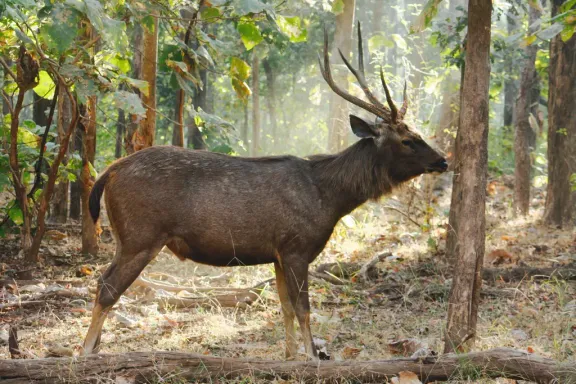
Big game
Sambar deer
Rusa unicolor
Same subfamily (Cervinae)
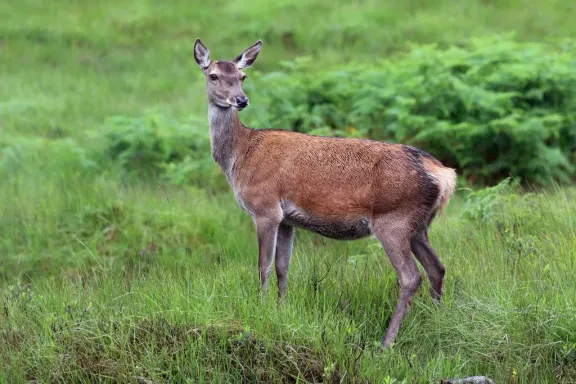
Big game
Red deer
Cervus elaphus
Same subfamily (Cervinae)
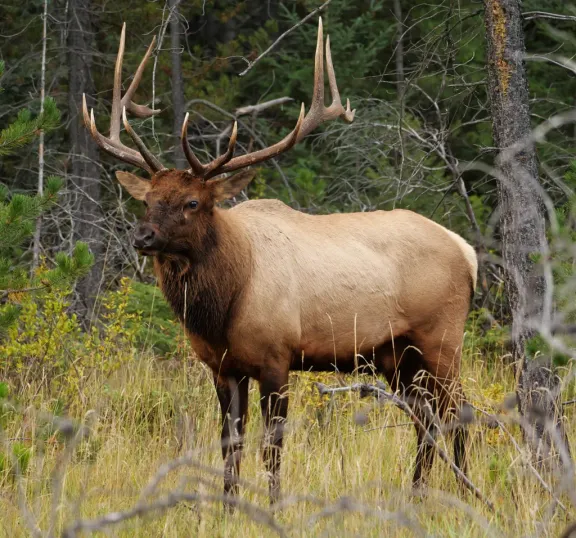
Big game
Elk (wapiti)
Cervus canadensis
Same subfamily (Cervinae)
Big game
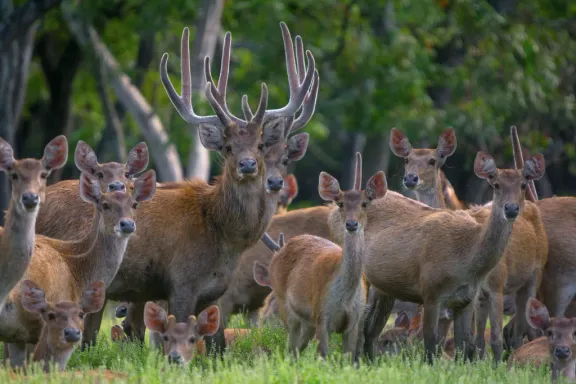
Rusa deer
Rusa timorensis
Same subfamily (Cervinae)
Big game
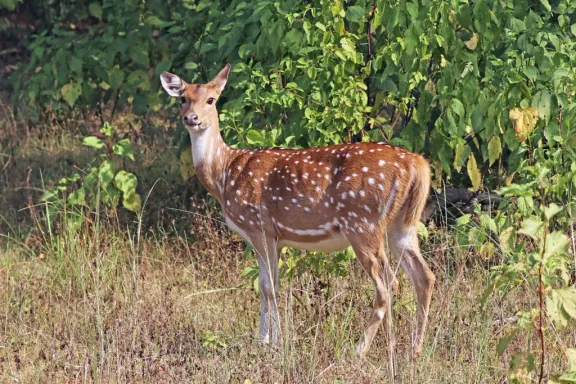
Axis deer (chital)
Axis axis
Same subfamily (Cervinae)
Big game
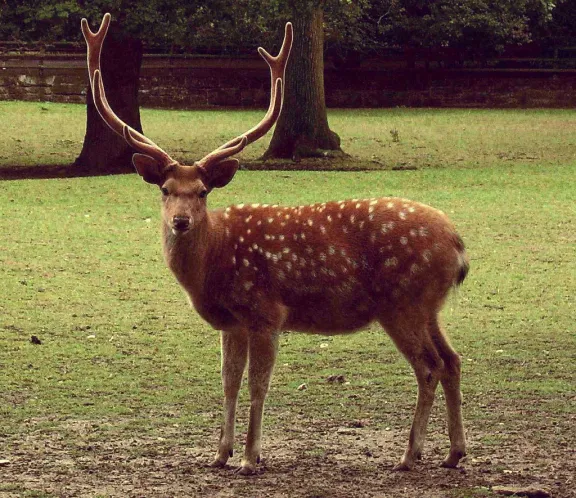
Sika deer
Cervus nippon
Same subfamily (Cervinae)