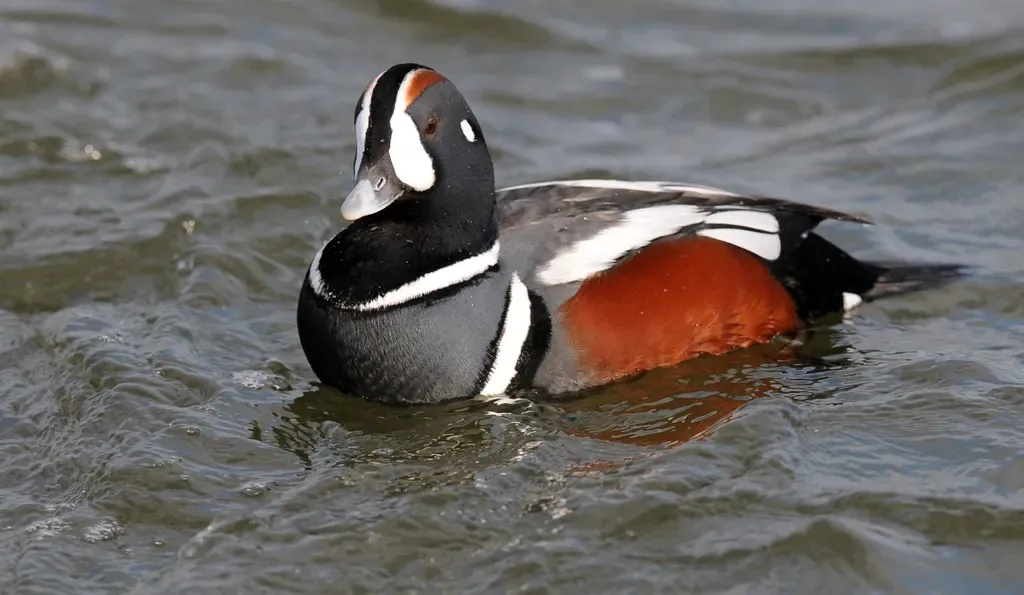
Photo:Peter MassasCC BY-SA 2.0
Waterfowl
Harlequin duck
Histrionicus histrionicus
- Group
- Waterfowl
- Size class
- Small (under 10 kg)
- Family
- Anatidae
Range
- North America
- Arctic
Habitat
- Coast
Range
Countries it is found in
12 countries
- Canada
- Faroe Islands
- Greenland
- Iceland
- Japan
- North Korea
- Russia
- South Korea
- St. Pierre & Miquelon
- Svalbard & Jan Mayen
- Sweden
- United States
Range from:Wikipedia country bird lists — read 2026-08-05
Chapter 01
Overview
The harlequin duck (Histrionicus histrionicus) is a small sea duck named after Harlequin, the gaudily dressed character of the commedia dell'arte; histrio is Latin for 'actor'. It is the only living species in its genus and has no subspecies. Its other names — painted duck, rock duck, glacier duck, lords and ladies — speak of its looks and its haunts: it breeds by cold, fast-flowing streams in north-western and north-eastern North America, Greenland, Iceland and eastern Russia, and winters along rocky Atlantic and Pacific shores, often in pounding surf. The IUCN lists it as least concern, with a world population of 190,000 to 380,000 and 4,000–7,000 pairs breeding in Europe; the Pacific population in Alaska and British Columbia may exceed 250,000, though it has never been fully counted. The eastern North American population is declining and considered endangered, through hydroelectric schemes on its rivers and oil spills on its coasts — the Exxon Valdez spill alone killed an estimated 1,298 to 2,650 harlequins. In Sweden it has been recorded only twice, in 1862 and 1894.
Chapter 02
Identification
The breeding male is unmistakable: dark slate-blue head and body with chestnut flanks and a black crown stripe edged chestnut, a large white crescent in front of the eye, a white dot behind it, a white oval on the neck, a black-bordered white collar and a white bar down the side of the breast. The tail is black, long and pointed and the speculum metallic blue. Males average about 650 g, females 575 g. The female is brownish grey with three white marks on the head — a round spot behind the eye, a larger patch between eye and bill and a small spot above the eye. In moult the male loses most of his colour and the sexes become hard to tell apart.
Chapter 03
Behaviour
Harlequins feed by diving and swimming underwater, and sometimes by dabbling, on molluscs, crustaceans and insects. They cope with strong currents better than other ducks and spend more of their foraging time underwater among rocks and boulders; their dense, smooth plumage traps air, insulating them and making them bob up like corks after a dive. In Alaska many birds stay along the same stretch of coast for most of the year, and non-breeders remain on the coast all summer. Pairs form in winter and may last several years, though males take little part in raising the young. Young birds court in their first winter, females pair successfully by their second, and males rarely form a lasting bond before their fourth. The nest is well hidden on the ground near a stream; the female lays 4 to 8 eggs and incubates them for 27–29 days.
Chapter 04
Hunting
Harlequin ducks may not be hunted anywhere in the US Atlantic Flyway: the federal frameworks for 2026–2027 state that there is no open season on them and that all areas of the flyway are closed to harlequin hunting. In Alaska's spring and summer subsistence harvest, which is open to permanent residents of villages in the included areas from 2 April to 31 August 2026, the harlequin is listed as open in the Prince William Sound–East harvest area, and lead shot is banned throughout that harvest. In Sweden the strömand has no open season: the Hunting Ordinance gives it no jakttid, so it is protected — and with two records in two centuries, the question hardly arises.
Sources
Sources: Harlequin duck — Wikipedia, Strömand — Wikipedia (sv), Alaska Department of Fish and Game: Harlequin duck species profile, U.S. Fish & Wildlife Service: General Decision Frameworks for Annual Migratory Game Bird Hunting Seasons — Atlantic Flyway (27 August 2026), U.S. Department of the Interior: Migratory Game Bird Hunting Memorandum 2026–02, 2026–2027 seasons in certain States, U.S. Fish & Wildlife Service: Regulations for the 2026 Alaska Subsistence Spring/Summer Migratory Bird Harvest, Jaktförordning (1987:905) — Sveriges riksdag — read 2026-10-29
Cross-reference
Related species
Its closest relatives in the compendium, nearest kinship first.
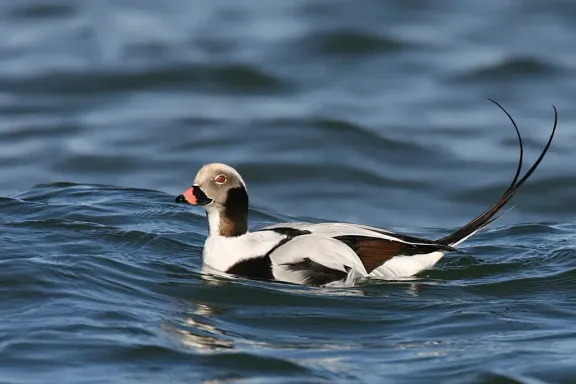
Waterfowl
Long-tailed duck
Clangula hyemalis
Same subfamily (Anatinae)
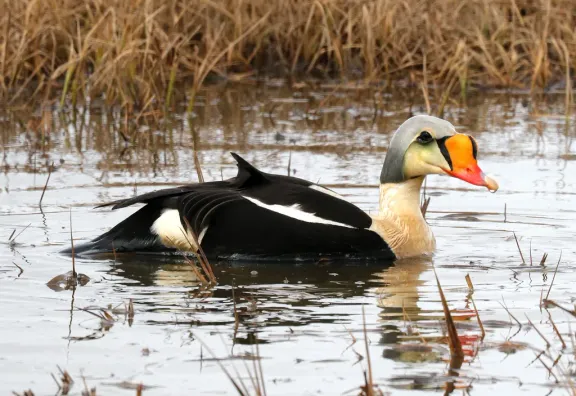
Waterfowl
King eider
Somateria spectabilis
Same subfamily (Anatinae)
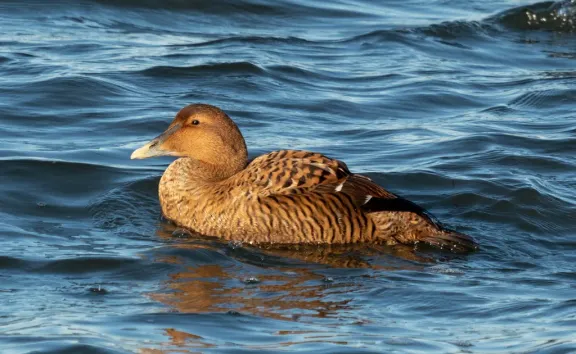
Waterfowl
Common eider
Somateria mollissima
Same subfamily (Anatinae)
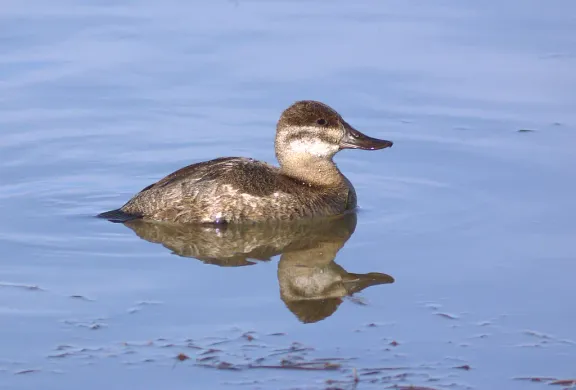
Waterfowl
Ruddy duck
Oxyura jamaicensis
Same subfamily (Anatinae)
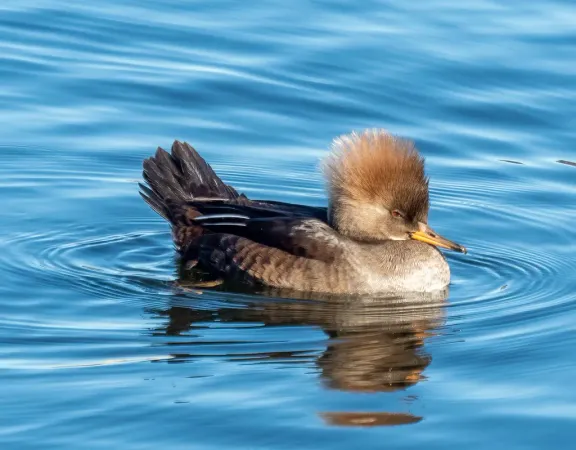
Waterfowl
Hooded merganser
Lophodytes cucullatus
Same subfamily (Anatinae)
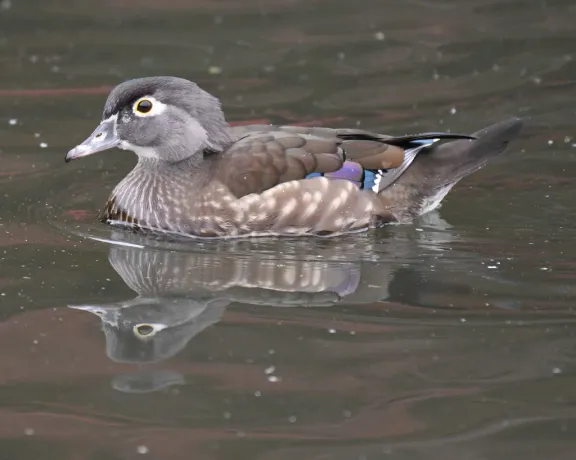
Waterfowl
Wood duck
Aix sponsa
Same subfamily (Anatinae)