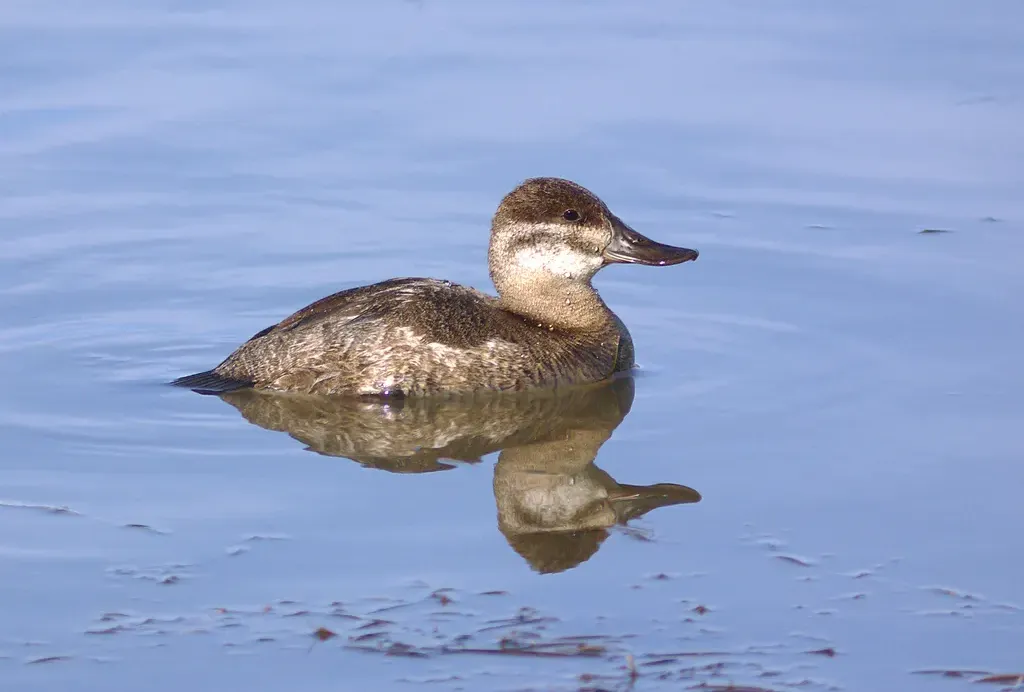
Photo:ALAN SCHMIERERCC0
Waterfowl
Ruddy duck
Oxyura jamaicensis
- Group
- Waterfowl
- Size class
- Small (under 10 kg)
- Family
- Anatidae
Range
- North America
- Europe
Habitat
- Wetland
Range
Countries it is found in
49 countries
- Anguilla
- Antigua & Barbuda
- Argentina
- Austria
- Azerbaijan
- Bahamas
- Barbados
- Belgium
- Bermuda
- Bolivia
- British Virgin Islands
- Canada
- Chile
- Colombia
- Cuba
- Denmark
- Dominican Republic
- Ecuador
- El Salvador
- Faroe Islands
- Finland
- France
- Germany
- Grenada
Range from:Wikipedia country bird lists, GBIF occurrence records — read 2026-08-05
Chapter 01
Overview
The ruddy duck (Oxyura jamaicensis) is one of six living stiff-tailed ducks, native to the Americas. Gmelin described it in 1789 from a 'Jamaica shoveler'; Oxyura means 'sharp tail' in Greek. Its short, stout build earned it the nickname 'butterball'. Introduced to Britain in the 1940s and established there after escapes from wildfowl collections, it spread to the Continent. Outside the Americas it is treated as a highly invasive species, and many countries have set out to eradicate it.
Chapter 02
Identification
A small, compact duck with a stout, scoop-shaped bill, a slightly peaked head, a short thick neck and a long stiff tail usually held cocked upward. The drake has a blackish cap over bright white cheeks; in summer his body is rich chestnut and his bill bright blue, in winter dull grey-brown with a grey bill. Females and first-year males are brownish with a blurry stripe across the pale cheek. In flight the upperwing is solidly dark; it rarely flies, and then with fast wingbeats low over the water.
Chapter 03
Behaviour
Courtship begins on the breeding grounds rather than in winter. The drake 'bubbles', drumming his bill against his breast hard enough to raise swirls of bubbles, both to court females and to face down rivals. It nests in dense marsh vegetation near water, and broods run from 5 to 15 ducklings; the male takes no part in rearing. It feeds underwater on seeds, roots, insect larvae and pupae and small crustaceans, finding them by touch in water clouded with sediment.
Chapter 04
Hunting
Escaped ruddy ducks hybridise with the endangered white-headed duck of southern Europe, and the species has been culled across Europe. By March 2012 the British cull had killed 6,500 birds at a cost of £5 million, and by early 2014 the British population was down to 20–100 from a peak of about 5,500. Since 2016 it has been on the EU list of invasive alien species of Union concern. In Sweden, where pairs bred in Hälsingland in 1996–97 and in Södermanland in 2004, skyddsjakt on the species has been permitted since 2005.
Sources
Sources: Ruddy duck — Wikipedia, Amerikansk kopparand — Wikipedia (svenska) — read 2026-10-29
Cross-reference
Related species
Its closest relatives in the compendium, nearest kinship first.
Waterfowl
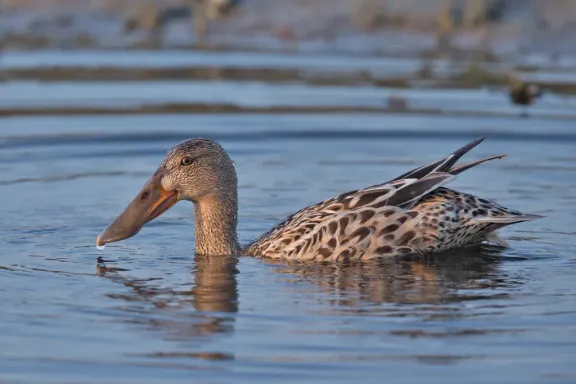
Northern shoveler
Spatula clypeata
Same subfamily (Anatinae)
Waterfowl
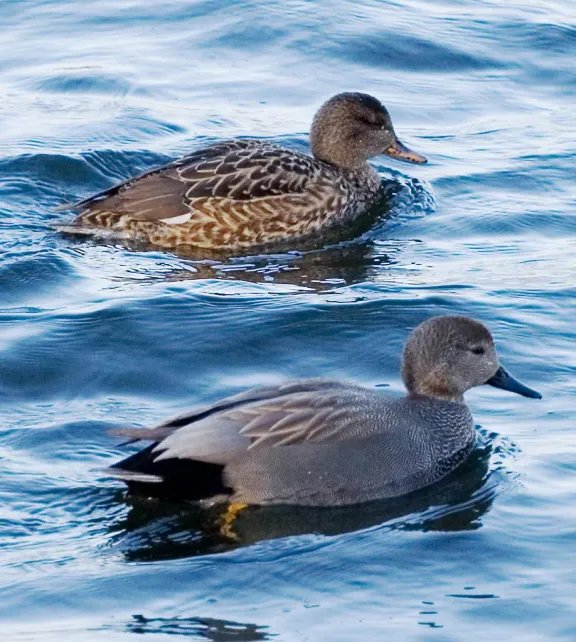
Gadwall
Mareca strepera
Same subfamily (Anatinae)
Waterfowl
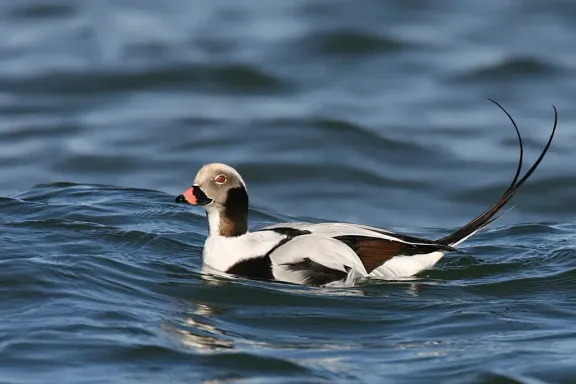
Long-tailed duck
Clangula hyemalis
Same subfamily (Anatinae)
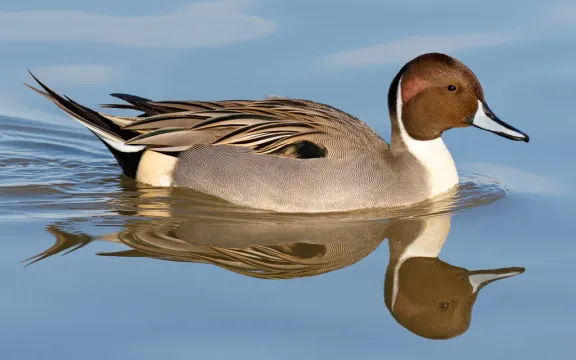
Waterfowl
Northern pintail
Anas acuta
Same subfamily (Anatinae)
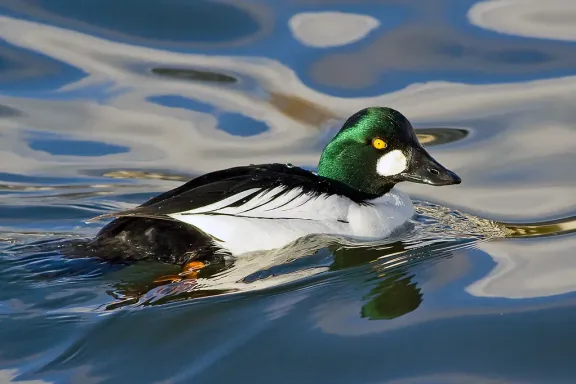
Waterfowl
Common goldeneye
Bucephala clangula
Same subfamily (Anatinae)
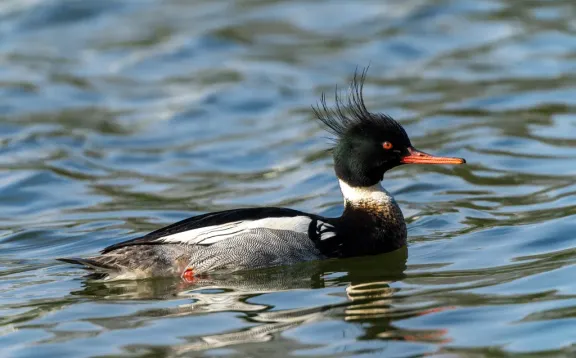
Waterfowl
Red-breasted merganser
Mergus serrator
Same subfamily (Anatinae)