Waterfowl
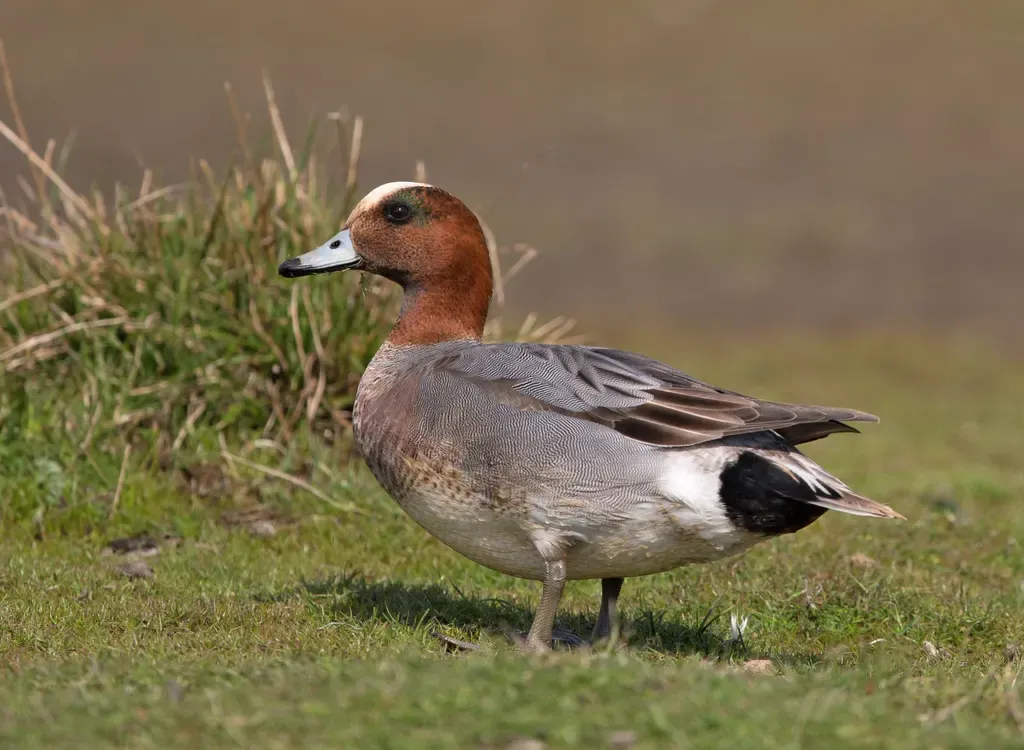
Eurasian wigeon
Mareca penelope
- Group
- Waterfowl
- Size class
- Small (under 10 kg)
- Family
- Anatidae
Range
- Europe
- Asia
Habitat
- Wetland
- Coast
Range
Countries it is found in
104 countries
- Afghanistan
- Albania
- Algeria
- Armenia
- Austria
- Azerbaijan
- Bahrain
- Bangladesh
- Belarus
- Belgium
- Bermuda
- Bhutan
- Bosnia & Herzegovina
- Bulgaria
- Canada
- China
- Croatia
- Cyprus
- Czechia
- Denmark
- Egypt
- Eritrea
- Estonia
- Faroe Islands
Range from:Wikipedia country bird lists, GBIF occurrence records — read 2026-08-05
Chapter 01
Overview
The Eurasian wigeon (Mareca penelope) is one of three living wigeons in the dabbling duck genus Mareca, common and widespread across its Palearctic range. Linnaeus described it in 1758 as Anas penelope. The epithet refers to a duck said to have saved Penelope when she was thrown into the sea — her name from the Greek for 'braid' and 'appearance', after the ruse she used to hold off suitors while Odysseus was away.
Chapter 02
Identification
A dabbling duck 42–52 cm long with a 71–80 cm wingspan, weighing 500–1,073 g. The breeding drake has grey flanks and back with a black rear end, a dark green speculum and a brilliant white patch on the upper wing that shows both in flight and at rest. The breast is pink, the belly white, and the head chestnut with a creamy crown. In eclipse plumage the drake looks much more like the female, which is the thing to be aware of outside the breeding season.
Chapter 03
Behaviour
A bird of open wetland — wet grassland or marsh with some taller vegetation. It usually feeds by dabbling for plant food or by grazing, which it takes to very readily. It nests on the ground, near water and under cover. Outside the breeding season it is highly gregarious and forms large flocks, joining flocks of American wigeon in the United States and hybridising with them.
On the table
Meat & cooking
Table grade 5 of 55/5
- Sold as meat in a legal market
- Has a named traditional dish
- Published way to handle and cook it
- Eaten in more than one country
- No known health advisory
Traditional preparations
- Roast wild duck
- Wild duck is roasted fast and served pink; the breast is the cut, the legs being better braised or confited. Duck as food — Wikipedia
- Salmis
- The classic French treatment of wildfowl — briefly roasted, jointed, then finished in a sauce built from the carcass. Salmis — Wikipedia
Sources
Sources: Eurasian wigeon — Wikipedia — read 2026-08-05
Cross-reference
Related species
Its closest relatives in the compendium, nearest kinship first.
Waterfowl
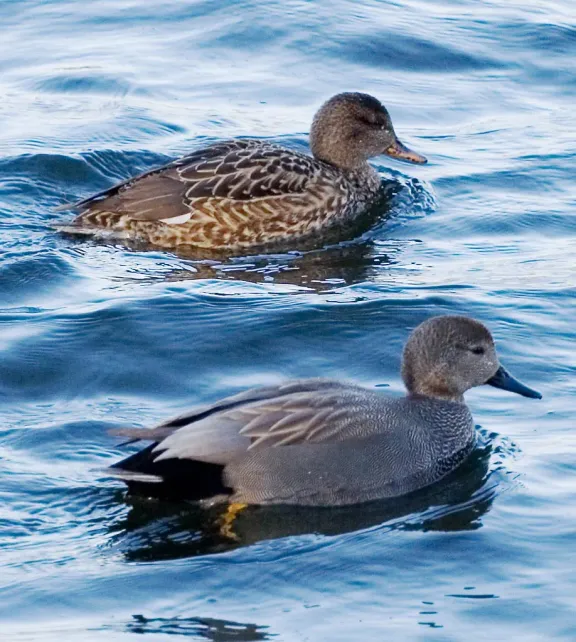
Gadwall
Mareca strepera
Same genus (Mareca)
Waterfowl
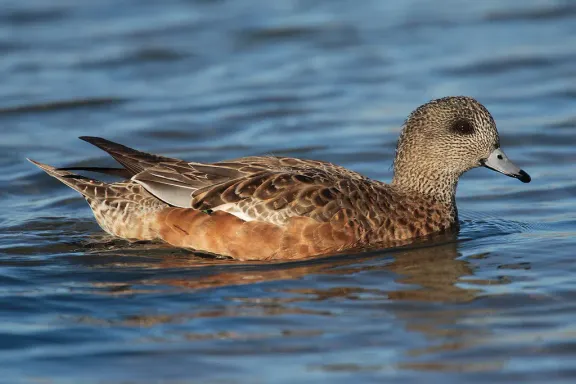
American wigeon
Mareca americana
Same genus (Mareca)
Waterfowl
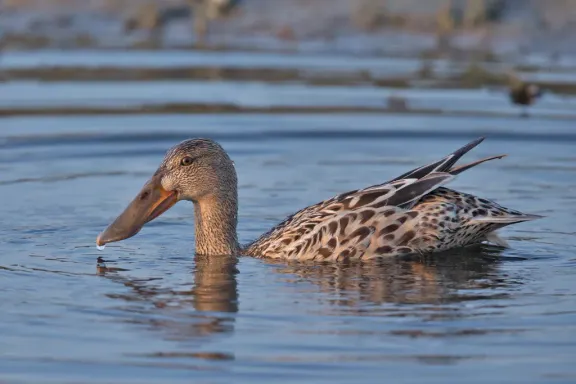
Northern shoveler
Spatula clypeata
Same subfamily (Anatinae)

Waterfowl
Northern pintail
Anas acuta
Same subfamily (Anatinae)

Waterfowl
Mallard
Anas platyrhynchos
Same subfamily (Anatinae)
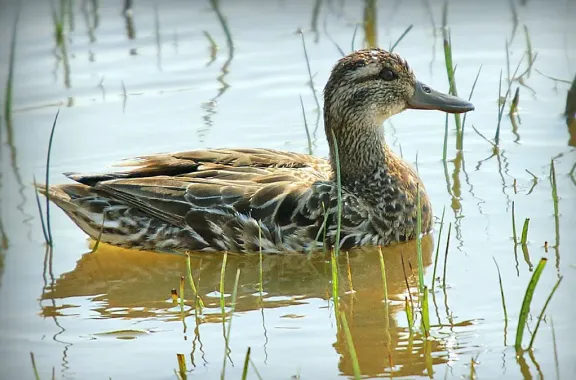
Waterfowl
Garganey
Spatula querquedula
Same subfamily (Anatinae)