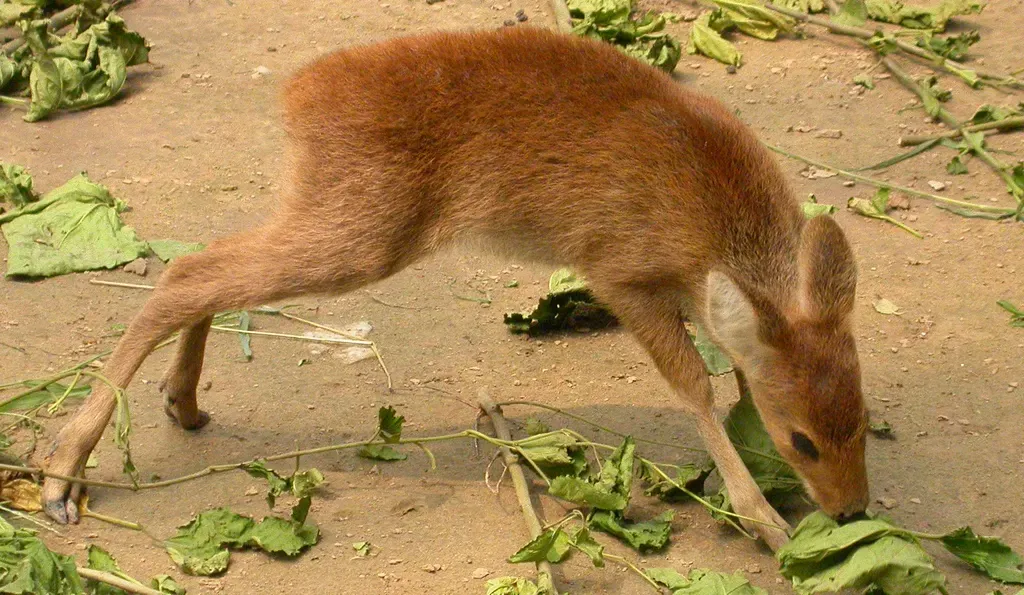
Photo:SnowyowlsCC BY-SA 2.0
Big game
Chinese water deer
Hydropotes inermis
- Group
- Big game
- Size class
- Medium (10–70 kg)
- Family
- Cervidae
Range
- Asia
- Europe
Habitat
- Wetland
- Farmland
Range
Countries it is found in
3 countries
- China
- North Korea
- South Korea
Range from:ASM Mammal Diversity Database — read 2026-08-05
Chapter 01
Overview
The water deer (Hydropotes inermis) is a small deer native to Korea and China and the only species in its genus; molecular studies place it as the sister of the roe deer. There are two subspecies, the Chinese water deer (H. i. inermis) and the Korean water deer (H. i. argyropus). The Chinese subspecies survives in the lower Yangtze, coastal Jiangsu and the islands of Zhejiang and is critically endangered in China, while the Korean one numbers around 700,000 across South Korea, where it is called gorani. It lives in tall reeds and rushes along rivers, but also on mountains, swamps, grassland and cultivated fields, and swims well enough to reach river islands several miles out. Chinese water deer were brought to Britain in the 1870s; escapes and releases from Woburn Abbey and Whipsnade founded the wild population, which centres on Bedfordshire, Cambridgeshire, Norfolk, Suffolk and north Essex. A French population descended from a 1960 escape is thought to be extinct, and in 2019 the species was recorded in Russia's Primorsky Krai.
Chapter 02
Identification
A small, antlerless deer about 45 to 55 cm at the shoulder and 11 to 14 kg, with long legs and a long neck; the hind legs are longer than the forelegs, so the haunches ride higher than the shoulders, and it runs in rabbit-like bounds. The coat is golden brown flecked with black, white underneath, with a reddish-brown or grey tapered face, a cream chin and throat, and short, very rounded ears. The tail is short, 5 to 10 cm, and almost invisible. In autumn it moults into a thicker, coarse winter coat of light to greyish brown. Fawns are dark brown with white stripes and spots. The giveaway is the tusks. Bucks carry long upper canines, averaging 5.5 cm and up to 8 cm, held loosely so they can be drawn back while eating and thrust forward in a fight; does have tiny ones of about 0.5 cm. It is also the only deer with scent glands in the groin.
Chapter 03
Behaviour
Outside the rut water deer are solitary, and bucks are strongly territorial, marking their ground with urine and droppings, by rubbing their preorbital glands on thin trees and by biting off vegetation. Rivals size each other up walking in parallel 10 to 20 m apart; if neither gives way they fight, stabbing and tearing at head, shoulders and back with their tusks until the loser lays his head flat or runs. Scars and torn ears show the fighting is frequent. The main call is a bark, more growling than a muntjac's yap, and a challenged buck makes a clicking sound. The rut falls in November and December. Water deer are the most prolific of all deer: up to seven young are recorded, though two or three is normal. The spotted fawns are hidden in cover for up to a month and are driven from the natal territory in late summer. The diet is mostly reeds, with grasses, grain and vegetables.
Chapter 04
Hunting
In South Korea the water deer has been designated harmful wildlife since 1994, as its natural predators, Korean tigers and leopards, have gone. Some local governments pay bounties of 30,000 to 50,000 won during the farming season, and hunting is not confined to the warm months — 18 hunting grounds were operating in the winter of 2018. In China it is regarded as a pest where it feeds on grain and vegetable fields, and it is also hunted for the does' colostrum, used in traditional Chinese medicine. In England and Wales the open season for water deer runs from 1 November to 31 March for both sexes, which are hard to tell apart in the field. The species is not recognised as present in Scotland under the Deer (Scotland) Act 1996. In France the former population had been protected since 1973.
Sources
Sources: Water deer — Wikipedia, Vattenrådjur — Wikipedia (sv), The British Deer Society: Deer open season dates — read 2026-10-29
Cross-reference
Related species
Its closest relatives in the compendium, nearest kinship first.
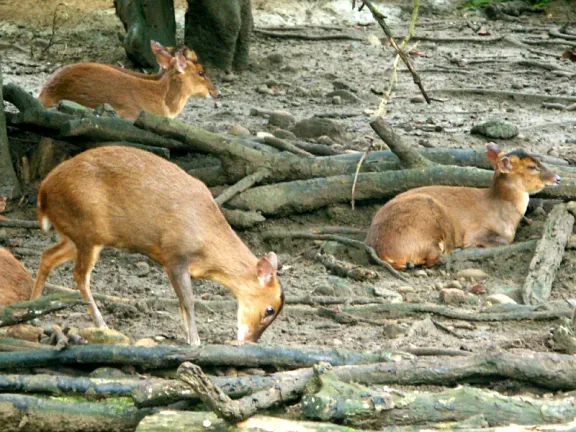
Big game
Reeves’s muntjac
Muntiacus reevesi
Same family (Cervidae)
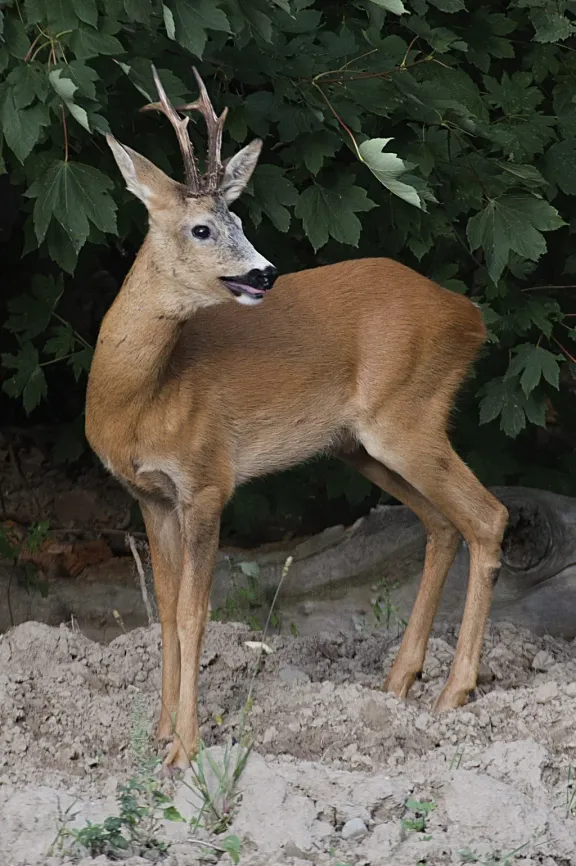
Big game
Roe deer
Capreolus capreolus
Same family (Cervidae)
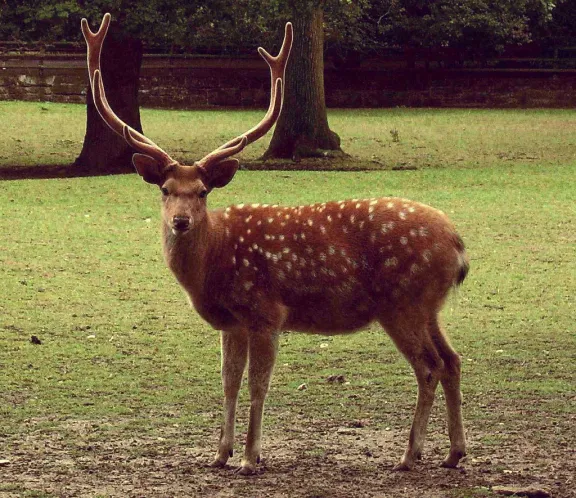
Big game
Sika deer
Cervus nippon
Same family (Cervidae)
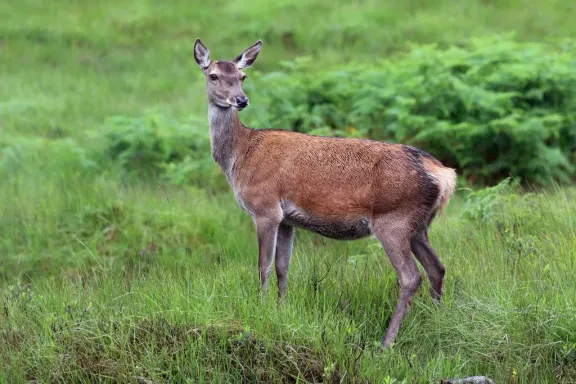
Big game
Red deer
Cervus elaphus
Same family (Cervidae)
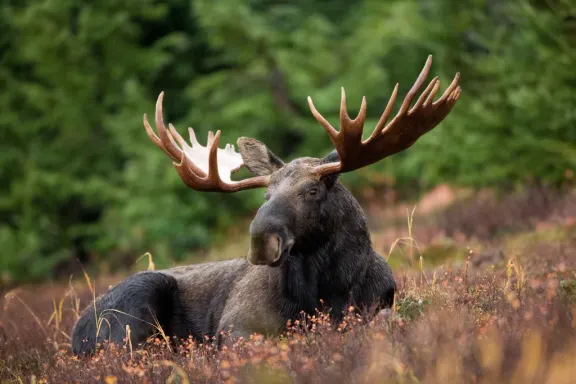
Big game
Moose
Alces alces
Same family (Cervidae)
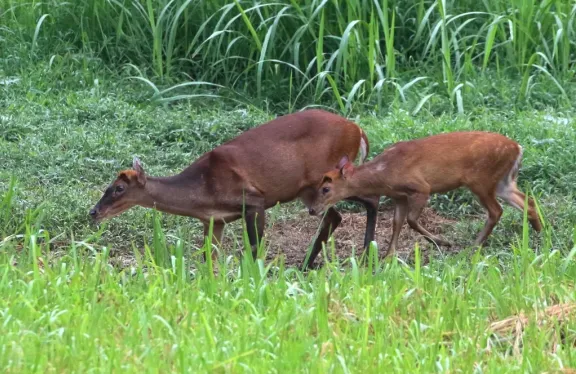
Big game
Indian muntjac
Muntiacus muntjak
Same family (Cervidae)