Photo:Richard FullerCC0
Big game
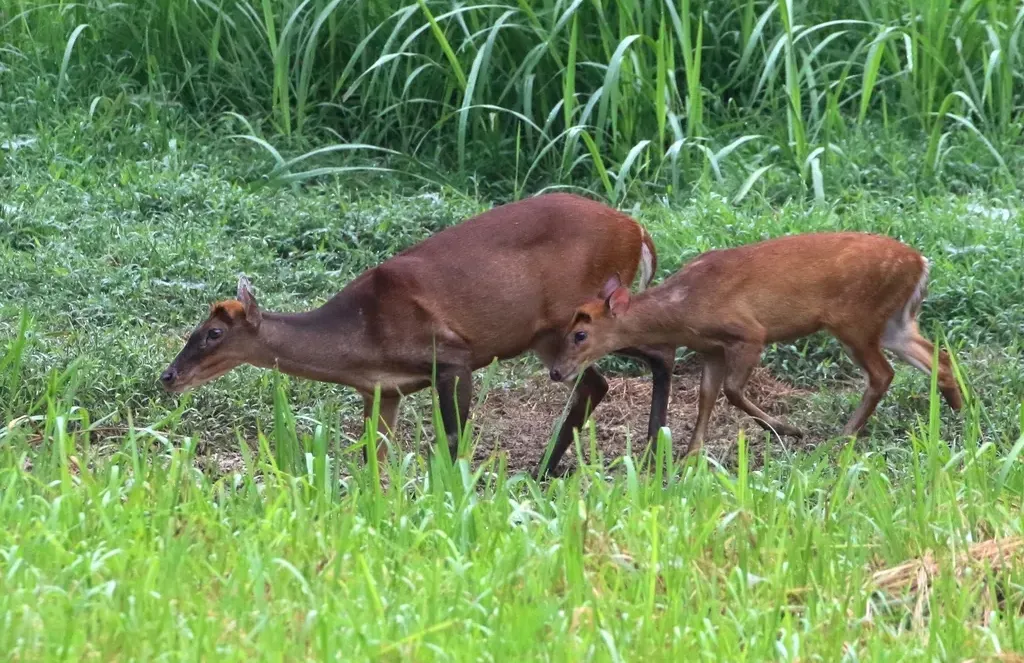
Indian muntjac
Muntiacus muntjak
- Group
- Big game
- Size class
- Medium (10–70 kg)
- Family
- Cervidae
Range
- Asia
Habitat
- Forest
- Rainforest
Range
Countries it is found in
11 countries
- Brunei
- Cambodia
- China
- Hong Kong SAR China
- India
- Indonesia
- Malaysia
- Nepal
- Sri Lanka
- Thailand
- Vietnam
Range from:ASM Mammal Diversity Database, GBIF occurrence records — read 2026-08-05
Chapter 01
Overview
Muntiacus muntjak was long known as the Indian or common muntjac, but a taxonomic revision has narrowed it to the southern red muntjac of the Malay Peninsula, Sumatra, Java, Bali and Borneo, probably also peninsular Thailand and south-western Myanmar. The mainland populations once included in it, among them those of India, are now assigned to the northern red muntjac, Muntiacus vaginalis, and the Malabar red muntjac has also been split off. It is locally extinct in Singapore. Muntjacs are known as barking deer, and the IUCN lists this one as least concern. It is mostly a deer of open forest but also lives in heavily degraded woodland and at the edges of coffee, cassava, rubber, sugarcane, coconut and teak plantations. It copes well with logging and seems to gain from farmland pushing into the forest edge: it is among the commonest animals on camera traps in young acacia plantations in Sarawak, and in Borneo's Danum Valley its numbers rose after deforestation. Its chromosome count is the lowest recorded in any mammal — six in females, seven in males.
Chapter 02
Identification
Among the smallest deer, with a short, soft, very dense coat that runs from darker brown to yellowish or greyish brown through the year, white underneath, with a darker face and dark to reddish-brown legs. Head and body measure 89–135 cm, the tail 13–23 cm, and it stands 40–65 cm at the shoulder; adults weigh 13–35 kg, males the heavier. Bucks carry short antlers, about 10 cm, which usually fork once near the base and grow from long, hair-covered pedicels above the eyes. They also have slightly curved upper canines of 2–4 cm that can do serious damage in fights. Does have tufts of fur and small bony knobs in place of antlers. Both sexes have large, obvious scent glands in front of the eyes, bigger in males.
Chapter 03
Behaviour
Apart from the rut and the first six months after a birth, adults live alone. Males in particular keep well apart and mark grass and bushes with secretion from the glands in front of their eyes, though home ranges overlap a good deal and dominance seems tied to sites rather than strict territories. Its name of barking deer comes from the bark it gives as an alarm, often when it has seen a predator — pythons, tigers, leopards and crocodiles among them. It eats grass, fruit, shoots and seeds, and also bird eggs, small animals and, now and then, carrion. Does mature in their first or second year and can breed at any time, coming into oestrus every 14 to 21 days. Gestation is six to seven months, usually for one fawn and sometimes twins, born hidden in dense growth; the young leave after about six months to find territories of their own. Males fight over females.
Chapter 04
Hunting
The southern red muntjac is hunted for sport, meat and skin around the edges of farmland. In Thailand it is regarded as a nuisance for damaging crops and stripping bark from trees.
Sources
Sources: Southern red muntjac — Wikipedia, Indisk muntjak — Wikipedia (sv) — read 2026-10-29
Cross-reference
Related species
Its closest relatives in the compendium, nearest kinship first.
Big game
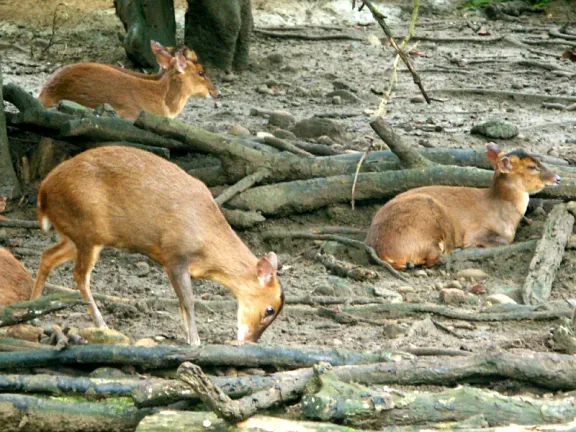
Reeves’s muntjac
Muntiacus reevesi
Same genus (Muntiacus)
Big game
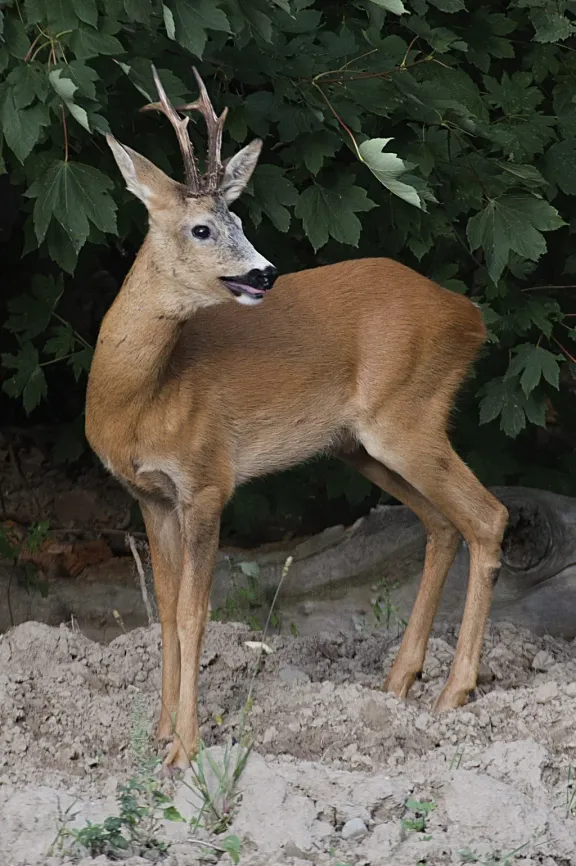
Roe deer
Capreolus capreolus
Same family (Cervidae)
Big game
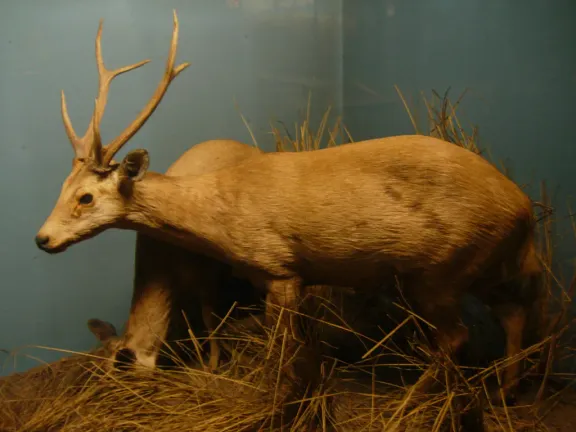
Hog deer
Axis porcinus
Same family (Cervidae)
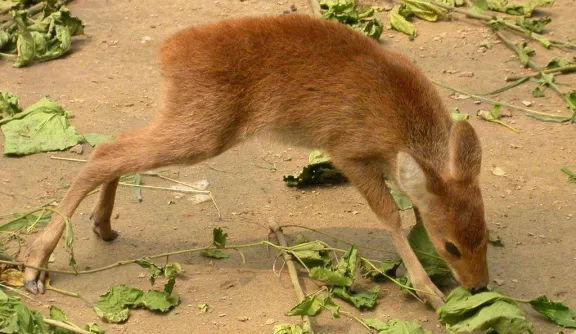
Big game
Chinese water deer
Hydropotes inermis
Same family (Cervidae)
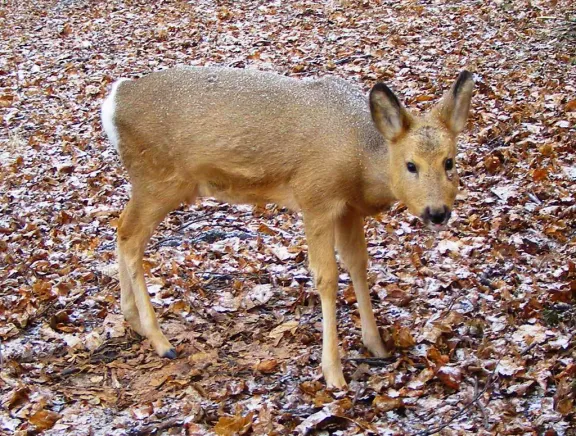
Big game
Siberian roe deer
Capreolus pygargus
Same family (Cervidae)
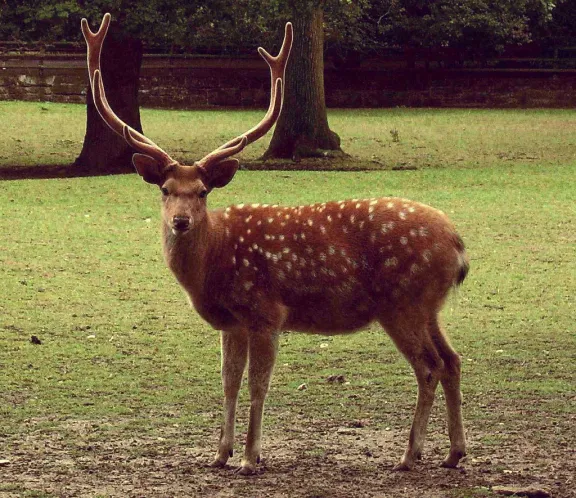
Big game
Sika deer
Cervus nippon
Same family (Cervidae)